Online
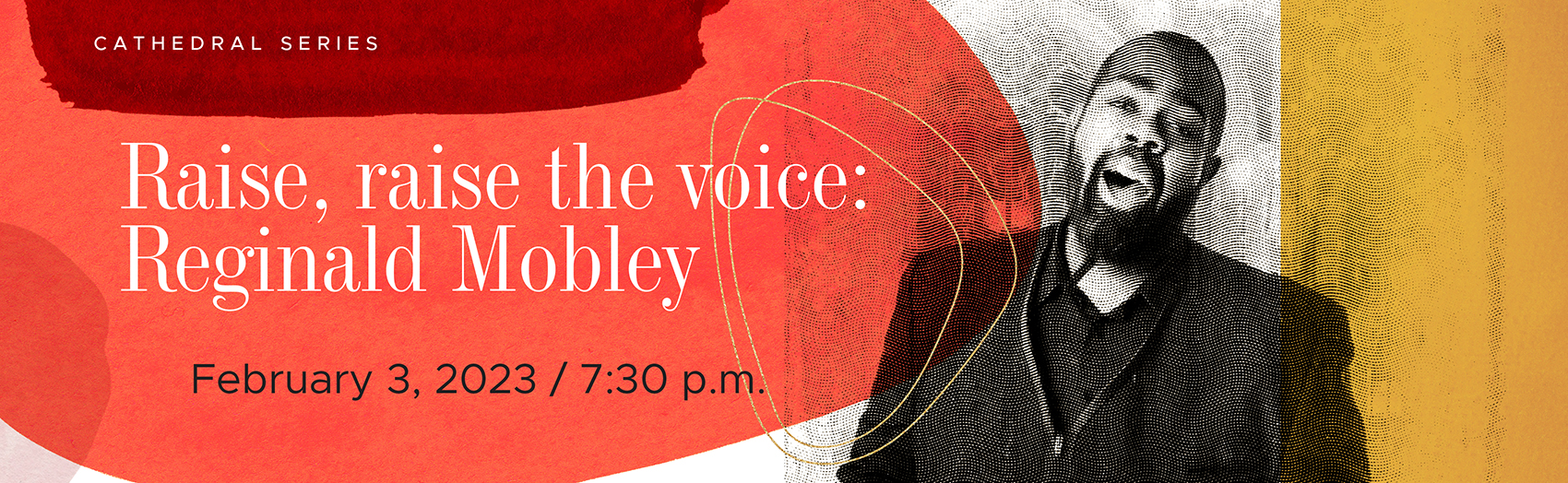
Artists: Reginald Mobley, countertenor; the Pacific Baroque Orchestra directed by Alexander Weimann
2023 Grammy Awards and 2023 Classical Music Awards Nominee Reginald Mobley returns to Vancouver to share his incomparable artistry with Alexander Weimann and the Pacific Baroque Orchestra in a unique recital. Reggie’s strong devotion to social and political activism has helped him focus on a desire to make a difference within the arts, particularly with the massive inequality regarding race, gender, and sexuality within the classical music industry.
‘Raise, raise the voice’, one of Henry Purcell’s most attractive smaller-scale works, praises Apollo on ‘sacred Music’s holy day.’ This title also serves to remind us of the importance of raising all the artistic voices of our rich and diverse world.
Read the recent interview with Mr. Mobley in Stir Vancouver here.
PROGRAMME
O solitude
Tis Nature’s voice
Fantasia 7 in G
Henry Purcell
Music for a while
Ignatius Sancho (c. 1729-1780)
Minuets and Country Dances
arr. Nicola Saraceni Canzano
George Frideric Handel
Yet can I hear that dulcet lay
Interval
Henry Purcell
Here the deities approve
Fantasia 6 in E minor
Johann Sebastian Bach (1685-1750)
Bekennen will ich seinen Namen
Anonymous (Dutch Gradual, 1751)
Amo te, Jesu plus quam me
arr. Tineke Steenbrink
Henry Purcell
Crown the altar, deck the shrine
Chacony in G minor
Evening Hymn
In my solitude
The odes of Henry Purcell (1659-1695) were closely tied to court ceremonial and public celebration. In the days of the music-loving Stuart monarchs, Purcell’s music marked the comings and goings of the king with appropriate pomp and magnificence. After the accession of the Protestant William and Mary, Purcell continued to write odes for the queen’s birthday and for the festivities of civic institutions such as London’s “Musical Society.” In Purcell’s day, odes served as elevating expressions of unity in times of frequent political unrest—as well as projections of royal power. Their enduring subject, however, is music—the act of singing—itself. The word “ode” comes from an ancient Greek term meaning “to sing,” and the ode of Classical antiquity was thus a poem meant to be sung.
The feast day of St. Cecilia (November 22), the patroness of music, encouraged music that reflected on its own powers: celebration and praise, lamentation, solace and healing. Although some of the occasions for raising the voice have changed since Purcell’s time, many of the basic reasons for doing so have not. This programme celebrates the power and importance of supporting and listening to those voices, bringing together some of the gems of Purcell’s vocal and instrumental writing with the work of diverse musicians of later centuries.
Raise, raise the voice (Z. 334) is one of Purcell’s St. Cecilia Day odes, and its opening “Symphony” draws a majestic sound out of relatively modest three-part scoring for two violin lines and bass. Like a French overture, it begins with a dignified, sombre introduction, followed by an agile and more intensively contrapuntal second section; whereas the overture was frequently intended to accompany the entrance of the king, we can imagine that this symphony is welcoming “Music” itself, whose “holiday” is being celebrated.
“O solitude,” which Purcell published in 1687 in a collection titled Comes Amoris: Or The Companion of Love, uses one of the composer’s favourite devices, a ground bass; Purcell adopted the practice from his Italian contemporaries but made it unmistakeably his own, crafting unusual bass patterns, varying the harmony, and shaping the melodic contour and rhythm to create a dramatic sense of storytelling. “Music for a while,” from a set of incidental music for the play Oedipus, and the beloved “Evening Hymn” are also examples of Purcell’s ingenious and expressive use of this technique.
“‘Tis nature’s voice” suggests another kind of Italian influence. Drawn from the ode Hail, Bright Cecilia (Z. 328)—and, according to an early engraving, sung by Purcell himself on St. Cecilia’s Day—it is an ornate recitative with extraordinary pictorial effects, all of which describe the various functions and effects of music. “Here the deities approve,” another song on a ground, was popularized by a beautiful keyboard arrangement that Purcell published in 1689; “Crown the altar, deck the shrine” similarly pairs elaborate vocal melody with an active, strongly thematic bass.
George Frideric Handel (1685-1759) succeeded Purcell as the preeminent musical personality of the English Baroque. Vedendo amor (HWV 175), however, dates from his time in Italy, and is part of a string of cantatas for voice and continuo detailing the protagonist’s ill-fated attempts to escape the snares of “Amore,” who takes the form of an uccellatore, or bird-catcher. “Now can I hear that dulcet lay” is also part of a larger work, The Choice of Hercules (HWV 69), which tells the popular story of young Hercules’s fateful decision between the paths of Virtue and Pleasure. The “dulcet lay” is one of Pleasure’s attempts to win the hero over; enticing as the music is, Hercules must reject it in order to embrace the sterner but higher rewards of Virtue. One gets the sense, though, that Handel relished this moment of indecision as a chance to display his own—incomparably “sweet”—melodic gifts. Bekennen will ich seinen Namen (BWV 200), by Johann Sebastian Bach (1685-1750), is also a gracious and lyrical aria in E major, but its speaker is at the end of his journey rather than the beginning. The text paraphrases the words of Simeon (Luke 2.29-32), an old man who after seeing the infant Jesus in the temple proclaims his assurance of salvation and his readiness to die.
While Bach and Handel were at the height of their powers, Ignatius Sancho (c. 1729-1780) was born on a slave ship bound for Columbia. An orphan, Sancho was brought at the age of two to England, where he spent the rest of his life. Sancho’s determined self-education, resilience, and perseverance in finding patronage allowed him to achieve and safeguard his freedom, to win the esteem of his contemporaries as a man of letters, and to become a vocal abolitionist; his collected letters were published posthumously in 1784 as evidence of the injustice and inhumanity of the slave trade. A man of many talents, Sancho also penned a treatise on music theory and wrote collections of dances for keyboard, several of which we will hear tonight in an arrangement for four-part ensemble.
Duke Ellington (1899-1974), one of the great American composers, pianists, and bandleaders of the twentieth century, also brought a passion for social justice to his long and storied career. Wrestling with the ongoing realities of segregation and racial discrimination at home, Ellington also advocated for peace and international cooperation on his world tours. As the story goes, Ellington wrote “In My Solitude” in twenty minutes while he was waiting to start a recording session. This haunting music went on to be unforgettably recorded not only by Ellington and his orchestra but also by Billie Holiday and many others. There is a certain continuity with the love lyrics of Purcell’s day, tapping into the uncanny pain of absence and bereavement: in spite of “solitude,” just to be singing about loss is to be gathering strength, finding friendship, raising your voice.
- Connor Page
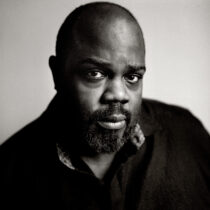
Reginald Mobley, countertenor
Noted for his ‘shimmering voice’ (BachTrack), American countertenor Reginald Mobley is highly sought after for the baroque, classical and modern repertoire.
Reginald leads a very prolific career on both sides of the Atlantic. In the United States, where he resides, he became the first ever programming consultant for the Handel & Haydn Society following several years of leading H&H in his community engaging Every Voice concerts. He also holds the position of Visiting Artist for Diversity Outreach with the Baroque ensemble Apollo’s Fire, and is a regular guest with Cantata Collective, Musica Angelica, Agave Baroque, Charlotte Bach Akademie, Seraphic Fire, Quodlibet, Pacific Music Works, Bach Collegium San Diego, San Francisco Early Music Society and Philharmonia Baroque Orchestra.
Recent engagements have included concerts and recordings with the Chicago Symphony Orchestra, Opera Lafayette, Blue Heron, Chatham Baroque, Washington Bach Consort, Atlanta Baroque Orchestra and Early Music Seattle. Future highlights include Carmina Burana with the Chicago Symphony Orchestra, Messiah with the New York Philharmonic and Pittsburgh Symphony Orchestras, a debut at Carnegie Hall with Orchestra St Luke’s and at the Walt Disney Hall in Los Angeles.
In Europe, Reginald has been invited to perform with the OH! (Orkiestra Historycsna) in Poland, Vienna Academy in Austria (Musikverein), Musée d’Orsay in Paris, Royal Scottish National Orchestra, Academy of Ancient Music, City of Birmingham Symphony Orchestra, Balthasar Neumann Chor & Ensemble, Bach Society in Stuttgart, Holland Baroque Orchestra and in the autumn of 2021, he performed the role of Ottone in L’incoronazione di Poppea in Geneva, MUPA and Teatro di Vicenza in a European tour with The Budapest Festival Orchestra. He has also extensively toured with the Monteverdi Choir and Orchestra under the baton of John-Eliot Gardiner, and more recently performed a series of English music programmes in Germany with the Freiburger Barockorchester under the leadership of Kristian Bezuidenhout.
His recordings have been received with great critical acclaim, most recently American Originals with Agave Baroque ensemble, recorded with Acis Productions, which has been nominated for a GRAMMY Award, following A Lad’s Love with Brian Giebler on BRIDGE 9542 label. Reginald features on several albums with the Monteverdi Choir and Sir John Eliot Gardiner, including a recording of Bach’s St Matthew Passion and Magnificat, where Reginald ‘encapsulates whimsical pathos’ (Classical Music Magazine) His solo recording debut with ALPHA Classics will be released in June 2023. Reginald’s work has earned him both a 2023 Grammy Awards and 2023 Classical Music Awards Nomination.

Pacific Baroque Orchestra
The ‘house band’ of Early Music Vancouver, The Pacific Baroque Orchestra (PBO) is recognized as one of Canada’s most exciting and innovative ensembles performing “early music for modern ears.” Formed in 1990, the orchestra quickly established itself as a force in Vancouver’s burgeoning music scene with the ongoing support of Early Music Vancouver. In 2009, PBO welcomed Alexander Weimann as Director. His imaginative programming, creativity and engaging musicianship have carved out a unique and vital place in the cultural landscape of Vancouver.
PBO regularly joins forces with internationally-celebrated Canadian guest artists, providing performance opportunities for Canadian musicians while exposing West Coast audiences to a spectacular variety of talent. The Orchestra has also toured throughout BC, the northern United States, and across Canada. Their 2019 East Coast Canadian tour with Canadian soprano Karina Gauvin culminated in a critically acclaimed album, Nuit Blanches, released by Atma Classique.

Alexander Weimann | Sponsored by Bruce Munro Wright, O.B.C., dir.
The internationally renowned keyboard artist Alexander Weimann has spent his life enveloped by the therapeutic power and beauty of making music. Alex grew up in Munich. At age three he became fascinated by the intense magic of the church organ. He started piano at six, formal organ lessons at 12 and harpsichord at university (along with theatre theory, medieval Latin and jazz piano.) He is in huge demand as a director, soloist and chamber player, traveling the world with leading North American and European ensembles. He is Artistic Director of the Pacific Baroque Orchestra in Vancouver and teaches at the University of British Columbia where he directs the Baroque Orchestra Mentorship Programme.
Alex has appeared on more than 100 recordings, including the Juno-award-winning album “Prima Donna” with Karina Gauvin and Arion Baroque orchestra. His latest album series “The Art of Improvisation” (Volume 1: A Prayer for Peace; Volume 2: Ad libitum; and Volume 3: Canavian Variations, released on Redshift, 2024) unites his passions for both baroque music and improvisation on organ, harpsichord, and piano.