Orpheum Annex | Map
Jeffrey Thompson, tenor; La Rêveuse, ensemble; Florence Bolton and Benjamin Perrot, treble and bass viola da gamba; Bertrand Cuiller, harpsichord; Benjamin Perrot, theorbo
“Thompson and the group did not miss an opportunity to indulge in ravishing improvisations…though oh so English, the music paid more than a passing nod to the extremes of passion, clashing harmonies and florid style of Monteverdi.” The Washington Post
After being selected to participate in the first Le Jardin des Voix with William Christie’s Les Arts Florissants, tenor Jeffrey Thompson has appeared with virtually all of the biggest names in early music. For his Vancouver debut he will perform a program of music by Henry Lawes accompanied by French ensemble La Rêveuse.
Programme
Oft have I sworn I’d love no more (Henry Lawes 1595 – 1662)
Perfect and endless circles are (William Lawes 1602-1645)
Or you, or I, nature did wrong (Henry Lawes 1595 – 1662)
Tregian’s ground (Daniel Norcombe – 17ème siècle) [bass viol & continuo]
Wither are all her false oaths blown ? (Henry Lawes 1595 – 1662)
Why so pale and wan, fond lover ? (William Lawes 1602-1645)
Neither sights, nor tears, nor mourning (Nicholas Lanier 1588-1666)
Ground in G Major (Godfrey Finger c.1660-c.1730) [bass viol & continuo]
I rise and grieve (Henry Lawes 1595 – 1662)
Bid me but live, and I will live (Henry Lawes 1595 – 1662)
Wert thou yet fairer than thou art (Henry Lawes 1595 – 1662)
INTERMISSION
When thou, poor excommunicate (Henry Lawes 1595 – 1662)
Have you e’er seen the morning sun ? (Henry Lawes 1595 – 1662)
Slide soft you silver floods (Henry Lawes 1595 – 1662)
O tell me love ! O tell me fate ! (Henry Lawes 1595 – 1662)
Ground (Christopher Simpson c.1602-1669) [bass viol & continuo]
Sweet stay awhile ; why do you rise ? (Henry Lawes 1595 – 1662)
I’m sick of love (William Lawes 1602-1645)
No more shall meads be deck’d with flowers (Nicholas Lanier 1588-1666)
The Queen’s delight / Lady Catherine Ogle, a new dance (John Playford 1623-1686) [treble viol & continuo]
Sleep soft, you cold clay cinders (Henry Lawes 1595 – 1662)
Out upon it, I have lov’d (Henry Lawes 1595 – 1662)
Why should great beauty virtuous fame desire (William Lawes 1602-1645)
Programme notes
Henry Lawes, born in the late sixteenth century, belongs to the generation that succeeded the great composers of the Elizabethan era. At the end of that sumptuous period for the arts, the first signs of important changes were felt in Italy, where, in certain aristocratic milieus, theorists and artists were thinking in a new way about the role of music. They gradually abandoned the polyphonic and contrapuntal style, too unwieldy in their view, in favour of monody, which gave precedence to the outer voices, the treble and the bass. Notation of the accompaniment was simplified to the point where it became a mere bass line, with the harmony suggested by a few figures. This new semi-improvised style of accompaniment thus gained in flexibility and gave greater freedom to the singer, who now ‘carried’ the text, like an actor in the theatre. This stile nuovo, launched by artists such as Giulio Caccini in Florence and Monteverdi in Mantua, had a lasting influence on the rest of Europe and took the form, in England, of the ‘declamatory ayre’, in which declamation gradually came to prevail over melody, while the lute part, now barer than in the previous period, stuck exceptionally closely to the text, already prefiguring, notably in the music of Henry Lawes, the style of Locke and Purcell.
The end of the reign of Charles I, his execution, and the troubled period of the Civil War and Cromwell’s Commonwealth caused tremendous upheavals in the lives of musicians. With the dissolution of the King’s Musick and the Chapel Royal, most of the leading composers and musicians of the period found themselves out of a job. Nicholas Lanier (1588-1666), for whom Charles I had created the post of Master of the King’s Musick in 1626, fled London and took refuge on the Continent. Thus England lost this outstanding figure, a perfect example of the ideal cultivated courtier, who was at once composer, singer, lutenist, violist, poet, etcher, and painter.
Henry Lawes, born in 1595 in the Wiltshire village of Dinton, was probably taught by the great Coperario in person. He joined the King’s Musick in 1626. When the monarchy fell, Lawes stayed in London and, while waiting for better days, took a position as music master in
a leading aristocratic family. He briefly evoked these hard times in the preface to the Ayres and Dialogues of 1653: ‘Now, we live in so sullen an Age, that our Profession it selfe hath lost its Encouragement.’ At this time he appeared regularly in private concerts, events much appreciated by music-lovers, which attracted the finest London society. Sales of his music, which coincided with the expansion of music publishing in England, brought him a healthy
income and a certain fame. Lawes was one of the most productive composers of his period: more than 350 songs have survived, including a considerable number published in the extensive
anthologies of successful ayres issued by John Playford. At the Restoration of Charles II, he rejoined the King’s Musick, as did most of his colleagues.
Despite the popularity he enjoyed in his lifetime, Henry Lawes has been somewhat overshadowed by his hot-headed younger brother William, King Charles I’s favourite musician, who was constantly seeking bold musical innovations. Fighting on the Royalist side during the Civil War, William was cut off in his prime at the battle of Chester on 24 September 1645. His output for lute has probably been lost and the three pieces recorded here (in a version for lute and harpsichord) are all that is left. It is likely that Lawes composed only the second lute parts.
To sing while accompanying oneself on the lute was a common practice, and it is highly probable that Henry Lawes and Nicholas Lanier were experienced exponents of it. From the end of the Elizabethan period new accompanying instruments came into vogue, including the virginal (until then essentially a solo instrument), the harpsichord, the organ, the bass viol, the
theorbo, and the guitar. With the fashion for the ‘lyra viol’, the solo viol, played chordally (‘lyra way’), could sometimes even substitute for the lute, and the violist Tobias Hume does not conceal his taste for accompanying songs in this way (‘to be sung to the Viole, with the Lute or = better, to the Viol alone’: Musicall Humors, 1605). The periods of Charles I and Cromwell were a veritable golden age for the viol: its technique developed considerably, with high positions, chordal playing, and frequent use of scordatura. ‘Divisions’, or variations on ostinato basses called ‘grounds’, often of great technical difficulty, were then very fashionable and form the major part of the repertory along with pieces for solo viol.
Christopher Simpson (c.1605-69) is one of the most inspired and respected composers of
grounds. Daniel Norcombe, who wrote more than thirty divisions, is still little known. He was probably a violist in the service of the Archduke Albert in Brussels between 1602 and 1647. Simpson mentions him as a composer worthy of interest in The Division Violist: ‘I would have you peruse the Divisions which other men have made upon Grounds; as those of Mr Henry Butler, Mr Daniel Norcome, and divers other excellent men of this our Nation . . .’
Francis Withy, probably born around 1650, was the son of the excellent violist John Withy. We know little about him except that he came from Worcester and probably spent his life as a musician in Oxford, another very dynamic musical centre of the Commonwealth years. Withy, who belonged to the last generation of great English violists, was a disciple of Simpson. One also notes in his music the influence of John Jenkins and of chordal playing (lyra way), very evident in the Division in G minor. The arrival of Jacques Gaultier in England in 1617 coincided with the vogue for the French lute. The strong personality of this somewhat boisterous lutenist (to put it mildly) and the craze for playing in the French style that infected the English aristocracy were important factors in the gallicisation of the repertory. Gaultier’s music circulated widely in manuscript, proof of its success, but curiously was never printed. In any case, his playing seems to have made a vivid impression on those who heard him, as is demonstrated by this remark of a contemporary: ‘English Gualtier (sic) was fit to play in a Cabarett because of his thundering way of playing!’
Florence Bolton
Translation: Charles Johnston
Jeffrey Thompson, tenor
After graduating in 2001 from the Cincinnati Conservatory (USA), where he studied with William McGraw, Jeffrey Thompson was awarded first prize at the Chimay International Baroque Vocal Competition (Belgium) by a jury chaired by William Christie.
In 2002 he was chosen to participate in the first edition of the academy ‘Le Jardin des Voix’ with Les Arts Florissants (William Christie) on a European tour. He also sang under Christie as a soloist in Rameau’s motet In convertendo for a DVD released by Opus Arte.
Since then he has sung a variety of operatic roles in numerous international houses, including Zotico (Eliogabalo/Cavalli, conducted by René Jacobs, 2004, Théâtre de la Monnaie, Brussels, and Innsbruck Festival); Monostatos (Die Zauberflöte/Mozart, director William Kentridge, cond. Jacobs, La Monnaie, 2005); Ninus (Pirame et Thisbé/Rebel & Francoeur, cond. Daniel Cuiller, Nantes 2007). He was heard at the Opéra-Comique in Paris in Philidor’s opera Sancho Panza with La Simphonie du Marais (2010), and in Budapest as Testo in Monteverdi’s Combattimento di Tancredi e Clorinda and as Hippolyte in Rameau’s Hippolyte et Aricie. In 2011-12 he sang the role of Aldobrandin in Grétry’s Le Magnifique in New York and Washington with Opera Lafayette (Ryan Brown) and Giancuir in J. C. Bach’s Zanaida with Opera Fuoco (David Stern) in Leipzig, Paris, and Vienna. During the 2012-13 season, he sings the roles of Acamas in Pyrrhus (Pancrace Royer) in Versailles, Castor in Rameau’s Castor et Pollux with Pinchgut Opera in Sydney, and Glaucus in Leclair’s Scylla et Glaucus in Budapest.
Alongside his operatic activities, Jeffrey Thompson also appears in concert (oratorios and recitals) with such ensembles as Ausonia (Frédérick Haas and Mira Glodeanu), Les Arts Florissants (William Christie), Boston Baroque, Faenza (Marco Horvat), Fuoco e Cenere (Jay Bernfeld), Handel and Haydn Society (Boston), Le Parnasse Français (Louis Castelain), Purcell Choir/Orfeo Orchestra (György Vashegyi, Budapest), La Rêveuse (Benjamin Perrot and Florence Bolton), and the Ensemble William Byrd (Graham O’Reilly).
La Rêveuse, ensemble
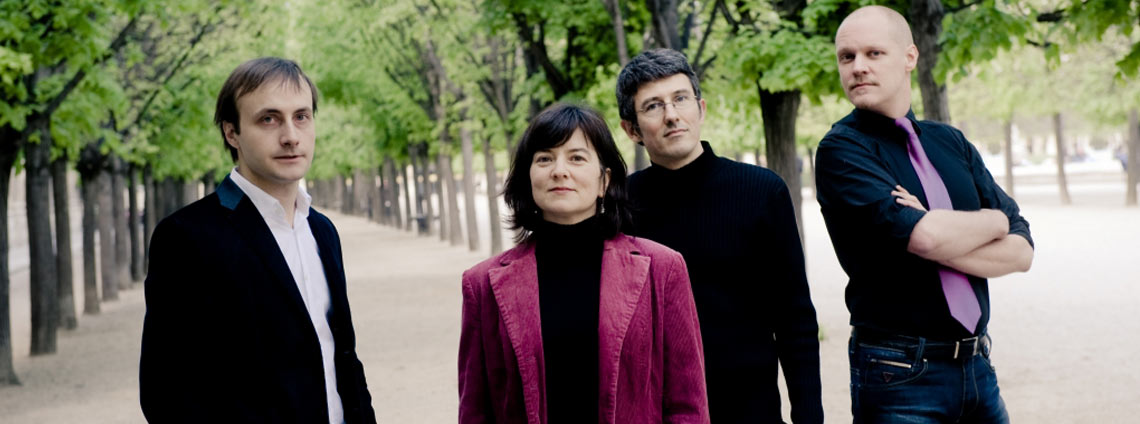
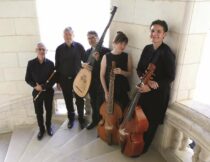
Founded by Benjamin Perrot and Florence Bolton, La Rêveuse is an ensemble of solo musicians that works on the heritage of the seventeenth and eighteenth centuries, a period rich in artistic experiments and inventions of all kinds. The ensemble’s recordings have all been acclaimed by French and international critics and have received numerous awards.
La Rêveuse is frequently invited to appear in prestigious venues in France (Auditorium de Radio France, La Folle Journée de Nantes, Les Concerts Parisiens, Fontevraud Abbey, Théâtre de l’Athénée, the Chambord and Radio-France Montpellier festivals, the Scènes Nationales of Orléans, Blois, and Quimper, the TNP de Villeurbanne, etc.) and abroad, notably in the United Kingdom, the Netherlands, Belgium, Switzerland, Germany, Poland, Russia, Japan, the United States and Canada.
Wishing to forge links between the different artistic disciplines, the ensemble often collaborates with the world of the theatre and literature in order to give a new slant to classic texts. Among the notable productions it has premiered are L’Autre Monde ou les États et Empires de la Lune by Cyrano de Bergerac and Les Caractères de La Bruyère with the actor and director Benjamin Lazar, Le Bourgeois Gentilhomme by Molière/Lully with Catherine Hiegel and François Morel, Molière’s Monsieur de Pourceaugnac with Théâtre de l’Éventail (Raphaël de Angelis) and L’Heure verte, a show focusing on the poets of the Cabaret du Chat Noir, with the composer Vincent Bouchot.
Alongside this, the ensemble has developed over the past few years a series of concert-lectures, aimed at museums and media libraries, which bring out parallels between music and painting of the seventeenth and eighteenth centuries.
The ensemble has also invested in knowledge transfer through Les Ateliers de Musique Ancienne (Early Music Workshops), which aim to introduce the music and arts of the seventeenth and eighteenth centuries to a wide audience through a range of activities, including chamber music courses at the Conservatoire d’Orléans, lectures and ‘discovery concerts’.
In 2017 La Rêveuse was awarded the Gold Medal of the Académie Arts-Sciences-Lettres for its overall achievement.
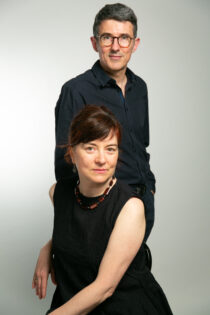
Florence Bolton and Benjamin Perrot, treble and bass viola da gamba
Florence Bolton began musical studies at the age of seven, with the harpsichord and the recorder. Attracted to bowed instruments, she finally devoted herself to the viola da gamba. After obtaining a first prize for a viola da gamba and a first chamber music prize at the Saint-Cloud Conservatory (Sylvia Abramovicz’s class), she joined the early music department of the CNSM in Lyon where she studied with Marianne Muller. She obtained a first prize in 2001. She also holds a master’s degree in Japanese from the National Institute of Oriental Languages and Civilizations (INALCO). Florence Bolton teaches viola and chamber music in Orleans and various baroque music courses.
With Benjamin Perrot she founded and shares direction of the ensemble La Rêveuse. With La Rêveuse, she has created several shows including The Other World or the States and Empires of the Moon by Cyrano de Bergerac (2004) and Les Caractères de La Bruyère (2006), with the comedian and director Benjamin Lazar; The Thousand and One Nights (2011) with actress and director Louise Moaty; Concerto Luminoso (2012) – magic lantern show and old music – with the visual artist Vincent Vergone; L’Heure Verte (2017) with the composer Vincent Bouchot, a cabaret show about the resonances of the circle of libertines of Gaston d’Orléans and the poets of the Chat Noir.
Benjamin Perrot studied lute, theorbo and Baroque guitar with Eric Bellocq and Claire Antonini at the Conservatoire National Régional (CNR) in Paris, where he graduated in 1997 with the Diplôme Supérieur de Musique Ancienne. He then went on to advanced study with Pascal Monteilhet. In 1996-97 he was also trainee accompanist at the Studio Baroque de Versailles (Centre de Musique Baroque de Versailles).
He is co-founder of the ensemble La Rêveuse with Florence Bolton. He also created the production l’Autre Monde ou les Etats et Empires de la Lune with the actor and director Benjamin Lazar.
He teaches lute and theorbo at the Conservatoire of Versailles and is a répétiteur at the Centre de Musique Baroque de Versailles. He also teaches on several early music training courses.
Bertrand Cuiller, harpsichord
To be added...
Benjamin Perrot, theorbo
To be added...