Orpheum Annex | Map
Michael Slattery, tenor; Amanda Keesmaat, cello; Sylvain Bergeron, lute; Sean Dagher, cittern; Dowland in Dublin, flute; Alex Kehler, violin; La Nef, production
“Dowland’s tunes are sturdy, able to thrive on a lively lilt or bring a sentimental tear to the eye when offered with sweet Irish melancholy. Slattery sings with a feel for period style and the pub, and La Nef crosses genre divides with similar ease.” – Los Angeles Times
“Elemental emotional force” – The Financial Times
Working closely with internationally renowned American tenor Michael Slattery, Montreal’s La Nef lend some of John Dowland’s music a simple Celtic flavor and breathe life into the possibility that one of the greatest English composers was actually an Irishman.
The Alvin S. Nemetz Memorial Concert
Born and educated in Vancouver, Alvin S. Nemetz moved to the United States in 1952 to pursue further studies in his chosen field of economics at the University of Washington and at the School of Business at Columbia University where he was a Samuel Bronfman Fellow. After 30 years in business in the US and Toronto, he realized his dream of returning to the city of his birth. Back in Vancouver, he generously shared his time and assets for the enrichment of the community until his death in May 2001. A devoted family man and keen traveler with his wife Sheila, daughters Andrea and Jill, son-in-law Ralph, and grandchildren Ian and Sarah, Alvin always made a point of seeking out indigenous music in any place he visited, purchasing cassettes and CDs in locales such as Greece, Memphis, South America, and St. Petersburg, Russia, to name a few.
A life-long lover of music, Alvin was especially proud to have had a part in bringing the inaugural Festival Vancouver 2000 from a dream to reality.
Generously sponsored by Tony & Margie Knox.

Programme
Behold a Wonder Here
Me, Me and None But Me
The Frog Galliard
O Sweet Woods, the delight of solitarinesse
Kemp’s Jig/Mistress Winter’s Jump/My Lady Hunsdon’s Puffe
A Shepherd in a Shade
Away With These Self-loving Lads
Come Away, Come Sweet Love
Lacrimae pavan
Come, Heavy Sleep
pause
Fine Knacks for Ladies
Clear or Cloudy
His Golden Locks
Sleep, Wayward Thoughts
Time Stands Still
A Galliard
Say Love if Ever Thou Didst Find
Now, O Now I Needs Must Part
Music by John Dowland
Musical Direction & Arrangements: Sylvain Bergeron, Seán Dagher and Michael Slattery
Programme notes
“To my loving Country-man, Mr. John Forster the younger, Merchant of Dublin, in Ireland.”In thus dedicating the song ‘From Silent Night’ in his collection A Pilgrim’s Solace (1612), John Dowland reveals his
possible Irish origins. Was Dowland, often considered the first great English composer, actually Irish? He may have belonged to an old Irish family, the O’Dolans, who settled in Dublin in the middle of the 16th century. The hypothesis that he was Irish seems strengthened by the fact that he was a Catholic, and had an honorary diploma from Trinity College in Dublin. And what makes the hypothesis seductive is the fact than many of his melodies, if stripped of their complex accompaniment and counterpoint are, in their simplicity and flavor, very Celtic. When an Irish flute, violin, cittern, and percussion join the lute in playing them, they sound indeed like real Irish airs.
Dowland is mainly known today for the expressiveness of his Ayres, and for the somber melancholy, even depressive, mood of
his music. His motto, Semper Dowland, semper dolens (always Dowland, always down), seems to proclaim an aspect of his personality, but it may just be a cliché. We should not forget that, in his time, the time of Shakespeare, there was a cult of melancholy. Dowland, in actual fact, was a pleasant and cheerful chap who spent his days making jokes! He seems, as well, to have had very good relationships with women; the fact that a significant number of his dedications are to women testifies to this. In his music, and his choice of titles for it, Dowland clearly reveals himself as a split personality. On the one hand, he is a man of melancholy, the man who wrote so many weepy works: ‘Lachrimae’, ‘Flow my tears’, ‘I saw my Lady weep’, ‘Go Crystal tears’. On the other hand, he is a man of lightness, wit, and satire: ‘My Lady Hunsdon’s Puffe’, ‘Mistress Winter’s Jump’, ‘Mrs. White’s Thing’. In putting together tonight’s program, we have chosen to concentrate on the latter, light-hearted Dowland.
Though he was admired throughout Europe as a composer and luthenist, Dowland was not engaged by the English court until very late in his life. This was probably because of his religion, and because of his forthright tongue — Queen Elizabeth could not tolerate plain speaking. So the virtuoso lutenist traveled all over Europe, playing for the great princely courts, and winning fame as the composer of the greatest international hit of the day: the pavane ‘Lachrimae’, which he turned into the song ‘Flow my tears’. After having been rejected several times by his sovereign, Dowland must have felt resentment and a deep sense of injustice. Finally, at the end of his life, a British sovereign, King James I, hired him. But this was but slight consolation; the great musician found himself in a lute ensemble with hacks of modest talent, who had obtained their jobs at court through schemes and flattery.
Tonight we celebrate the Irish Dowland by imagining how some of his tunes would have sounded if played by traditional instrumentalists and singers in a 16th-century pub.
The arrangements
The idea for this project was sparked when, at the end of a La Nef Christmas party, Seán Dagher charmed all who were listening when he took out his cittern and began to sing ‘Come again’ as a folksong. Working closely with Michael Slattery, we began to strip some of Dowland’s Ayres of their complex, contrapuntal accompaniments, seeking to give them a simple, Celtic flavor. We hope that the music of this program, midway between folk songs and art songs, charms you as much as it does us! Cheers! -Sylvain Bergeron
Since graduating from Juilliard, Michael Slattery has enjoyed an exciting international career. He has worked with the New York Philharmonic, the Philadelphia Orchestra, the Los Angeles Philharmonic, Lincoln Center's Mostly Mozart Festival, the French National Orchestra in Paris, the Akademie für Alte Musik in Berlin, and the Orchestra of St. Luke's at Carnegie Hall. Career highlights include Peter Sellars' Tristan Project at Lincoln Center, the title role in Bernstein's Candide at Royal Festival Hall in London, and Monteverdi's L'Orfeo at the Châtelet Theater in Paris, the Staatsoper in Berlin, and at Glimmerglass. He was recently included in The Spectator's list of tenor "Heroes of the Concert Hall." His prize-winning recordings include Mozart's Bastien und Bastienne, Scarlatti's Cecilian Vespers, Handel's Atalanta, Saul, and Solomon, and Bernstein's Candide. His solo discs The Irish Heart, and Secret and Divine Signs, received critical acclaim from Gramophone Magazine and Five Star ratings from BBC Music Magazine and ClassicFM. His voice has been recorded for films and for television, and upcoming recordings will include Handel's Acis and Galatea and Samson, Britten's Curlew River, and a disc of Dowland songs. Outside his musical activities, Michael Slattery devotes much of his spare time to visual art and to writing. His paintings have been published in the French art magazine ORAOS and exhibited by Glimmerglass Opera in conjunction with the launch of their new website. Amanda Keesmaat (Montreal) performs as principal cellist with Arion Baroque Orchestra. As creator and director of Space Time Continuo, her project first presented by La Nef in 2019, she had recorded two cd's and presented numerous concerts and video recordings. Amanda is an original member of Skye Consort, a member of Les Idées Heureuses, and plays regularly with Clavecin en Concert, Studio de Musique Ancienne de Montréal (SMAM) and Galileo. As a specialist on basse de violon, Amanda belongs to Rendez-Vous Baroque Français, an ensemble specializing in French baroque music. Amanda has also toured with Les Violons du Roy (Quebec), Pacific Baroque Orchestra (Vancouver) and Tafelmusik (Toronto). Considered “a supremely refined, elegant and cerebral musician” (Ottawa Citizen), Sylvain Bergeron is a master of the lute and family of plucked instruments, including the theorbo, archiluth and baroque guitar. He is in great demand on the North American music scene as a soloist and continuist. He is one of the pioneers of early music in Canada and has helped establish the lute as a viable instrument at the highest level of professionalism. His work has confirmed the importance of plucked instruments and helped validate their place in Baroque ensembles and orchestras in Canada. Sylvain Bergeron has participated in more than 70 recordings, many of which have won prizes and awards. His most recent solo album, Gioseppe Antonio Doni’s Lute Book, published by ATMA Classique in 2015, was widely praised for his “strong lute technique combined with outstanding musical intelligence and impeccable phrasing” (The WholeNote ), while the magazine Goldberg described his game as “imbued with both great rhythmic vitality, delicacy and nuance”. Co-founder and co-artistic director of La Nef, Mr. Bergeron has directed several award- winning productions of this Montreal ensemble since 1991. He has taught lute at McGill University and the Université de Montréal since 1992. Seán Dagher is an active performer, arranger, and composer of music from various folk and classical music traditions: Celtic, Baroque, Medieval, Arabic, French-Canadian, and Maritime. He is artistic director of Skye Consort and its principal arranger. Seán often provides arrangements for other ensembles and artists, including La Mandragore, Pierre Lapointe, Shannon Mercer, I Furiosi, Les Voix Baroques, and Les Voix Humaines. His music has been performed across Canada and the United States. Seán has worked with the Festival du Monde Arabe creating shows of Middle Eastern and North African music. He has arranged and composed music for audio books, with story-teller and musician Suzanne De Serres and for American author Sandra Gulland. Seán has been a composer and sound designer for theatre productions. He has been nominated for numerous Adisq awards and participated in the Adisqwinning CD, La Traverse Miraculeuse with La Nef and Les Charbonniers de l'enfer. Despite all that Seán can most frequently be found singing and playing in Irish pubs. A McGill music graduate in baroque violin, Alex has devoted more than a decade to Celtic fiddle styles as well as other world music. Currently living in Sherbrooke, he has discovered a love for teaching while managing to continue an active playing career. Other musical projects include Skye Consort, La Nef, Jeunes Musiciens du Monde among others and he has recorded over 20 CDs in his career. La Nef is a company dedicated to the creation and production of early and contemporary music. It hires musicians and artists in all disciplines according to the needs of its productions. La Nef produces concerts and recitals of early and traditional music that are based on historical and literary themes. In 2001, La Nef broadened its field of action by launching a sector dedicated to contemporary music; a sector, that is, dedicated to the creation, research, and development of new forms. The company alternates projects that are essentially musical with theatrical projects that involve multidisciplinary, interdisciplinary, multimedia, and operatic elements. The concern for historical and theatrical context has been present since the company began. As well as producing musical-theatrical shows, it has also accepted the mandate of making music accessible to young people. To this end, the company’s Jeunesse (Youth) sector also offers concert-workshops in schools and community centers, and produces musical-theatrical shows. La Nef’s approach aims at creating worlds of sounds that are often based on little known or original music and that integrate historical and theatrical elements. This distinctive approach sets La Nef apart in the musical and cultural milieu, and allows it to offer original and accessible experiences to its public.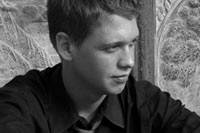
Michael Slattery, tenor
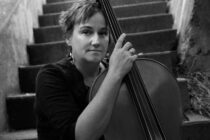
Amanda Keesmaat, cello
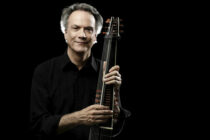
Sylvain Bergeron, lute
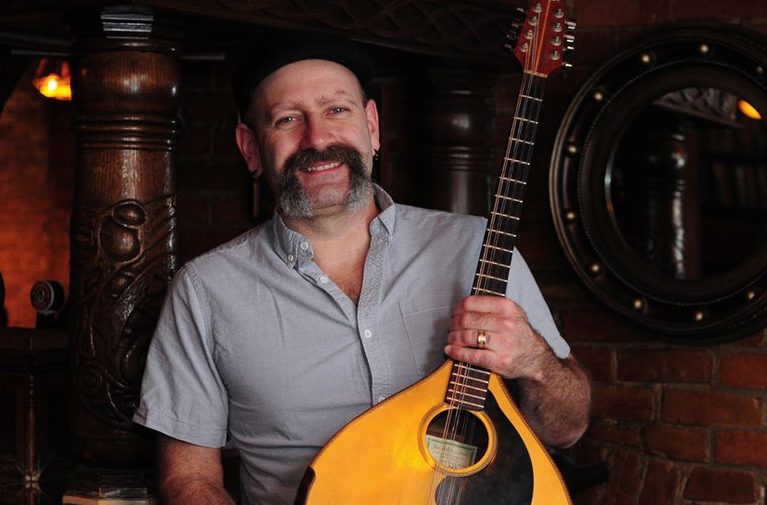
Sean Dagher, cittern
Dowland in Dublin, flute
Alex Kehler, violin

La Nef, production