
Online
“… the evening provided what felt like a secret portal into a vibrantly multicultural distant time,” Janet Smith, Stir Vancouver
This concert was originally recorded on December 1, 2022.
Artists: Ensemble Cappella Mariana directed by Vojtěch Semerád, Constantinople directed by Kiya Tabassian, and narrator Bill Richardson
The life journey of the Czech nobleman, traveller, humanist, soldier, writer and composer Kryštof Harant from Polžice and Bezdružice ended prematurely on the Old Town Square in Prague on June 21, 1621, when he was executed for participating in the Protestant Bohemian Revolt. The goal of this project of Ensemble Cappella Mariana is to present his surviving compositions and introduce listeners to his literary legacy – his record of a unique trip to the Middle East which he chronicled in his book Journey from Bohemia to the Holy Land, by way of Venice and the Sea published in 1608. During the 16th and 17th centuries the vibrancy of music – and art in general – founded on Eastern traditions from Persia to the Eastern Mediterranean, contributed to the creation of multicultural societies. Dialogue and mutual enrichment between artists of different cultures were commonplace. We find evidence of these musical and cultural exchanges in period works that appear in musical manuscripts of 17th century Ottoman, Persian and post-Byzantine origin. In this concert, these compositions will be combined with other masterpieces surviving for centuries through the oral tradition and handed down from one generation to the next; together they provide a comprehensive picture of the atmosphere and local colour of the places Harant himself visited and the music he heard on his travels.
Harant’s colourful work, narrated by Bill Richardson, will guide you on a musical journey to the exotic lands of Cyprus, Jerusalem, Sinai, and Cairo. “The Journey is like a beacon which will act as a guide for both ensembles – a geographical, historical, cultural and inner voyage of discovery to distant horizons,” says Vojtech Semerad, director of Cappella Mariana.
Pre-Concert Talk at 7 p.m.: Sylvia L’Ecuyer in conversation with Vojtech Semerad (Director, Cappella Mariana) and Kiya Tabassian (Director, Constantinople).
This concert is generously supported by Marianne Gibson and Delma Hemming.
This concert is also made possible through the support of the Ministry of Culture of Czech Republic, The Canada Council for the Arts and the Conseil des arts et des lettres du Quebec.
PROGRAMME
Kiya Tabassian, Nour (Light), Anonyme (16th Cent.) Tasbih-i Misri (Egypsian Prayer)
Kryštof Harant (1564-1621) – Missa quinis vocibus Credo
Anonym (16th Cent.) – Naqsh Dar Bazm-e Del, poem by Hafez (1315-1390), MSS s 314
Kryštof Harant – Missa quinis vocibus Kyrie
Kiya Tabassian (1976) – Namaz-e Sham-e Ghariban – poem by Hafez (1315-1390)
Kryštof Harant – Missa quinis vocibus Gloria
Shishtari Murad (?-1688 ) Chashm-e Mast, Huseyni Agir Semai
Kryštof Harant – Missa quinis vocibus Sanctus
Kâsebâz-i Misri (16th Cent.) Pishref-i Misri & Sama‘i, MSS s.318-319
Kryštof Harant (arr. Jaroslav Pelikán) Psallite Domino in cythara
Seyyid Seyfullah (16th Cent.) Bu Ashk Bir Bahri Ummandir, Nihavend ilahi, MSS s.318
Kryštof Harant – Maria Kron
Kryštof Harant – Missa quinis vocibus Agnus Dei
Paschal de l’Estocart (c.1538-after1587) / Ali Ufki (1610-1675) – Psalm 4 / Mezmur 2 & 4
Kryštof Harant – Qui confidunt
Kiya Tabassian – Raghs
Kryštof Harant (arr. Jaroslav Pelikán) Dies est laetitiae
Gazi Giray Han (1554-1607) – Mahour Pishrow, Cantemir Collection
Anonyme: Otce Buoha nebeského
Note: In lieu of programme notes the concert will be narrarated by Bill Richardson.
TEXTS & TRANSLATIONS
Click here to read the texts and translations.
WATCH THE TRAILERS
Cappella Mariana
Cappella Mariana is a vocal ensemble specializing in medieval and Renaissance polyphony and the vocal repertoire of Early Baroque.
The performances of Capella Mariana have met with enthusiastic reception from the public and critics alike, the latter highlighting the ensemble’s expressive performance based on close attention paid to the text.
Cappella Mariana was founded in 2008 as one of the few local ensembles focussing on the interpretation of high vocal polyphony, especially from Italian, Flemish, and English Renaissance.
The ensemble is an artistic guarantor of the concert cycle Lenten Fridays which aims to revive the historical tradition of musical performances held at the Monastery of the Knights of the Cross with the Red Star.
Vojtěch Semerád, dir.
Vojtěch Semerád is a graduate of the Prague Conservatory, Charles Uiversity in Prague (Choir Conducting) and Conservatoire national supérieur de musique et de danse in Paris (baroque violin with François Fernandez). He is a finalist of the prestigious Telemann-Wettbewerb competition in Magdeburg.
He is a member of Collegium Marianum ensemble which focuses on the performance of 17th- and 18th-century music and which, as one of the few thus specialized ensembles in the Czech Republic, specializes not only in concert productions but also in staged performances of scenic works.
As a soloist and chamber musician he has appeared at prestigious venues and festivals around Europe, including Théâtre des Champs-Élysées, Palau de la Música Barcelona, Concertgebouw Rotterdam, Tage Alter Musik Regensburg, Bachfest Leipzig, and Prague Spring. He regularly collaborates with ensembles such as Le Poème Harmonique, Les Folies Françoises, and Les Agrémens and has realized recordings for Deutsche Gramophon, Naïve, and Supraphon, among others.
As a singer he is regularly invited to perform with ensembles such as Huelgas Ensemble or Vox Luminis. He actively researches the 15th- and 16th- century music of the Central-European provenience.
Vojtěch Semerád is the artistic director of the Cappella Mariana vocal ensemble, one of the few such ensembles specializing in the interpretation of Renaissance polyphony, and Early-Baroque vocal works.
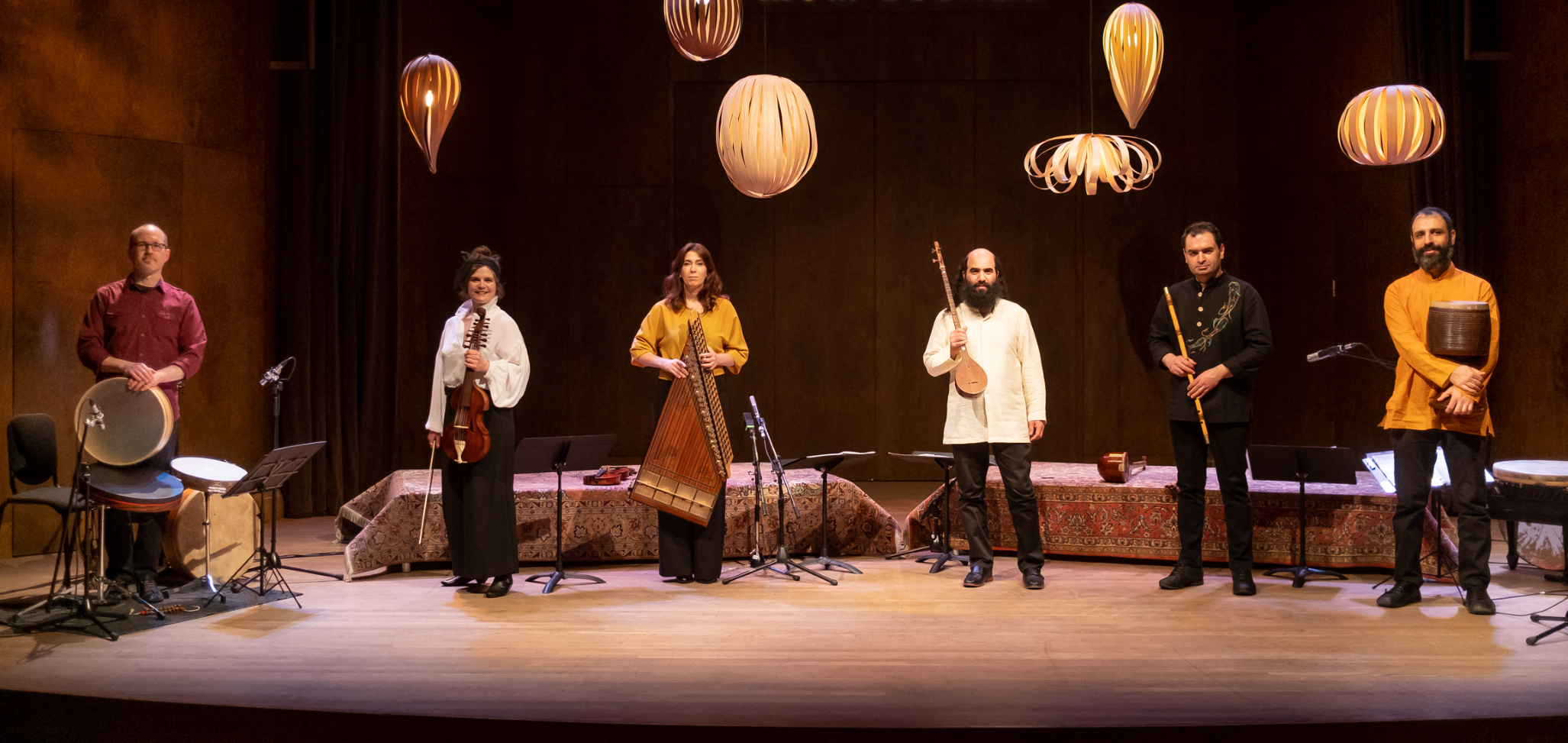
Ensemble Constantinople
Founded in 1998 by its artistic director Kiya Tabassian, Constantinople is a musical ensemble inspired by the ancient city straddling the East and West. Since its founding, the ensemble promotes the creation of new works incorporating musical elements of diverse musical traditions around the world; drawing from medieval manuscripts to a contemporary aesthetic, passing from Mediterranean Europe to Eastern traditions and New World Baroque. Underpinned by a spirit of research and creation, Constantinople has joined forces with leading international artists such as: Marco Beasley, Suzie LeBlanc, the Mandinka griot Ablaye Cissoko, the Greek ensemble En Chordais, the Belgian duo Belem, The Klezmatics, sarangi virtuoso Dhruba Ghosh, and Iranian kamancheh master Kayhan Kalhor. They are regularly invited to perform in international festivals and prestigious concert halls including: the Salle Pleyel (Paris), the Berliner Philharmonie, the Fes Festival of World Sacred Music (Morocco), the Rencontres musicales de Conques (France), the Aga Khan Museum (Toronto), the Cervantino Festival (Mexico) and the Festival de Carthage (Tunisia). Constantinople has 19 albums to its credit. Over the past fifteen years, Constantinople has created nearly 50 works and travelled to more than 240 cities in 54 countries.
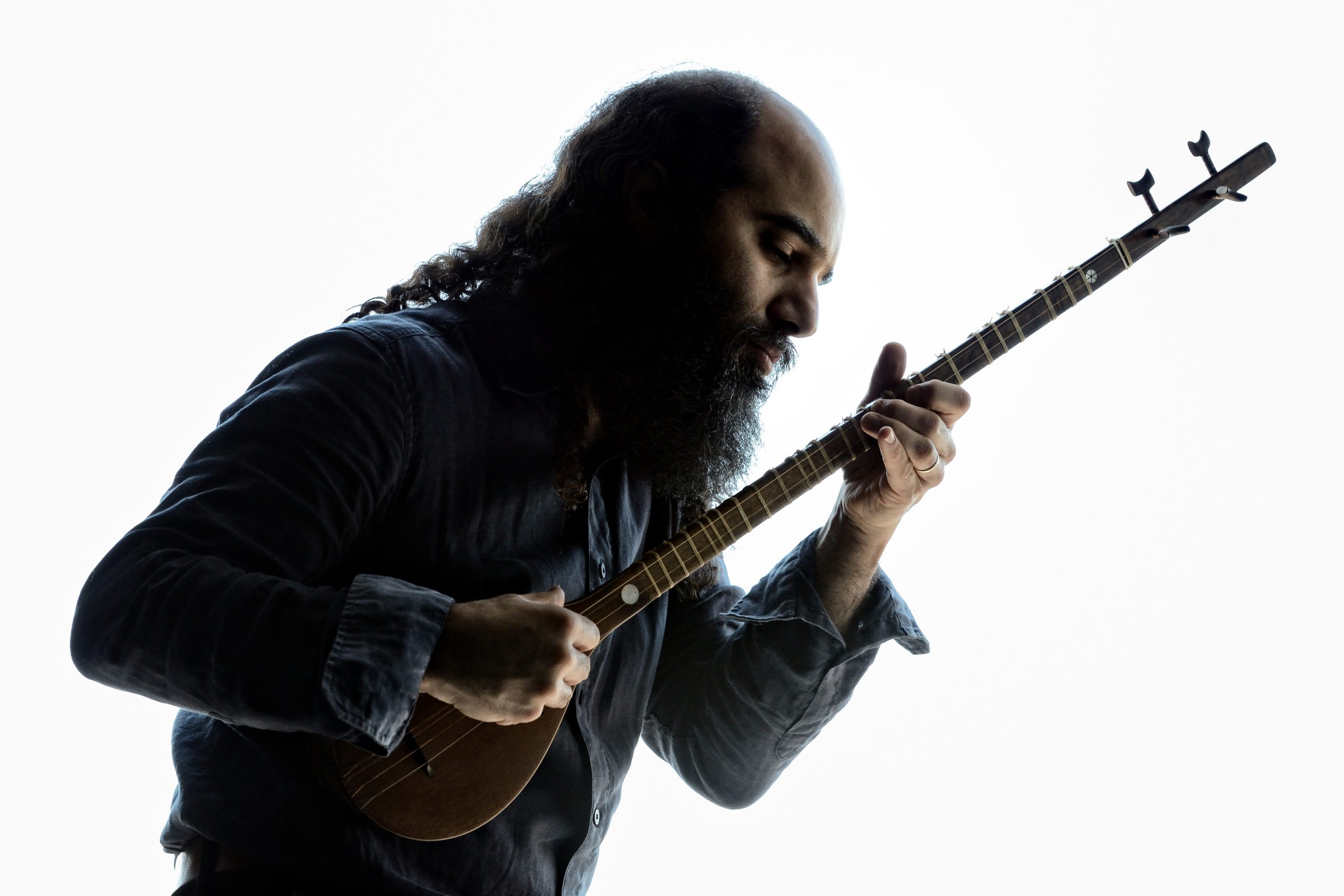
Kiya Tabassian, dir.
In 1990, at age 14, Kiya Tabassian emigrated with his family to Quebec from his native Iran, bringing with him some initial musical training in Persian music. Determined to become a musician and composer, he continued his education in Persian music, studying with Reza Gassemi and Kayhan Kalhor. At the same time, he studied composition at the Conservatoire de musique de Montréal with Gilles Tremblay. In 1998, he co-founded Constantinople with the idea of developing an ensemble for musical creation that draws from the heritage of the Middle Ages and the Renaissance, of Europe, and of the Mediterranean and the Middle East. Serving as its artistic director, Kiya has developed close to 40 programs with Constantinople. Numerous musical groups and institutions have called upon his talents as a composer, including the Orchestre symphonique de Montréal, the Nouvel Ensemble Moderne and the European Broadcasting Union. He has also composed music for documentary and feature films, including Jabaroot and Voices of the Unheard. Since the summer of 2017, he has held the post of Associate Artist at Rencontres musicales de Conques festival in France. In 2017 he co-founded the Centre des musiciens du monde in Montreal. Kiya also sits on the Board of Conseil des arts et des lettres du Québec.
Bill Richardson, narrator
Author, humorist, and former radio host Bill Richardson was born in Winnipeg, Manitoba. After earning a Master of Library Sciences from the University of British Columbia in 1980, he worked as a children's librarian before becoming a researcher for The Vicki Gabereau Show on CBC Radio in 1988. By 1992, Richardson was a regular contributor and occasional guest host on the show and his name and voice had become familiar to listeners across Canada. In 1997, he became host of As You Like It — a CBC Radio request show for classical music listeners. He developed a loyal following as host of the CBC television show Booked on Saturday Night, a series featuring interviews with writers.
As an author, Richardson had his first mainstream success when Bachelor Brothers' Bed & Breakfast was published in 1993. The novel won the Stephen Leacock Memorial Medal for Humour in 1994 and led to two more books about the brothers and their establishment. His book After Hamelin, a novel for children, won the Silver Birch Award.Bill’s columns have appeared in The Globe and Mail, Western Living Magazine, The Vancouver Sun, Georgia Straight, and Xtra West Magazine. Most recently, he has collaborated with composer and singer Veda Hille in the creation of Do You Want What I Have Got? — A Craigslist Cantata, which was staged at the Factory Theatre in Toronto. His most recent books for children are Last Week, illustrated by Emilie Leduc, and Lola Flies Alone, illustrated by Bill Pechet.
Bill makes frequent public appearances reading poetry, narrating musical works and giving keynote speeches. He lives in Vancouver.
Media