Chan Centre for the Performing Arts
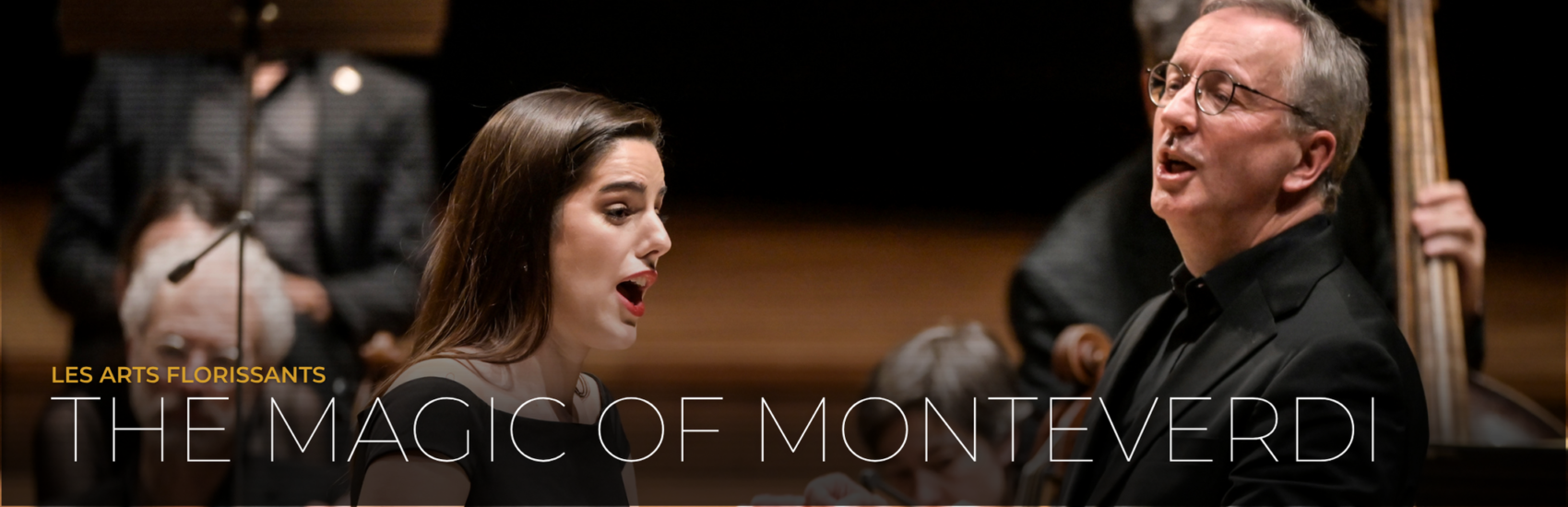
The Magic of Monteverdi with Les Arts Florissants
Artists: Les Arts Florissants (France) directed by William Christie and Paul Agnew; with Ana Viera Leite, Soprano; Rebecca Leggett, Mezzo soprano; Melodie Ruvio, Alto; Paul Agnew, Tenor; Bastien Rimondi, Tenor; Edward Grint, Baritone
Pre-concert Chat: TBA
Runtime: approximately 80 minutes, plus interval
An unparalleled insight into the transformative power of Monteverdi’s music.
Join Baroque masters William Christie and Paul Agnew for a revelatory program of Monteverdi’s finest madrigals for mixed voices, including a performance of the iconic Il Combattimento (The Combat of Tancred and Clorinda). William Christie will lead the continuo from the harpsichord, and Paul Agnew will lead and sing in the vocal ensemble, joined by singers who are rising stars from the next generation.
“For decades Les Arts Florissants have been fulfilling the task of any truly important cultural institution: opening up new worlds of beauty and excitement, both emotional and intellectual.”
— New York Times
“Astonishingly beautiful…wonderful sensuousness of tone and rhythmic precision.”
— The Guardian
Generously sponsored by Birgit Westergaard & Norman Gladstone
PROGRAMME:
Claudio Monteverdi (1567 – 1643)
Volgendo il ciel (From Madrigals, Book 8)
Baci soavi e cari (Book 1)
Ecco mormorar l’onde (Book 2)
Chiome d’oro (Book 7)
Lamento della Ninfa (Book 8)
Sfogava con le stelle (Book 4)
Si ch’io vorrei morire (Book 4)
A quest’olmo (Book 8)
Interval
Il Combattimento (Book 8)
Romanesca (Book 7)
Zefiro Torno (Book 6)
Ballo ‘Tirsi e Cloro (Book 7)
Paul Agnew, Musical Co-Director
An artist of international renown and an accomplished teacher, British tenor and conductor Paul Agnew has made his mark on all the main international stages as a specialist in the music of the 17th and 18th centuries and as the performer of choice for the high-tenor roles of the French Baroque. After studying at Magdalen College, Oxford, he met William Christie in 1992 and subsequently became a close collaborator of the conductor and his ensemble Les Arts Florissants, while continuing to perform with such other conductors as Marc Minkowski, Ton Koopman, Paul McCreesh, Jean-Claude Malgoire, Sir John Eliot Gardiner, Philippe Herreweghe and Emmanuelle Haïm.
In 2007, his career took a new turn when he began conducting certain projects for Les Arts Florissants. From 2011 to 2015, he undertook a complete cycle of Monteverdi’s madrigals, a project for which he directed nearly 100 concerts throughout Europe and made three recordings for harmonia mundi the first of which won the Gramophone Award in 2016. He has conducted Les Arts Florissants in such productions as the ballet Doux Mensonges (Opéra de Paris), a new production of Rameau’s Platée (Theater an der Wien, Paris’s Opéra Comique and New York’s Lincoln Center), and created a new production of L’Orfeo as part of the celebration of Claudio Monteverdi’s 450th anniversary – not to mention many concert programs. He is artistic director of the Festival de Printemps – Les Arts Florissants which takes place in churches throughout the region of the Vendée, since its creation in 2017, and is co-director of Le Jardin des Voix, Les Arts Florissants’ academy for young singers. This interest in the training of new generations of musicians has led him to conduct the Orchestre Français des Jeunes Baroque, the European Union Baroque Orchestra and, in 2017, the European Baroque Academy in Ambronay. Dedicated to musical education for all, he has devised educational concerts such as Le Voyage de Monsieur Monteverdi and La Lyre d’Orphée. As a guest conductor, Paul Agnew regularly conducts orchestras such as the Staatsphilharmonie Nürnberg, the Staatskapelle, Dresden, the Liverpool Philharmonic Orchestra, the Royal Scottish National Orchestra, the Norwegian Chamber Orchestra, the Finnish Radio Symphony Orchestra, the Seattle Symphony Orchestra, the Houston Symphony Orchestra, the Maggio Musicale Fiorentino and the Akademie für Alte Musik Berlin.
Recent projects with Les Arts Florissants include a concert cycle dedicated to Carlo Gesualdo and recorded by harmonia mundi (Gramophone Award, Diapason d’Or, CHOC de Classica), Bach’s St. John Passion, the concert series “Bach, A Life in Music” at the Philharmonie de Paris and the Festival d’Ambronay, Handel’s Messiah, Gluck’s Orphée et Euridice (recorded by harmonia mundi) and the new production Gesualdo Passione created with choreographer Amala Dianor. He also conducted Purcell’s The Fairy Queen staged by choreographer Mourad Merzouki, with the laureates of the Jardin des Voix, Les Arts Florissants’ international academy for young singers, on stages such as the Lincoln Center in New York, the Philharmonie de Paris and the Royal Albert Hall as part of the BBC Proms. Let us also mention new productions of Platée at the Semperoper Dresden, Göteborg Opera and Garsington Opera.
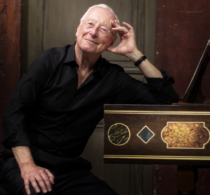
William Christie, Musical Co-Director, Founder
William Christie, harpsichordist, conductor, musicologist, and teacher, is the inspiration behind one of the most exciting musical adventures of the last 40 years. A pioneer in the rediscovery of Baroque music, he has introduced the repertoire of 17th- and 18th-century France to a very wide audience across the globe. Born in Buffalo, and educated at Harvard and Yale, William Christie has lived in France since 1971. The turning point in his career came in 1979, when he founded Les Arts Florissants. As director of this vocal and instrumental ensemble, William Christie soon made his mark as both a musician and man of the theatre, in the concert hall and the opera house. Major public recognition came in 1987 with the production of Lully’s Atys at the Opéra Comique in Paris.
From Charpentier to Rameau, through Couperin, Mondonville, William Christie is the uncontested master of tragédie-lyrique as well as opéra-ballet, and is just as comfortable with the French motet as with music of the court. But his affection for French music does not preclude him from exploring other European repertoires as Monteverdi, Rossi, Scarlatti, Landi, Purcell, Handel, Mozart, Haydn or Bach.
Notable among his most recent operatic work are Purcell’s Dido and Aeneas at the Teatros del Canal in Madrid, Opéra Royal de Versailles and Gran Teatre del Liceu in Barcelona, Purcell’s The Fairy Queen on an international tour (La Scala in Milan, Luzern, Tanglewood Festival…), Charpentier’s Médée at the Opéra de Paris and Teatro Real in Madrid and Les Fêtes d’Hébé at Paris Opéra Comique.
As a guest conductor, William Christie often appears alongside the Berliner Philharmoniker or the Orchestra of the Age of Enlightenment at opera festivals such as Glyndebourne or opera houses such as the Metropolitan Opera of New York, the Zurich Opernhaus, or the Opéra National de Lyon.
His extensive discography includes more than 100 recordings. The most recent ones – « Conversations – Gaspard Le Roux : Suites pour deux clavecins », « Haydn – Paris Symphonies & Violin Concerto n°1 », « Nei giardini d’amore – Baroque arias for 2 alti » – were issued by harmonia mundi in the “Les Arts Florissants” collection.
Wishing to develop further his work as a teacher, in 2002 William Christie created Le Jardin des Voix, Les Arts Florissant’s biennial baroque Academy for young singers, now established at Thiré in Vendée. Since 2007 he has been artist in residence at the Juilliard School in New York, where he gives master classes twice a year. In 2021, he launches with Les Arts Florissants the first “Arts Flo Masterclasses” for young professional musicians at the Quartier des Artistes in Thiré (Vendée, Pays de la Loire – France).
In 2012, he created the Festival Dans les Jardins de William Christie in his own gardens, located in the French village of Thiré in the Vendée, where he welcomes every summer young musicians from the Juilliard School and singers of the Jardin des Voix along with the musicians and singers of Les Arts Florissants.
William Christie has bequeathed his real-estate assets to the Foundation Les Arts Florissants –William Christie created in 2018.
In November 2008, William Christie was elected to France’s Académie des Beaux-Arts, and gave his official inaugural speech under the dome of the Institut de France in January 2010. In 2022 he was the recipient of the PdSK (German Record Critics’ Award) Honorary Award.
During the 2024-2025 season, an anniversary tour and a series of exceptional events marked the celebration of William Christie’s 80th birthday.
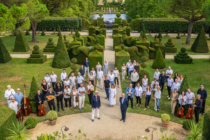
Les Arts Florissants
An ensemble of singers and instrumentalists specializing in the performance on period instruments, Les Arts Florissants has played a pioneering role in the revival of Baroque repertoire. Founded in 1979 by William Christie, it gives around one hundred concerts and opera performances each season, in France and internationally, and has produced an extensive discography – especially in its own collection with the “harmonia mundi” record label.
Since 2020, British tenor and conductor Paul Agnew has become its co-musical director. The Ensemble has been in residence at the Philharmonie de Paris since 2015. It has launched several education programs for young musicians, among which Le Jardin des Voix academy, the Arts Flo Juniors program and a collaboration with The Juilliard School. In the village of Thiré (Vendée, Pays de la Loire), Les Arts Florissants created in 2012 the Festival Dans les Jardins de William Christie, followed by a Spring Festival in 2017 and was labelled “Centre Culturel de Rencontre” in 2017 for its project of an international artistic campus. 2018 has seen the creation of the Fondation Les Arts Florissants – William Christie.
Les Arts Florissants receives financial support from the State, the Regional Direction of Cultural Affairs (DRAC), the Département de la Vendée and the Région Pays de la Loire. The Selz Foundation is their Principal Sponsor. The American Friends of Les Arts Florissants are Major Sponsors. Les Arts Florissants have been artists in residence at the Philharmonie de Paris since 2015.