• My Account
  • Cart
  • About
    • Who is Early Music Vancouver
    • What is Early Music?
    • OUR INSTRUMENT COLLECTION
    • Employment Opportunities
    • Annual General Meeting 2025
    • 2024/25 Annual Report
  • Pacific Baroque Orchestra
    • August 7 | Vivaldi’s The Four Seasons
    • October 17 | A Little Night Music with Mozart 
    • December 20 | Festive Cantatas
    • March 25, 2027 | Handel’s La Resurrezione
  • EVENTS
    • Summer Festival 2026: The Power of Music
    • EMV’s 2026-2027 Main Season
    • Digital Concert Hall
    • Free Events
    • Past Events
  • Learn
    • PROGRAMMES
    • Artist Interviews
    • Instrument Videos
  • Support Us
    • Donate Now
    • Corporate Opportunities
    • Volunteer
    • Host an EMV Musician
  • Ticketing Info
    • BOX OFFICE
    • Gift Vouchers
    • Venues
  • Press Centre
    • Media Releases
    • EMV PRESS KIT
    • EMV in the News
Early Music Vancouver
  • My Account
  • Cart
  • Donate
  • Buy Tickets
  • Gift Vouchers
  • Get our newsletter
Toggle Menu
  • About
    • Who is Early Music Vancouver
    • What is Early Music?
    • OUR INSTRUMENT COLLECTION
    • Employment Opportunities
    • Annual General Meeting 2025
    • 2024/25 Annual Report
  • Pacific Baroque Orchestra
    • August 7 | Vivaldi’s The Four Seasons
    • October 17 | A Little Night Music with Mozart 
    • December 20 | Festive Cantatas
    • March 25, 2027 | Handel’s La Resurrezione
  • EVENTS
    • Summer Festival 2026: The Power of Music
    • EMV’s 2026-2027 Main Season
    • Digital Concert Hall
    • Free Events
    • Past Events
  • Learn
    • PROGRAMMES
    • Artist Interviews
    • Instrument Videos
  • Support Us
    • Donate Now
    • Corporate Opportunities
    • Volunteer
    • Host an EMV Musician
  • Ticketing Info
    • BOX OFFICE
    • Gift Vouchers
    • Venues
  • Press Centre
    • Media Releases
    • EMV PRESS KIT
    • EMV in the News
Home  >  Early Music Vancouver Events  >  Moonlit Mozart with Les Délices 

Saturday, February 20, 2027 | 7:30 pmChrist Church Cathedral

Buy Tickets

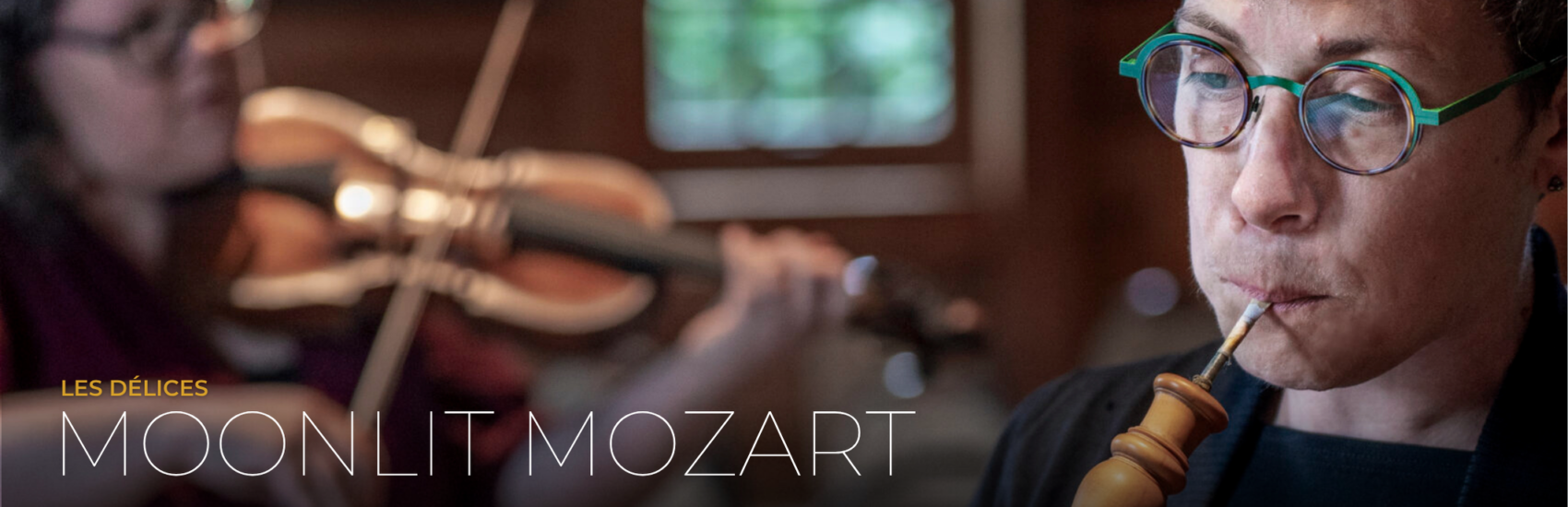
Moonlit Mozart with Les Délices 

Artists: Les Délices, directed by Debra Nagy

Pre-concert Chat: TBA

Runtime: Approximately 80 minutes of music, plus interval

Programme notes

In late-18th century Vienna, wind bands known as “Harmoniemusik” offered an effective – and colorful – means of presenting music in virtually any setting. Whether performing nocturnes or serenades, dance music, or even operatic or symphonic reductions, an ensemble of eight woodwinds could cover most – if not all – bases. Soaring melodies were often split between first oboe and first clarinet, inner parts were covered by other winds and horns, bassoons would alternate between tenor solos and bustling bass lines, and a double bass often provided reinforcement on the low end. For Moonlit Mozart, acclaimed oboist and Les Délices Artistic Director, Debra Nagy, brings together today’s finest period-instrument woodwind players for an “undeniably uplifting” all-Mozart program that includes original 18th-century arrangements of selections from The Magic Flute and Don Giovanni, plus Mozart’s transcendent Serenade in C minor (K388).

Generously sponsored by Vincent and Zelie Tan.


PROGRAMME:

Wolfgang Amadeus Mozart (1756 – 1791)

Selections from The Magic Flute

1. Overture arr. Joseph Heidenreich

3. Der Vogelfänger bin ich ja [Andante]

7. Dies Bildnis ist bezaubernd schön [Larghetto]

5. Du feines Täubchen nur herein [Allegro]

Serenade in Eb, KV375 

I. Allegro Maestoso

Selections from The Marriage of Figaro

Cinque…dieci arr. Debra Nagy

Non più andrai farfallone amoroso

Dove sono i bei momenti

Ecco la marcia

Interval

Selections from Don Giovanni

1. Ouvertura arr. Josef Triebensee

2. Notte e giorno a faticar

5. Là ci darem la mano

19. Gia la mensa è preparata

Serenade in C minor “Nachtmusik,” KV388

I. Allegro

II. Andante

III. Menuetto in canone

IV. Allegro [Tema con variazione]
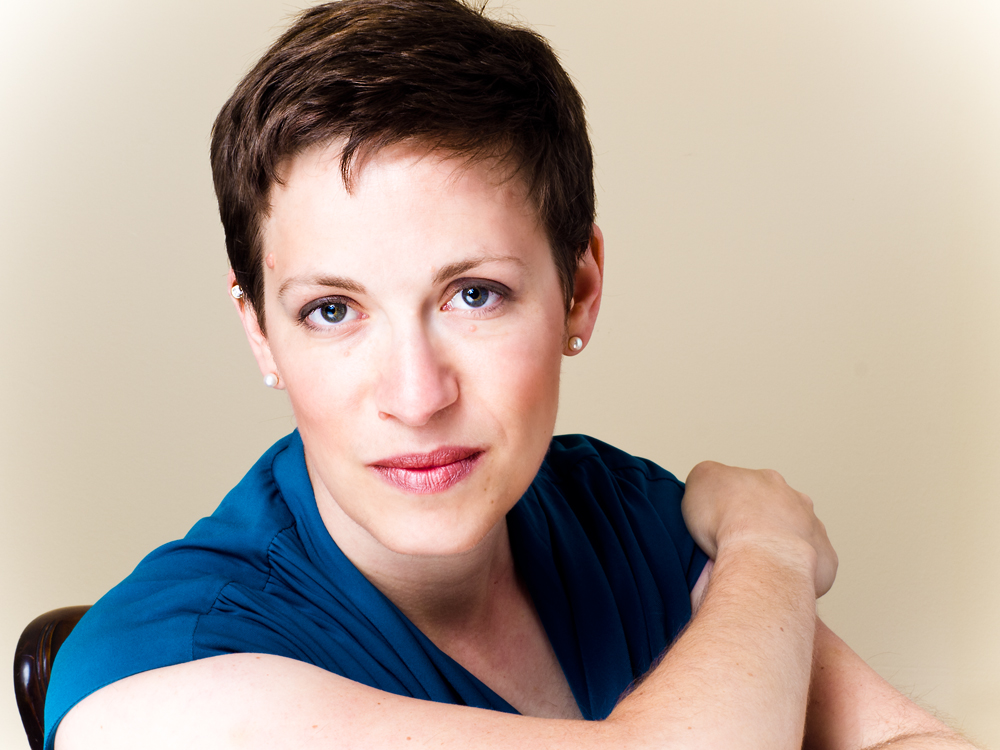
Debra Nagy, Director

Debra Nagy is one of North America’s leading performers on the baroque oboe and has been called a “musical polymath” (San Francisco Classical Voice) for her accomplished performances as a singer and historical wind player. She is the founder of acclaimed chamber ensemble Les Délices and indulges her love of late-medieval music as a regular guest with Boston’s Blue Heron and Chicago’s Newberry Consort. Inspired by a creative process that brings together research, composition in historical styles, improvisation, and artistic collaboration, highlights of Debra’s recent projects include a critically-acclaimed multimedia production of Machaut’s medieval masterpiece Remede de Fortune and a Baroque-Jazz crossover program called Songs without Words. Debra’s passion for unearthing little-known works caused The New York Times to dub Les Délices “an early music group with an avant-garde appetite,” adding “concerts and CDs by Les Délices are journeys of discovery.” She has received many awards for her creative and scholarly pursuits and her discography includes over 30 CDs with repertoire ranging from 1300-1800. Debra is also an unabashed foodie and loves commuting by bike from her home in the heart of Cleveland’s historic Ohio City neighborhood.

Kathryn Montoya, Oboe

Oboist Kathryn Montoya appears with a variety of orchestral and chamber ensembles including the Boston Early Music Festival Orchestra, Tafelmusik, Bach Collegium San Diego, Apollo’s Fire, Ars Lyrica, and H&H among others. She currently teaches historical oboes at Oberlin Conservatory and has been faculty of Longy's International Baroque Institute, the Baroque Performance Institute at Oberlin, SFEMS Baroque, and has given masterclasses in the US, Costa Rica, and China. Past projects include
the Globe’s Tony award winning productions of Twelfth Night and Richard III on Broadway, and a Grammy-winning recording with the Boston Early Music Festival. Kathryn enjoys time in Hereford, England, converting an 18th century barn into a home with her husband, James.
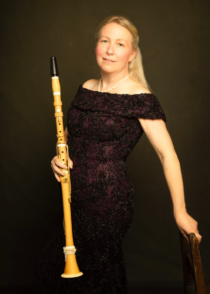
Katherine Spencer, Clarinet

Clarinettist Katherine ‘Waffy’ Spencer is the newly appointed principal clarinet of Boston’s Handel and Haydn Society, a position she also holds with The Orchestra of the Age of Enlightenment, Academy of Ancient Music, Gabrieli Consort and Players, The Irish Chamber Orchestra, and the City of London Sinfonia. Katherine has played for Queen Elizabeth II at Buckingham Palace and at a private performance for the Emperor of Japan. Katherine made her concerto debut at London’s Royal Festival Hall aged 14. She has made numerous BBC Radio 3 solo broadcasts, performs at the BBC Proms, and has presented BBC radio programmes. A believer that music is for everyone, Katherine leads the education and outreach departments of most of her orchestras. Katherine studied at Chethams School of Music (Manchester), The Royal Academy of Music (London), Hannover Hoschule für Musik, and is completing a doctorate at Stony Brook University, New York. This season Katherine will tour the Mozart Clarinet Concerto as part of OAEs 40th birthday celebrations.

Maryse Legault, Clarinet

Clarinettist Maryse Legault is a clarinettist and musicologist whose work sits at the intersection of performance practice and philosophy. A graduate of the Koninklijk Conservatorium Den Haag, where she earned her master's degree studying with Eric Hoeprich, she holds a Ph.D. in musicology from McGill University. Celebrated for her "transcendent playing" (Wall Street Journal), her research explores the impact of Idealist philosophy on solo concerto performance in the nineteenth century. She has lectured at Oxford University, the Conservatoire national supérieur in Paris, and the Hochschule der Künste Bern. Legault performs regularly with ensembles such as The Handel & Haydn Society, Teatro Nuovo, Arion Orchestre Baroque, and Tafelmusik Baroque Orchestra, and has collaborated with European orchestras including MusicAeterna and Les Siècles. In 2023, she was named an Emerging Artist by Early Music America. Her debut solo album, Around Baermann (Leaf Music, 2023), received critical acclaim.
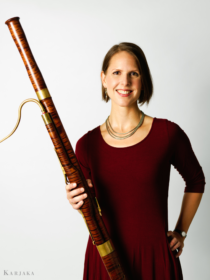
Stephanie Corwin, Bassoon

Bassoonist Stephanie Corwin enjoys playing music of the past five centuries on modern and historical bassoons. Praised for her “warmth and composure” (Wichita Eagle), Stephanie has performed throughout the US and abroad, appearing as a soloist at Lincoln Center and Carnegie Hall and performing with renowned ensembles, including Tafelmusik, Piffaro, Apollo’s Fire, and the Handel and Haydn Society. The inaugural winner of the Meg Quigley Vivaldi Competition, Stephanie has received prizes at the Fischoff, Coleman, and Yellow Springs chamber music competitions. After graduating from Davidson College, Stephanie earned her MM from Yale and DMA from Stony Brook, studying with Frank Morelli at both institutions. Intrigued by performance practice, she completed a Performer Diploma at Indiana University with Michael McCraw. Stephanie has served on faculty at the University of Virginia, the Chamber Music Conference, Amherst Early Music Festival, and the Tafelmusik Baroque Summer Institute. She lives in New York City.
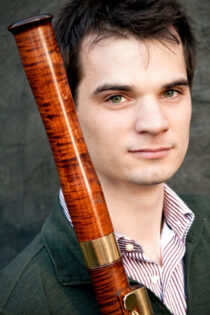
Nathan Helgeson, Bassoon
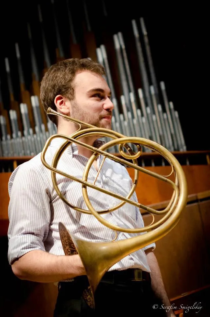
Nate Helgeson is one of the West Coast’s leading specialists in historical bassoons. He appears frequently as soloist with period instrument orchestras such as Portland Baroque Orchestra, Seattle Baroque Orchestra, American Bach Soloists, and Mercury Chamber Orchestra. Nate can be heard on recordings by Apollo’s Fire, Tafelmusik Baroque Orchestra, Pacific MusicWorks, and the Trinity Baroque Orchestra. Beginning in 2018,he has performed works of Rossini and Bellini on period instruments as part of Teatro Nuovo, a festival in New York exploring 19th century bel canto sounds and performance practices on the opera stage. He is on faculty at the Bozeman Baroque Performance Workshop, and was professor of bassoon at the University of Oregon during the 2019/20 school year. Nate studied modern bassoon with Steve Vacchi and Richard Svoboda before taking up the baroque bassoon, continuing his studies with Dominic Teresi at the Juilliard School.

Nathanael Udell, Horn

Nathanael Udell is a graduate of Indiana University’s Jacobs School of Music, earning his Doctor of Music under the tutelage of the former principal horn of the Chicago Symphony, Dale Clevenger. A graduate of both Rice University and The Juilliard School, he studied with William
VerMeulen and David Wakefield. Aside from modern horn, Nathanael also studied natural horn with R.J. Kelley, Richard Seraphinoff, and Anneke Scott, and has performed with The Boston Early Music Festival, Bach Collegium San Diego, Handel and Haydn Society, Trinity Wall Street, Musica Angelica, Mercury Baroque, Ars Lyrica Houston, and Jubilate Baroque. Currently, he is principal horn of WilliamCrutchfield’s opera company, Teatro Nuovo, and has also worked with the American Ballet Theatre, Sarasota Orchestra, the Staunton Music Festival, and was on Broadway for Gershwin’s Porgy and Bess, Lincoln Center Theatre’s Camelot, and the 2024 revival of The Who’s Tommy.
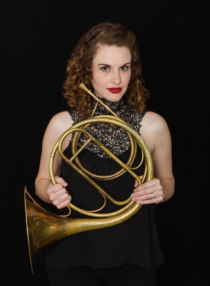
Sadie Glass, Horn

Sadie Glass leads a career as a performer and educator. She performs with period-instrument ensembles across North America, including Philharmonia Baroque Orchestra, Portland Baroque, American Bach Soloists, Musica Angelica Baroque Orchestra, and Seattle Baroque. Sadie is on faculty at the Conservatory of Music at the University of the Pacific in Stockton, CA where she serves as Brass-Percussion Program Director. She has also held teaching positions at Pacific Union College, Chabot College, and El Sistema music programs. During the summer, she is on faculty at the Kendall Betts Horn Camp as the natural horn specialist. Outside of music, Sadie enjoys spending time with her family, is a DIY enthusiast, and loves to travel.
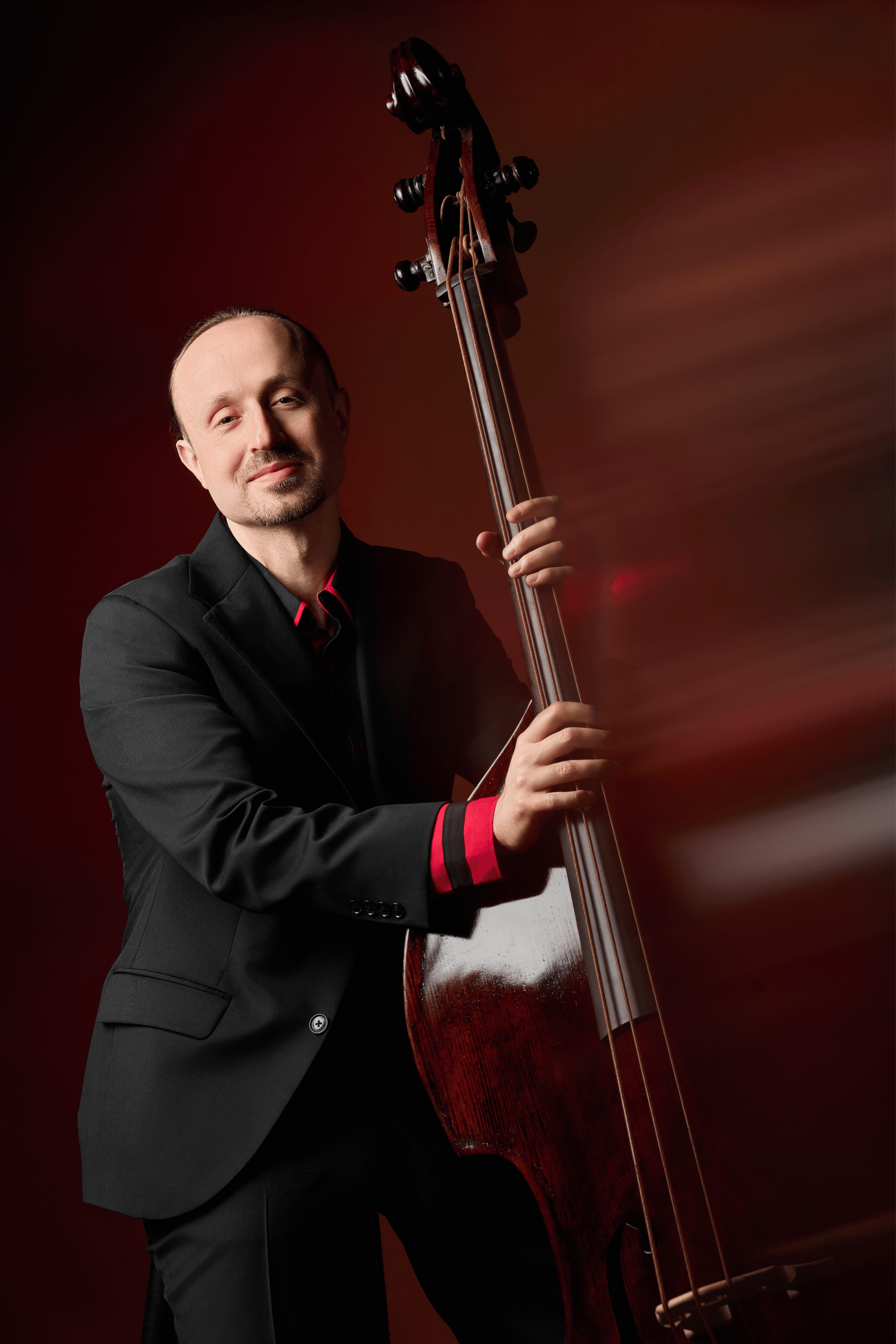
Nathaniel Chase, Double Bass

Double bassist Nathaniel Chase performs a wide range of music, from early music performances with the Sebastians, Boston Early Music Festival, and Tafelmusik, to orchestral repertoire as a member of the Orchestra of St. Luke's, and new music with NOVUS NY. He performed on Broadway in the critically acclaimed production of Farinelli and the King with countertenor Iestyn Davies. He is a graduate of the New England Conservatory and the Yale School of Music, where he was a winner of the 2010 Woolsey Hall Concerto Competition.

Media

1254 W 7TH AVE
VANCOUVER, BC, V6H 1B6

(604) 732-1610
staff@earlymusic.bc.ca

  • About EMV
    • What is Early Music?
    • Staff
    • Partners
    • Board of Directors
    • Venues
  • Education & Community
    • BC Scholarship Programme – 2026/2027
    • OUR INSTRUMENT COLLECTION
  • Press Centre
  • Join Our Mailing List
Facebook URLTwitter URLYoutube URLInstagram URL

Copyright © 2026 EARLY MUSIC VANCOUVER | EMV | PHOTOS BY JESS MACALEESE, MARK MUSHET AND JAN GATES.
CONTACT EMV FOR INDIVIDUAL CREDITS. | site by DFS Digital Fusion Studios web designAND MEDIUM RARE Medium Rare Interactive

Een Romantische Johannes Passion

Historical Performance has been steadily looking toward the nineteenth-century as a source of inspiration, and Orchestra Lagrandt wants to lead the charge into Romantic orchestral performance practice. As an orchestra of ambitious musicians in their twenties from 25 different nations, we aspire to represent the voice of the new generation in Historical Performance.

Een Romantische Johannes Passion is an ongoing project to reimagine the Johannes Passion of J. S. Bach in a late nineteenth century style. The first Passion revivals in the Netherlands took place in Rotterdam in 1870, featuring large symphonic orchestrations, and a radically different musical language than that of the HP and modern classical worlds. In our initial performance with the Tangram Chamber Choir, we pushed the boundaries of what Romantic Bach might have sounded like: exploring changes in orchestration, stoic tempi, rubato, phrasing, nineteenth- century bowing practices, and even portamento. We plan to establish this project as an annual tradition every Easter season, reworking the arrangement each time in the spirit of Romantic spontaneity.


One of the wonderful things about the Historical Performance movement is that we are able to use forgotten practices, this time hailing from the nineteenth century, to present such a beloved and well known-work in a new light.

The world is familiar with stories of clever forgers whose life’s mission is to cunningly reproduce the light and shadows of historical masterworks, from Vermeer’s brushstrokes to Da Vinci’s proportional precision… but what if these crimes of craftsmanship were to extend beyond the visual arts? What if the pieces we know to be by Palestrina, Monteverdi or even Johann Sebastian Bach were in fact stylistic copies, artfully composed by a secret circle of music forgers and passed off as the work of the greats? What if those music forgers are at work as we speak? 

This premise inspires our original program The Music Forgery Workshop. Our early music comedy imagines the lives of such a circle of musical criminals, offering a fresh and lively presentation of historical compositions, not as museum artifacts but as living works in progress. The workshop itself is set up on the stage and its members carry forth the plot in music and words. A narrator in the role of a suspicious inspector lends the performance a theatrical flow. The listener is invited into a satire on high society’s art commerce, while the performers make fun of themselves for having devoted their lives to the niche subject of historical music performance. 

Violinist Elizabeth Sommers combines her skills and experience in traditional music with expertise in the performance and improvisation of medieval and Renaissance repertoires. Multi-instrumentalist Eliot X. Dios (keyboards, bagpipes and flutes) works wholeheartedly to employ storytelling techniques developed through the history of literature and cinema in his early music concerts. Composer Gunnar Haraldsson (violin, guitar) seeks to translate the forms and intentions of early composition for a modern audience. Halldór B. Arnarson (keyboards, voice) has devoted his career to bringing musical craftsmanship from the era of counterpoint to the attention of the public and comedy to the early music scene. Singer and storyteller Ásta S. Arnardóttir brings the storyline to the public with personal immediacy, and through her character work defines the different veins of the show, sometimes hilarious and sometimes serious. 

The story is narrated by the character of the Inspector, acted out by the members of the MFW, and told in rhyming Icelandic verse in one musical pillar of the show, a madrigal composed by our very own 

Halldór in the style of Monteverdi. The show has an entertaining educational dimension. The audience is exposed to a broad sweep of historical and musical information in a condensed form, necessary to understand the musical humour, while dramatic rhythm and scenographic effects prevent overwhelm. We also place particular emphasis on theatrical illusion and synchronisation. One example appears in the opening scene, in which the inspector is seen watching television. On stage, this becomes a complex exercise in coordination: each time the inspector presses a button on the remote control, the musicians instantly switch pieces, creating the impression of rapidly changing television channels. 

This opening scene establishes the tone of the entire show, comical and satirical in its storytelling and diverse in its musical language. It not only introduces the wide range of musical styles that appear throughout the performance, but also functions as the plot’s inciting incident, as the inspector hears a news report about the discovery of a previously unknown concerto by Vivaldi. 

Another important scene takes place when one forger is alone on stage in low light, perusing books on medieval music, while the musicians perform and sing offstage, sounding his audiation as he reads. This intimate moment evokes the sleepless nights spent studying facsimiles and learning historical compositional techniques, by which the forger acquires the inspiration and the expertise necessary to his art, and reveals a hidden side of musical performance: the immense amount of study and preparation that precedes the moment on stage. This setting also creates space for visual and musical comedy, as seen in the trailer video, where a 14th-century melody is played backwards because Halldór is unknowingly reading the facsimile upside-down, only realising the mistake when the music begins to sound absurd. 

Fun and friendship are at the heart of the whole project, though the link between music and crime is an important historical consideration. Classical music was often used as the demonstration of a monarch’s power, music teaching as a cover up for secret affairs, and pieces were published under another’s name for profit. Such examples of “inappropriate practices” carry an exciting and attractive element for the audience which the MFW seeks to exploit. Under this light-hearted surface lies a more serious layer of questions concerning our present-day existence, such as excessive materialism in high society and the threat posed on human craftsmanship and skill by the rise of artificial intelligence. 

Please Note:

The main applicant and creative/intellectual driver of the project must be 30 or under (on May 15th).

The average age of all musicians must not be older than 32, and the maximum age of supporting musicians must be no more than 35 (on May 15th.)