Chan Centre for the Performing Arts
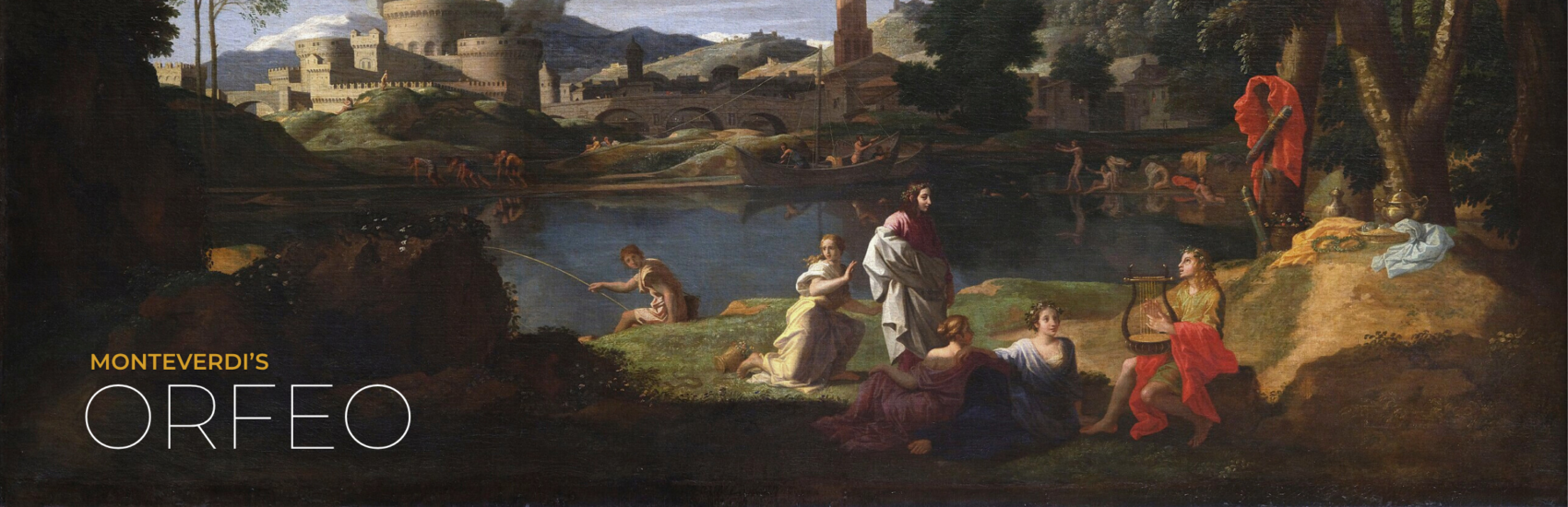
Monteverdi’s Orfeo
A Fully Staged Opera – Matinee Performance Added!
Artists: Marc Mauillon, Orfeo; Guillaume Bernardi, stage director; Alexander Weimann, music director; with Pacific Baroque Orchestra
Pre-Performance Chat: July 31 – 7:00pm hosted by Silvia L’Ecuyer with Orfeo director Guillaume Bernardi. August 2 – 2pm hosted by Sarah Pelzer with director Guillaume Bernardi. Both talks will be held at RBC.
Run Time: Approximately 110 Minutes + 20 Minute Intermission
Sung in Italian with English Projected Titles
Description
EMV is thrilled to launch our 2026 Summer Festival with Claudio Monteverdi’s opera Orfeo in a bold and ambitious fully staged production. When Orfeo’s beloved wife Euridice dies suddenly on the night of their wedding, he decides to journey deep into the underworld to bring her back, equipped only with the power of his music.
While some operas were composed and performed before the 1607 premiere of Orfeo, Monteverdi was the first to reveal the genre’s true dramatic and musical potential. It remains one of the most powerful and influential works in the operatic canon.
This production is directed by baroque performance expert Guillaume Bernardi and conducted by Pacific Baroque Orchestra Director Alexander Weimann. With a dozen singers on stage, an orchestra full of rarely heard 17th century instruments in the pit, and the incredible beauty of titular star Marc Mauillon’s singing, Orfeo promises to be a special event for lovers of early music, opera, and the eternal power of storytelling.
July 31, 2026 at 7:30pm | Chan Centre for the Performing Arts.
Visit the Chan Centre’s Virtual Tour to see the view from your seats
Please note that this performance is not eligible for subscription discounts, Youth tickets or Student tickets. Other restrictions may apply.
This production is made possible by the generosity of the following donors: An Anonymous Donor, The Graham & Gayle Cooke Foundation, Always ON UPS Systems Canada Inc., Mike & Kathy Gallagher, Elaine Godwin, Jens & Linda Lee Henriksen, Marta and Nicolas Maftei in memory of Stephen Drance, Ian Michaud, Simon Murphy, George Pick & Santi Pelaez.
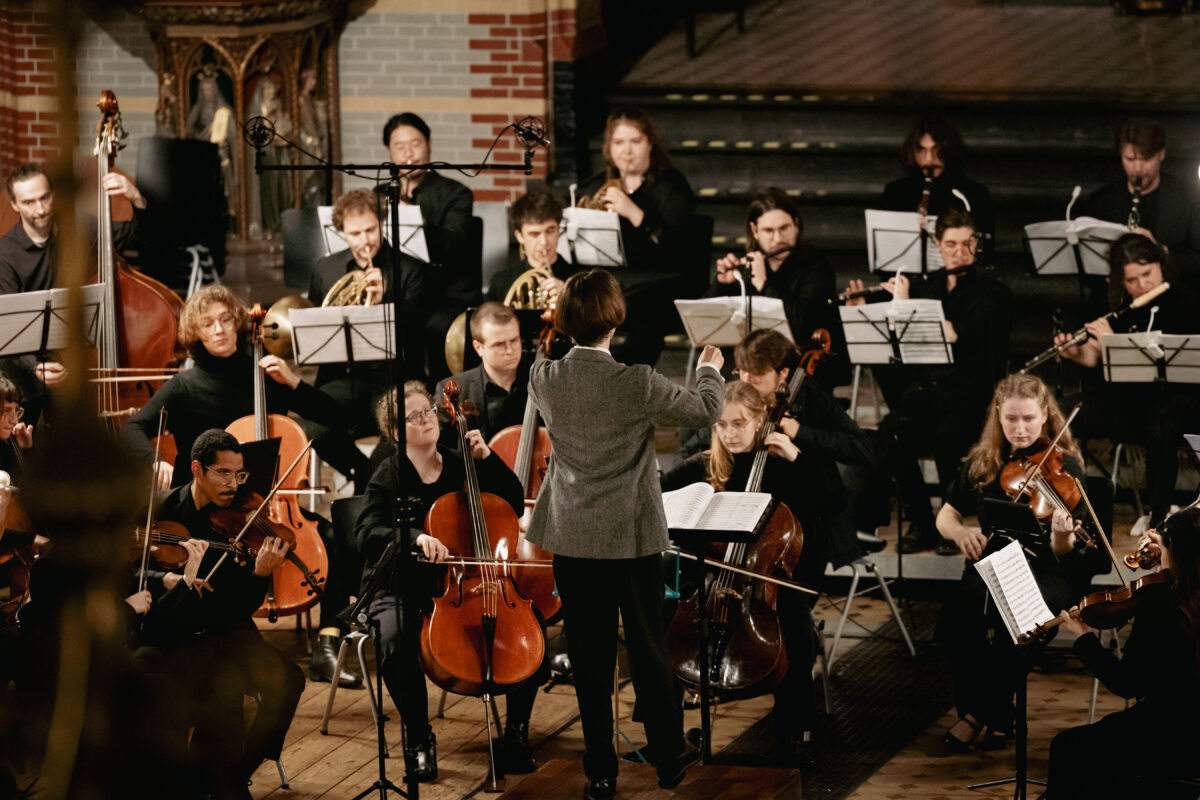
Images below are drawn from Opéra Comique’s production of L’Orfeo, featuring Marc Mauillon in the title role, and are provided for illustrative purposes only. EMV’s final production will vary.
Synopsis
Act I
After the opening Toccata, the Prologue presents La Musica, who greets the noble audience, praises the power of Music, and invites the onlookers to listen to the story of Orfeo.
Nymphs and shepherds sing joyously in anticipation of the marriage of Orfeo and Euridice, and the couple sing of their love for each other. After dances of celebration, Euridice and Sylvia leave the company to prepare for the ceremony, while the nymphs and shepherds continue their festivities.
Act II
Orfeo sings with his friends of his new found joy, and praises the natural beauty of the Arcadian surroundings in which he has found Euridice. Silvia breaks into their rejoicing to tell the terrible news of Euridice’s death after being bitten by a serpent. Devastated by her account, Orfeo vows to descend to Hades to reclaim Euridice, or to join her in death. As he departs, the company laments their grief at the loss of both the lovers.
Act III
Orfeo is led by the allegorical figure of Hope to the banks of the river Styx, across which lies the Underworld, but then he must continue alone. Caronte, the guardian boatman, appears in front of him and blocks his path. Orfeo invokes all the power of his singing to convince Caronte to let him enter the Underworld, but the boatman is unmoved. Finally the singing lulls the guardian to sleep. Seizing his opportunity, Orfeo steals the boat and rows across the river. A chorus of infernal spirits marks his entrance into Hades and praises his audacity.
Act IV
In the Underworld, Proserpina, wife of the ruler Plutone, has been moved by the prayers and laments of Orfeo as he roams in search of his lost love, and pleads with her husband to restore Euridice to him. Her husband, touched by her tender entreaties, decrees that Orfeo may lead Euridice home, but must not look at her while still in the Underworld or she will be lost for all eternity. Orfeo appears leading Euridice, and sings praises to the power of his lyre that has led to her redemption, but gradually, doubts creep into his mind that he is being tricked, and he glances back; infernal spirits immediately pronounce the sentence and Euridice, in despair, is lost forever. An infernal chorus proclaims that Orfeo could conquer Hell but not himself.
Act V
Returning alone to the scene of his former joy, Orfeo laments his loss to Eco. He recalls the virtues of Euridice and vows never to love another woman. His father, Apollo, God of Music, descends and comforts Orfeo, and offers to lead him to eternal life and glory in Heaven, where he may see the likeness of Euridice in the sun and stars. As Orfeo and Apollo rise to Heaven singing, the chorus proclaims Orfeo’s celestial honour and declare that virtue will be justly rewarded, and a festive Moresca ends the fable.
Team
Creative

Alexander Weimann | Sponsored by Bruce Munro Wright, O.B.C., Conductor
The internationally renowned keyboard artist Alexander Weimann has spent his life enveloped by the therapeutic power and beauty of making music. Alex grew up in Munich. At age three he became fascinated by the intense magic of the church organ. He started piano at six, formal organ lessons at 12 and harpsichord at university (along with theatre theory, medieval Latin and jazz piano.) He is in huge demand as a director, soloist and chamber player, traveling the world with leading North American and European ensembles. He is Artistic Director of the Pacific Baroque Orchestra in Vancouver and teaches at the University of British Columbia where he directs the Baroque Orchestra Mentorship Programme.
Alex has appeared on more than 100 recordings, including the Juno-award-winning album “Prima Donna” with Karina Gauvin and Arion Baroque orchestra. His latest album series “The Art of Improvisation” (Volume 1: A Prayer for Peace; Volume 2: Ad libitum; and Volume 3: Canavian Variations, released on Redshift, 2024) unites his passions for both baroque music and improvisation on organ, harpsichord, and piano.
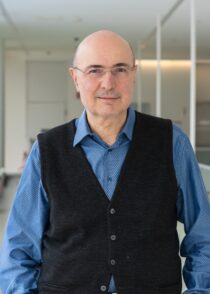
Guillaume Bernardi, Director
Guillaume Bernardi is a stage director, a dramaturge and a teacher based in Toronto. His directorial work covers a wide range of genres, from theater and opera to movement pieces. Recent directorial projects include the staging of Handel’s Orlando for Stony Brook University, La Giuditta, a Baroque Oratorio, for the Frankfurt Oper and two different productions of Mozart’s Le Nozze di Figaro for the Frankfurt Oper and the Canadian Opera Company. Bernardi has collaborated with several important artists, like René Jacobs and Stephen Stubbs, singers like Andreas Scholl and Suzie LeBlanc, and early music groups, like the Yale Baroque Opera Project and Pacific Musicworks. In Toronto he has worked with the Toronto Continuo Collective and I Furiosi Baroque Ensemble. He regularly conducts workshops on the declamation and delivery of Italian Baroque librettos, in particular on the operas of Francesco Cavalli, as he has done now on a few occasions for the Toronto Consort and for the Festial d’Aix en Provence. Bernardi holds a doctorate from the Paris-Sorbonne University. He teaches in the Drama Studies Programme at Glendon College, the bilingual faculty of York University.

Camilla Tassi, Projection Designer
Camilla Tassi is a NYC-based projection designer from Florence, Italy. Previously for EMV: Les Élémens and Queen of Carthage. Design credits include
King Arthur (Juilliard415, Lincoln Center), Falling Out of Time (Carnegie Hall), Adoration (Beth Morrison Projects & LA Opera), L’Orfeo (Apollo’s Fire), La Bohème (Music
Academy of the West), Malhaar: A Requiem For Water (LA Master Chorale, Disney Concert Hall), Mansfield Park (IU Opera), SANDRA (TheaterWorks Hartford), Ariodante
(Boston Baroque), Lady M & The Extinctionist (Heartbeat Opera), Carmina Burana (Debartolo Performing Arts Center), Fiddler on the Roof (ACT of CT) and Alcina (Yale
Opera). Tassi holds degrees in computer science, music, and projection design. She has sung for groups including the Yale Schola Cantorum and NY Phil Chorus. MFA in
Design at Yale. Connecticut Critics Circle, Burry Fredrik Design, and Robert L. Tobin Opera Design Award recipient. camillatassi.com – IG: camtassi
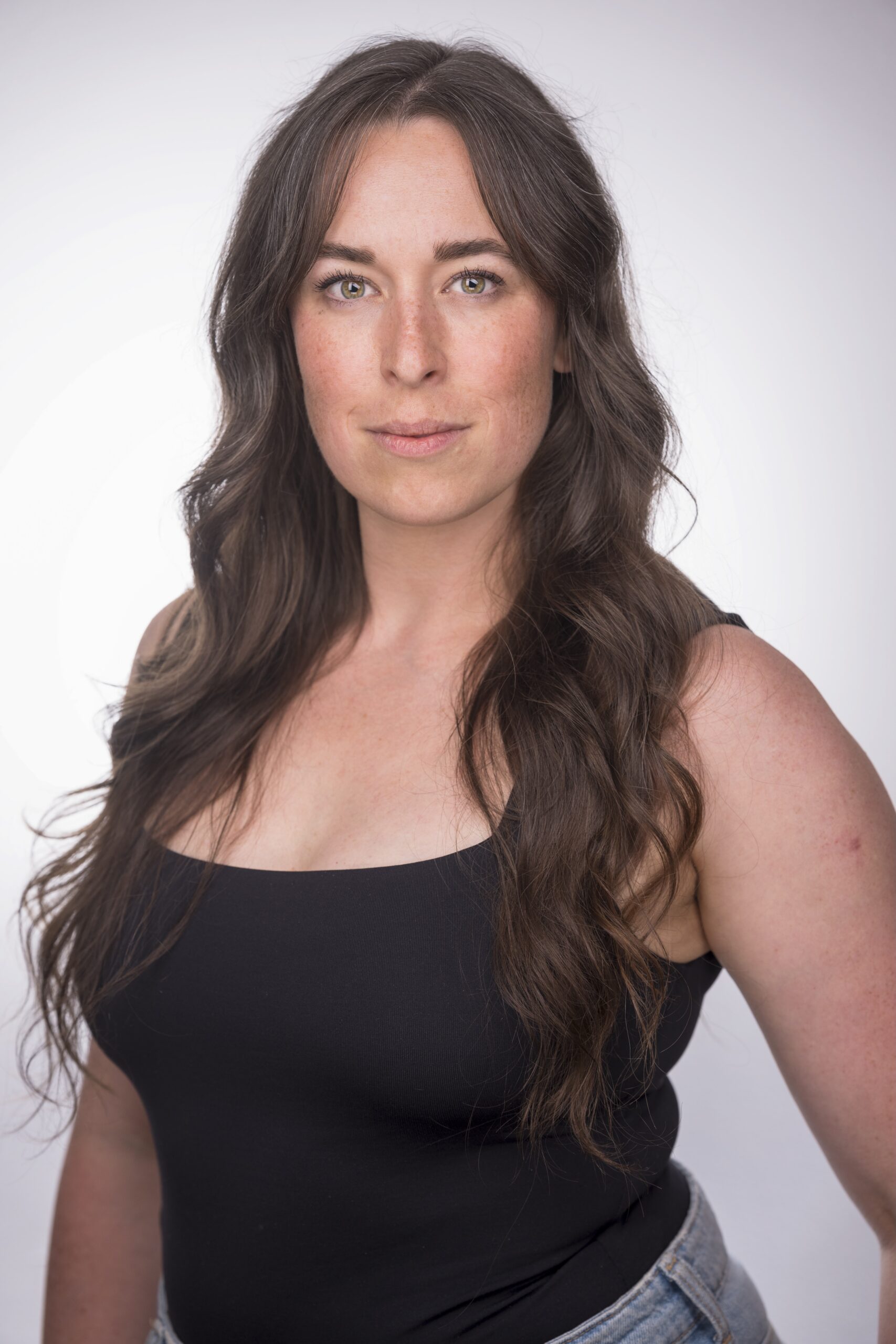
Alaia Hamer, Costume Designer
Alaia Hamer is a Vancouver theatre designer originally from the Gulf Islands. Recent projects she has worked on include costume design for Measure for Measure (Bard on the Beach); Miracle on 34th Street, Million Dollar Quartet, Sexy Laundry, The Cull, Beneath Springhill, The Birds and the Bees (Arts Club); The East Van Panto: Robin Hood, Beauty and the Beast, The Little Mermaid (Theatre Replacement); HMS Pinafore, Carmen Up Close and Personal (Vancouver Opera); costume design for Beautiful Man (PI Theatre); set design for A Midsummer Night’s Dream (TWU); The Hobbit, Middletown, Case for Existence of God, God Said This (Pacific Theatre); Seventeen (Western Gold). She has worked on a variety of smaller shows through Vancouver and has a passion for costuming dance. Alaia is a graduate of the UBC Theatre Design program in 2017 and holds an English literature degree from 2012.

Nicole Lamb, Lighting Designer, Technical Director
Nicole Lamb is happy to be putting on a creative hat on this production, taking a hiatus from her “day job” as the Director of Artistic & Production at Vancouver Opera.
Nicole has worn many hats in the industry – an instructor, production manager, technical director, stage manager and designer. Recent design credits include:
Dirty Rotton Scoundrels, Footloose, The Piano Teacher, 39 Steps, The Marvellous Wonderettes (Chemainus); Sanctuary & Storm (re:Naissance Opera); Clean/Espejos
(Tour; Neworld Theatre).
Marijka Asbeek Brusse, Stage Manager
Marijka Asbeek Brusse has spent 13 seasons as part of the stage management team at Vancouver Opera and has also had the pleasure of working for such companies as Arts Umbrella Dance Company, Alberta Theatre Projects, Arts Club Theatre Company, Belfry Theatre, and as a Faculty stage manager at the Banff Centre’s Opera in the 21st Century program. Marijka has a BFA from UBC Theatre Production & Design, where she also taught stage management for seven seasons.
Other highlights include Wozzeck (ASM, Canadian Opera Company), Take This Waltz (SM, Ne.Sans Opera & Dance), La traviata (SM, Vancouver Opera), Silent Light (SM, Banff Centre for Performing Arts) and The Overcoat (ASM, Canadian Stage / Tapestry Opera / Vancouver Opera).

Michelle Harrison, Assistant Stage Manager
Michelle Harrison has worked in stage management for over a decade. Select credits include La Bohème, Cosi fan tutte, Rigoletto, Madama Butterfly, Flight, Die Fledermaus, Carmen, Don Pasquale, The Flying Dutchman, The Barber of Seville, Le Nozze di Figaro, La Cenerentola (Vancouver Opera); Waitress, The Sound of Music, Kinky Boots (Arts Club Theatre), A Christmas Carol (Theatre Calgary), Little Shop of Horrors (Arts Club/Citadel). Michelle is a graduate of the University of British Columbia.
Sarah Pelzer, Assistant Director
Sarah Pelzer is a stage director and performance maker based in Vancouver, BC.
She has directed, assisted and taught across Canada and the US at Vancouver, Edmonton, and Manitoba Opera, Opera on the Avalon, Pacific Opera Victoria, Opera Kelowna, and Wolf Trap.
Prior to her transition to the opera world, Sarah was a performer and theatre-maker most known for creating the role of Jane Doe in Ride The Cyclone, and as artistic associate and co-founder of the experimental performance company SNAFU Dance Theatre. With SNAFU, she co-created and performed in several pieces that blurred the lines between dance, puppetry, clown and ceremony.
In November 2020, Sarah co-founded Lucky Penny Opera, a company dedicated to exploring alternative models for creating opera performances.
Sarah is also the Operations Manager of Early Music Vancouver.
Cast
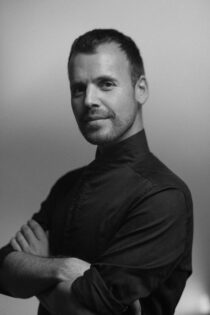
Marc Mauillon, Orfeo
An unusually versatile artist, Marc Mauillon is equally at home performing music from the medieval era to the present day. Sometimes a baritone, sometimes a tenor, this chameleon adapts his colours to the music he performs and the characters he embodies. A prolific performer of Baroque and contemporary opera, Mauillon has worked with many of the top directors and early music conductors of the early 21st century. Recent highlights include: Castor et Pollux (Pollux) at the Opéra national de Paris (T. Currentzis/P. Sellars) and Les fêtes d’Hébé (Momus & Mercure) at the Opéra-Comique (W. Christie/R. Carsen).

Bahareh Poureslami, Euridice
Soprano Bahareh Poureslami enjoys a varied performing and artistic output throughout her communities in and around Vancouver. Her musical curiosity was heavily influenced by her grandmother who was always introducing her to different forms of expression through crafts and singing. Bahareh has performed in opera, across concert stages, and as an Art Song aficionado, she has prepared and presented numerous solo and chamber repertoire programs. The sacredness of space and acoustics has made Baroque music a home, as it always plays at her heart strings in the same way the music of her region does. Besides her passion for the arts, Bahareh has always been fascinated with healing and wellness, and has recently started practising as a Registered Massage Therapist.
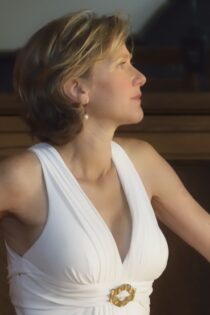
Suzie LeBlanc, La Musica
Born in Acadia, the charismatic soprano Suzie LeBlanc provides convincing evidence for the popularity of Early Music while exploring French art song, lieder, contemporary repertoire, and Acadian traditional music. She has performed on famous stages of the world in recitals and opera and has made over 60 recordings ranging from medieval to contemporary music.
Many of her recordings received international praise and prestigious awards, notably a Grammy award for Lully’s Thésée and several Opus awards. In addition to her passion for Early Music, she is an advocate for Canadian contemporary music. Her album “I am in need of music” on poems by Elizabeth Bishop won ECMA’s Best Classical Album and her album “mouvance”, which unites the words of 13 contemporary Acadian poets to the music of Jérôme Blais, was nominated for a JUNO in the category album of the year – solo artist, in 2024. Her most recent album with the Viadana Collective explores the sacred works by Lodovico Viadana and was released on May 1st, 2024, on the Passacaille label.
Appointed to the Order of Canada in 2015, she was recently awarded the rank of Knight of the Order of Arts and Letters from the French Republic. As the Artistic and Executive Director of Early Music Vancouver, she enjoys presenting a wide range of artists in the field of historical performance and welcomes the opportunity to sing from time to time.
Myriam Leblanc, Messagiera
A graduate of McGill University, Myriam Leblanc obtained a master’s degree in choral conducting direction from the University of Sherbrooke. She was a First Prize winner and People’s choice Award winner at the Orchestre symphonique de Trois-Rivières Competition, a Jeune Ambassadrice Lyrique in 2014 (Prix Québec-Bavière), Audience Choice Award winner at the Canadian Opera Company Centre Stage Competition, Third Prize winner at the Ottawa Choral Society New Discoveries contest, holder of the Excellence grant given annually by l’Atelier lyrique de l’Opéra de Montréal, First Prize winner in the Mathieu-Duguay Early Music Competition at the 2017 Lamèque International Baroque Music Festival. She has been working in the world of music for few years. Leblanc is recognized for the purity of her tone, a flexible and warm voice and her mastery of both technique and musical expressiveness.
In 2016, she made her debut with the Opéra de Montréal in the role of the High Priestess in Verdi’s Aida. La Presse music critic Caroline Rodgers described her voice as one of “rare beauty”. Her more recent performances (2017-2018) include Milica in Sokolovic’s Svadba with Opéra de Montréal, Micaela in Bizet’s Carmen with Opéra de Québec and concerts with conductors such as Yannick Nézet-Séguin, Kent Nagano, Matthias Maute and Jonathan Cohen. In 2018-2019, she sang a Gilda in Verdi’s Rigoletto, the soprano solos on Handel’s Messiah with Ensemble Caprice, the Mendelssohn’s Symphony No.2 “Lobgesang” with l’Orchestre Metropolitain under Yannick Nézet-Séguin’s direction. Recently, she was a soloist with Les Violons du Roy under Jonathan Cohen’s direction.
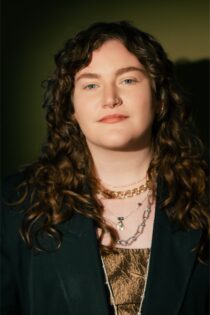
Len Torrie, Proserpina / Ninfa
singer-songwriter, and performance curator known for their crystalline tone, expressive
versatility, and storytelling depth. A sought-after soloist, Len performs internationally with
leading early music ensembles including L’Harmonie des Saisons, Mercury Baroque, Studio de
musique ancienne de Montréal, and Ensemble Caprice.
Len holds a master’s degree in early music vocal performance from McGill University, where
they studied under Suzie LeBlanc and Dominique Labelle. Internationally, Len has trained with
the Accademia Europea dell’Opera and the Internationale Bachakademie Stuttgart. They are one-
third of the medieval trio COMTESSA, where they sing and play citole and Anglo-Saxon lyre.
A queer, non-binary artist, Len draws on the wisdom of queer elders and ancestors in their
research and performance of radically inclusive stories. Their work bridges early music and
contemporary folk, and also includes self-accompanied performance on both period and modern
instruments.

Jillian Tam, Speranza
Jillian Tam is a Canadian mezzo-soprano recognized for her versatility across Baroque, contemporary opera, and art song repertoire. She is currently completing her Master of Music at the Manhattan School of Music, and recently performed Mercédès in Highlights from Carmen. A graduate of McGill University’s Schulich School of Music, Jillian performed leading roles with Opera McGill including Medoro in Orlando and Rosmira in Partenope by Handel, and Judith in Luna Pearl Woolf’s The Limit of the Sun. Her artistic profile bridges early and new music, with additional appearances in contemporary opera projects and oratorio repertoire including Saint-Saëns’ Oratorio de Noël and Vivaldi’s Gloria.
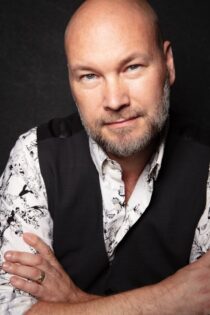
Tyler Duncan, Plutone/Pastore/Spirito
Sought-after baritone Tyler Duncan appears regularly on major concert stages around the world. Recent critics have called his performances “eloquent,” “charismatic,” and “stunning,” and praised his “refined, burnished voice” and “impeccable phrasing.” Tyler has recently appeared in concerts with the Minnesota Orchestra, the Toronto Symphony, the Kansas City Symphony, the New York Philharmonic, and at the Wigmore Hall.
Also accomplished on the opera stage, Tyler has appeared at the Metropolitan Opera as Prince Yamadori in Puccini’s Madama Butterfly under Karel Chichon, among many other Met Opera roles. Other recent roles include Morales in Bizet’s Carmen under Seiji Ozawa, and appearances in the Spoleto Festival as the Speaker in Mozart’s The Magic Flute. Duncan is also passionate about new opera; recent roles include Raymond in Nic Gotham’s Nigredo Hotel with City Opera Vancouver, and in the world premiere of Jonathan Berger’s Leonardo at New York’s 92nd Street Y.
Mr. Duncan also performs as a duo with pianist Erika Switzer, celebrating songs from the Romantic period as well as the work of living composers. Together the pair have premiered dozens of new compositions.
Tyler’s recordings include the newly released album English Songs à la française with Erika Switzer, the Juno Award winning Vaughan-Williams Serenade to Music with Peter Ounjian and the Toronto Symphony, Earthquakes and Islands: an album of songs by Andrew Staniland with texts by Robin Richardson, the title role in John Blow’s Venus and Adonis with Boston Early Music Festival, J.S. Bach’s St. John Passion with the Portland Baroque Orchestra, Purcell works and Carissimi’s Jephte with Les Voix Baroque, and a DVD of Handel’s Messiah with Kent Nagano and the Montreal Symphony Orchestra. His singing has been recognized internationally with numerous awards, including Grammy and Juno nominations and prizes from the Naumburg, London’s Wigmore Hall, and Munich’s ARD competitions.
Originally from British Columbia, Canada, Mr. Duncan resides in New York’s beautiful Hudson Valley. www.tylerduncan.ca

William Kraushaar, Caronte/Pastore/Spirito
A bass recognized for his “charisma and impressive voice”, William Kraushaar is a classically-trained composer and arranger with a strong fondness for vocal music. Specialized in early music, he has earned himself a privileged position in a number of prestigious Canadian vocal ensembles, both as a soloist and chamber singer.
Besides singing regularly with l’Harmonie des Saisons (Eric Milnes), the Studio de Musique Ancienne de Montréal (SMAM) and Ensemble Caprice (Matthias Maute), he has made numerous soloist guest appearances with such groups as the Montreal Symphony Orchestra Chamber Choir, the Ottawa Baroque Consort, the Church of St-Andrew/St-Paul, Early Music Vancouver & The Pacific Baroque Orchestra, Les Voix Humaines, the Theater of Early Music, the Edison Singers, Les Idées Heureuses and many more, as well as being a regular guest in early music festivals (the Lamèque International Baroque Music Festival, the Burlington Baroque Festival, Festival Montréal Baroque,…). As a composer, he has won two SOCAN Foundation awards and an Amadeus Composition Award, all for vocal pieces. On top of the cinematic projects he’s scored, his music has been played by the Quebec Symphony Orchestra, Voces Boreales, Ensemble Art-Choral and the National Youth Choir of Canada, to name a few.
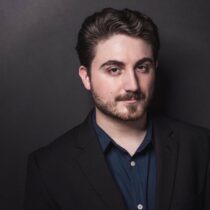
Jacob Perry, Apollo/Pastore/Spirito
Jacob Perry, tenor, is lauded for his stylish interpretations of early music. As a soloist, he lends his graceful sense of phrasing and luminous tone to engagements with American Classical Orchestra, Apollo’s Fire, Bach Collegium San Diego, Jacksonville Symphony, Philharmonia Baroque, Portland Baroque Orchestra, Tafelmusik, Tempesta di Mare, Washington Bach Consort, and the Washington National Cathedral. Jacob joined the Carmel Bach Festival in 2022 as the tenor participant in the Virginia Adams Best Masterclass.
Deeply immersed in vocal chamber music, Jacob enjoys active membership in Les Canards Chantants, a soloist-ensemble based in Philadelphia, as well as engagements with ensembles such as the Ampersand, Art of Early Keyboard (ARTEK), Cathedra, Ensemble Altera, The Leonids, New Consort, Res Facta, and TENET Vocal Artists. He has explored the vocal works by contemporary composers through engagements with Third Practice, hexaCollective, and Great Noise Ensemble. As Co-Artistic Director of Bridge, a genre-defying vocal collective based in Washington, he draws on his instincts for theatricality and story-telling, as the group explores the connections between early masterpieces and ground-breaking new works.
Career highlights include his recent solo debut with the New York Philharmonic singing Handel’s “Israel in Egypt”, headlining the inaugural festival of Western Early Music at the Beijing Central Conservatory of Music with Les Canards Chantants, and “English Orpheus”—a tour de force exploration of love songs and poems from the Elizabethan, Restoration, and early 18th-century periods he performed with Tempesta di Mare.

Haitham Haidar, Pastore/Spirito
Haitham Haidar is a Lebanese-Palestinian Canadian tenor highly sought out for his “memorably warm tone… a gripping communicator and charismatic musician.” (Gramophone), and his “arresting warmth and lyricism” (Music Web International). He is a proud graduate of Yale’s Institute of Sacred Music, McGill’s Schulich School of Music, and the University of British Columbia and currently resides in Montreal, Quebec.
Haitham’s JUNO® nominated debut solo album Zaytoun is now available on all streaming platforms, praised as BBC Music’s Vocal Choice 2025 and as “exquisitely beautiful and inherently melancholic” by Gramophone. Zaytoun explores the beautiful intersectionality of Baroque and Arabic music, interlaced with poetry and musical improvisations. Haitham also appears on multiple Grammy® nominated albums, namely as a soloist on Conspirare’s House of Belonging.
Haitham has been seen as a soloist at the Morgenland Music Festival in Osnabrück, as the Evangelist in Bach’s Christmas Oratorio with Seattle Bach Festival, as Matthew in Considering Matthew Shepard at ACDA Northwestern, and with groups like Conspirare and Seraphic Fire. He has also been seen as the tenor soloist in Handel’s Messiah with Newfoundland Symphony, Winnipeg Symphony Orchestra, Arion Baroque Orchestra, and Spire Vocal Ensemble. Recently, he has performed as the Evangelist in Bach’s St. John Passion with the Choir of A&P in Montreal and with the Cantata Collective in San Francisco under the baton of Nicholas McGegan. Recent engagements include being the artist in residence at Reed College in Portland, a collaboration with Chanticleer, and showcases of Zaytoun in Montreal. Coming up, Haitham will be performing the role of Evangelist in Bach’s St. Matthew Passion with Seattle Bach Festival, hold a residency at Cornell University, and continue to present Zaytoun across North America.
Haitham is a proud of Kaleidoscope Vocal Ensemble, a group that unites music excellence and diversity while offering highly educational and practical experiences to students from middle school to graduate school. KVE launched the first inaugural Kaleidoscope Vocal Academy in 2025 and the group looks forward to this growing educational program.
Haitham’s approach to performance has always been humanity first. Being an Arab immigrant in North America comes with its unique set of oppressive challenges and it is because of that and what he sees around him in the field, that he aims to touch people’s hearts with music and compassion and make change in the world the best way he knows how.

Gregório Taniguchi, Pastore/Spirito
Gregório Taniguchi, tenor, is a native Angeleno and Brooklyn resident, specializing in music of antiquity and the contemporary as chamber artist and soloist. He brings linguistic gusto and vitality to performances as the Evangelist in Bach’s Passions (“textually keen and emotionally piercing” – San Francisco Classical Voice), Zadok in Handel’s Solomon, Miles Zegner in Missy Mazzoli’s Proving Up, and Septimius in Handel’s Theodora, and when originating new roles. He enjoys the alchemy of collaborative ensemble singing, especially with Seattle Bach Festival, Beth Morrison Projects, American Bach Soloists, Apollo’s Fire, Tesserae, The Leonids, Bach Collegium San Diego, and Washington Bach Consort.
Gregório is passionate about artistic community, coaching language, and knitting. Since recording his mother’s favorite fado with ukulele during lockdown, he’s been rekindling his love of instrumental music via Renaissance cornetto. He enjoys being an active part of his ecological community, germinating seeds and raising native wildflowers.

Pacific Baroque Orchestra
Learn more about the PBO by clicking here.
The ‘house band’ of Early Music Vancouver, The Pacific Baroque Orchestra (PBO) is recognized as one of Canada’s most exciting and innovative ensembles performing “early music for modern ears.” Formed in 1990, the orchestra quickly established itself as a force in Vancouver’s burgeoning music scene with the ongoing support of Early Music Vancouver. In 2009, PBO welcomed Alexander Weimann as Director. His imaginative programming, creativity and engaging musicianship have carved out a unique and vital place in the cultural landscape of Vancouver.
PBO regularly joins forces with internationally-celebrated Canadian guest artists, providing performance opportunities for Canadian musicians while exposing West Coast audiences to a spectacular variety of talent. The Orchestra has also toured throughout BC, the northern United States, and across Canada. Their 2019 East Coast Canadian tour with Canadian soprano Karina Gauvin culminated in a critically acclaimed album, Nuit Blanches, released by Atma Classique.
Media