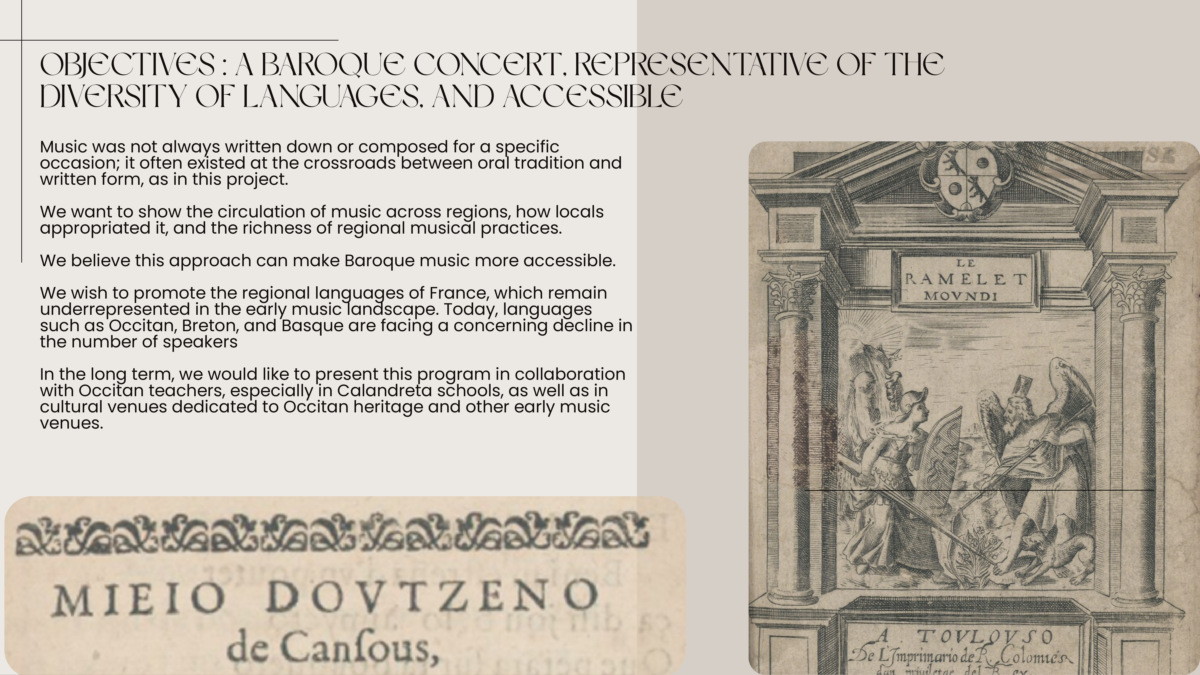
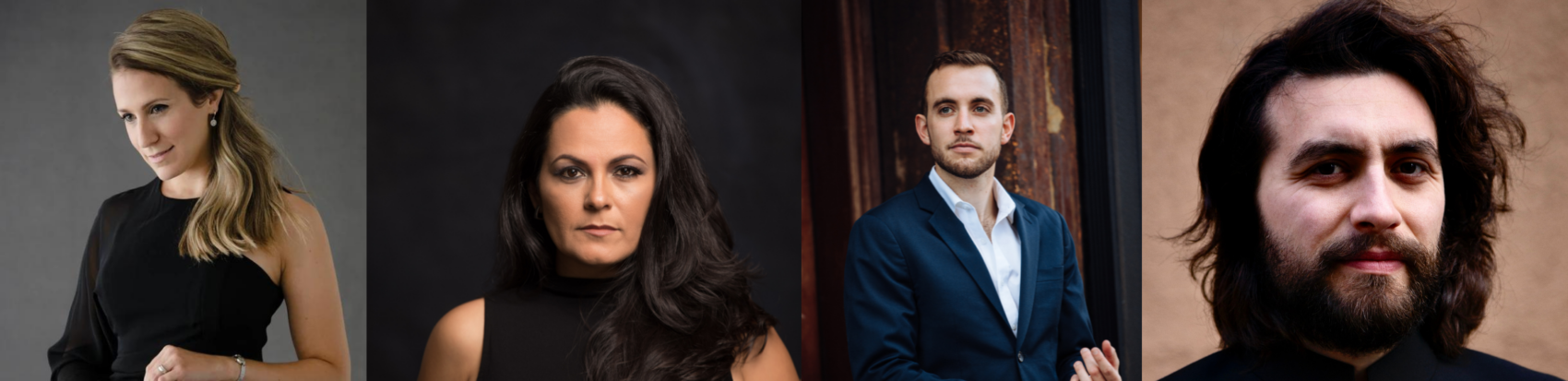
Christ Church Cathedral, Victoria
Festive Cantatas: Bach & Zelenka – Victoria
Works by: J.S. Bach & J.D. Zelenka
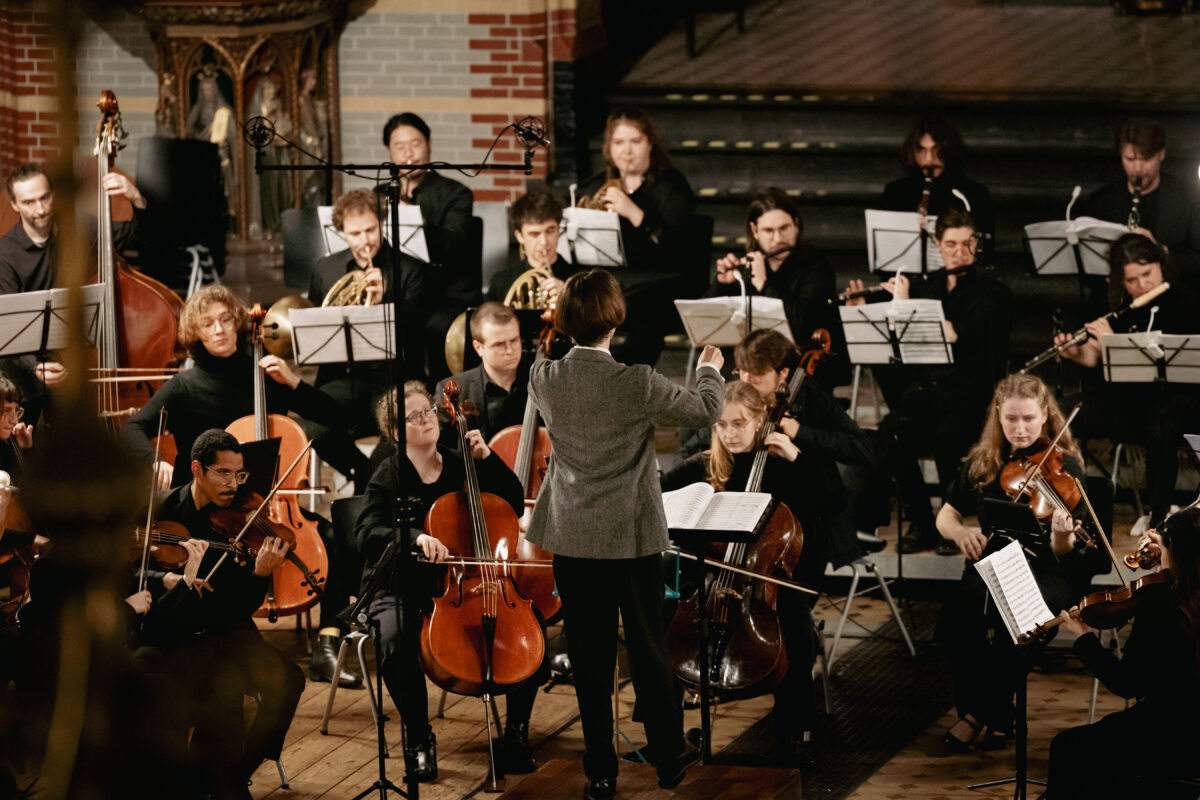
Artists: Hélène Brunet & Suzie LeBlanc, sopranos; Cecilia Duarte, alto; James Reese, tenor; William Kraushaar, bass; Vancouver Chamber Choir & Pacific Baroque Orchestra, directed by Alexander Weimann.
Runtime: approximately 80 min + 15 min intermission
This performance is in VICTORIA, BC. For the Vancouver concert click here.
Early Music Vancouver’s Festive Cantatas returns with a pairing of the Gloria in excelsis Deo cantata BWV 191 by J.S. Bach with the Czech composer Jan Dismas Zelenka’s Missa Nativitatis Domini (ZWV 8) of 1726.
The only Bach church cantata set to a Latin text, BWV 191’s opening lines will immediately strike listeners. It is based entirely on the “Gloria” from the B minor Mass (BWV 232), with an unusual premiere in Leipzig on Christmas Day to celebrate the Peace of Dresden (1745).
J.D. Zelenka (1679-1745), whose output consisted mainly of sacred music for the Catholic court at Dresden, was the most important Bohemian composer before Gluck. His Missa Nativitatis Domini was found in Carl Philipp Emannuel Bach’s personal effects, giving us a clue that the piece was known to J.S. Bach.
Click here to read the programme notes by Connor Page.
Presented in collaboration with the Early Music Society of the Islands
PROGRAMME
Johann Sebastian Bach (1685-1750)
Orchestral Suite No. 3 in D Major, BWV 1068
Ouverture
Air
Gavotte
Jan Dismas Zelenka (1679-1745)
Missa Nativitatis Domini (ZWV 8)
Interval
J.S. Bach
BWV 1068
Bourrée
Gigue
Gloria in excelsis Deo, BWV 191

Hélène Brunet, soprano
Hélène Brunet is hailed as “a singer of tremendous quality” with “a voice of perfect beauty and sincere expression.” Recognized for her interpretations of Bach, Handel, and Mozart, her repertoire extends from Baroque to the music of the 20th and 21st centuries. Hélène is the recipient of a prestigious Juno award (2022) for her first solo album Solfeggio (ATMA Classique) with renowned ensemble L‘Harmonie des saisons. Hélène is the first artist to ever win for a solo album in the category Large Ensembles at the Junos.
The critics describe Solfeggio as “a first-rate vocal achievement” (La Presse) and a “red carpet that displays Hélène’s superb and enveloping tone” (Le Devoir). Accolades continue with Solfeggio being selected as one of CBC Music’s Top 20 Classical albums of the year. On the stage, Hélène sings with the American Classical Orchestra at Lincoln Center in New York City, with American Bach Soloists in San Francisco, and the Orchestre Métropolitain under the baton of Yannick Nézet-Séguin, who says, “Hélène Brunet is the embodiment of class, refinement, and purity.” Hélène is the recipient of generous grants from Musicaction and the Canada Council for the Arts. She studies with voice teacher Neil Semer in New York.
Suzie LeBlanc, soprano
Born in Acadia, the charismatic soprano Suzie LeBlanc provides convincing evidence for the popularity of Early Music while exploring French art song, lieder, contemporary repertoire, and Acadian traditional music. She has performed on famous stages of the world in recitals and opera and has made over 60 recordings ranging from medieval to contemporary music.
Many of her recordings received international praise and prestigious awards, notably a Grammy award for Lully’s Thésée and several Opus awards. In addition to her passion for Early Music, she is an advocate for Canadian contemporary music. Her album “I am in need of music” on poems by Elizabeth Bishop won ECMA’s Best Classical Album and her album “mouvance”, which unites the words of 13 contemporary Acadian poets to the music of Jérôme Blais, was nominated for a JUNO in the category album of the year – solo artist, in 2024. Her most recent album with the Viadana Collective explores the sacred works by Lodovico Viadana and was released on May 1st, 2024, on the Passacaille label.
Appointed to the Order of Canada in 2015, she was recently awarded the rank of Knight of the Order of Arts and Letters from the French Republic. As the Artistic and Executive Director of Early Music Vancouver, she enjoys presenting a wide range of artists in the field of historical performance and welcomes the opportunity to sing from time to time.

Cecilia Duarte, alto
“A creamy voiced mezzo-soprano.” -The New York Times-
Soloist in the Grammy-Winning album Duruflé: The Complete Choral Works, Cecilia specializes in early music and contemporary opera. Role premieres include Renata in the Mariachi Opera Cruzar la Cara de la Luna, (HGO, Chicago Lyric Opera, San Diego Opera, El Paso Opera, NYCOpera, Europe and South America); as well as Renata in El Milagro del Recuerdo, (HGO, Arizona Opera); Jessie Lydell in A Coffin in Egypt, (HGO and the Wallis Annenberg Center in L.A.); Harriet/First Responder in After the Storm (HGO); Alicia in Some Light Emerges (HGO); and Alma in the new opera web series Star Cross’d, with Houston Grand Opera.
Other operatic roles include Linda Morales in Laura Kaminski and Kimberly Reed’s Hometown to the World, Maria in Maria de Buenos Aires, Loma Williams in Cold Sassy Tree, and Sarelda in The Inspector. Concert collaborations include the Five Boroughs Music Festival in NY, ROCO Houston, and the Kaleidoscope Ensemble. Early music experience includes Ars Lyrica Houston, The Boston Early Music Festival, Mercury Houston, Seraphic Fire, and the Bach Collegium San Diego, among others. Cecilia just released her first solo album, Reencuentros, a compilation of Latin American songs under the Reference Recordings label. Upcoming performances include the Boston Early Music Festival, Minnesota Opera, The Bach Collegium San Diego, and Pacific Music Works.
James Reese, tenor
A "shining tenor" (New York Classical Review), James Reese is a frequently sought tenor soloist with leading orchestras and ensembles throughout North America. James maintains close relationships with Philharmonia Baroque Orchestra, the American Bach Soloists, The Sebastians, TENET Vocal Artists, the Washington Bach Consort and the Boston Early Music Festival. In the 2023-24 season, he looks forward to debuts with the Portland Baroque Orchestra, Bach Collegium San Diego, and Symphony Nova Scotia, and to performances across North America, Belgium, Scandinavia, and Germany. In 2023 James won a GRAMMY award as a soloist on Born, released by The Crossing, singing the music of Edie Hill. Praise for James' singing have called his performances "captivating" (The Broad Street Review) and "splendid" (San Francisco Chronicle.)

William Kraushaar, bass
A bass recognized for his “charisma and impressive voice”, William Kraushaar is a classically-trained composer and arranger with a strong fondness for vocal music. Specialized in early music, he has earned himself a privileged position in a number of prestigious Canadian vocal ensembles, both as a soloist and chamber singer.
Besides singing regularly with l’Harmonie des Saisons (Eric Milnes), the Studio de Musique Ancienne de Montréal (SMAM) and Ensemble Caprice (Matthias Maute), he has made numerous soloist guest appearances with such groups as the Montreal Symphony Orchestra Chamber Choir, the Ottawa Baroque Consort, the Church of St-Andrew/St-Paul, Early Music Vancouver & The Pacific Baroque Orchestra, Les Voix Humaines, the Theater of Early Music, the Edison Singers, Les Idées Heureuses and many more, as well as being a regular guest in early music festivals (the Lamèque International Baroque Music Festival, the Burlington Baroque Festival, Festival Montréal Baroque,…). As a composer, he has won two SOCAN Foundation awards and an Amadeus Composition Award, all for vocal pieces. On top of the cinematic projects he’s scored, his music has been played by the Quebec Symphony Orchestra, Voces Boreales, Ensemble Art-Choral and the National Youth Choir of Canada, to name a few.

Alexander Weimann | Sponsored by Bruce Munro Wright, O.B.C., director
The internationally renowned keyboard artist Alexander Weimann has spent his life enveloped by the therapeutic power and beauty of making music. Alex grew up in Munich. At age three he became fascinated by the intense magic of the church organ. He started piano at six, formal organ lessons at 12 and harpsichord at university (along with theatre theory, medieval Latin and jazz piano.) He is in huge demand as a director, soloist and chamber player, traveling the world with leading North American and European ensembles. He is Artistic Director of the Pacific Baroque Orchestra in Vancouver and teaches at the University of British Columbia where he directs the Baroque Orchestra Mentorship Programme.
Alex has appeared on more than 100 recordings, including the Juno-award-winning album “Prima Donna” with Karina Gauvin and Arion Baroque orchestra. His latest album series “The Art of Improvisation” (Volume 1: A Prayer for Peace; Volume 2: Ad libitum; and Volume 3: Canavian Variations, released on Redshift, 2024) unites his passions for both baroque music and improvisation on organ, harpsichord, and piano.

Pacific Baroque Orchestra
Learn more about the PBO by clicking here.
The ‘house band’ of Early Music Vancouver, The Pacific Baroque Orchestra (PBO) is recognized as one of Canada’s most exciting and innovative ensembles performing “early music for modern ears.” Formed in 1990, the orchestra quickly established itself as a force in Vancouver’s burgeoning music scene with the ongoing support of Early Music Vancouver. In 2009, PBO welcomed Alexander Weimann as Director. His imaginative programming, creativity and engaging musicianship have carved out a unique and vital place in the cultural landscape of Vancouver.
PBO regularly joins forces with internationally-celebrated Canadian guest artists, providing performance opportunities for Canadian musicians while exposing West Coast audiences to a spectacular variety of talent. The Orchestra has also toured throughout BC, the northern United States, and across Canada. Their 2019 East Coast Canadian tour with Canadian soprano Karina Gauvin culminated in a critically acclaimed album, Nuit Blanches, released by Atma Classique.

Vancouver Chamber Choir
Artistic Director Kari Turunen began leading the Vancouver Chamber Choir (VCC), one of Canada’s premier professional choral ensembles, in September 2019. Founded by Jon Washburn in 1971 the VCC has enjoyed amazing success -, ranking with the handful of North America’s best professional choruses and noted for its diverse repertoire and performing excellence. In addition to concerts at home in Vancouver and across Canada, international excursions have taken them to the USA, Mexico, Japan, China, Hong Kong, Taiwan, South Korea, Finland, France, Germany, the Czech Republic, Russia, Estonia, Latvia, Lithuania and Ukraine.
VCC has performed countless concerts and broadcasts, released 36 recordings and received numerous awards including the Margaret Hillis Award for Choral Excellence by Chorus America. Foremost supporters of Canadian music, they are responsible for commissions and premieres of nearly 400 choral works by 150 composers and arrangers, most of whom are Canadian. Over the years the choir has sung over 4,000 performances of works by Canadian composers, in addition to their extensive international repertoire. The choir’s award-winning educational programs include the Conductors’ Symposium for advanced choral conductors, Interplay interactive workshops for choral composers, Focus professional development program for student singers, OnSite visitations for school choirs, the biennial Young Composers’ Competition, and many on-tour workshops and residencies.