
Online I Suzie LeBlanc, Ariadne Lih & Andreanne Brisson-Paquin, sopranos I Constantinople I Kiya Tabassian, setar & director
This programme is a tribute to the Venetian composer and singer Barbara Strozzi, one of the most important composers of Italian cantatas and baroque arias. Her sensitivity to text and experimentation with form and style offered nuance and a high level of emotional sensitivity to her music. In 1638, she read both sides of a debate written by Giovanni Francesco Loredano and Matteo Dandolo about whether tears or song is the more powerful weapon in love. Not surprisingly, the song won and Strozzi ended the debate by saying: “I do not question your decision, gentlemen, in favor of song, for well I know that I would not have received the honor of your presence at our last session had I invited you to see me cry and not to hear me sing.” This concert will explore Strozzi’s lighter side as well as presenting her famous lament “Lagrime mie”. A rich mix of plucked and string instruments from Iran, Turkey, and Italy (two theorbos, baroque guitar, kanun, setar, cello, gamba, viola d’amore, and violin) complements the vocal pieces and creates some lively instrumental dances.
This concert is generously supported by Sharon E. Kahn and Johanna Shapira & John Geddes
HOW TO WATCH:
Online: Access to the online concert is free, and donations are greatly appreciated.
Click here to watch the concert on our YouTube channel until March 22.
PROGRAMME
Anon, BL (XIVe siècle)
Dança amorose
Barbara Strozzi (1619-1677)
Sonetto prœmio dell’opera (Mercè di voi)
Ali Ufki (1610-1675)
Samai Frenci & Digar
Barbara Strozzi
Lagrime mie
Barbara Strozzi
Mi fa rider
Kiya Tabassian
Parvaz
Barbara Strozzi
Le Tre Grazie
Anon. BL (XIVe s.)
La Manfredina /La Rotta
Barbara Strozzi
Amore è bandito
Giovanni Girolamo Kapsberger (c.1580-1651)
Colasione
Barbara Strozzi
Che si può fare
Anon. BL (XIVe.s)
Trotto
PROGRAMME NOTES
The Medieval pieces on this program are among the earliest European examples of notated music for instruments alone. Indeed, artistic representations of people playing instruments in the Middle Ages—lutes, organs, vielles, and more—basically never show written music, while images of singers often show them holding choir-books or scrolls. The fact that Dança amorosa, La Manfredina, and Trotto were written down does not remove them from the traditions that were not. All three are dances with single, unaccompanied melodies, assumed to be instrumental because they have no words. But the type and the number of instruments involved are anyone’s guess. Lutes? Melodic instruments? With drones? With drums? All these and more are plausible ways to interpret this music and bring it to life in the present day.
Dança amorosa was found on the back of an Italian legal document dated 1390; La Manfredina and Trotto belong to a manuscript from Northern Italy c. 1390–1425 containing more than a hundred pieces of music. The Trotto is a catchy and virtuosic standalone dance, whereas Dança amorosa / Rota and La Manfredina / Trotto are dance pairs: the main dances are followed by after-dances, which are condensed and ornamented versions of the same material.
***
Although lutes were popular across Europe by the fourteenth century, little Medieval notation for the lute survives. Knowledge was passed mainly from teacher to student, and virtuosic improvisation was prized above all.
Giovanni Girolamo Kapsberger (1580–1651) is thus another landmark source of music in a sparsely notated tradition. An Italian composer of German descent and an exceptional player of plucked instruments, he wrote books upon books of works for guitar, lute, and theorbo, the long-necked lute with bass strings played here. His piece Colascione is named after another kind of long-necked lute that had only two or three strings, derived from the Middle Eastern—likely Turkish—tanbur. The tanbur is in turn closely related to the setar, played here by Kiya Tabassian.
Kapsberger’s Colascione is for theorbo, but it mimics an improvisation over a drone bass, inviting all kinds of interpretative freedom. Once again, the fact that Kapsberger’s pieces were written down and published does not mean that the improvisatory tradition ceased to exist, and indeed, Kapsberger’s compositions cannot be separated from it.
***
Barbara Strozzi (1619–1677) lived in Venice while Kapsberger lived in Rome, but both were closely associated with various Accademie—societies of artists and intellectuals who, among many other things, discussed and promoted new music (including opera). In 1637, Barbara Strozzi’s adoptive father Giulio founded the Accademia degli Unisoni at least partly as a platform for Barbara to perform. She sang, likely accompanying herself, and acted as a hostess, but she also participated in their discussions.
For instance, in 1638, she read both sides of a debate written about whether tears or songs are the more powerful weapons in love. Song won, unsurprisingly, and Strozzi ended the debate by saying, “I do not question your decision, gentlemen, in favor of song, for well I know that I would not have received the honor of your presence at our last session had I invited you to see me cry and not to hear me sing.”
Strozzi’s first opus appeared in 1644. By that time, her performances at the Unisoni had raised considerable interest and enough disapproval for at least one satire to imply that she offered physical as well as musical services. This is probably not true, but the works from op. 1 included here do seem to play with the idea. Sonetto Proemio dell’Opera addresses the collection’s patron Vittoria della Rovere in a way that can only be described as sexy, and in Le Tre Grazie a Venere, Venus’s entourage warmly encourages her to undress.
Strozzi published eight books of vocal music in total. While the first one contains accompanied madrigals for two to five voices, the later collections are primarily for solo soprano and basso continuo. Lagrimie mie shows Strozzi’s stunning vocal writing in cantata form, where there are sections of recitative—essentially, heightened musical speech made gut-wrenchingly dramatic—and more metrical sections like tiny arias. Bando d’amore and Mi fa rider stand by themselves as ariette, tuneful strophic pieces with refrains, while Che si può fare provides a beautiful example of a ground bass.
***
As a young man, Ali Ufki (né Wojciech Bobowski, 1610–1675) was captured by raiders in what is now Poland and taken to Constantinople. He would become a prized singer and santur player at the Ottoman court, where he compiled an extremely wide and varied collection of the music he encountered: instrumental, vocal, sacred, secular, rural, urban, and more. The resulting manuscript offers an incredibly valuable look at the kaleidoscopic music of Constantinople, which included European and Italian styles—often imported by captives like Ali Ufki himself.
Because the musical knowledge of the Ottoman Empire was passed on mostly by oral tradition, manuscripts like Ali Ufki’s are rare, but the traditions hinted at by his transcriptions continued and continue to flourish. Kiya Tabassian’s composition Parvaz, or Taking Flight, describes the transmission of memories and the gradual travel of ideas through a poem in Persian by Amir Khosrow (1253–1325). With these omnipresent themes, and with the collective improvisation of this cross-cultural group of musicians, our program shows how close and how complementary our different musical traditions can be, since they draw on the same sources of creativity: text, emotion, collaboration, and creation on the spur of the moment.
© Ariadne Lih
Suzie LeBlanc, Soprano
Born in Acadia, the charismatic soprano Suzie LeBlanc provides convincing evidence for the popularity of Early Music while exploring French art song, lieder, contemporary repertoire, and Acadian traditional music. She has performed on famous stages of the world in recitals and opera and has made over 60 recordings ranging from medieval to contemporary music.
Many of her recordings received international praise and prestigious awards, notably a Grammy award for Lully’s Thésée and several Opus awards. In addition to her passion for Early Music, she is an advocate for Canadian contemporary music. Her album “I am in need of music” on poems by Elizabeth Bishop won ECMA’s Best Classical Album and her album “mouvance”, which unites the words of 13 contemporary Acadian poets to the music of Jérôme Blais, was nominated for a JUNO in the category album of the year – solo artist, in 2024. Her most recent album with the Viadana Collective explores the sacred works by Lodovico Viadana and was released on May 1st, 2024, on the Passacaille label.
Appointed to the Order of Canada in 2015, she was recently awarded the rank of Knight of the Order of Arts and Letters from the French Republic. As the Artistic and Executive Director of Early Music Vancouver, she enjoys presenting a wide range of artists in the field of historical performance and welcomes the opportunity to sing from time to time.
Andréanne Brisson-Paquin, Soprano
Hailed for her generous stage presence and expressive voice, Montreal-born soprano Andréanne Brisson-Paquin is equally devoted to several different musical genres, singing baroque, classical, operatic or contemporary repertoire with the same commitment, rigour, and excitement. In the past seasons, she was invited at Festival International de Lanaudière, Montreal Baroque Festival, Festival de musique baroque de Pontoise, Lufthansa baroque Festival, Festival Music and beyond, Montreal Bach Festival, to name a few. She has won national and international prizes such as Guy-Soucie Excellence Award; Second Prize at Concours International de Musique de Chambre de Lyon; Second Prize at Eckhardt-Grammatée contemporary music competition; Second Prize and Duo Prize at New York’s Joy in Singing. She was also a finalist at the prestigious Montréal International Musical Competition 2012 and performed with Montreal Symphony Orchestra.
She was the guest soloist with ensemble I Musici, Arion, Pallade Musica, Masques, Caprice, Edmonton Symphony Orchestra, Orchestre métropolitain de Montréal, Musica Angelica.
She completed her vocal studies at Université de Montréal before pursuing a Master degree in the Netherlands at Conservatorium van Amsterdam.
Ariadne Lih, Soprano
Based in Tio'tia:ke (currently known as Montreal) on the lands of the Kanienʼkehá꞉ka people, Ariadne Lih is a queer feminist soprano who loves cats. She sings opera, oratorio, and chamber music from the earliest notations to the present day, and co-directs The Uncommon Music Festival, where she does her best to make feminist chamber music rooted in land and community. As a soloist, she appears regularly with ensembles such as Clavecin en Concert, Infusion Baroque, La Chamaille, and the Madison Bach Musicians. Currently, you can hear her online with Lucas Harris as part of the Cozzolani Reunited project and with a humpback whale as part of the Conversations with Whales project, piloted by the Uncommon Music Festival. Upcoming engagements include the Early Music America Emerging Artists Showcase and the new opera Julie, Monster with RVA Baroque. She has a B.A. in music from Yale University and a master’s degree in opera from the Schulich School of Music.
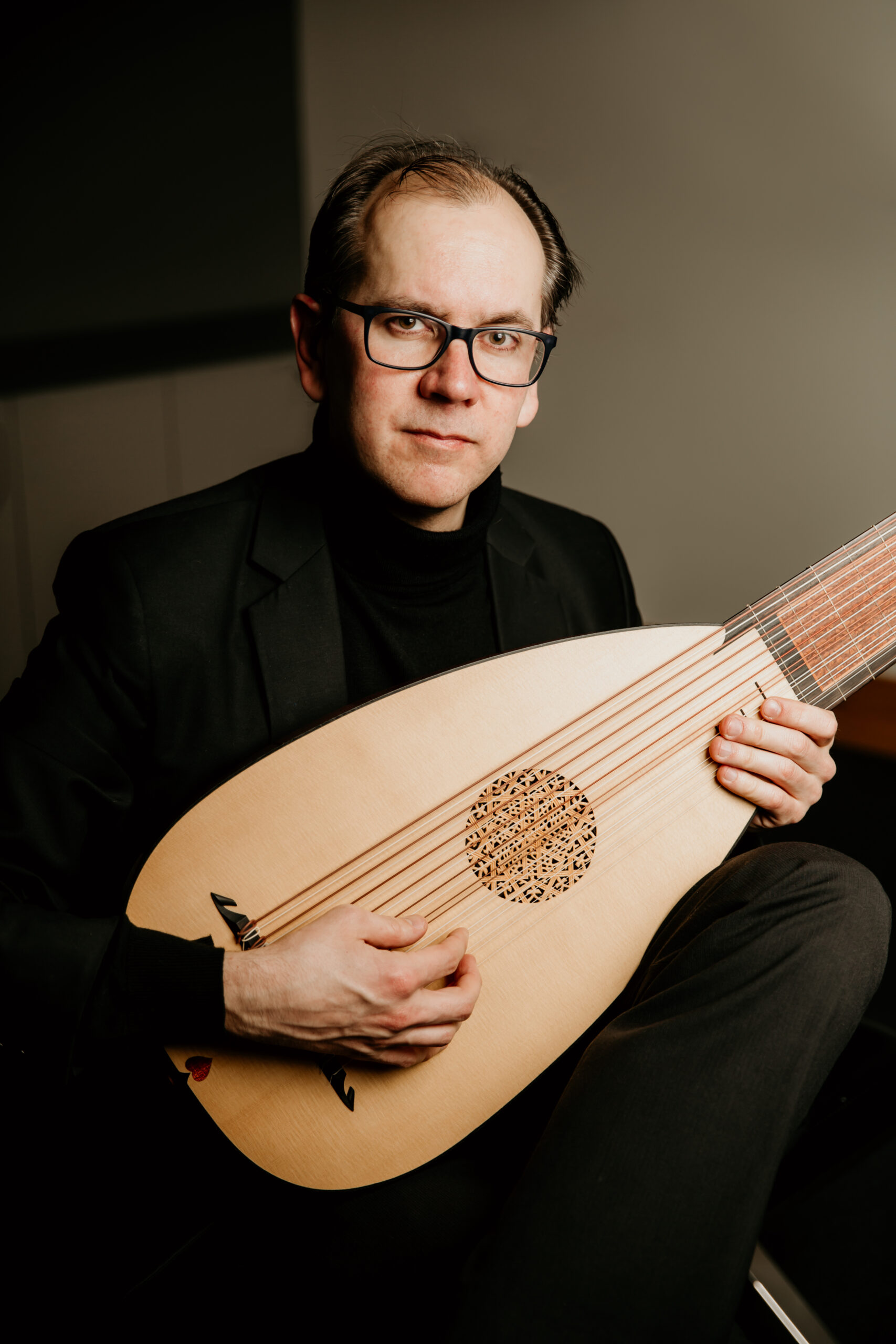
Lucas Harris, Theorbo
Toronto-based Lucas Harris discovered the lute during his undergraduate studies at Pomona College, and went on to study the lute and early music at the Civica scuola di musica di Milano and at the Hochschule für Künste Bremen. He is a founding member of the Toronto Continuo Collective, the Vesuvius Ensemble and the Lute Legends Collective (an association of specialists in ancient plucked-string traditions from diverse cultures) and is the regular lutenist for Tafelmusik Baroque Orchestra. Lucas plays with many other ensembles in Canada and the USA and has worked with the Smithsonian Chamber Players, Atalante, and Jordi Savall / Le Concert des Nations amongst others.
He teaches at the Tafelmusik Summer and Winter Baroque Institutes, Oberlin Conservatory’s Baroque Performance Institute, and the Canadian Renaissance Music Summer School, and is a regular guest artist with Early Music Vancouver. Lucas is also the Artistic Director of the Toronto Chamber Choir, for which he has created and conducted more than twenty themed concert programs. One of Mr. Harris’ many pandemic projects was the reconstruction of 12 solo voice motets by the Italian nun Chiara Margarita Cozzolani.
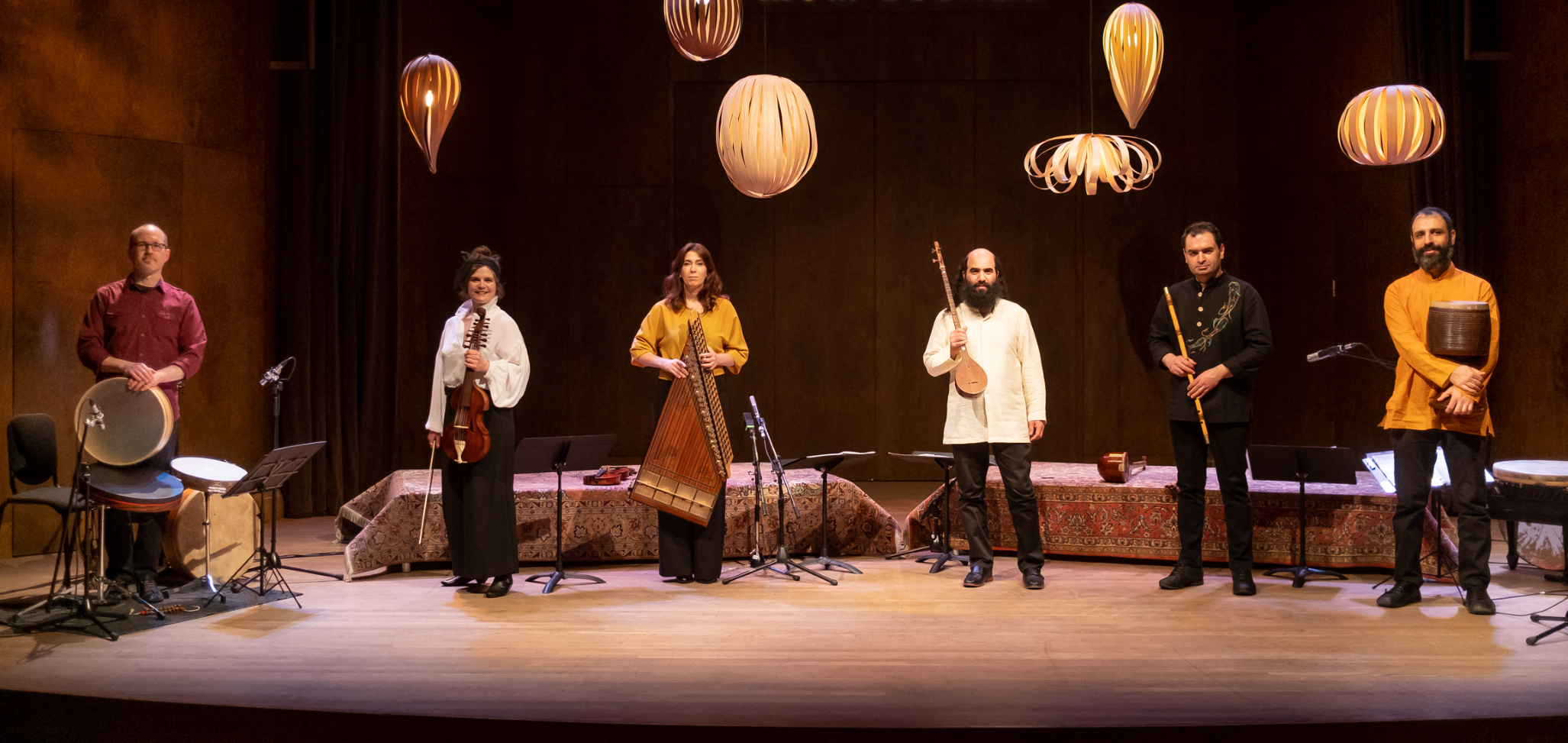
Ensemble Constantinople
Founded in 1998 by its artistic director Kiya Tabassian, Constantinople is a musical ensemble inspired by the ancient city straddling the East and West. Since its founding, the ensemble promotes the creation of new works incorporating musical elements of diverse musical traditions around the world; drawing from medieval manuscripts to a contemporary aesthetic, passing from Mediterranean Europe to Eastern traditions and New World Baroque. Underpinned by a spirit of research and creation, Constantinople has joined forces with leading international artists such as: Marco Beasley, Suzie LeBlanc, the Mandinka griot Ablaye Cissoko, the Greek ensemble En Chordais, the Belgian duo Belem, The Klezmatics, sarangi virtuoso Dhruba Ghosh, and Iranian kamancheh master Kayhan Kalhor. They are regularly invited to perform in international festivals and prestigious concert halls including: the Salle Pleyel (Paris), the Berliner Philharmonie, the Fes Festival of World Sacred Music (Morocco), the Rencontres musicales de Conques (France), the Aga Khan Museum (Toronto), the Cervantino Festival (Mexico) and the Festival de Carthage (Tunisia). Constantinople has 19 albums to its credit. Over the past fifteen years, Constantinople has created nearly 50 works and travelled to more than 240 cities in 54 countries.
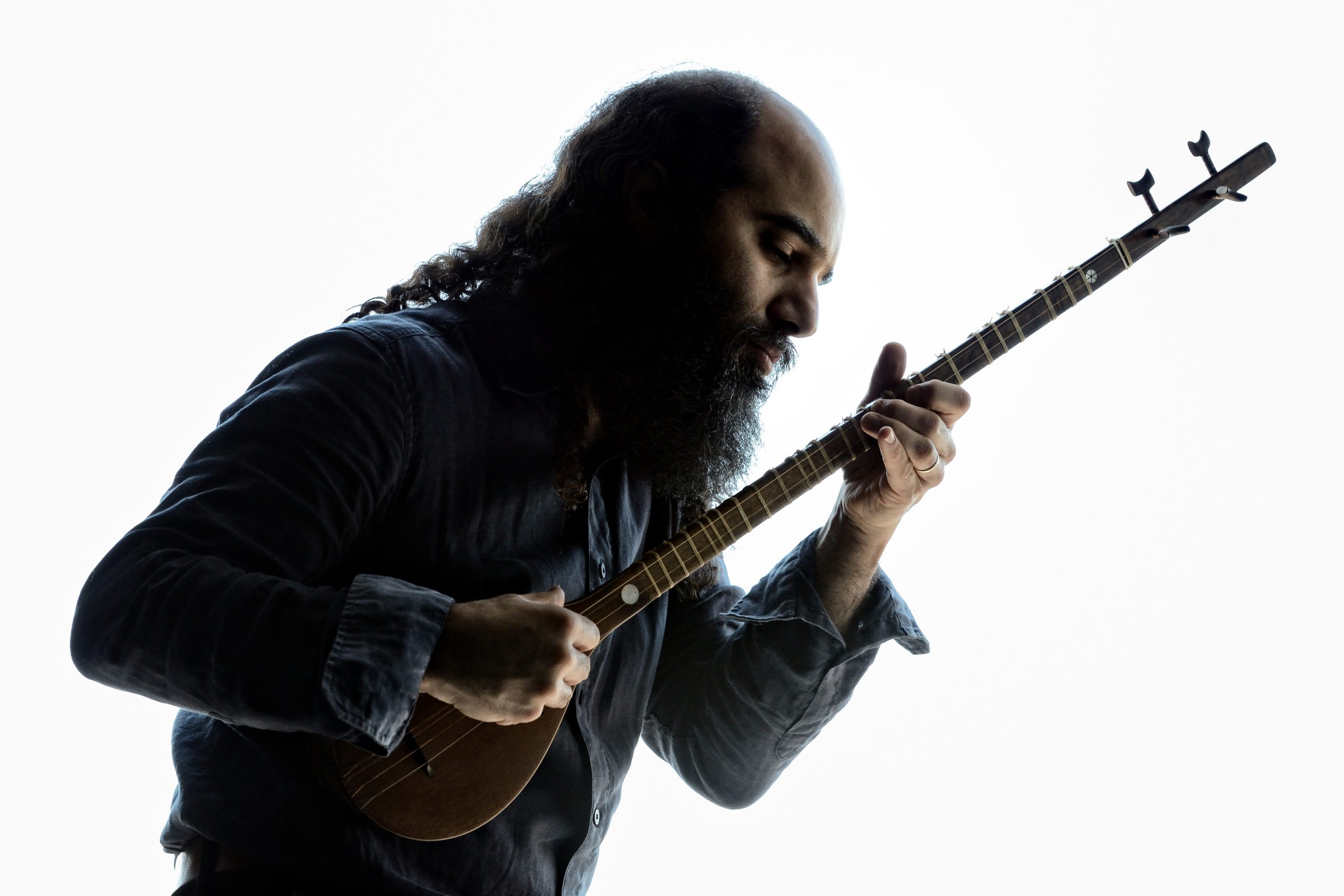
Kiya Tabassian, Setar & Shourangiz
In 1990, at age 14, Kiya Tabassian emigrated with his family to Quebec from his native Iran, bringing with him some initial musical training in Persian music. Determined to become a musician and composer, he continued his education in Persian music, studying with Reza Gassemi and Kayhan Kalhor. At the same time, he studied composition at the Conservatoire de musique de Montréal with Gilles Tremblay. In 1998, he co-founded Constantinople with the idea of developing an ensemble for musical creation that draws from the heritage of the Middle Ages and the Renaissance, of Europe, and of the Mediterranean and the Middle East. Serving as its artistic director, Kiya has developed close to 40 programs with Constantinople. Numerous musical groups and institutions have called upon his talents as a composer, including the Orchestre symphonique de Montréal, the Nouvel Ensemble Moderne and the European Broadcasting Union. He has also composed music for documentary and feature films, including Jabaroot and Voices of the Unheard. Since the summer of 2017, he has held the post of Associate Artist at Rencontres musicales de Conques festival in France. In 2017 he co-founded the Centre des musiciens du monde in Montreal. Kiya also sits on the Board of Conseil des arts et des lettres du Québec.
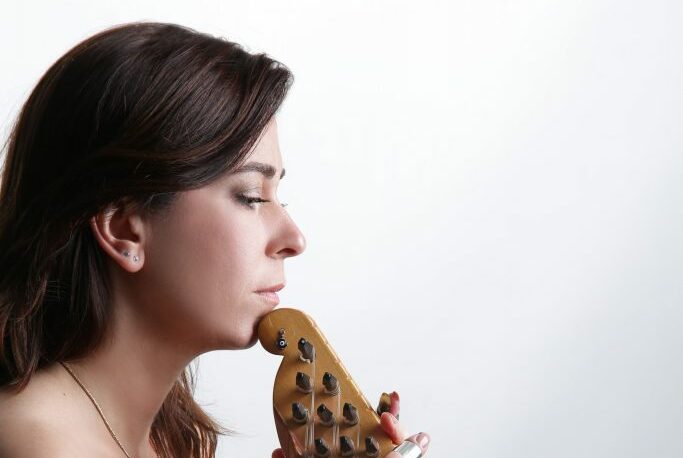
Didem Başar, Kanun
Born in a family steeped in music, kanun (Turkish zither) player and composer Didem Başar began her music education at the Istanbul Turkish Music State Conservatory when she was 11 years old. After completing the Conservatory’s kanun program, she continued training at the same institution and received a bachelor’s degree in composition.
Her interest in examining the effects of art on society led her to pursue a master’s degree in the musical analysis of Mevlevi music at Marmara University. She gave lectures on Turkish music and kanun playing techniques at Halic University’s Turkish Music Conservatory and the Istanbul University State Conservatory from 2001 until she moved
to Canada in 2007. Relocating to Montreal has given Didem the opportunity to reinterpret her music in a new environment whose vividness is the result of the turbulent convergence of manifold cultures flowing from different parts of the world.
After composing for different ensembles and playing with different artists over the past 15 years, Didem Başar wanted to create her own project, which would intersect her two musical influences: Turkish and Western classical music. During an artistic residency at the World Musicians Centre in Montreal, she was able to call on the talents of Noemy Braun, a classical cellist with a flair for improvisation, Guy Pelletier, a flute virtuoso and highly versatile musician known for exploring different genres and styles, Brigitte Dajczer, a violinist rooted in Eastern European and Romani folk music, and Patrick Graham, another remarkably versatile musician with a broad knowledge of different percussion instruments from all over the world. The album, Levantine Rhapsody, was released in February 2020 and received the Opus Award for best world music album of the year, as well as many other prestigious nominations.
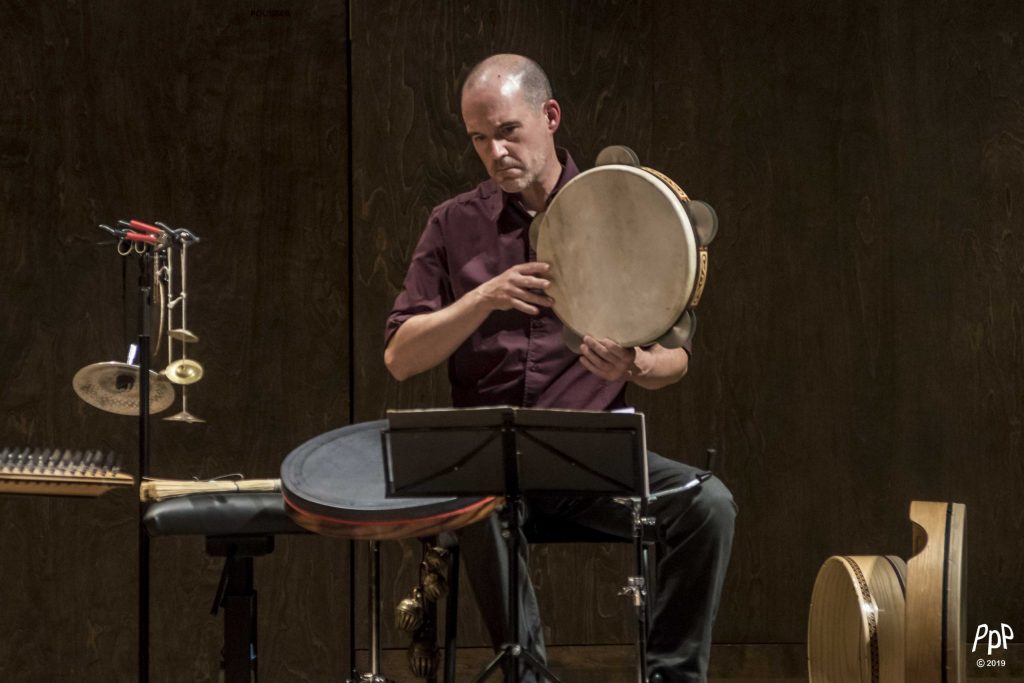
Patrick Graham, Percussion
Over a two decades career based in Montreal, Canadian multi-percussionist Patrick Graham has been described as a “master improviser… on the border of several forms of traditional and creative music, embracing the world of rhythm as a whole” (Yves Bernard, Le Devoir). Patrick displays a talent for fusing an eclectic array of influences—ranging from Japanese percussion, through Indian and Irish rhythms, to Mediterranean frame drumming—as a well as a passion for new sounds and improvisation. This unique cross-genre approach is reflective of an extensive and ongoing study of the art of percussion, including a Bachelor of Music from McGill University in Montreal, as well as private training in several countries with Trichy Sankaran, Glen Velez, Carlo Rizzo, Zohar Fresco and Taichi Ozaki. In addition, Patrick has attended workshops and master classes at the Banff Centre for the Arts, Simon Fraser University, the Labyrinth centre in Crete and participated in the Taiko Koh-Kan workshops conducted by the group Kodō, on Sado Island in Japan.
Patrick performs, tours and records regularly with many groups and ensembles, including Constantinople, as well as contributing to productions by IMAX, Cirque du Soleil and Ubisoft Games. Alongside a busy performing and recording schedule, Patrick is also active as an instructor, teaching percussion and rhythm workshops in Canada, the USA, India, China and Japan, as well as for the Cirque du Soleil.
In March 2020, Patrick released Lumina, his latest solo project.
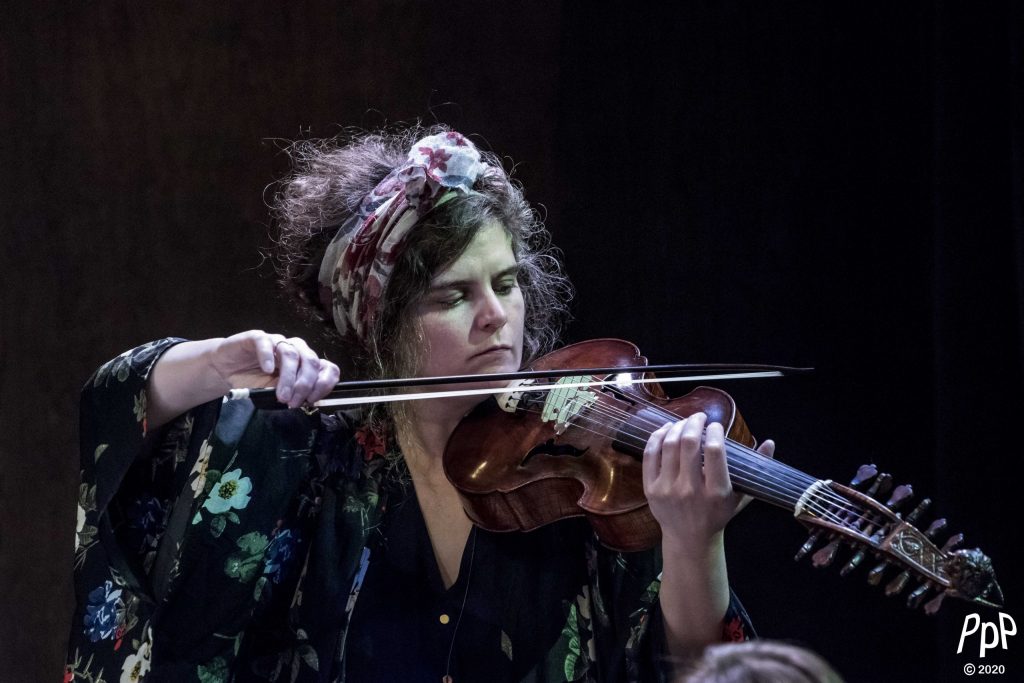
Tanya LaPerrière, Baroque Violin & Viola D'Amore
Recognized for the elegance and passion of her interpretations, Tanya LaPerrière is a graduated violin master of the Royal Conservatory of Brussels under the direction of Mira Glodeanu, as well as McGill University under the guidance of Chantal Rémillard. Co-solo violin of Arion orchestra, she also performs on Canadian and international stages with the celebrated ensembles Caprice, Constantinople, Studio de musique ancienne de Montréal, Clavecin en concert and Les Idées Heureuses. She is currently collaborating as a coach for the baroque orchestra at Université de Montréal (OBUM) alongside Luc Beauséjour.
She also leads as solo violin and founding member her quartet, Pallade Musica, winner of prestigious awards in Utrecht (Holland) and New York (United States), also nominated for two Opus Awards for their recordings on the Atma label. Ms. LaPerrière regularly performs as Concertmaster in Canadian ensembles and is building a solid reputation as a leader in early music throughout the country.