Christ Church Cathedral
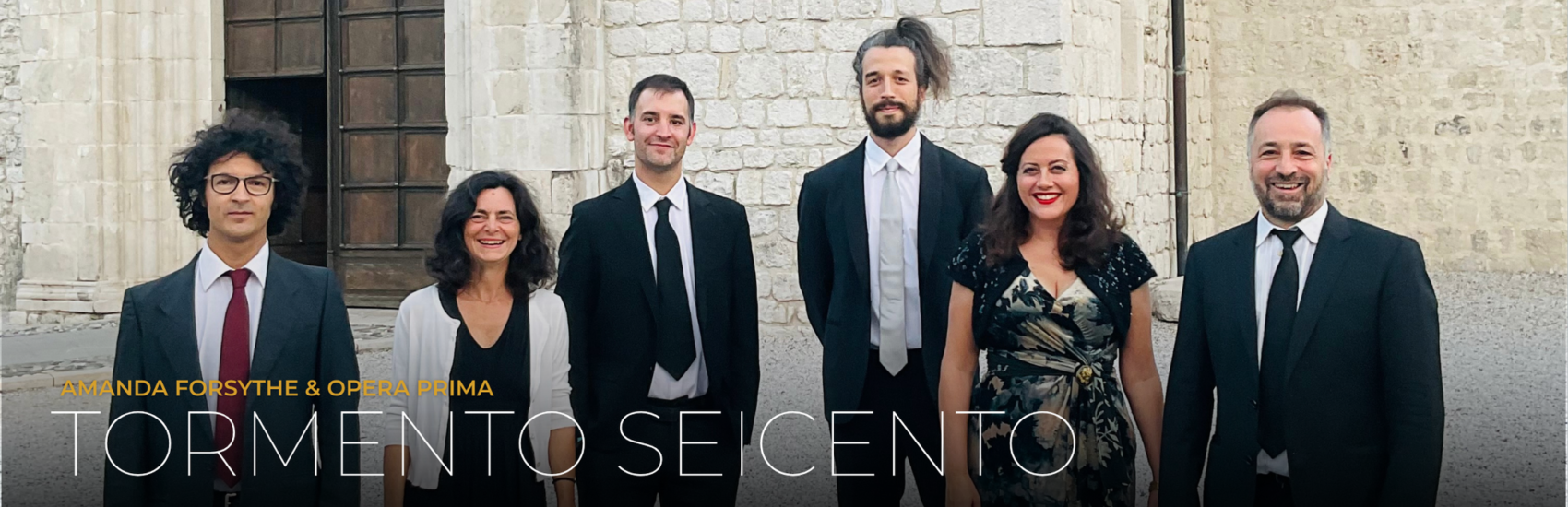
Tormento Seicento – Amanda Forsythe & Opera Prima
Artists: Amanda Forsythe, soprano, and Opera Prima, directed by Cristiano Contadin
Pre-concert Chat: TBA
Runtime: approximately 80 minutes
“In many ways, the music of the early Baroque period bears a stronger relationship to jazz improvisation than to the late Baroque composers,” writes soprano Amanda Forsythe in her program notes. “Musicians of the early Baroque were masters of improvisation and they invented melodies and harmonies with skill and confidence. The goal of this period in music was expression—the singer was at an advantage, with the text and melody notated, but the heart of this operation was the Basso Continuo, the musicians that interpreted the figured bass line.”
“Amanda Forsythe’s heartfelt dissonances, elegantly supported by the ensemble, cascade one onto the next, evoking a sense of longing that transcends time and place. This style of music hits directly at the heart and is a gentle—and at times forceful—reminder of the complexities of love and the human spirit, and the performers brought this fully to life.
– Jonathan Salaman (La Voce di New York)
Generously sponsored by Eric Wyness.
PROGRAMME:
Claudio Monteverdi (1567 – 1643)
Sinfonia per strumenti dall’ VIII libro di madrigali
Luigi Rossi (1697 – 1653)
Mio ben Aria per S e bc.
Tarquinio Merula (1595 – 1665)
Ballo detto Eccardo per 2 vl e bc
Domenico Mazzocchi (1592 -1665)
Sdegno campion audace aria x S e bc
Cipriano de Rore/ Girolamo Dalla Casa ( ? – 1601)
Anchor che col partire madrigale diminuito per la viola bastarda e bc
Barbara Strozzi (1551 – 1618)
Che si può fare aria per voce e bc
Gasparo Sartorio (1630 – 1680)
Perché quando apersi a l’aure vitali aria per voce e bc
Francesco Cavalli (1602 – 1676)
Dammi morte aria per voce e strumenti da “Artemisia”
Giovanni Kapsberger (1580 – 1651)
Canario per tiorba sola
Benedetto Ferrari (1603 – 1681)
Cantata spirituale per S e bc
Monteverdi
Voglio di vita uscire per S e bc
Merula
Ballo detto Pollicio per 2 canti, basso e bc
Kapsberger
Arpeggiata per arpa sola
Giulio Caccini (1551 – 1618)
Amarilli, mia bella Amarilli
Anonimo (XVII sec.)
inglese Amarilli, mia bella Amarilli
Maurizio Cazzati (1616 – 1678)
Ciaccona a 3 con il balletto della ciaccona per violino, cornetto e bc.
Rossi
La bella più bella aria per S e bc
Andrea Falconieri (1585 – 1656)
Passacalle a 3 per 2 canti, basso e bc
Ferrari
Amanti io vi so dire aria per voce, 2 vl e bc
Amanda Forsythe, Soprano
The American soprano Amanda Forsythe, celebrated for her performances on both sides of the Atlantic, is a regular soloist with the highly acclaimed baroque ensembles Les Talens Lyriques, the Monteverdi Choir and Orchestra, the Boston Early Music Festival, the Handel and Haydn Society, Boston Baroque, Tafelmusik, Apollo’s Fire, Opera Prima, Pacific Musicworks, Early Music Vancouver, and the Philharmonia Baroque Orchestra.
She sang Euridice on the recording of Charpentier’s La descente d’Orphée aux enfers with the Boston Early Music Festival which won the GRAMMY AWARD for Best Opera Recording. Her début solo album of Handel arias “The Power of Love” with Apollo’s Fire was recently followed with the highly praised “Heavenly Bach”.
She toured with the outstanding French countertenor Philippe Jaroussky, performing works based on the Orfeo myth, and subsequently recorded the role of Euridice in a new edition of Gluck’s Orfeo for the ERATO label. Her discography includes more than 25 albums and DVDs, many of them premiere recordings.
Equally at home on the concert platform and on the opera stage, in recent seasons Amanda Forsythe’s major concert engagements have included performances with the Boston Symphony, the Los Angeles Philharmonic, The Philadelphia Orchestra, the Chicago Symphony Orchestra, The Hong Kong Philharmonic, The New York Philharmonic, among others.
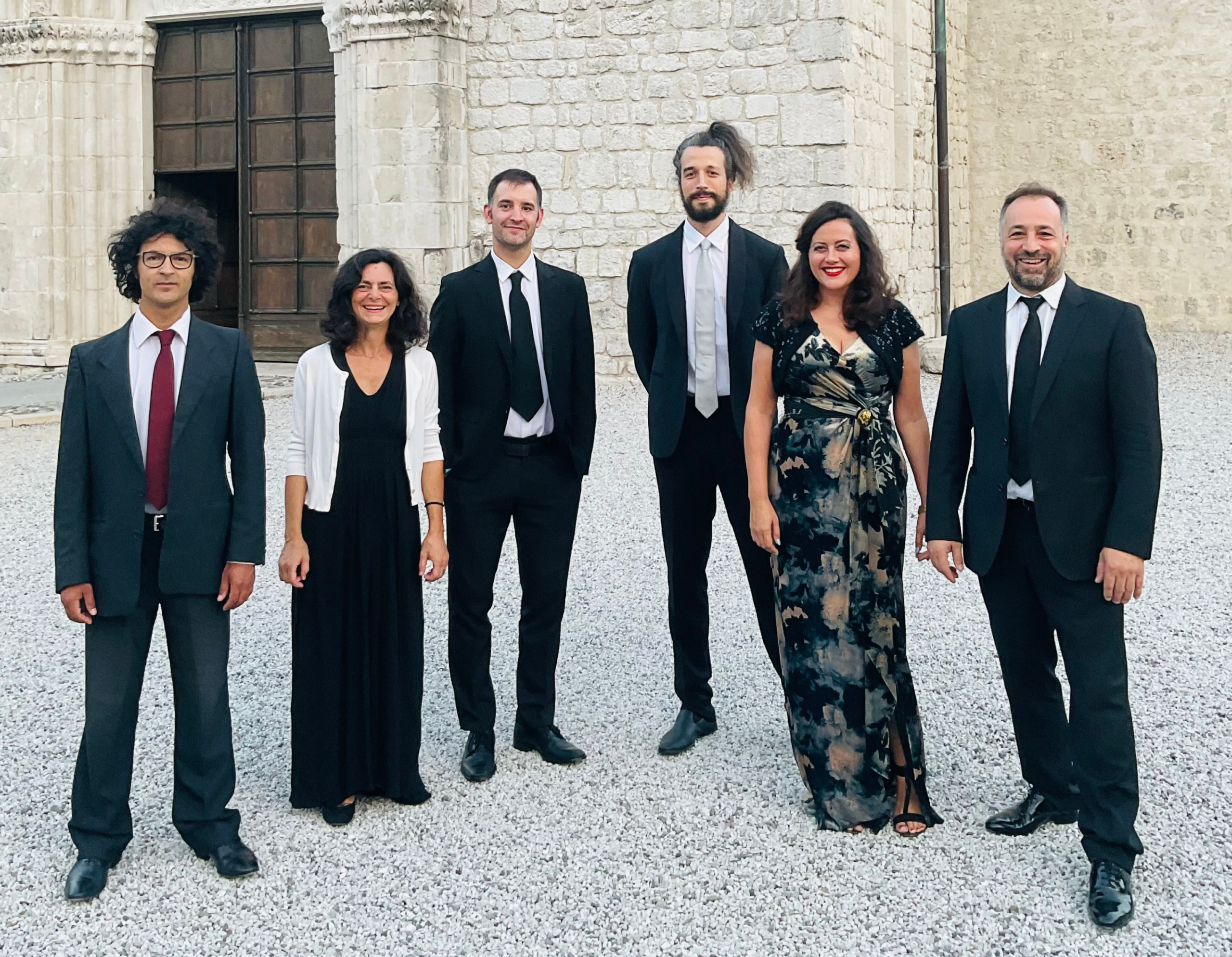
Opera Prima Ensemble
A newly established ensemble directed by Cristiano Contadin, was created to bring historically informed concerts and recordings of the Renaissance and Baroque period to life. The heart of the project lies in exploring the repertoire of the viola da gamba in its various styles, and approaching all music with pleasure and enthusiasm, as if each work for this instrument was newly-composed. If, through passionate communication, we can touch the hearts of the public, then the language of early music will be easy to understand.
The first recording by Opera Prima, “The Complete Telemann Trio Sonatas and Concertos”, for the Brilliant Classics label, received critical acclaim at the national and international level, and was proclaimed by Classic Voice Magazine as CD of the month in February 2015, while Musica Magazine confirmed Cristiano Contadin as “a first-rate artist for the sweetness of the sound, the stylistic relevance and the absolute mastery of the instrument”. Opera Prima has performed concerts at festivals in Italy, Greece, Suisse, Slovenia, Estonia and United States. Recent Opera Prima recordings include Dowland’s Lacrimae (awarded “Disc of the Month” by Musica magazine and praised by Fanfare as “a fabulous performance”),Torna Vincitor, an all-Graun disc of cantatas and viol concerto with Amanda Forsythe soprano (chosen by Opera News as the Critic’s Choice in March 2021), a 2023 recording of Tartini (Klassik Heute claims Opera Prima “deliver[s] a buoyant orchestral sound with sensitively executed solos and decisive ensemble direction by Contadin, who also captivates as a soloist with temperament, empathy and sensitivity”), and just recently, a disc of Handel’s Roman cantatas with soprano Amanda Forsythe.
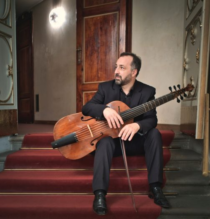
Cristiano Contadin, Director
Cristiano Contadin is an Italian viola da gamba player and the founder of the Opera Prima Ensemble, a chamber music group of internationally-acclaimed soloists devoted to the baroque repertoire. As a gamba soloist and continuo player, he collaborates with ensembles in Italy and abroad, including I Barocchisti, Les Musiciens du Prince, Il Suonar Parlante, Accademia Bizantina, Akademie für Alte Musik Berlin, La Venexiana, Odhecaton, Orchestra Sinfonica “G.Verdi” (Milan), Orchestra Filarmonica della Scala (Milan), Cantar Lontano, and the Boston Early Music Festival.
With the “Quartetto Italiano di Viole da Gamba”, “Il Suonar Parlante”, and as a soloist, he aims to cultivate a repertoire that embraces ancient as well as modern viol consort music. He has performed works by contemporary composers and jazz artists such as Kenny Wheeler, Uri Caine, Don Byron, Ernst Reijseger, Markus Stockhausen, and performed in the Italian premiere of George Benjamin’s Written on Skin with the Orchestra Haydn of Bolzano.
Mr. Contadin teaches Viola da Gamba and chamber music at the Conservatory B. Marcello in Venice. He has given lectures and master-classes at the Estonian Academy of Music and Theatre of Tallinn, the Conservatorio Superior de Musica de Vigo and of Salamanca, Mozarteum of Salzburg, at the Longy School of Music of Bard College, at Harvard University and Wellesley College in Boston. Mr. Contadin plays an anonymous Venetian bass viol from the 18th century.
Here are links to three
videos- one is a general promo for the concert and the other is a complete song. I’m also including a link to our pre-concert interview with BEMF.