Blue Shore Financial Centre for the Performing Arts, Capilano University
Artists: En Chordais and Constantinople directed by Kiya Tabassian
Based in Thessaloniki, Greece, En Chordais is active in the learned and popular multicultural musical traditions of the Mediterranean. The ensemble fuses contemporary musical trends with Byzantine art music and Greek regional idioms and joins forces with Constantinople to present works from newly discovered Byzantine manuscripts dating from 1480 to 1800.
This concert is generously supported by the RPC Family Foundation.
PROGRAMME
Segah Muhammes Pesrev
Anonymus, MS Gritsanis 3 (Zakynthos island, 18th century)
Täsnîf Persikon
Abdülkadir Marâghî (~1350 – 1435), MS Leimonos 259 (Lesvos island, dated 1572).
Chairesthe kampoi chairesthe ~
(Plains be happy)
Greek traditional song, MS Iviron 1189 (Mont Athos, dated 1562).
Evic Semai
Şâh Abbâs (1571-1629), MS Hellenic Philological Association of Constantinople 44 (18th century)
Nevâ [Peşrev] [Persikon]
Anonymus, MS Konstantinos Psachos Library – University of Athens 60 (18th century)
Anarchos Theos, Byzantine Carols
(Beginningless God)
Anonymus, MS Gritsanis 8 (Zakynthos island, dated 1698)
Hüseynî ‘Aşirân Ağir Semâ’î
Hânende Zacharias (18th century), MS Hellenic Philological Association of Constantinople 44 (18th century)
Gavesht Saz Semai
Dimitri Cantemir (1673-1723), MS Istanbul Universitesi Kutuphanesi, Turkiyat Enstitusu, 2768.
Pote kaneis as men ipi
(Never let anyone say)
Petros Peloponnesios (1740-1778), MSS RAL 927, 62r / RAL 925, 6r / LKP 19/173, 118r / ELIA, 75r / RAL 784, 10r / Iaşi 129, 47 / Vatopediou 1428, 48.
Valte filoi mes ti vrysi, to krasi mas na drosisei
(Friends, put our wine in the tap to cool)
Nikeforos Kantouniares (ca. 1770-ca. 1820), verses by Athanasios Christopoulos (1772- 1847). MSS RAL 784, 81r / Iaşi 129, 309 / Vatopediou 1428, 316.
Hicâz [Saz] Semâ’î
Anonymus, MS Konstantinos Psachos Library – University of Athens 60 (18th century)
Hejāz Kar
Anonymus, MS Hellenic Philological Association of Constantinople 44 (18th century)
PROGRAMME NOTES
Both ensembles «En Chordais» and «Constantinople» have devoted special attention and energy to the promotion of intercultural dialogue, identifying and promoting the many levels at which the musical heritages of the Mediterranean and beyond are intimately connected and interdependent. By this project both ensembles join their talents again and propose a unique opportunity for the audience to hear the sounds of Eastern Mediterranean Art Music in the 14th to 19th centuries.
The recent research undertaken by Dr. Κalaitzidis on Byzantine and Post-Byzantine music manuscripts is the cornerstone of this program. These manuscripts allow us with a fair degree of certainty to reach historical depths that were previously unattainable. It is worth noting that from the middle of the 10th century Byzantine music teachers developed a system of music notation based phonetic signs. About 7,500 Byzantine and Post-Byzantine music manuscripts survive today. This project deals with the phenomenon of the use of this Byzantine system of notation for the writing down of secular music, whether of Greek, Persian, Ottoman or Arabic origin.
Today, the Post-Byzantine music manuscripts are considered one of the most significant written sources for secular music of the East: a total of 4,200 pages containing transcribed secular pieces. The manuscripts mention seventy-four named composers including Greeks, Turks, Persians, Arabs, Jews, as well as many anonymous composers, with a total of approximately 1060 works recorded within them: Ottoman court music, Phanariot songs, Persian Art Music, as well as a few Greek folk songs. Some of these compositions have been transcribed into staff notation and published recently by the National Music University – Bucharest.
These written sources provide us with an astounding possibility to know and hear examples of Mediterranean Art Music from these centuries. We believe that it is most interesting to present this musical tangible evidence of the relationships within the Byzantine and neighbouring musical heritages, and the curiosity and openness of the musicians at the time, to understand and integrate idioms other than their own. Furthermore, this concert will underline the presence of Mediterranean music culture and its dialogue with the other major cultural forces throughout a significant phase of the history of what is today the Middle East.
The fruitful collaboration of the two ensembles «En Chordais» and «Constantinople» go back to 2000. Since then, they have worked together on numerous projects and presented nearly 50 concerts around the world. This project is a dream come true, after so many years of collaboration, discussion, and research on the manuscripts. The rediscovery and interpretation of these masterpieces by visionary composers of the past, is an overwhelming process and brings to light the beauty and intercultural facet of this musical art.
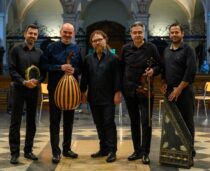
En Chordais
En Chordais is based in Thessaloniki (Greece). The ensemble is active in the domain of multicultural, learned and popular musical traditions of the Mediterranean, exploring both their creative continuity and their meeting with contemporary musical trends, in a fusion mood. Through an osmotic procedure the group successfully combines Byzantine and art music of Mediterranean with Greek regional idioms and contemporary music. Collaborating occasionally with virtuosi from all over the world, the ensemble presents a multimedia mosaic dating from the 13th century to today. The result is a timeless dialogue between different cultures and eras.
Renowned for extensive research on the musical legacy of the East Mediterranean, En Chordais has entranced audiences all over the world. This appreciated ensemble has been invited to perform in very special and important concert halls: the Library of Alexandria, the Grace Rainey Rogers Auditorium of Metropolitan Museum of Art in New York, the Institut du Monde Arabe and Théâtre de la Ville in Paris, the BOZAR in Brussels, the City Hall Concert Hall in Hong Kong… are just some of them. The group has also collaborated with top musicians from Greece, the Arabic world, Iran, Turkey, Israel, China, Canada as well as from Europe.
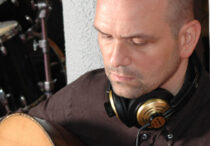
Kyriakos Kalaitzidis, oud, dir.
Kyriakos studied Theology in Aristotle University of Thessaloniki and Byzantine Musicology in Athens University, where he obtained his PhD. He is also an active oud player, composer and artistic director of En Chordais centre for musical traditions of the Mediterranean.
His research interests focus on the Post-Byzantine Music Manuscripts as a Source for Oriental Secular Music and includes documentation, commentary and transcription into staff notation.
He has given lectures, workshops and master classes at various universities and music academies and among his publications, we can distinguish his dissertation & Post-Byzantine Music Manuscripts as a Source for Oriental Secular Music & published by the Orient Institut - Istanbul & Ergon-Verlag.
As a member of En Chordais or as soloist he has given more than 2000 concerts in 45 countries in major festivals and venues, among them at Berlin Philharmonie, Sydney Opera House, Philharmonie de Paris, Lincoln Center (New York), Fès Festival (Morocco), Shanghai Opera House, Cervantino Festival (Mexico).
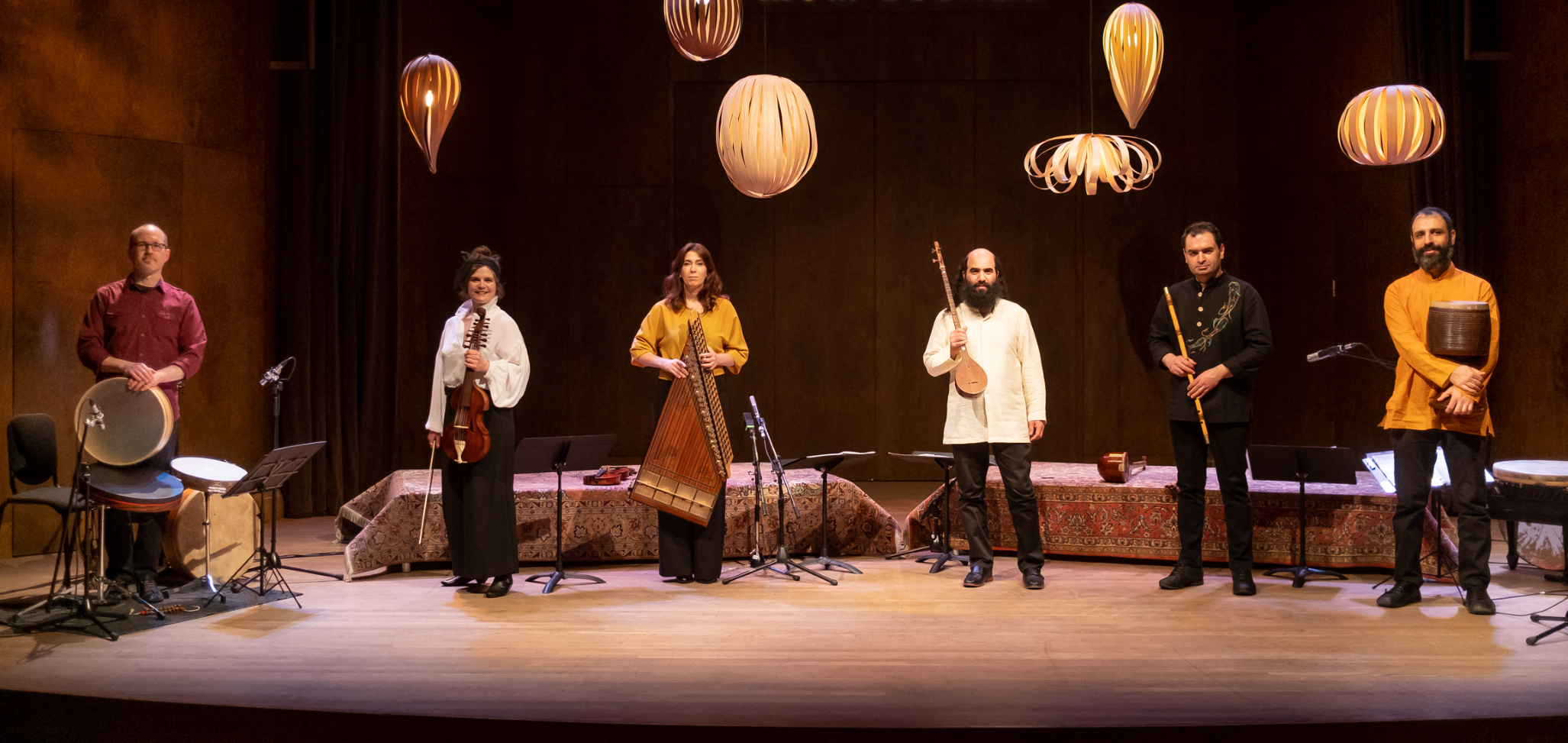
Ensemble Constantinople
Founded in 1998 by its artistic director Kiya Tabassian, Constantinople is a musical ensemble inspired by the ancient city straddling the East and West. Since its founding, the ensemble promotes the creation of new works incorporating musical elements of diverse musical traditions around the world; drawing from medieval manuscripts to a contemporary aesthetic, passing from Mediterranean Europe to Eastern traditions and New World Baroque. Underpinned by a spirit of research and creation, Constantinople has joined forces with leading international artists such as: Marco Beasley, Suzie LeBlanc, the Mandinka griot Ablaye Cissoko, the Greek ensemble En Chordais, the Belgian duo Belem, The Klezmatics, sarangi virtuoso Dhruba Ghosh, and Iranian kamancheh master Kayhan Kalhor. They are regularly invited to perform in international festivals and prestigious concert halls including: the Salle Pleyel (Paris), the Berliner Philharmonie, the Fes Festival of World Sacred Music (Morocco), the Rencontres musicales de Conques (France), the Aga Khan Museum (Toronto), the Cervantino Festival (Mexico) and the Festival de Carthage (Tunisia). Constantinople has 19 albums to its credit. Over the past fifteen years, Constantinople has created nearly 50 works and travelled to more than 240 cities in 54 countries.
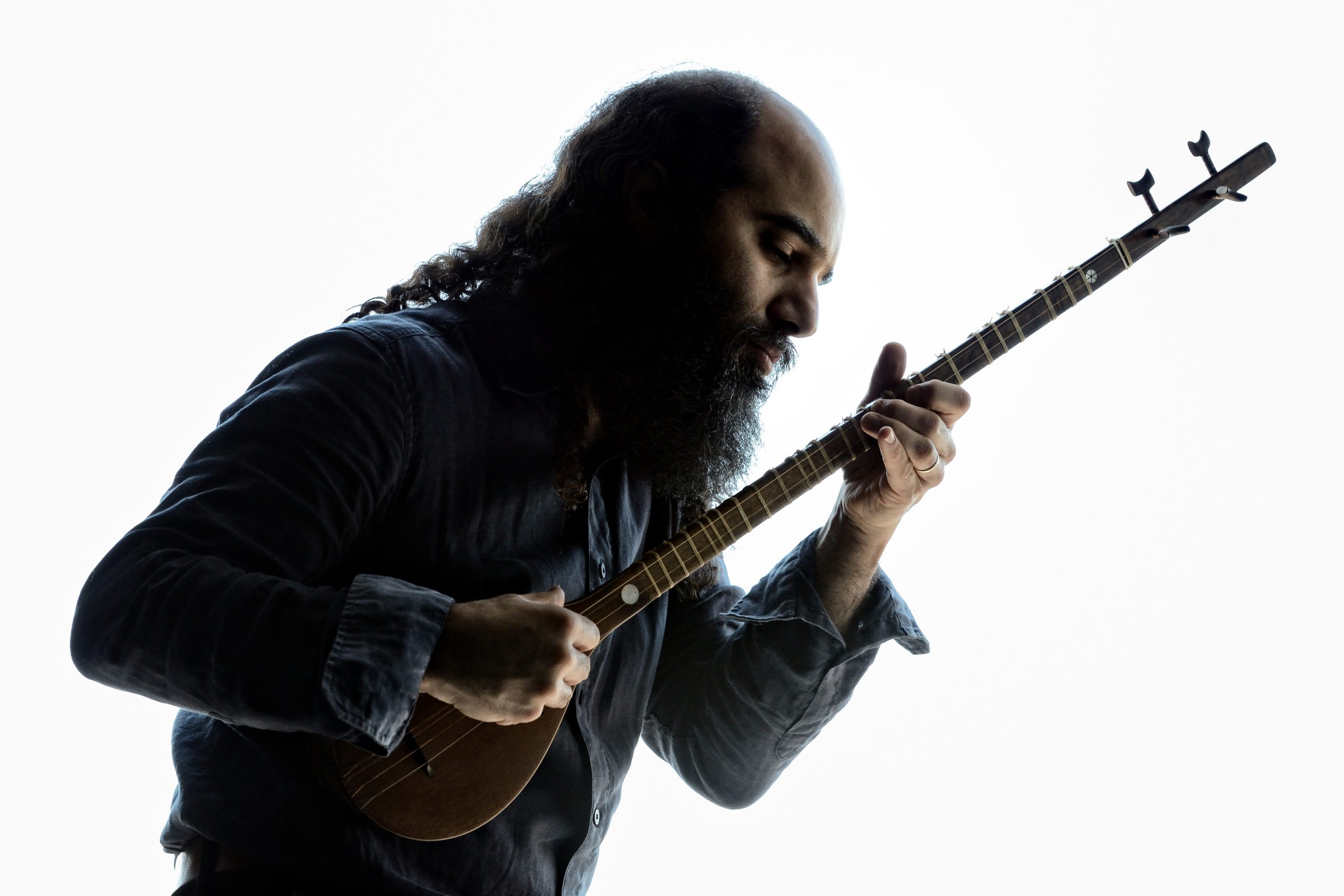
Kiya Tabassian, dir.
In 1990, at age 14, Kiya Tabassian emigrated with his family to Quebec from his native Iran, bringing with him some initial musical training in Persian music. Determined to become a musician and composer, he continued his education in Persian music, studying with Reza Gassemi and Kayhan Kalhor. At the same time, he studied composition at the Conservatoire de musique de Montréal with Gilles Tremblay. In 1998, he co-founded Constantinople with the idea of developing an ensemble for musical creation that draws from the heritage of the Middle Ages and the Renaissance, of Europe, and of the Mediterranean and the Middle East. Serving as its artistic director, Kiya has developed close to 40 programs with Constantinople. Numerous musical groups and institutions have called upon his talents as a composer, including the Orchestre symphonique de Montréal, the Nouvel Ensemble Moderne and the European Broadcasting Union. He has also composed music for documentary and feature films, including Jabaroot and Voices of the Unheard. Since the summer of 2017, he has held the post of Associate Artist at Rencontres musicales de Conques festival in France. In 2017 he co-founded the Centre des musiciens du monde in Montreal. Kiya also sits on the Board of Conseil des arts et des lettres du Québec.