
Christ Church Cathedral
Subscriptions: To purchase tickets to this performance as part of a subscription to 3 or more concerts and receive a 25% discount off the full ticket price, please call Early Music Vancouver’s box office at 604-732-1610 or email boxoffice@earlymusic.bc.
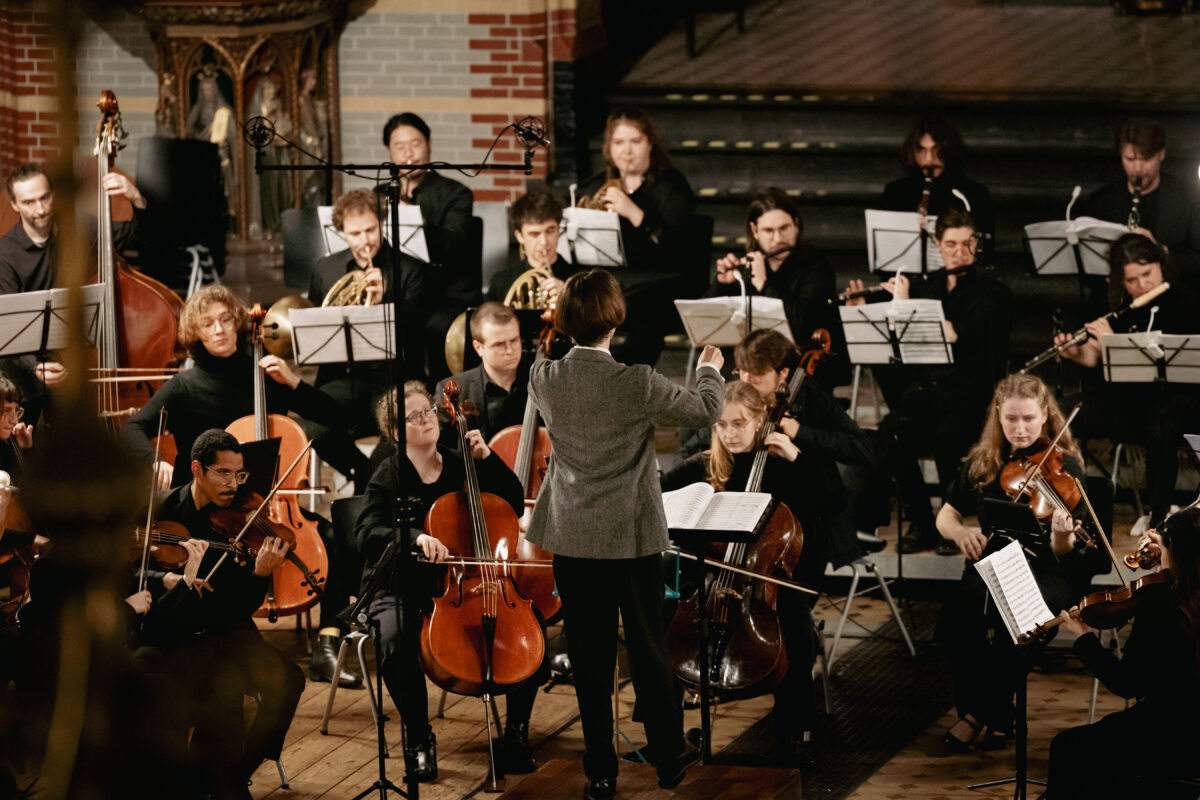
Artists: Baroque Orchestra Mentorship Programme (BOMP) under the direction of EMV 2022 Artist-in-Residence David McGuinness and Chloe Meyers; Isaiah Bell, tenor; and Ellen Torrie, soprano
Scottish music found its way into European consciousness in the 17th and 18th centuries. Georg Muffat’s family left Scotland to escape religious persecution. They settled in Savoie in the French Alps, and Muffat grew to be one of the century’s most cosmopolitan musicians – spending time with Lully in Paris and Corelli in Rome. His elegant and lush Armonico Tributo sonatas bring together aspects of both French and Italian music and were given their first performances by Corelli’s orchestra.
Francesco Gemignani’s wonderfully elaborate arrangements of Scottish songs and tunes appeared in a book entitled A Treatise of Good Taste in the Art of Music. He did know a thing or two about good taste, being an art dealer, as well as a violin virtuoso and composer who had studied with Corelli in Rome several decades after Georg Muffat. We do not know if Geminiani ever set foot in Scotland. He made his arrangements of Scottish music from some tunes he found in the immensely popular songbook The Tea- Table Miscellany, by Allan Ramsay. Songs from Ramsey’s Tea-Table Miscellany will be featured in a concert later in the Festival.
The Baroque Orchestra Mentorship Programme is a collaboration between Early Music Vancouver, the UBC School of Music and the Pacific Baroque Orchestra. This year-long programme gives student and community musicians the chance to play side by side with experts in historically-informed performance. This unique mentorship initiative is designed to foster and inspire the next generation of early music performers, and support the region’s early music community.
This concert is generously supported by Pam Ratner and Joy Johnson
Pre-concert talk: Join us at 6:45 p.m. for a pre-concert interview with Suzie LeBlanc and Marie Nadeau-Tremblay. This talk is included in the live concert ticket price.
PURCHASING TICKETS
Click here to purchase tickets.
Subscriptions: To purchase tickets to this performance as part of a subscription to 3 or more concerts and receive a 25% discount off the full ticket price, please call Early Music Vancouver’s box office at 604-732-1610 or email boxoffice@earlymusic.bc.
PROGRAMME
Georg Muffat
Armonico Tributo
Sonata III
Grave
Allegro
Courente
Adagio
Gavotta
Rondeau
Francesco Geminiani
The Lass of Peaty’s Mill
The Night her Silent Sable Wore (She Rose and Loot Me In)
Robert Mackintosh
Air (Allegro)
Air (Andante)
Miss Burnett of Monboddo’s Reel
Mrs. Richard Walpole’s Reel
Henry Purcell – Thomas D’Urfey
Aminta One Night Had Occasion to Piss
(tune: Mr Purcell’s Jigg Z.430)
Henry Purcell – James Oswald
Moonlight on the Green
Scotch Tune (Amphitryon Z.572)
Henry Purcell – John Dryden
Fairest Isle (King Arthur, Z.628)
Henry Purcell – James Oswald
First Music: Hornpipe (The Fairy Queen Z.629)
Lads of Leith
Sodger Lad
Georg Muffat
Armonico Tributo
Passacaglia from Sonata V
PROGRAMME NOTES
Tonight’s concert demonstrates just some of the ways in which Scots and Scottish music found their way into European cultural consciousness in the 17th and the 18th centuries.
It’s questionable whether such an international figure as the composer Georg Muffat can really be classed as a Scot, but one possible measure is whether he would qualify for a place in the national football team, assuming he had the necessary ball skills of course. In this respect Muffat succeeds, as his family had only left Scotland earlier in the 17th century for Savoy in the French Alps to escape religious persecution. He became one of the century’s most cosmopolitan musicians, spending time with Lully in Paris and Corelli in Rome, learning the contrasted French and Italian musical styles from the towering figures at the head of each, and eventually settling in Germany. Had he ever returned to Scotland, he might have been known as Georgie Moffat. His elegant, lush Armonico Tributo sonatas bring together aspects of both French and Italian music, and were given their first performances by Corelli’s orchestra.
The third sonata is perhaps the most French of the five, with an unmistakably French Courante (although Muffat spelled it a little more like the Italian Corrente), and a similarly tripping Rondeau. Amongst the elegance, there are clearly very personal touches in the music too. Right at the very end of the monumental Passacaglia which ends the Armonico Tributo collection, and also ends tonight’s concert, the soaring theme that’s been weaving through the previous nine minutes of music is suddenly taken away from the first violinist, and for its very last utterance is given to the second violin instead. Was the second violinist Muffat himself, taking a bow in Corelli’s home for his masterful composition? When he came to revise the piece nearly two decades later for publication in Passau, the swap had disappeared …
In 1749 Francesco Geminiani’s wonderfully elaborate arrangements of Scots songs and tunes appeared in a book which he misleadingly titled A Treatise of Good Taste in the Art of Music, as the rest of the book is a short instruction manual on how to play the harpsichord as loudly and as resonantly as possible. He did know a thing or two about good taste, being an art dealer as well as a virtuosic, if headstrong, violinist and composer, and he had studied with Corelli in Rome several decades after Georg Muffat. He hadn’t yet visited Scotland when he made his arrangements of Scottish music, but he knew the songs through the immense London popularity of William Thomson’s song collections entitled Orpheus Caledonius (1726 & 1733). Thomson in turn had taken all of the songs from Allan Ramsay’s The Tea-Table Miscellany which Ramsay was none too pleased about, and Thomson had carefully tailored them for a metropolitan audience, taking out the wilder aspects of both the tunes and their execution, and replacing them with vocal virtuosity in a more familiar idiom.
Not being Italian was violinist and composer Robert ‘Red Rob’ Mackintosh’s big career mistake in the late 18th century, when to lead an orchestra in Scotland, an Italian name was effectively a requirement. Despite having a flashy technique and connections with the best London musicians, the Edinburgh Musical Society refused to take him on, and his one season as orchestral leader in Aberdeen ended badly, with him being demoted to the second violins: after this, his leaving Scotland for London was clearly a wise move. He’s best known now for a legacy of brilliant characterful reels which are still played in the fiddle tradition, but his music also includes quirky sonatas and chamber music in a number of styles, including the unusual combination of minuets with reels.
The London musicians of Henry Purcell’s world moved in similarly varied circles: his contemporary Francis Forcer who ran Sadler’s Wells music house, had been the organist of Durham Cathedral, but he was also a fiddler and a dancing master. When Purcell composed a hornpipe, it wasn’t an abstract musical form, but a real dance, associated with a real sailors. Some of Purcell’s own ‘Scotch Tunes’ are clearly derived from London stage parodies, but others are genuine Scottish and Irish tunes that were in circulation among musicians in the English capital, and which found their way back to Scotland, sometimes anonymously.
James Oswald, originally from Fife, had moved from Edinburgh to London in 1741, after already proving himself versatile as a publisher, composer, dancing master and cellist. Eventually he was to be court composer to George III, but first the books which were the basis of his commercial London success were a series of twelve small volumes titled The Caledonian Pocket Companion, which gathered together tunes from a huge variety of sources, some Scottish, and some not so much. In Book 4 (1752), James Oswald set the melody of Purcell’s Fairy Queen Hornpipe as a slow tune on the same page as The Lads of Leith, a traditional-style air probably composed by himself. The stream-of-consciousness nature of the Pocket Companion suggests that one tune had reminded him of the other.
The Lads of Leith is one of the melodies which Robert Burns borrowed from Oswald’s Pocket Companion for his verses. In Cape Breton, it is played as a jig and is known as Beauties of the Ballroom because it was arranged and published by J. Scott Skinner in a collection by that name. Sodger Lad is a traditional jig whose early sources include Henry Playford’s Apollo’s Banquet … Several New Scotch Tunes for the Treble Violin (London, 1663-1690), and the Margaret Sinkler manuscript from Glasgow where it’s titled ‘Northland Ladie’. Robert Burns noted of the words for the song that ‘The first verse of this is old; the rest is by [Allan] Ramsay’, who had published it in his Tea-Table Miscellany, vol. 2 (Edinburgh, 1726).
Later it was included in many fiddle-tune collections, including those by the Gow family.
The parody of Purcell’s ‘When first Amintas su’d for a Kiss’ by Tom D’Urfey is from his Songs Compleat, Pleasant and Divertive of 1719, better known as Pills to Purge Melancholy. For this we can only apologise. But we can restore a more noble sentiment, albeit one with a satirical edge, in John Dryden’s verse for ‘Fairest Isle’, sung by Venus in the final masque of the semi-opera King Arthur. If there is a whiff of British exceptionalism in the notion of Cupid’s ‘Fav’rite Nation’, Dryden’s wish for Love to prevail over political machinations (in this case the dispute over the rightful successor to Charles II) is a worthy message to be carried by Purcell’s matchless music.
- David McGuinness with David Greenberg
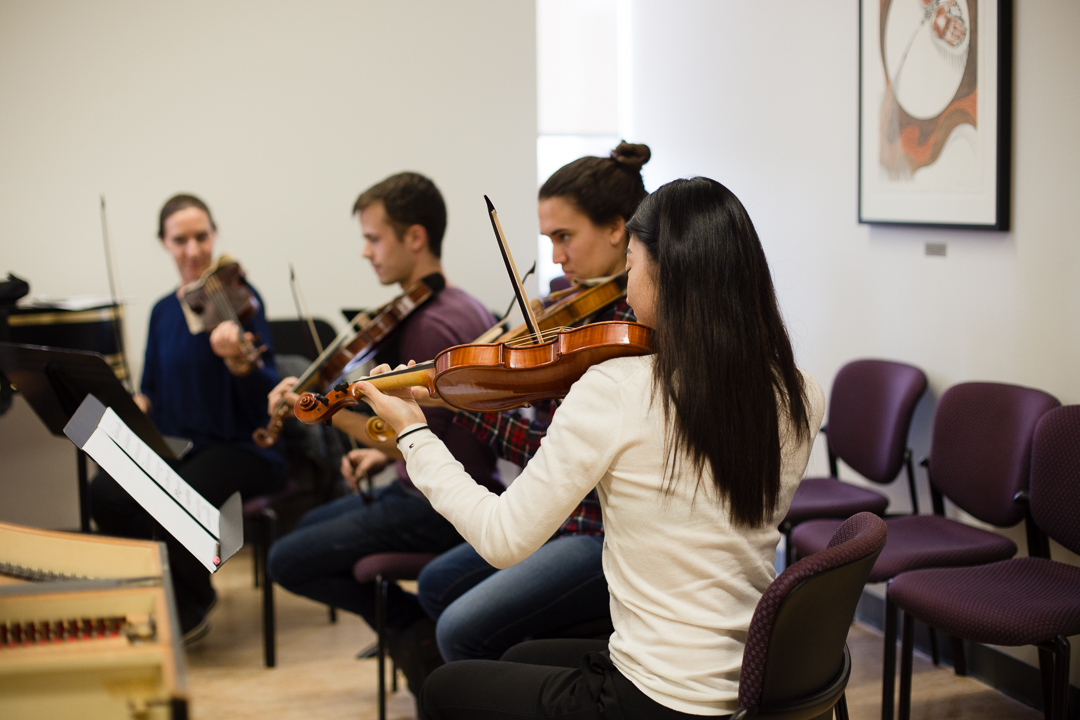
Baroque Mentorship Orchestra
Eleven years ago a new and exciting educational initiative took root in Vancouver, a Baroque Mentorship Orchestra in which the seasoned professionals of the Pacific Baroque Orchestra rehearse and perform side-by-side with students and aspiring young artists from the community. The programme is made possible by the collaboration of Early Music Vancouver, Pacific Baroque Orchestra, and the University of British Columbia, and thanks to the generosity of Vic and Joan Baker. The mentorship orchestra is directed by Alexander Weimann. Chloe Meyers and Natalie Mackie serve as regular mentors, aided by many other specialist coaches for strings, woodwinds, and brasses. The orchestra has offered an ambitious variety of music from the 17th and 18th centuries: highlights have included Telemann’s Don Quixote Suite, Handel’s Fireworks Music at the Chan Centre, a spicy programme of Mediterranean music entitled Fandango!, excerpts from Handel’s magnificent early opera Agrippina, and a festival of Telemann concertos and suites.
David McGuinness, Dir.
David McGuinness divides his time between historical Scottish music and contemporary work. As director of early music ensemble Concerto Caledonia he has made fifteen albums, mostly of newly-rediscovered repertoire, and collaborated with musicians in a variety of genres from folk to punk cabaret.
Recently he has been playing historical pianos in traditional music: 2018’s What News is a collection of traditional Scots ballads with the singer Alasdair Roberts and sound artist Amble Skuse, and in 2022 he recorded an instrumental album with concertina player Simon Thoumire. In the ongoing performance project Nathaniel Gow’s Dance Band, Concerto Caledonia plays late 18th-century Scottish dance music while the audience dances the original figures.
David has been a music producer and composer for television and radio, most notably on several seasons of E4’s TV drama Skins. In 2007 he produced John Purser’s 50-part history of Scottish music for BBC Radio Scotland and co-ordinated the station’s observance of No Music Day with the artist Bill Drummond. In 2019 Sony Music reissued the Prefab Sprout album I Trawl the Megahertz, for which he provided the string arrangements.
He is Senior Lecturer in music at the University of Glasgow, and was principal investigator on the AHRC-funded research project Bass Culture in Scottish Musical Traditions. 2022 sees the publication of his edition of the music for Allan Ramsay’s ballad opera The Gentle Shepherd for Edinburgh University Press, and a recording with Concerto Caledonia of Ramsay’s songs.
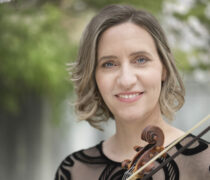
Chloe Meyers | Sponsored by Jill Bodkin, Dir., violin
Violinist Chloe Meyers performs with early music ensembles across North America as leader, orchestra member, and chamber musician. She is the concertmaster of the Pacific Baroque Orchestra in Vancouver and co-concertmaster of Arion Baroque Orchestra in Montreal. She has led or appeared as soloist with groups including the Victoria Baroque Players, Pacific MusicWorks, Ensemble Les Boréades, the Theatre of Early Music, Ensemble Masques, and Les Voix Baroques, of which she was a founding member. She has had the pleasure of sharing the stage with international violin stars, performing double concerti with Stefano Montanari, Enrico Onofri, Amandine Beyer, and Cecilia Bernardini. Chloe’s playing may be heard on many award-winning disks, including the 2022 Juno award winning recording “Solfeggio”… in which she leads the orchestra L’Harmonie des Saisons as concertmaster. In 2023 she was nominated as Best Musical Director for her work in Pergolesi’s Stabat Mater with the Edmonton Opera.
Alongside Chloe’s passion for performance and directing, is her love of teaching. As adjunct professor at the University of British Columbia, she trains young artists in the Baroque Orchestra Mentorship Program, chamber music and solo lessons. She has years of teaching children, university and students of all ages and levels! She is an active teacher in the summer Victoria Conservatory teaching programs, as well the UVic Collegium orchestral program.
Chloe lives in Ladner, BC, with her ever growing family and dog.

Isaiah Bell, tenor
Canadian-American tenor Isaiah Bell sings across North America as a soloist in concert and opera. Having distinguished himself early as an interpreter of Handel, Benjamin Britten, and Bach’s Evangelists (Lincoln Center, Edinburgh Festival, Toronto Symphony), he has also found an artistic home in new creations. He was Antinous in the world premiere of Rufus Wainwright and Daniel MacIvor’s Hadrian at the Canadian Opera Company (2018), and brought “immense stage presence” and a “powerful, beautiful instrument” to La Reine-garçon (Bilodeau/Bouchard, 2024) at Opéra de Montréal. Reviewing his queer pandemic-era revamp of Poulenc’s La voix humaine, Opera Canada admired “a finely tuned performance, so perfectly married to his own sensitive and intelligent adaptation.”
Isaiah also composes and writes for the theatre. His chamber-opera/cabaret-theatre solo show The Book of My Shames has garnered overwhelming audience response: “impossibly beautiful” … “broke my heart wide open with the pure honesty, raw vulnerability and humanity of it” … “I honestly thought this was one of the most compelling shows I’ve ever seen.” The piece, a genre-defying, funny, and shockingly candid theatrical fusion co-created with director Sean Guist, has toured Canada in versions for piano, chamber ensemble, and orchestra.
Upcoming engagements for Isaiah include a return to La Reine-garçon (Canadian Opera Company, 2025), Haydn’s Creation with the Vancouver Symphony and the Elora Festival, and the world premiere of Leslie Uyeda’s opera Silence, commissioned to celebrate Opera NUOVA’s 25th season. He also returns to “Banned from the Concert Hall” (an irreverent mashup he co-created for Victoria Baroque and Early Music Vancouver) and “The Traveller,” an interweaving of the music of Robert Schumann with folk songs and original compositions and poetry. Isaiah also appears on the newly released world premiere recording of Mendelssohn’s transcription of the Matthew Passion, with the Bach Choir of Bethlehem.
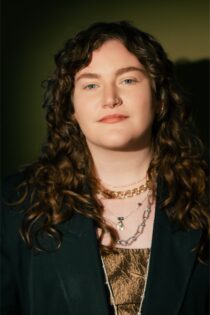
Len Torrie, soprano
Len Torrie is an Ontario-born, soprano and project maker living in Montreal who just completed a master’s degree in early music performance at McGill University under the tutelage of Dominique Labelle. Most recently, Len sang the title role in Charpentier’s oratorio Judith with ensemble Capella Antica and is lead soprano at Christ Church Cathedral, Montreal.
While studying music therapy at Acadia University, Len appeared frequently as a soloist with local ensembles including Symphony Nova Scotia, and was lead soprano of the Manning Chapel Choir from 2014-2018. In 2017, Len was awarded the Canadian Federation of University Women scholarship which funded their participation in Accademia Europea Dell’Opera in Lucca, Italy, where they played Oberto in Handel’s Alcina. This experience motivated Len to pursue a career in performance and upon graduation, Len moved to Montreal to study with soprano Suzie LeBlanc.
Len frequently returns to the Maritimes for solo recitals, collaborations, and residencies. Len also recently completed an artist residency at Banff Arts and Creativity Centre with Canadian tenor Kerry Bursey, as the newly formed early music/folk duo Kalliope. Len is currently exploring the practice of self-accompanying early music on baroque guitar. As a queer, non-binary musician, Len is inspired by the possibility that their queer ancestors had their own musical traditions and that through research, creative speculation, and performance, we can tell a more inclusive and rich story about music and humanity.