

Christ Church Cathedral
Subscriptions: To purchase tickets to this performance as part of a subscription to 3 or more concerts and receive a 25% discount off the full ticket price, please call Early Music Vancouver’s box office at 604-732-1610 or email boxoffice@earlymusic.bc.
Artists: Jonathon Adams, baritone; Chloe Kim, violin; Marie-Nadeau Tremblay, violin; Margaret Little, viola da gamba; Lucas Harris, theorbo; Avi Stein, keyboard
Emanating from seventeenth-century Italy, music of the “stylus phantasticus” was free and extravagant, marked by an uninhibited play of the compositional imagination. This programme shows the power and creativity of the fantastical style as it was taken up in the courts and chapels of Germany and Austria, featuring the stunning instrumental virtuosity of composers like Biber and Buxtehude alongside concerted psalm settings that treat the baritone voice with equal skill and imaginativeness. Filled with moving language and some of the best of the period’s musical fancy, these ancient songs of praise and supplication continue to speak with freshness and drama today.
This concert is generously supported by Sharon Kahn and Barrie MacFadden in memory of Mary Christopher.
Pre-concert talk: Join us at 6:45 p.m. for a pre-concert interview with Sylvia L’Écuyer, Jonathon Adams, and Chloe Kim. This talk is included in the live concert ticket price.
PURCHASING TICKETS
Click here to purchase tickets.
Subscriptions: To purchase tickets to this performance as part of a subscription to 3 or more concerts and receive a 25% discount off the full ticket price, please call Early Music Vancouver’s box office at 604-732-1610 or email boxoffice@earlymusic.bc.
PROGRAMME
PROGRAMME NOTES
In 1650, the Jesuit polymath Athanasius Kircher identified eight styles in music of the day. The “most free and unfettered” of these was what he called the stylus phantasticus: the fantastical style. For Kircher, the stylus phantasticus allowed the composer’s musical intellect to roam free of the constraints of language or of any rigid structure, and so to meditate on the divine harmony of the cosmos. This kind of musical imagination was best suited to the increasingly popular instrumental genres of the period, “those pieces which are commonly called Phantasias, Ricercatas, Toccatas, and Sonatas.”
When the music theorist Johann Mattheson picked up the term almost ninety years later in 1739, the meaning of the fantastical style had changed. Mattheson saw it not so much as a mode of composition as a style of performance—one in which musicians were free to show off all their improvisatory brilliance and virtuosity. These two definitions of musical “phantasy” bookmark a period of extraordinary creativity among European composers, a time when pieces called “sonata” or “toccata” had a kind of openness and unpredictability that would later be tightened by generic conventions.
Although the stylus phantasticus is often associated with Italy—the exuberant organ music of Girolamo Frescobaldi, for instance—it was cultivated and transformed throughout Europe, spreading through the cosmopolitan courts of Austria into northern Germany and even Scandinavia. And although both Kircher and Mattheson link the style with instrumental performance, its influence also extended into vocal music. In this programme, the fantastical sensibility of seventeenth-century Germany and Austria shines through equally in instrumental sonatas and in concerted psalm settings for solo voice.
The Psalms are the most important music collection of the Hebrew Bible, having been sung in the context of worship since antiquity. Psalm texts were incorporated into Christian liturgy early on, and they were popular among Baroque composers, who were drawn to their poetic quality and their intense affects of elation, grief, and supplication. This programme’s composers tend to divide their psalm texts into sections of different metres and tempos, heightening each emotional nuance with the same brilliant string writing that fills their instrumental works.
Dieterich Buxtehude (c1637-1707) was a representative of the North German school who spent much of his career in Lübeck (the destination of J.S. Bach’s musical pilgrimage of 1705). The unpredictable movement structure, frequent contrasts, and improvisatory flair of his sonatas show Buxtehude’s interest in key features of the stylus phantasticus. In the Sonata in A minor (BuxWV 272), a short Adagio separates two ostinato movements based on a repeating bass pattern. The series of increasingly complex variations gives the sense of a structured improvisation—something Buxtehude the organist understood very well. Buxtehude’s Sonata in G minor (BuxWV 261) is also framed by two large-scale ostinato movements, with lush slow sections, perpetual motion passages, and a final gigue thrown in. This music thrives on contrast—including the timbral contrast between violin and viola da gamba, which are brought together in a trio scoring rare in Italy but common north of the Alps.
Nicolaus Bruhns (1665-1697) was Buxtehude’s favourite pupil in Lübeck. Clearly a musician of immense talent, Bruhns was known (according to Mattheson) to climb into the organ loft with his violin and play both instruments at once—managing the organ pedals with his feet and the violin with his hands. Bruhns left four praeludia for organ, whose brilliant toccata-like figuration, sectional structure and chromatic fugue subjects show the influence of his teacher. Such pieces were cornerstones of the fantastical style—only at the organ could an individual musician’s imagination have such a range of sounds at its disposal.
One of Bruhns’s few surviving vocal works, De profundis clamavi is a sacred concerto in the Italian style. Typically, Bruhns splits the psalm text (in this case, Psalm 130) into short, contrasting sections attuned to the particular character of each verse. Bruhns’s choice of a low voice (perhaps originally the famous bass Georg Ferber) shows that he intended to depict a cry of supplication that rises quite literally “de profundis”—out of the depths.
Heinrich Franz Ignaz von Biber (1644-1704) was the preeminent violin virtuoso of seventeenth-century Europe. Biber established himself in the service of the Archbishop of Salzburg and was eventually granted the noble rank of knight by Emperor Leopold I on the strength of his dazzling violin playing; like Buxtehude, he was fond of a repeating bass progression for showing the sheer extent of his skill and inventiveness. But Biber was distinguished as a composer as well as a performer. His Nisi Dominus (Psalm 127) is a distinctive mixture of instrumental and vocal virtuosity; to support the exuberant vocal line, Biber makes the single violin sound like an entire orchestra.
Perhaps the least known of this programme’s composers, David Pohle (1624-1695) studied with the great Heinrich Schütz in Dresden and worked in central Germany. Pohle did not publish any music during his lifetime, and many of his compositions are sadly lost. Vox Domini super aquas, however, gives a sense of his imagination and lyricism. Whereas De profundis clamavi evokes a cry of abject sorrow, Pohle’s text—from Psalm 28 of the Latin Vulgate—describes a voice of power. Here, musical “phantasy” (especially the singer’s long melismatic passages on a single syllable) and Psalm text join in creating a sense of sheer joy.
Connor Page

Jonathon Adams, baritone
Jonathon Adams is a Cree-Métis two-spirit baritone from amiskwaciwâskahikan (Edmonton, AB). They have appeared as a soloist under Masaaki Suzuki, Philippe Herreweghe, Laurence Equilbey, and Alexander Weimann, among others, with the New York Philharmonic, National Symphony, San Francisco Symphony, and Toronto Symphony Orchestras, the Washington Bach Consort, Tafelmusik, Ricercar Consort, B’Rock, Vox Luminis, the Netherlands Bach Society, and il Gardellino. In 2021 they were named the first artist-in-residence at Early Music Vancouver. They have lectured and led workshops at the Universities of Toronto, Manitoba, British Columbia, Alberta (Augustana), Bard College, Festival Montréal Baroque, and the Juilliard School.
Jonathon was featured in Against the Grain Theatre’s 2020 film MESSIAH/COMPLEX, in Sidi Larbi Cherkaoui’s MEA CULPA with Ballet Vlaanderen, and on Jessica McMann’s most recent album ‘Prairie Dusk’. They attended the Victoria Conservatory of Music, the Royal Academy of Music, and the Conservatorium van Amsterdam, studying with Nancy Argenta, Emma Kirkby and Rosemary Joshua.
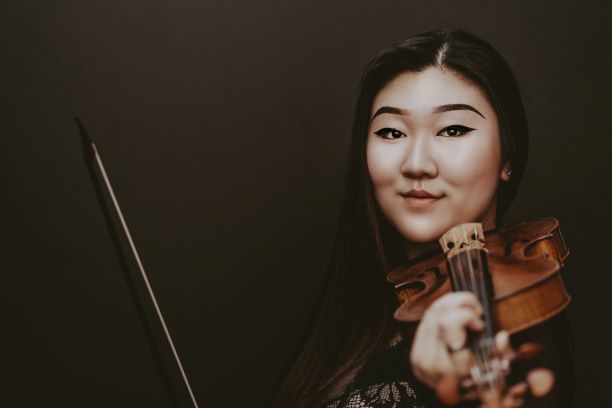
Chloe Kim, violin
Praised as a “rising superstar” (The Georgia Straight) who performs with “passion and intensity to electrifying effect” (The Vancouver Sun), Canadian violinist Chloe Kim is in high demand internationally as a performer with leading period instrument ensembles. She appears regularly with groups such as Voices of Music, Philharmonia Baroque Orchestra, The English Concert, and the Orchestra of the Age of Enlightenment.
A passionate advocate for historically informed performance, Chloe is the recipient of numerous accolades, including the 2021 American Bach Society Grant, the 2020/21 Mercury–Juilliard Fellowship, and a feature on CBC’s 30 Under 30 list in 2020. She was elected a Fellow of The English Concert in America in 2021 and has served on multiple occasions as a panelist for the BC Arts Council.
Some favorite past projects include performing an all-women Vivaldi program with Monica Huggett, touring Scandinavia with Yale’s Schola Cantorum, and leading Juilliard415 as concertmaster in acclaimed performances of Dido and Aeneas at Opera Holland Park and the Opéra Royal de Versailles. In the upcoming season, Chloe will appear with the Orchestra of the Age of Enlightenment, Academy of Ancient Music, La Nuova Musica, and the Irish Baroque Orchestra.
Outside of music, Chloe is a self-proclaimed linguaphile and cinema obsessive. She is known amongst friends as monstrous company before (and occasionally after) coffee, and her partner insists she should come with a warning label. She is a devoted reader and a lover of a well-crafted cocktail. Chloe is deeply grateful to her dear friends and mentors Heilwig von Königslöw, Elizabeth Blumenstock, and Jeanne Lamon for their enduring support and inspiration.
Marie Nadeau-Tremblay, violin
During the final session of her undergraduate degree in violin performance at McGill University, Marie Nadeau- Tremblay decided to try her hand at the Baroque. She joined the university’s Baroque orchestra and fell head over heels in love! Transported by the beauty of this music— and finding resonance with its mode of expression— she decided to plunge headfirst into the Baroque world. After obtaining a Licentiate Degree, she pursued further studies under the tutelage of Hank Knox, Lena Weman, and Olivier Brault, receiving a Master’s Degree in Early Music Performance. After being awarded numerous prizes and scholarships at McGill — including the prestigious Mary McLaughlin prize, which she won four years in a row — Marie Nadeau-Tremblay received an Early Music America grant in 2017. More recently, in 2019, she swept the honor roll of the Concours de musique ancienne Mathieu Duguay with an unprecedented four awards: First Prize, the People’s Choice Award, the Festival Montréal Baroque Prize, and the Été musical de Barachois Prize.
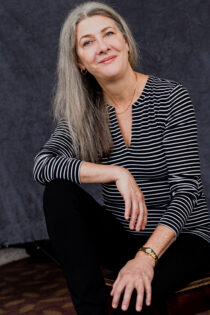
Margaret Little, viola da gamba
Margaret Little discovered the viola da gamba at the age of eleven at the CAMMAC Music Centre and instantly fell in love with the instrument and early music repertoire. Margaret has been performing since 1975 as a soloist, and a chamber musician on the viola da gamba and baroque viola with various groups, including the Studio de Musique ancienne de Montréal, Les Idées Heureuses, Arion, Musica Divina. In 1985 she founded the viola da gamba duo Les Voix humaine with Susie Napper. Margaret has performed with many early music groups (as a gambist and baroque violist) including Cappricio Stravagante, Fuocco e Cenere, Rebel, Four Nations, Trinity Consort, The Publick Musick, Les Boréades, Les Violons du Roy. Her career has included extensive tours in North America, Mexico, Australia, New Zealand and Europe. Margaret has recorded more than 90 CDs, and her first solo CD Senza Continuo was nominated for an Opus Award. Since 1992, she has taught the viola da gamba and baroque ensembles at the Université de Montréal.
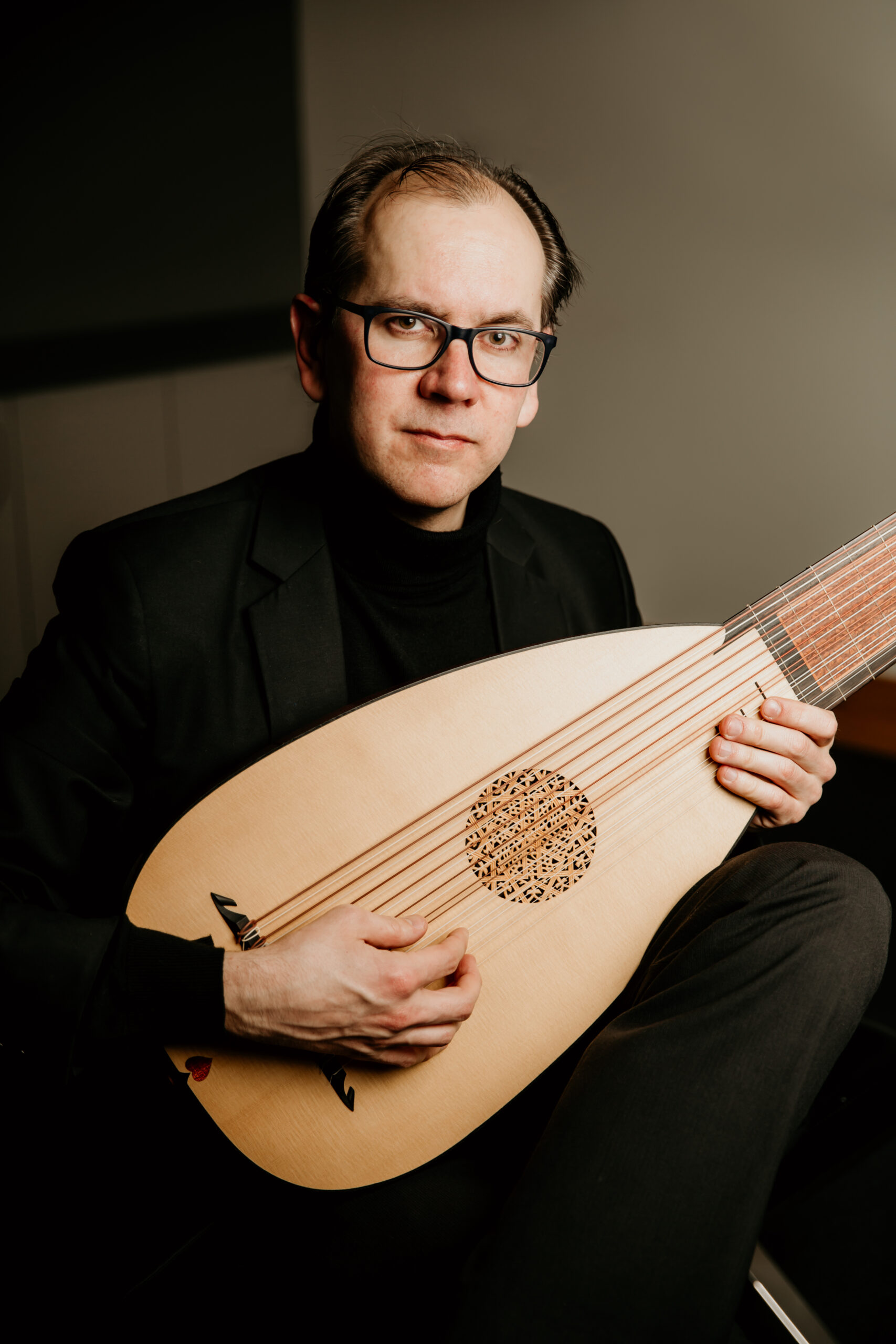
Lucas Harris, theorbo
Toronto-based Lucas Harris discovered the lute during his undergraduate studies at Pomona College, and went on to study the lute and early music at the Civica scuola di musica di Milano and at the Hochschule für Künste Bremen. He is a founding member of the Toronto Continuo Collective, the Vesuvius Ensemble and the Lute Legends Collective (an association of specialists in ancient plucked-string traditions from diverse cultures) and is the regular lutenist for Tafelmusik Baroque Orchestra. Lucas plays with many other ensembles in Canada and the USA and has worked with the Smithsonian Chamber Players, Atalante, and Jordi Savall / Le Concert des Nations amongst others.
He teaches at the Tafelmusik Summer and Winter Baroque Institutes, Oberlin Conservatory’s Baroque Performance Institute, and the Canadian Renaissance Music Summer School, and is a regular guest artist with Early Music Vancouver. Lucas is also the Artistic Director of the Toronto Chamber Choir, for which he has created and conducted more than twenty themed concert programs. One of Mr. Harris’ many pandemic projects was the reconstruction of 12 solo voice motets by the Italian nun Chiara Margarita Cozzolani.

Avi Stein, organ/harpsichord
Avi Stein is the associate organist and chorusmaster at Trinity Church Wall Street. He is on faculty at the Juilliard School where he teaches continuo accompaniment, vocal repertoire and chamber music. At Juilliard, Avi conducted Henry Purcell’s Dido and Aeneas in a production that toured in London’s Holland Park and at the Royal Opera House at the Palace of Versailles and most recently, directed a production of Luigi Rossi’s Orfeo which was named one of the best performances of 2021 by The New York Times.
Avi is the Artistic Director of The Helicon Foundation and has directed the International Baroque Academy of Musiktheater Bavaria, the young artists’ program at the Carmel Bach Festival, and has conducted a variety of ensembles including the Portland Baroque Orchestra, the Bang on a Can All-Stars, the Opera Français de New York, OperaOmnia, the Amherst Festival opera, and a critically acclaimed annual series called the 4×4 Festival. He performed on the 2015 Grammy Award winning recording for best opera by the Boston Early Music Festival. The NY Times described Avi as “a brilliant organ soloist” in his Carnegie Hall debut and he was featured in Early Music America magazine in an article on the new generation of leaders in the field.
Avi studied at Indiana University, the Eastman School of Music, the University of Southern California and was a Fulbright scholar in Toulouse, France.