Christ Church Cathedral
Subscriptions: To purchase tickets to this performance as part of a subscription to 3 or more concerts and receive a 25% discount off the full ticket price, please call Early Music Vancouver’s box office at 604-732-1610 or email boxoffice@earlymusic.bc.
Artists: Arkora; Jonathon Adams, baritone; Lan Tung, erhu
The electric chamber consort Arkora, conceived in Vancouver, continues its exploration of connections between past and present with a project of new works by Canadian composers and ancient masterworks highlighting the oeuvre of Hildegard von Bingen. The program offers a combination of historically-informed performance and contemporary re-envisioning of early work performed by Arkora’s ensemble of early and new music specialists. At the heart of the program lie Arkora-commissioned works by Dorothy Chang, Tova Kardonne, and Jonathan Wild, as well as world premieres by Curtis Andrews and Benton Roark, composer-performers that have each forged distinct voices in the world of contemporary music through the fusion of different styles. Alongside medieval and Renaissance chants and motets, these works find a meeting place in a concert of voices and instruments from different centuries and traditions, including mridangam, electric guitar, strings, and microtonal keyboard and percussion. For this project Arkora is also joined by special guests EMV’s 2021 Artist-in-Residence Jonathan Adams, baritone and master erhu improviser, Lan Tung. The early works will include the chants Nunc Gaudeant and O Virtus Sapientiae and more by Hildegard von Bingen as well as motets by Pérotin, Vicentino and Lassus.
Generously supported by Dorothy Jantzen
Pre-concert talk: Join us at 6:45 p.m. for a pre-concert interview with Bill Richardson and the co-Artistic Directors of Arkora, Kathleen Allan and Benton Roark. This talk is included in the live concert ticket price.
PURCHASING TICKETS
Click here to purchase tickets.
Subscriptions: To purchase tickets to this performance as part of a subscription to 3 or more concerts and receive a 25% discount off the full ticket price, please call Early Music Vancouver’s box office at 604-732-1610 or email boxoffice@earlymusic.bc.
PROGRAMME
Orlande de Lassus
Carmina Chromatico
Hildegard von Bingen
Nunc Gaudeant
Benton Roark
The Range of Light
Curtis Andrews
Shantaleela Namostute
Pérotin
Viderunt Omnes
Jonathan Wild
Within a Tender Garden
Nicola Vicentino
Dolce Mio Ben
Tova Kardonne
Temper Temper
Hildegard von Bingen, arr. Allan
Caritas abundat in omnia
Orlande de Lassus
In pace in idipsum
Dorothy Chang
Blue
Pérotin
Viderunt Omnes II
Hildegard von Bingen, arr. Allan
O Virtus Sapientiae
Benton Roark
Where Endless Ages Roll
PROGRAMME NOTES
Voices from the past, visions of the future…Resounding Hildegard: Echoes of the Abbess in the Present Day is a program of works that strives for common ground between ancient music and the music of our time. The 13th century abbess Hildegard von Bingen (c. 1098-1179), celebrated for her radical thinking, poetic gift, and singular life’s work, had visions from a young age. Imbued with the symbology of mystical Christianity, and strongly tinged with imagery of nature and light, they later in life found their way into her prosody – free, even virtuosic by plainchant standards – and into the imaginations of so many artists hence. Tonight we offer three chants found in Hildegard’s Symphonia armonie celestium revelationum – Nunc Gaudeant – a fervent renunciation of evil, Caritas abundant in omnia, a proclamation of universal love, and O Virtus Sapientiae, a meditation on the three-pronged virtues of Wisdom – as a framework around which to situate contemporary and ancient motets, including Arkora commissions, and those by Orlande de Lassus (c. 1532-1594), Nicola Vicentino (c. 1511-1575), and Pérotin (c. 1160-1225).
Beginning the program, a selection from Orlando de Lassus’s Prophetiae Sibyllarum – Carmina Chromatico – serves as an invocation for the evening, uniting the concepts of prophecy (the motet belongs to a longer cycle celebrating the Greek Sibyl prophets) and of experimental harmonies. As far-reaching as this work is in its treatment of chromaticism, farther reaching still are the works of de Lassus’s contemporary, Nicola Vicentino, a composer and music theorist who worked throughout northern Italy and is best known as an early microtonalist. As inspirations for our own commissioned work, Vicentino’s treatises on harmony espousing levels of tonality, including scales in 31 tones-per-octave, are a primary area of research of Arkora-commissioned composer Jonathan Wild. Vicentino’s original keyboard instruments – the archicembalo and arciorgano – also share a connection with Roark’s 31-tone per octave lumiphone.
While Vicentino’s strange gem of a motet can be an uncharacteristically fiendish challenge in tuning, his use of homophonic-contrapuntal interplay is perhaps more idiomatic of his time. These aspects – extended tonality, a varied approach to polyphonic prosody – as well as an extremely attentive ear to word-painting, narrative, and character can also be found in Wild’s commissioned work for Arkora:
“within a tender garden is a setting of an English adaptation of the medieval French lyric “L’amour de moy”. The text enigmatically describes an allegorical vision of the poet’s lover in a beautiful garden. The setting, for three women’s voices and lumiphone, imagines the vision as a shimmering mystery played out in stillness, ending with the hazy sensation that the vision could have been merely in the imagination. The three voices sing largely in homophony, and are mostly restricted to subtly inflected 31-tone versions of the usual 12 pitches. The two lumiphone performers support the singers, but also provide the nebulous haze that blooms up around each sustained sonority, never quite achieving clarity. In a final section of the work, exotic modes in the lumiphone pulse gently, woven through the sustained lines of the wordless coda.”
as well as in recent commissions by Tova Kardonne:
“…I found myself remembering feelings that had been buried when I learned equal-tempered tuning; when I learned to hear only twelve notes as tuneful, I lost a few feelings-in-sound. Hearing the lumiphone’s full range, I remembered, and was transported to the scenes of the loss of these sounds. Suppressed reactions to sounds are like suppressed anger at events. Some connections between events and feelings are lost; the disallowed reactions remain buried, and re-emerge when the note is sounded again, far from its original instrument. I have been the lumiphone to another’s ears. I have sounded the note that brought back old, buried anger, and transported my interlocutor into long-forgotten scenes. I have borne the brunt of angers not of my making, and I have taken a long time to learn that it is my range, and not my wrongness, that brought them forth. This microtonal cohort has afforded me the opportunity to live in the forgotten sounds and re-integrate them into the landscape of my expression.”
and Dorothy Chang:
“The text for my work Blue is a compilation of phrases and fragments taken from five Tang Dynasty poems by several different poets of the era (618-907). The imagery in Tang poetry is highly evocative, often providing glimpses into the extravagant lives of the imperial court centuries ago. However, the universal and timeless themes of love, loss, regret and solitude are also reflected in much of the poetry. The reconstructed text for Blue is a quasi-narrative of a woman of nobility mourning for a lover who is never to return. The following excerpt was not included in the setting, but the passage reflects the woman’s unspoken sentiments: ‘But far beyond my reach is the Enchanted Mountain/And you are on the other side, ten thousand peaks away.’ (from To One Unnamed I by Li Shangyin; 813–858)”
Medieval techniques such as isorhythm (repeating one rhythmic pattern, often against a changing set of pitches) and rhythmic modality (patterns of note durations modeled after classical poetry) can be found throughout Pérotin’s work, as well as in certain of Roark’s works featured on our program. The Range of Light is driven by ostinati which bounce between various rhythmic modes, meter which blurs simple and compound time, and a melody which paints a John Muir text praising the beauty of the Sierra Nevada mountains. A turn-of-the-century conservationist and founder of the Sierra Club, Muir has been the subject of debate within the Sierra Club and beyond for some of his early writings. This piece is part of an ongoing commissioning project examining the colonial and racist history of conservationism and the meaning of true environmental stewardship. In the case of our concert closer, Where Endless Ages Roll. Roark uses the building blocks of an isorhythmic bass line and modal fragments of text to set an anonymous text from The Sacred Harp (the 18-19th century compendium of American shape-note singing), noting:
“On a textual level, Where Endless Ages Roll is both a sober reminder of mortality and a joyous celebration of immortality. Musically, though not composed within a microtonal system, it strives to find common ground between these emotional states, and between elements (homophony, counterpoint, various tonalities, voices) and styles. I say “strives,” but it is my hope that, like so many fusion genres, that the unification is effortless, that it is not so much two things as merely just one: itself.”
In many ways, it is chant – that freely-measured, melismatic, approach to expressing text (and a cornerstone of medieval music) – that provides the backbone to our programme. At once exalting the musical line over the semantic meaning by drawing out syllables over long phrases, and also providing a clarity of text through its unison, unaccompanied approach, it’s no wonder that chant composers such as Hildegard continue to resonate in our time (for example, in improvisatory cross-century dialogue with non-Western instruments and rhythms). Our two world premieres of the evening each explore chant and rhythm in their own way. In Curtis Andrews’s Shantaleela Namostute, a bed of droning vocals sets up a melodic introduction leading into the composition itself, embellished with rhythmic and tonal variations, and has lyrics in praise of divine female energy, inspired by his daughter Shantaleela and Saraswati, the Hindu Goddess of goddess of knowledge, music, art, speech, wisdom, and learning. In his words:
“Being one of the few players of the mridangam in Canada who can read and compose music, it is exciting to present the instrument (and what it represents) in new contexts and create bridges between cultures using sound. In my work for Arkora I incorporate a combination of solkattu (the rhythmic language of Carnatic music), raga (characteristic melodic modes of Carnatic music) and sargam (the solfege used in that system).”
- Benton Roark
Arkora
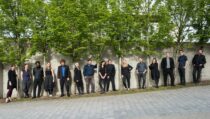
Arkora is an electric consort dedicated to blurring the lines between chamber vocal, post-rock, jazz fusion, and ancient music. With music described as “an experience of deep and darkling beauty” (The Austin Chronicle), “simply beautiful” (newmusicbuff.com) “a deep unity of music and text” (Vital Weekly), and “the standout event of Vancouver’s spring music season” (The Vancouver Observer), the group has in its first five years quickly set a standard for next-level performances and innovative productions.
As the brainchild of directors Kathleen Allan and Benton Roark, the group was conceived in 2012 in Vancouver, BC at the premiere of Songs from the Rainshadow’s Edge, a production that came to symbolize the collective’s broad vision and distinct hybrid sound. Their official debut was in 2014 at Newfoundland’s Sound Symposium, and since they have offered performances in Brooklyn, Austin, and Vancouver in association with presenters Ear Heart Music, Church of the Friendly Ghost, and Redshift Music. Arkora’s debut CD, Songs from the Rainshadow’s Edge (“perfection…a mysterious landscape” The WholeNote), was released on the Vancouver label Redshift Records in 2015 and nominated for a 2016 Western Canadian Music Award for Composition of the Year.
Recent projects include Cloud Chamber – a collaborative video EP created by five of Arkora composer-performers and two experimental analogue filmmakers set for release in December 2021, and the launch of Transfigured Light, a project which explores microtonal vocal music of both the Renaissance and the present day. Featuring collaborations with theorists, instrument builders, and visual artists and seven new commissions by composers from the States, Canada, and China, this project was called a “seasonal benchmark” and “jaggedly, defiantly microtonal” by The Vancouver Observer and unfolded over two twilight concerts in Vancouver’s Mountain View Cemetery. A recording and tour of the project’s music is in the works for 2022.

Kathleen Allan, dir.
Kathleen Allan is a soprano, composer, and conductor from St. John’s, NL. Her compositions have been commissioned by ensembles throughout Canada, and performed across North America, the UK, and in Argentina, where her work was featured at the World Symposium on Choral Music. In 2012, she was awarded an Emerging Composer Residency by the Canadian Music Centre and Canadian League of Composers. She has received two NL Arts and Letters Awards for her compositions.
Equally in demand as a soprano soloist and professional choral singer, she has appeared as a soloist with National Broadcast Orchestra of Canada and Berkshire Choral Festival Choir, the Vancouver Symphony Orchestra and Vancouver Bach Choir, and UBC combined ensembles. In addition to freelancing regularly in Canada and the US, she is a member of the Atlanta-based Skylark Vocal Ensemble, was a member of the Yale Schola Cantorum from 2012-13, and was a member of the Vancouver Chamber Choir from 2010-12. A passionate interpreter of new vocal music, she has premiered over two dozen works for the voice, and her 2011 recital of original vocal music received national media attention on CBC.
In 2013-14, Ms. Allan Roark was the assistant conductor of the Yale Glee Club, director of the Yale Glee Club Chamber Singers, and assistant conductor of the New Haven All-City Honor Choir. During her time in Vancouver, she directed the Vancouver Bach Children’s Chorales and was director of choirs at the Vancouver Academy of Music Summer Institute. In 2013, she was appointed Conducting Fellow of the Canadian Chamber Choir.
Upcoming engagements include a premiere of an original work for tenor and string quartet and performances as guest conductor for Handel’s Messiah and Bach’s Christmas Oratorio in Japan. She holds a degree in composition from the University of British Columbia, a Masters of Choral Conducting from Yale University.

Benton Roark, dir.
Benton Roark’s music has been described as “visionary” (The Vancouver Sun), “ardent and soaring” (The National Post), and and “an experience of deep and darkling beauty” (The Austin Chronicle). His work has been commissioned and performed by Tapestry Opera, the Bozzini Quartet, TorQ Percussion, Redshift Music, the Victoria Guitar Trio, Fugue Theatre, and Triplepoint Trio, among other groups. Roark has also enjoyed critical acclaim as a bandleader and solo artist with projects such as The Benton Roark Band (“magisterial” The Vancouver Sun), Rollaway (“backwoods choir elegance” The Georgia Straight), and Arkora (“the standout event of Vancouver’s spring music season” Vancouver Observer).
In recent years, Roark has worked increasingly in the realm of opera and experimental music theatre, with full productions including Tapestry Opera’s Bandits in the Valley and TAP:EX Augmented Opera (“a compact, experimental success,” The Globe and Mail), Vancouver Pro Musica/Tomoe Arts’s Shadow Catch (“an evocative score” The Bulletin), Fugue Theatre’s Off Leash (“one of the most unique theatrical experiences currently on Vancouver stages” Vancity Buzz), and Songs from the Rainshadow’s Edge (“a mysterious landscape of instrumental timbre” The WholeNote). Nominated as Classical Composition of the Year by the Western Canadian Music Awards, the Rainshadow cycle has been presented across North America by Redshift Music (Vancouver), Sound Symposium (St. John’s), Ear Heart Music (New York), and Church of the Friendly Ghost (Austin).
Roark’s work can be heard on a number of recordings, including the Victoria Guitar Trio’s Concentric Rings, the Bozzini Quartet’s À chacun sa miniature, flutist Mark Takeshi McGregor’s Sins and Fantasies, Arkora’s Songs from the Rainshadow’s Edge, and no fewer than five records of original work with indie rock, folk, and fusion projects (the latest – Rollaway’s Modern Epic – drew comparisons to the Stax/Volt catalogue, Sea Level, and the Allman Brothers, and and was called “superb” by The Vancouver Sun). Ongoing projects include The Handless Maiden, a new opera being developed with Tempest Flutes, Dystopia Lost, a cycle for chamber choir and ensemble written for Arkora’s Transfigured Light project, and work on a series of microtonal instruments including the Lumiphone, a glass marimba in 31-tone equal temperament.
Roark holds degrees from Oberlin College and Conservatory and the University of British Columbia (D.M.A., 2013), and he has been a resident artist at the Banff Centre, The Atlantic Center for the Arts, Avaloch Farm, and the American Conservatory at Fontainebleau, where he was co-recipient of the Tournon Branley Prize for collaborative work in architecture and music. Roark has served as President of Vancouver Pro Musica and Associate Artistic Director of Redshift Music in Vancouver, BC, where he also taught theory and composition from 2015-2019 at the Vancouver Academy of Music. He is currently Co-Artistic Director of Arkora Music.
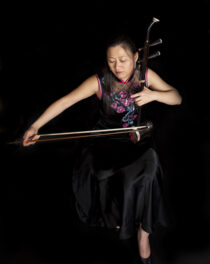
Lan Tung 董籃, erhu
Crossing between Canada’s new music, improvised music and world music scenes, Lan is the artistic director and resident composer of Sound of Dragon Ensemble, Orchid Ensemble, Vancouver Erhu Quartet, Crossbridge Strings, Proliferasian, and So
Originally from Taiwan, Lan has studied graphic score with Barry Guy, improvisation with Mary Oliver, Hindustani music with Kala Ramnath, Uyghur music with Abdukerim Osman, and Mongolian horsehead fiddle with Bayar, in addition to her studies of Chinese music. Lan has toured in Europe (Germany, Switzerland, and the Netherlands), Asia (China, Taiwan, Singapore, Indonesia), Chile, and North America (US, Canada, Mexico).
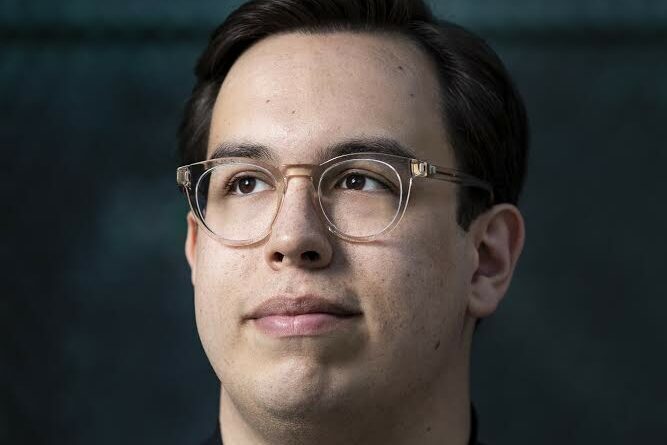
Jonathon Adams, baritone
Jonathon Adams is a Cree-Métis two-spirit baritone from amiskwaciwâskahikan (Edmonton, AB). They have appeared as a soloist under Masaaki Suzuki, Philippe Herreweghe, Laurence Equilbey, and Alexander Weimann, among others, with the New York Philharmonic, National Symphony, San Francisco Symphony, and Toronto Symphony Orchestras, the Washington Bach Consort, Tafelmusik, Ricercar Consort, B’Rock, Vox Luminis, the Netherlands Bach Society, and il Gardellino. In 2021 they were named the first artist-in-residence at Early Music Vancouver. They have lectured and led workshops at the Universities of Toronto, Manitoba, British Columbia, Alberta (Augustana), Bard College, Festival Montréal Baroque, and the Juilliard School.
Jonathon was featured in Against the Grain Theatre’s 2020 film MESSIAH/COMPLEX, in Sidi Larbi Cherkaoui’s MEA CULPA with Ballet Vlaanderen, and on Jessica McMann’s most recent album ‘Prairie Dusk’. They attended the Victoria Conservatory of Music, the Royal Academy of Music, and the Conservatorium van Amsterdam, studying with Nancy Argenta, Emma Kirkby and Rosemary Joshua.