• My Account
  • Cart
  • About
    • Who is Early Music Vancouver
    • What is Early Music?
    • OUR INSTRUMENT COLLECTION
    • Employment Opportunities
    • Annual General Meeting 2025
    • 2024/25 Annual Report
  • Pacific Baroque Orchestra
    • August 7 | Vivaldi’s The Four Seasons
    • October 17 | A Little Night Music with Mozart 
    • December 20 | Festive Cantatas
    • March 25, 2027 | Handel’s La Resurrezione
  • EVENTS
    • Summer Festival 2026: The Power of Music
    • EMV’s 2026-2027 Main Season
    • Digital Concert Hall
    • Free Events
    • Past Events
  • Learn
    • PROGRAMMES
    • Artist Interviews
    • Instrument Videos
  • Support Us
    • Donate Now
    • Corporate Opportunities
    • Volunteer
    • Host an EMV Musician
  • Ticketing Info
    • BOX OFFICE
    • Gift Vouchers
    • Venues
  • Press Centre
    • Media Releases
    • EMV PRESS KIT
    • EMV in the News
Early Music Vancouver
  • My Account
  • Cart
  • Donate
  • Buy Tickets
  • Gift Vouchers
  • Get our newsletter
Toggle Menu
  • About
    • Who is Early Music Vancouver
    • What is Early Music?
    • OUR INSTRUMENT COLLECTION
    • Employment Opportunities
    • Annual General Meeting 2025
    • 2024/25 Annual Report
  • Pacific Baroque Orchestra
    • August 7 | Vivaldi’s The Four Seasons
    • October 17 | A Little Night Music with Mozart 
    • December 20 | Festive Cantatas
    • March 25, 2027 | Handel’s La Resurrezione
  • EVENTS
    • Summer Festival 2026: The Power of Music
    • EMV’s 2026-2027 Main Season
    • Digital Concert Hall
    • Free Events
    • Past Events
  • Learn
    • PROGRAMMES
    • Artist Interviews
    • Instrument Videos
  • Support Us
    • Donate Now
    • Corporate Opportunities
    • Volunteer
    • Host an EMV Musician
  • Ticketing Info
    • BOX OFFICE
    • Gift Vouchers
    • Venues
  • Press Centre
    • Media Releases
    • EMV PRESS KIT
    • EMV in the News
Home  >  Artist-In-Residence

Artist-In-Residence

EMV’s 2025 Artist-in-Residence, Marc Mauillon is generously sponsored by Marc De Silva.

EMV’s Artist-in-Residence programme started in the summer of 2021. The first artist to hold the position was Cree-Métis Two-Spirit baritone, Jonathon Adams (they/them). EMV followed Adams with David Greenberg (violin) and David McGuinness (keyboards) in 2022, Catalina Vicens (keyboards) in 2023 and Alon Sariel (lutenist) in 2024. We created the programme to honour Canada’s diverse heritages while at the same time exploring the convergences between ‘world music’ and early music. The programme was initiated by Suzie LeBlanc, C.M., EMV’s Artistic and Executive Director.

During the course of their residency, the Resident Artist(s) performs in several festival concerts and engages with the broader community through interviews, mentoring and/or panel discussions and essays.

The scope of what the artist(s) can accomplish during their tenure at EMV will continue to evolve and grow with the programme. EMV is a dynamic contributor to the cultural life of the Canadian West Coast, and the Artist-in-Residence program is an important component.


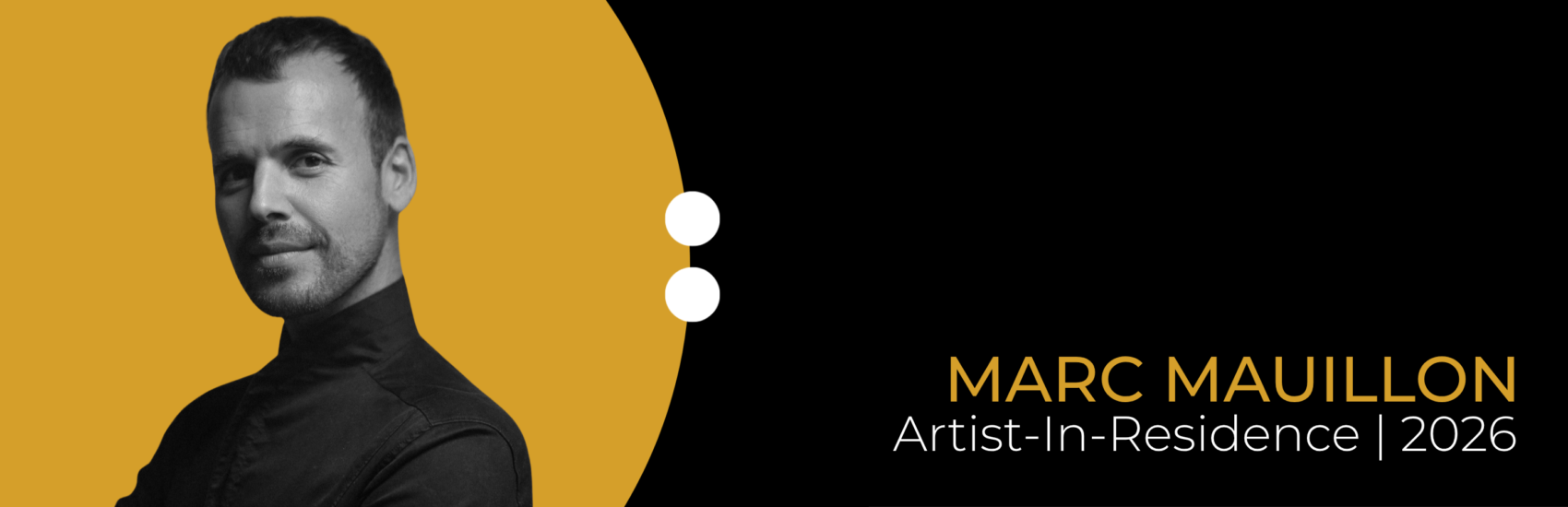
Marc Mauillon, 2026 EMV Artist-in-Residence

Learn more and purchase tickets to her concerts in our Summer Festival here.

An unusually versatile artist, Marc Mauillon is equally at home performing music from the medieval era to the present day. Sometimes a baritone, sometimes a tenor, this chameleon adapts his colours to the music he performs and the characters he embodies. A prolific performer of Baroque and contemporary opera, Mauillon has worked with many of the top directors and early music conductors of the early 21st century. Recent highlights include: Castor et Pollux (Pollux) at the Opéra national de Paris (T. Currentzis/P. Sellars) and Les fêtes d’Hébé (Momus & Mercure) at the Opéra-Comique (W. Christie/R. Carsen).

Summer Festival Highlights: Orfeo in Monteverdi’s Orfeo, Songline in Malcolm Knapp Research Forest, and Pien d’Amoroso Affetto… / With Amorous Affections with Angélique Mauillon


Media


Previous Artists-in-Residence

Magali Simard-Galdès, soprano – 2025

Alon Sariel, lutes – 2024

“Being Artist in Residence meant I’ll really was able to leave my mark on this festival edition, engage with the audience more intensively and contribute my part to multiple concerts and events. I loved this idea because it gaveme the chance to collaborate with a great number of superb artists, spend a little longer in wonderful Vancouver and enjoy the summer festival atmosphere to the most. I also got to showcase my instruments in different contexts such as early/late Baroque, world music, contemporary music and crossover.” – Alon Sariel

Catalina Vicens, keyboards – 2023

“I’m absolutely honoured and delighted to have been invited to be Artist in Residence of Early Music Vancouver 2023. Over the last years, I’ve admired from afar the high level and diversity of artists of EMV, and since 2020 and under the artistic direction of Suzie LeBlanc, this has been enhanced by programming that, in its artistic scope and social awareness, reaches new standards in the international early music scene. I feel, therefore great privilege to have been invited as a soloist, as director of Ensemble Servir Antico and as Music Director of the production of The Queen of Carthage.” – Catalina Vicens

David Greenberg, violin – 2022

“Working with Early Music Vancouver as artist-in-residence for their Bach Festival 2022 was a rewarding experience. As EMV Artistic & Executive Director, Suzie LeBlanc opened many doors to new programming possibilities. The whole EMV team was a pleasure to work with, making the stressful, performance-dense festival experience go smoothly. The concerts were well attended by appreciative audiences, in lovely and varied venues. Through my interactions with the many helpful volunteers and loyal and enthusiastic EMV donors, I sensed the breadth of support and how the EMV family is a welcoming and growing community. I was also thrilled to get to collaborate again with many beloved musicians whom I haven’t gotten to play with for awhile.” – David Greenberg

David McGuinness, keyboards – 2022

“It was a particular joy to be an Artist in Residence at the Vancouver Bach Festival in 2022. It is hard to think of another festival where it would have been possible to present such a broad range of work across a variety of venues. The collaborations with visiting and local musicians instigated by the festival had been carefully curated, and all proved both artistically rewarding and very enjoyable. The facilities in terms of venues, accommodation, and support were all genuinely world-class, and showed a striking level of care and attention to detail in understanding artists’ requirements. And it was great fun!” – David McGuinness

Jonathon Adams, Cree-Métis two-spirit baritone – 2021

“I was deeply honoured and incredibly excited to be EMV’s first official artist-in-residence. As a Cree-Métis artist, I hope my time in residence will help build bridges between EMV and Vancouver’s Indigenous communities while widening horizons of possibility for the performance of historical musics.” – Jonathon Adams

1254 W 7TH AVE
VANCOUVER, BC, V6H 1B6

(604) 732-1610
staff@earlymusic.bc.ca

  • About EMV
    • What is Early Music?
    • Staff
    • Partners
    • Board of Directors
    • Venues
  • Education & Community
    • BC Scholarship Programme – 2026/2027
    • OUR INSTRUMENT COLLECTION
  • Press Centre
  • Join Our Mailing List
Facebook URLTwitter URLYoutube URLInstagram URL

Copyright © 2026 EARLY MUSIC VANCOUVER | EMV | PHOTOS BY JESS MACALEESE, MARK MUSHET AND JAN GATES.
CONTACT EMV FOR INDIVIDUAL CREDITS. | site by DFS Digital Fusion Studios web designAND MEDIUM RARE Medium Rare Interactive

Een Romantische Johannes Passion

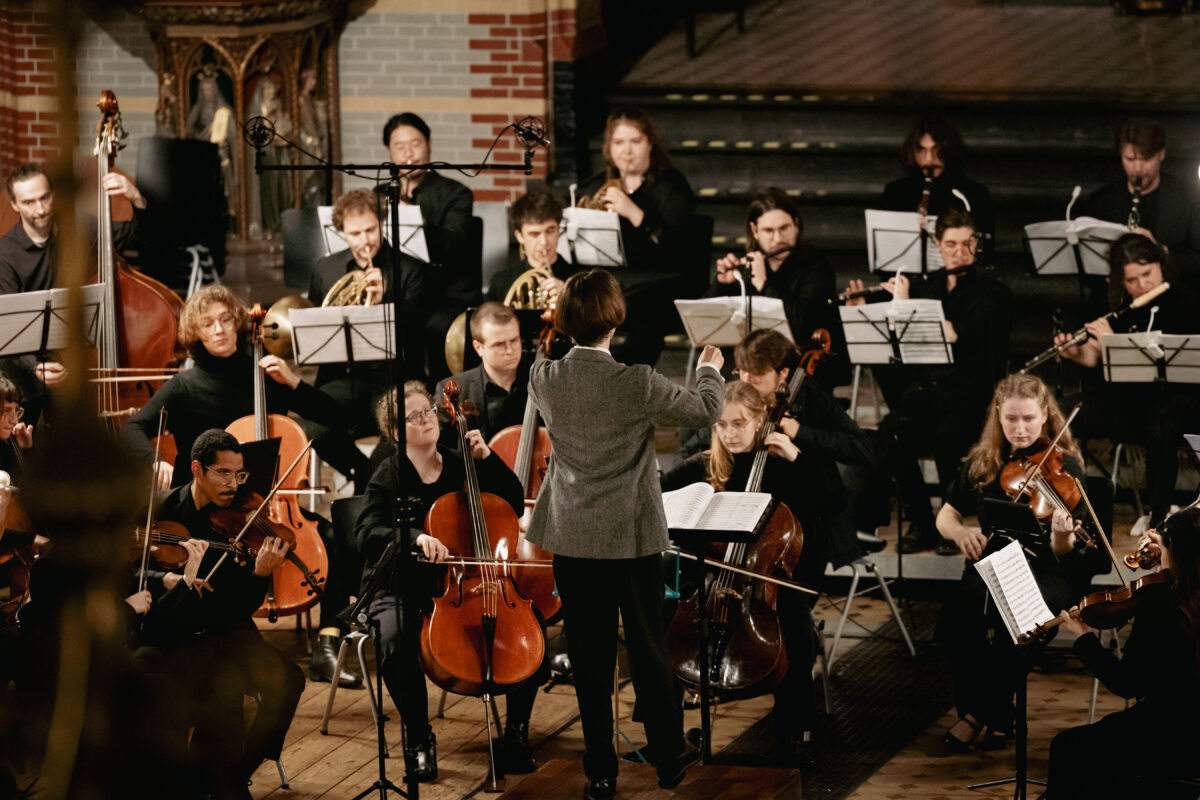
Historical Performance has been steadily looking toward the nineteenth-century as a source of inspiration, and Orchestra Lagrandt wants to lead the charge into Romantic orchestral performance practice. As an orchestra of ambitious musicians in their twenties from 25 different nations, we aspire to represent the voice of the new generation in Historical Performance.

Een Romantische Johannes Passion is an ongoing project to reimagine the Johannes Passion of J. S. Bach in a late nineteenth century style. The first Passion revivals in the Netherlands took place in Rotterdam in 1870, featuring large symphonic orchestrations, and a radically different musical language than that of the HP and modern classical worlds. In our initial performance with the Tangram Chamber Choir, we pushed the boundaries of what Romantic Bach might have sounded like: exploring changes in orchestration, stoic tempi, rubato, phrasing, nineteenth- century bowing practices, and even portamento. We plan to establish this project as an annual tradition every Easter season, reworking the arrangement each time in the spirit of Romantic spontaneity.


One of the wonderful things about the Historical Performance movement is that we are able to use forgotten practices, this time hailing from the nineteenth century, to present such a beloved and well known-work in a new light.

The world is familiar with stories of clever forgers whose life’s mission is to cunningly reproduce the light and shadows of historical masterworks, from Vermeer’s brushstrokes to Da Vinci’s proportional precision… but what if these crimes of craftsmanship were to extend beyond the visual arts? What if the pieces we know to be by Palestrina, Monteverdi or even Johann Sebastian Bach were in fact stylistic copies, artfully composed by a secret circle of music forgers and passed off as the work of the greats? What if those music forgers are at work as we speak? 

This premise inspires our original program The Music Forgery Workshop. Our early music comedy imagines the lives of such a circle of musical criminals, offering a fresh and lively presentation of historical compositions, not as museum artifacts but as living works in progress. The workshop itself is set up on the stage and its members carry forth the plot in music and words. A narrator in the role of a suspicious inspector lends the performance a theatrical flow. The listener is invited into a satire on high society’s art commerce, while the performers make fun of themselves for having devoted their lives to the niche subject of historical music performance. 

Violinist Elizabeth Sommers combines her skills and experience in traditional music with expertise in the performance and improvisation of medieval and Renaissance repertoires. Multi-instrumentalist Eliot X. Dios (keyboards, bagpipes and flutes) works wholeheartedly to employ storytelling techniques developed through the history of literature and cinema in his early music concerts. Composer Gunnar Haraldsson (violin, guitar) seeks to translate the forms and intentions of early composition for a modern audience. Halldór B. Arnarson (keyboards, voice) has devoted his career to bringing musical craftsmanship from the era of counterpoint to the attention of the public and comedy to the early music scene. Singer and storyteller Ásta S. Arnardóttir brings the storyline to the public with personal immediacy, and through her character work defines the different veins of the show, sometimes hilarious and sometimes serious. 

The story is narrated by the character of the Inspector, acted out by the members of the MFW, and told in rhyming Icelandic verse in one musical pillar of the show, a madrigal composed by our very own 

Halldór in the style of Monteverdi. The show has an entertaining educational dimension. The audience is exposed to a broad sweep of historical and musical information in a condensed form, necessary to understand the musical humour, while dramatic rhythm and scenographic effects prevent overwhelm. We also place particular emphasis on theatrical illusion and synchronisation. One example appears in the opening scene, in which the inspector is seen watching television. On stage, this becomes a complex exercise in coordination: each time the inspector presses a button on the remote control, the musicians instantly switch pieces, creating the impression of rapidly changing television channels. 

This opening scene establishes the tone of the entire show, comical and satirical in its storytelling and diverse in its musical language. It not only introduces the wide range of musical styles that appear throughout the performance, but also functions as the plot’s inciting incident, as the inspector hears a news report about the discovery of a previously unknown concerto by Vivaldi. 

Another important scene takes place when one forger is alone on stage in low light, perusing books on medieval music, while the musicians perform and sing offstage, sounding his audiation as he reads. This intimate moment evokes the sleepless nights spent studying facsimiles and learning historical compositional techniques, by which the forger acquires the inspiration and the expertise necessary to his art, and reveals a hidden side of musical performance: the immense amount of study and preparation that precedes the moment on stage. This setting also creates space for visual and musical comedy, as seen in the trailer video, where a 14th-century melody is played backwards because Halldór is unknowingly reading the facsimile upside-down, only realising the mistake when the music begins to sound absurd. 

Fun and friendship are at the heart of the whole project, though the link between music and crime is an important historical consideration. Classical music was often used as the demonstration of a monarch’s power, music teaching as a cover up for secret affairs, and pieces were published under another’s name for profit. Such examples of “inappropriate practices” carry an exciting and attractive element for the audience which the MFW seeks to exploit. Under this light-hearted surface lies a more serious layer of questions concerning our present-day existence, such as excessive materialism in high society and the threat posed on human craftsmanship and skill by the rise of artificial intelligence. 

Please Note:

The main applicant and creative/intellectual driver of the project must be 30 or under (on May 15th).

The average age of all musicians must not be older than 32, and the maximum age of supporting musicians must be no more than 35 (on May 15th.)