Kay Meek Arts Centre - this concert will be live streamed for 48hrs from April 1, 2022 at 7:30 PM.
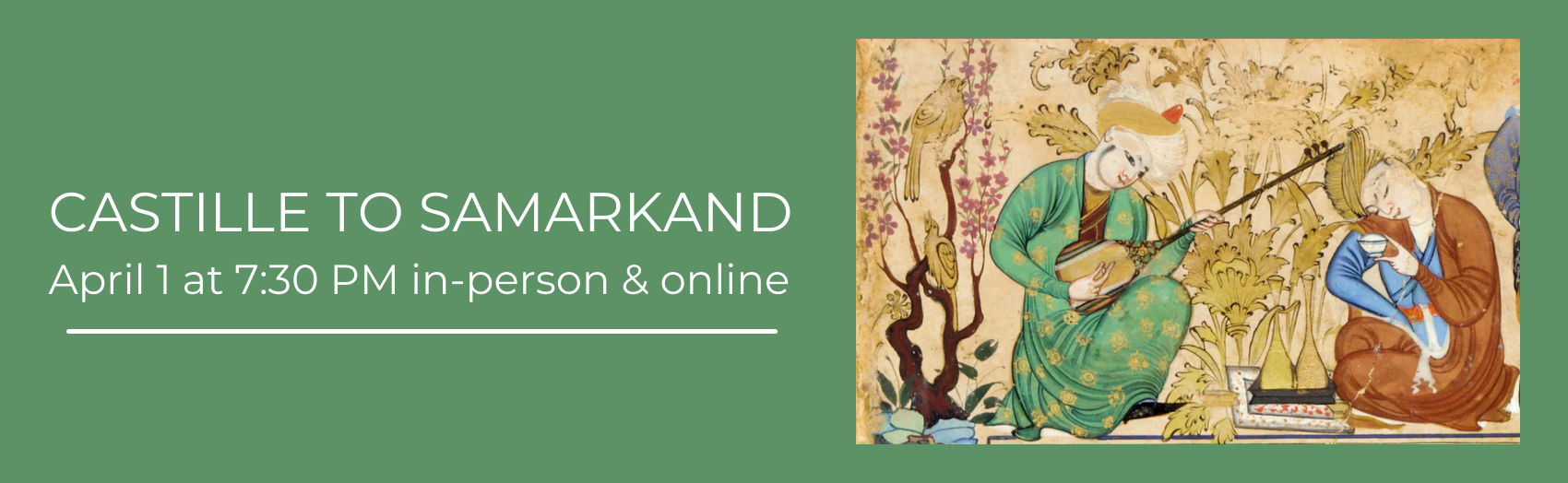
The 15th and 16th centuries have been described as “The Golden Age of Spanish music”, but they were also prolific periods for musicians in the Persian courts and throughout the Ottoman Empire. This journey from Castille to Samarkand brings into dialogue the music of the Spanish renaissance with Persian/Ottoman masterpieces taken from manuscripts unearthed in monasteries and palace libraries, such as Topkapi.
This concert is generously supported by Tony & Margie Knox and The RPC Family Foundation.

Purchasing Tickets
Click here to purchase tickets to the in-person concert.
Programme
The programme will be released in the week leading up to the concert.
ONLINE VERSION – PURCHASE TICKETS AND HOW TO WATCH:
Online: Streaming by Fee for 48 hours starting on April 1 at 7:30 PM.
Click here to purchase tickets to the online concert.
Programme Notes
The great masters of the Spanish Renaissance created their own signature of polyphony. Into what was essentially Franco-Flemish music of the time they wove influences left by the monodic tradition such Cantigas de Santa Maria and also by the Moors and the Muslim cultures so present in medieval Spain. During this time, the courts of Tamerlan, Shah Ismail and Sultan Suleyman in the East, welcomed and trained some of the most remarkable musicians, composers and theoreticians to grace the pages of the musical history of these regions.
This journey from Castille to Samarkand with Constantinople and Accademia del Piacere brings into dialogue the music of the Spanish Renaissance with Persian/Ottoman masterpieces taken from manuscripts unearthed in monasteries and palace libraries such as Topkapi.
In collaboration with Fahmi Alqhai, one of the great virtuosos of the viola da gamba, and his Accademia del Piacere, the leading ensemble of early Spanish music, Constantinople embarks on a musical journey through Iberia, Persia, and Central Asia, revisiting music notable for its sumptuous color and exceptionally rich beauty.
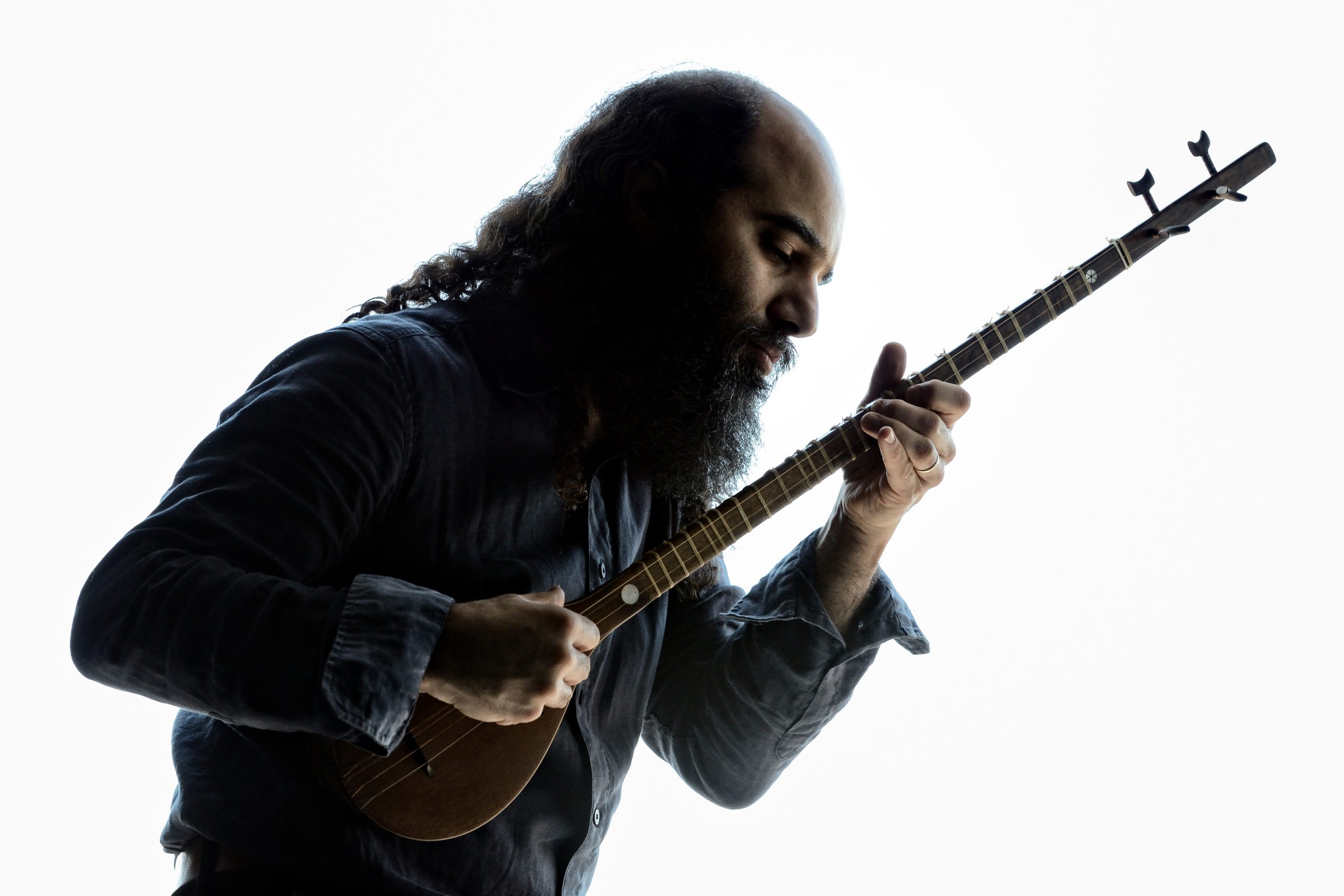
Kiya Tabassian, Music Director
In 1990, at age 14, Kiya Tabassian emigrated with his family to Quebec from his native Iran, bringing with him some initial musical training in Persian music. Determined to become a musician and composer, he continued his education in Persian music, studying with Reza Gassemi and Kayhan Kalhor. At the same time, he studied composition at the Conservatoire de musique de Montréal with Gilles Tremblay. In 1998, he co-founded Constantinople with the idea of developing an ensemble for musical creation that draws from the heritage of the Middle Ages and the Renaissance, of Europe, and of the Mediterranean and the Middle East. Serving as its artistic director, Kiya has developed close to 40 programs with Constantinople. Numerous musical groups and institutions have called upon his talents as a composer, including the Orchestre symphonique de Montréal, the Nouvel Ensemble Moderne and the European Broadcasting Union. He has also composed music for documentary and feature films, including Jabaroot and Voices of the Unheard. Since the summer of 2017, he has held the post of Associate Artist at Rencontres musicales de Conques festival in France. In 2017 he co-founded the Centre des musiciens du monde in Montreal. Kiya also sits on the Board of Conseil des arts et des lettres du Québec.
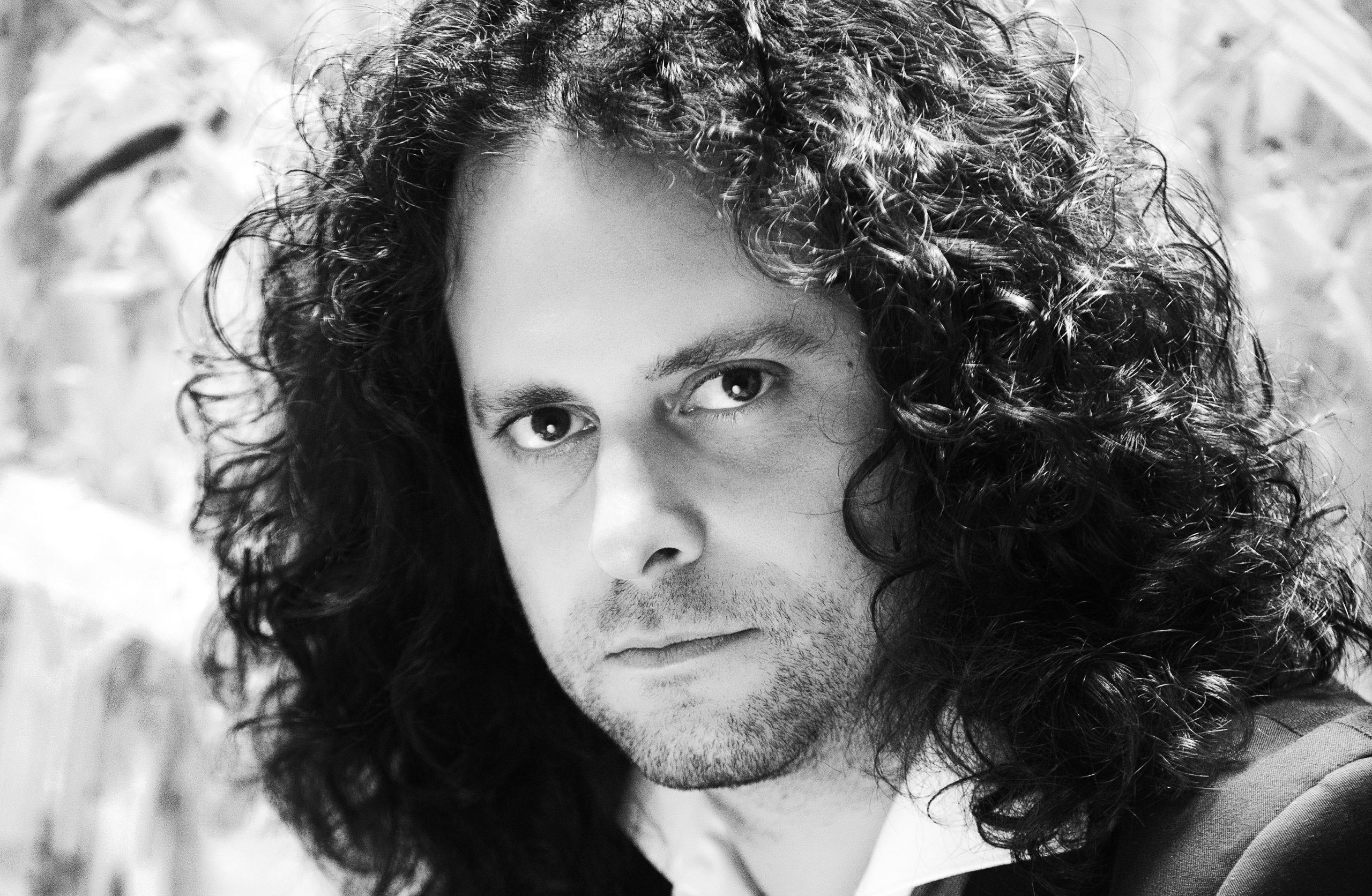
Fahmi Alqhai, Music Director
Fahmi Alqhai is considered one of the most brilliant and prestigious players of the Viola da Gamba in the world today, as well as one of the most recognised interpreters of early music, for his personal and communicative approach to historical repertories.
Born in Seville, Spain, in 1976 to a Syrian father and Palestinian mother, he spends the first eleven years of his life in Syria, where he starts to study music at a very young age. Later he studies—self-taught—in Spain until he enters the Manuel Castillo Conservatoire in Seville in 1994 to study the Viola da Gamba with Ventura Rico. He furthers his studies in the prestigious Schola Cantorum Basiliensis (Basel, Switzerland) with Paolo Pandolfo and in the Conservatorio della Svizzera Italiana (Lugano, Switzerland) with Vittorio Ghielmi. Over the course of his musical studies, Fahmi Alqhai also obtains his degree in Dentistry from the University of Seville.
In 2002 he founds Accademia del Piacere with soprano Mariví Blasco, ensemble of which he is the director. He is also founder, together with his brother Rami Alqhai, of the record label Alqhai & Alqhai, with which he produced and recorded four CDs –two dedicated to the Italian Seicento (Le Lacrime di Eros, winner of the 2009 Prelude Classical Music prize, and Amori di Marte) and a third to Marin Marais and Antoine Forqueray’s music for viola da gamba (nominated for the International Classical Music Awards 2011). In 2012 Fahmi Alqhai wins the Giraldillo prize awarded to Best Music at the 2012 Sevilla Flamenco Biennal, for the music of his fourth CD Las idas y las vueltas, together with flamenco vocalist Arcángel. In 2016 he wins also the Giraldillo to the Innovation for Diálogos, with Rocío Márquez.
In 2014 he records for Glossa his first CD for solo viol, A piacere, whose innovative conception of the instrument is warmly welcome in Spain, Germany and throughout Europe. For the British magazine Gramophone it’s an “extraordinary” CD in which “he brings the instrument into a new realm of joyful potential”, and “a merry tribute to all [the viola da gamba] could have been, and still can be”. In 2016 he launches its most personal work as a soloist, The Bach Album, for the label Glossa (award-wining for GEMA, Scherzo and Melomano). In 2018 he received the Medal of the City of Seville.
From a young age he is invited to work with the most internationally-renowned early music ensembles. He is a regular member of numerous recognised groups such as Hesperion XXI (Jordi Savall) and Il Suonar Parlante (Vittorio Ghielmi). He is also a founding member of More Hispano (dir. Vicente Parilla). With these ensembles, as well as with Accademia del Piacere and as a soloist, Fahmi Alqhai regularly offers concerts in Europe, Japan, the United States and South America’s best concert halls.
As a soloist, Fahmi Alqhai has performed with important orchestras such as the National Orchestra of Spain, the Philharmonic Orchestra of Galicia, Ensemble Vocal de Lausanne (Michael Corboz), Orquesta Barroca de Sevilla, and Al Ayre Español, among others. He has also made his entrance in the fields of contemporary music, as well as jazz, with artists such as Uri Caine.
Fahmi Alqhai has also made numerous recordings for record labels such as Alia Vox, Glossa, Winter&Winter, Tactus, Arsis and Enchiriadis, as well as for television and radio in Europe, Asia and America.
Since 2009, he is artistic director of the Early Music Festival of Seville (FeMAS), Spain’s oldest and most important early music festival.
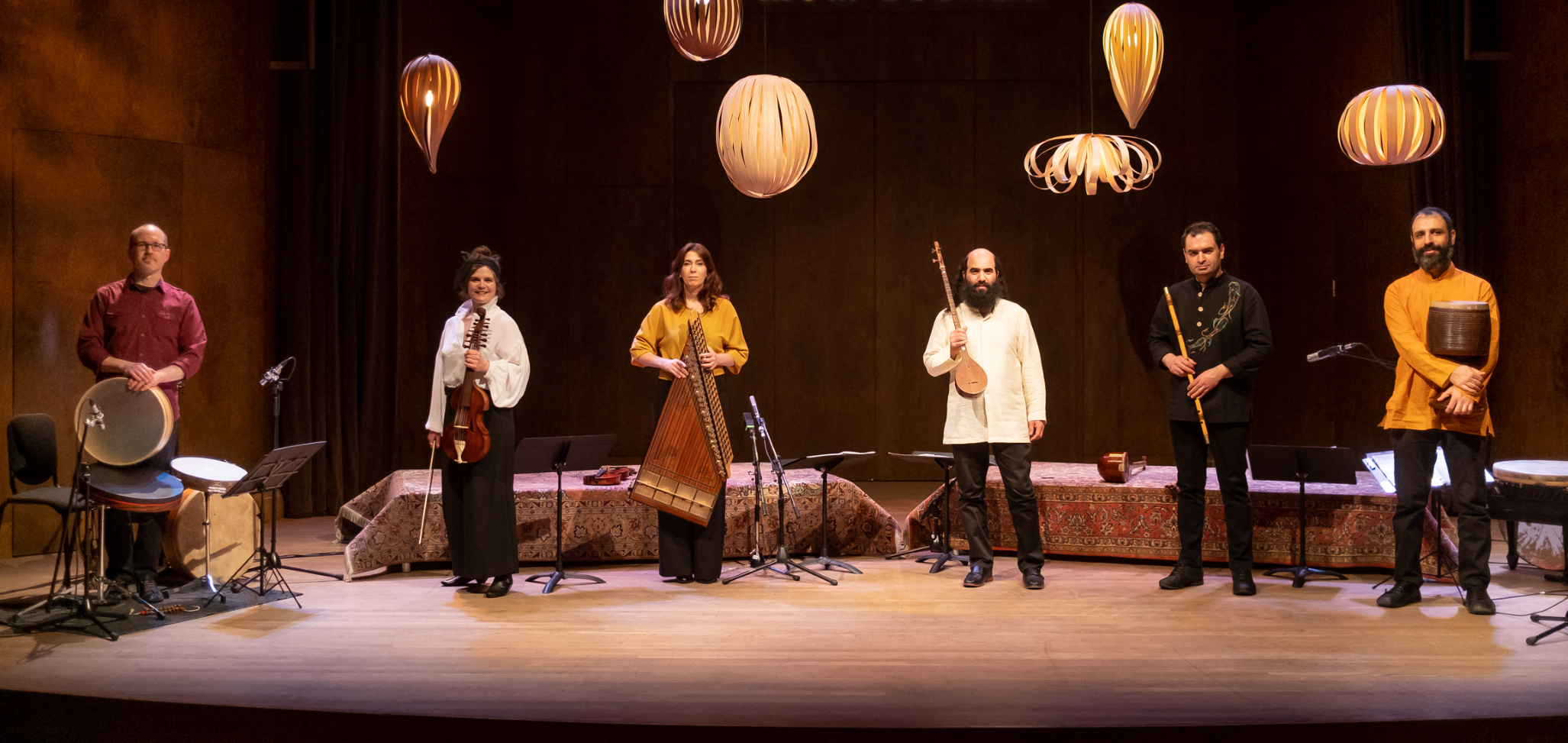
Ensemble Constantinople
Founded in 1998 by its artistic director Kiya Tabassian, Constantinople is a musical ensemble inspired by the ancient city straddling the East and West. Since its founding, the ensemble promotes the creation of new works incorporating musical elements of diverse musical traditions around the world; drawing from medieval manuscripts to a contemporary aesthetic, passing from Mediterranean Europe to Eastern traditions and New World Baroque. Underpinned by a spirit of research and creation, Constantinople has joined forces with leading international artists such as: Marco Beasley, Suzie LeBlanc, the Mandinka griot Ablaye Cissoko, the Greek ensemble En Chordais, the Belgian duo Belem, The Klezmatics, sarangi virtuoso Dhruba Ghosh, and Iranian kamancheh master Kayhan Kalhor. They are regularly invited to perform in international festivals and prestigious concert halls including: the Salle Pleyel (Paris), the Berliner Philharmonie, the Fes Festival of World Sacred Music (Morocco), the Rencontres musicales de Conques (France), the Aga Khan Museum (Toronto), the Cervantino Festival (Mexico) and the Festival de Carthage (Tunisia). Constantinople has 19 albums to its credit. Over the past fifteen years, Constantinople has created nearly 50 works and travelled to more than 240 cities in 54 countries.
Accademia del Piacere
Directed by Fahmi Alqhai, the ensemble has made its first recording for Glossa, Rediscovering Spain - fantasías, diferencias and glosas, in which it sets out to recover and bring up to date in all its aspects the common practice of musicians from the 16th and 17th centuries. For some years now, the group has been turning away from the well-worn pathways in order to explore new possibilities in terms of presentation and interpretation in its musical work (a good example of this has been the highly successful collaborative activities with the cantaor Arcángel).
Accademia del Piacere has taken part in many events all across Europe and some of the recent concert halls and festivals where it has performed have been the Konzerthaus, Vienna, the Fundação Calouste Gulbenkian, Lisbon, the Festival van Vlaanderen, the Tage Alter Musik Regensburg, De Bijloke, Gent, the Kölner Philharmonie and Il Ravello
Festival (Italy). Concerts in Spain have been frequent and have included the Auditorio Nacional de Música in Madrid, the Festival de Música Antigua de Sevilla, the Festival de Música y Danza de Granada, and the Festival de Música Antigua de Úbeda y Baeza.