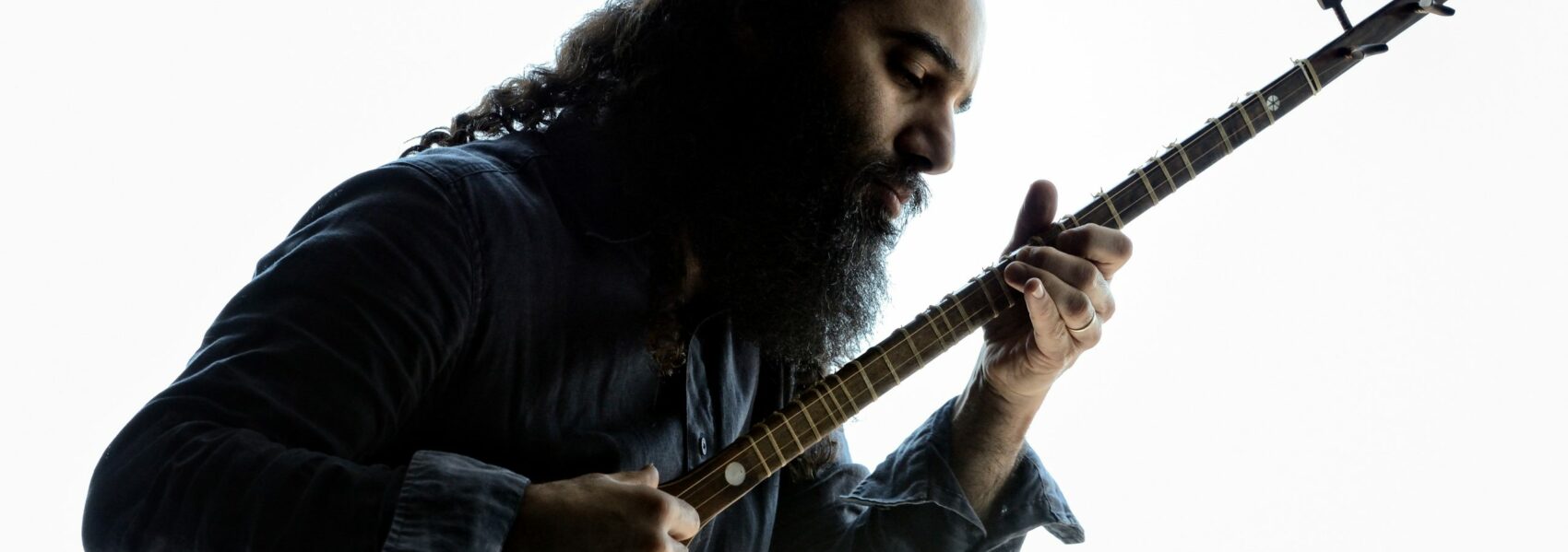
Ensemble Constantinople; Michel Angers, baroque guitar, theorbo; Didem Başar, kanun; Elinor Frey, baroque cello; Patrick Graham, percussion; Tanya LaPerrière, baroque violin, viola d'amore; Kiya Tabassian, setar, shourangiz
For this concert, Ensemble Constantinople has taken the liberty of reinventing the music left by Italian early baroque composers such Kapsberger, Monteverdi and Rossi. In response to these beautiful works, Constantinople will interpret a few masterpieces from the Polish composer at the Ottoman court, Ali Ufuki, as well as new compositions by Constantinople music director, Kiya Tabassian. The ensemble aims to create a dialogue that recreates the spirit of the cultural exchanges between Venice and Eastern capital cities, such as Constantinople. The spontaneous changes, sharp contrasts and unusual rhythmic groupings in this program provide fertile ground for the musicians of Constantinople, who always welcome the chance to free themselves from the cultural codes of old Europe.
This concert is generously supported by José Verstappen, Elaine Adair, and Jo Anne Tharalson
How to watch:
This concert is no longer available to stream. Stay informed with the latest news from EMV by signing up for our newsletter.
Programme
Giovanni Girolamo Kapsberger (c.1580-1651) / A. Falconieri (c. 1585-1656)
Capona / Ciaconna
Giovanni Girolamo Kapsberger
Toccata Arpeggiata
Kiya Tabassian
Sa’di
Giovanni Girolamo Kapsberger
Kapsberger
Kiya Tabassian
L’Aube d’une forêt
Salomone Rossi (c. 1570-1630)
Sinfonia
Ali Ufki (1610-1675)
Fath-e Bâb – Nikriz Pishrow
Claudio Monteverdi (1567-1643)
Il ballo delle ingrate (Excerpt)
Ali Ufki
Pishrev-i Zarb-i Feth
Giovanni Girolamo Kapsberger
Passacaglia
Pietro Paolo Borrono (1490-1563)
La Canella
Kiya Tabassian
Finale
Programme Notes
For several centuries, and despite numerous armed conflicts, Venice maintained strong diplomatic and commercial ties with the Ottoman Empire, and particularly with its capital, Constantinople (now known as Istanbul). Bearing witness to this are the paintings by many great artists, from Carpaccio to the 18th-century vedutisti, that show people in turbans and oriental clothes strolling through the public spaces of La Serenissima. Mutual rivalry and fascination continually wove links between the disparate civilizations of Venice and Constantinople.
Moreover, 17th-century Venice was the most musically vital city in Italy. This vitality was expressed mainly in an unprecedented boom in opera — the world’s first public theaters exclusively for opera opened here — but also in the development of autonomous and virtuosic instrumental music. These two trends were key elements of the new Baroque esthetic. It is not surprising, then, that Claudio Monteverdi came to La Serenissima; he was hired in 1612 as maestro di cappella of Saint Mark’s basilica. He, and his work, came to exercise considerable influence. Using the new style of accompanied monody supported by basso continuo with unrivalled suppleness and fidelity, setting Italian texts to music in dramatic forms such as the opera and light forms such as the canzonetta, he succeeded in his lifelong quest: to find ways to express human emotions.
For melody instruments, and particularly the violin, the ideal was to preserve the specific character of the instrument while, at the same time, sounding as much as possible like the human voice. At the beginning of the 17th century, music was being written for these instruments in such creative profusion that the terms sonata, canzona, sinfonia, and toccata had not yet acquired their current precise meanings and often became interchangeable. Salomone Rossi, a Jewish violinist and composer, worked in Mantua where he enjoyed the esteem of his patron, the Duke of Gonzaga. Rossi wrote in all the genres of his day, and though his vocal music remained essentially polyphonic, he innovated in developing the basics of the trio sonata and a new, expressive style of writing for the violin.
Giovanni Girolamo Kapsberger was born in La Serenissima — his father was a German military official — and became one of the greatest lutenists of his time. He published his first book of pieces in Venice before moving to Rome, where he acquired a reputation as a virtuoso on the bass lutes — the various forms of lute, such as the archlute, theorbo, and chitarrone, with added long bass strings. These low-register strings are not strung over the fingerboard, and thus not used to sound various pitches by pressing down on them with the fingers of the left hand. Rather, when plucked, they vibrate at full length.
Many instrumental pieces of the time, and especially dances such as chaconnes, passacaglias, and bergamasks, used melodies or bass lines with a standardized and recurring chord progression over which composers spun figures and variations of their own invention. Initially, in fact, these figures were mainly improvised, as in today’s jazz; and so, today, performers can combine tunes by different composers into a single piece, mixing, as here, Kapsberger with Andrea Falconieri and with Marco Uccellini.
It was at this time that coffee, which some travelers had already tasted in Cairo, Mecca, or Constantinople, came to Europe. The new beverage quickly became hugely popular, and the coffee trade began to acquire commercial importance. For quite some time, it was the fashion among the new European coffee fanciers to dress like Turks so as to further enhance the exotic pleasure of their favorite brew! The first coffee houses, like those common throughout the Near East and decorated in Turkish style, opened in Venice. They soon spread, to London, Paris, and Vienna, bringing to Europe a new, thoroughly modern, kind of sociability.
The several modes of cultural exchange that brought Ottomans and Europeans closer together did not include music; whether in its notation, modes, vocal technique, or poetic form, the East-West dichotomy was clear. Nonetheless, some characteristic intervals and vocal ornaments, as well as the military rhythms of the Janissaries and various percussion instruments, made their way into Western compositions. These components gave more or less exotic flavors to the numberless Turqueries performed on European stages for more than a century, from the Bourgeois gentilhomme of Molière and Lully to The Abduction from the Seraglio of Mozart.
It is also likely that, like coffee fanciers in their elegant Turkish garb, musicians of the day could not resist the temptation to include elements from the Near East to give original colors and flavors to their playing, or even to play with colleagues from the eastern Mediterranean… The addition of percussion, and of Persian plucked-string instruments, as well as the possibility of playing semi-improvised instrumental preludes and ritornellos, is very much in keeping with the great freedom musicians enjoy in realizing a basso continuo accompaniment. And Venetian music from the early Baroque admirably suits the musicians of the ensemble Constantinople.
© François Filiatrault
Translated by Sean McCutcheon
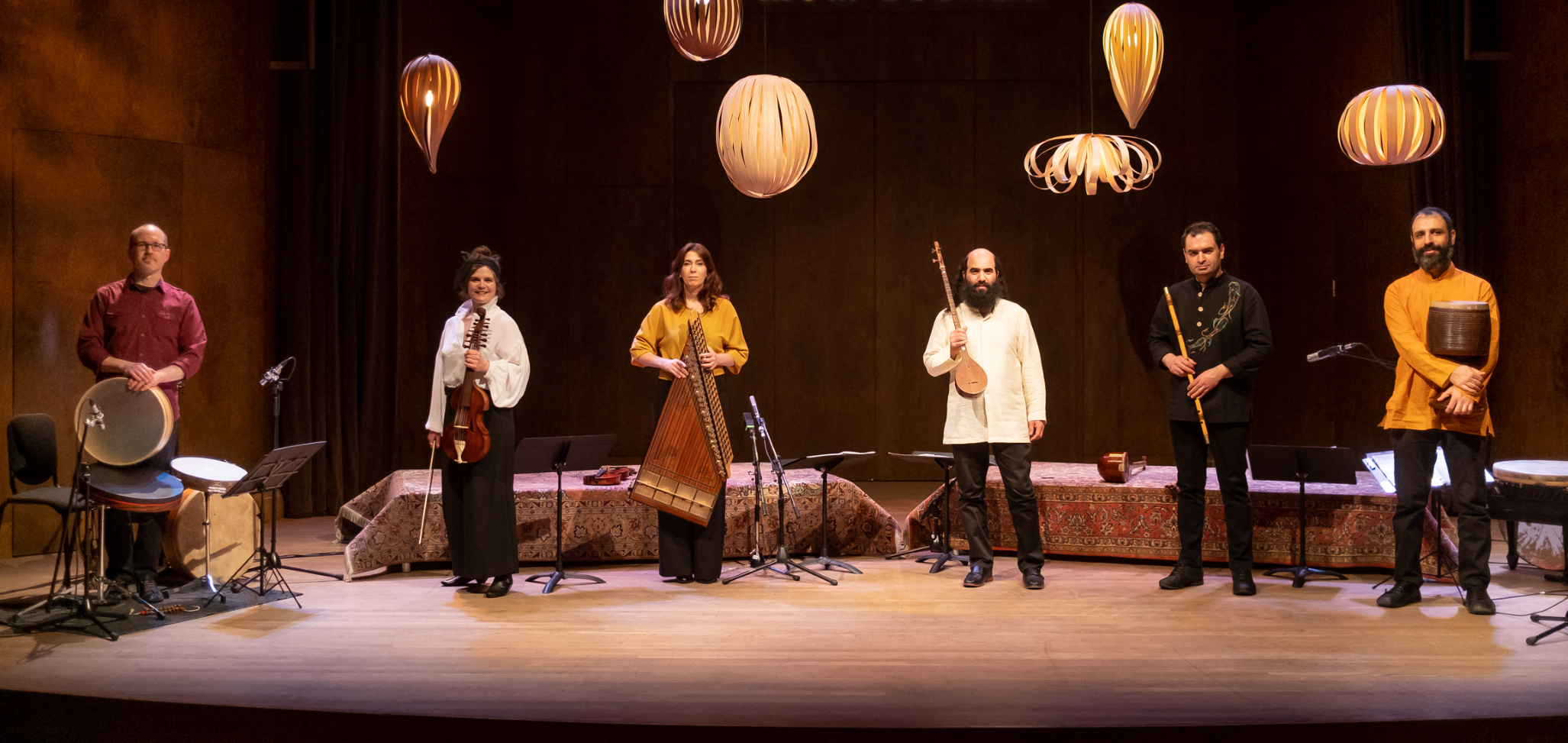
Ensemble Constantinople
Founded in 1998 by its artistic director Kiya Tabassian, Constantinople is a musical ensemble inspired by the ancient city straddling the East and West. Since its founding, the ensemble promotes the creation of new works incorporating musical elements of diverse musical traditions around the world; drawing from medieval manuscripts to a contemporary aesthetic, passing from Mediterranean Europe to Eastern traditions and New World Baroque. Underpinned by a spirit of research and creation, Constantinople has joined forces with leading international artists such as: Marco Beasley, Suzie LeBlanc, the Mandinka griot Ablaye Cissoko, the Greek ensemble En Chordais, the Belgian duo Belem, The Klezmatics, sarangi virtuoso Dhruba Ghosh, and Iranian kamancheh master Kayhan Kalhor. They are regularly invited to perform in international festivals and prestigious concert halls including: the Salle Pleyel (Paris), the Berliner Philharmonie, the Fes Festival of World Sacred Music (Morocco), the Rencontres musicales de Conques (France), the Aga Khan Museum (Toronto), the Cervantino Festival (Mexico) and the Festival de Carthage (Tunisia). Constantinople has 19 albums to its credit. Over the past fifteen years, Constantinople has created nearly 50 works and travelled to more than 240 cities in 54 countries.
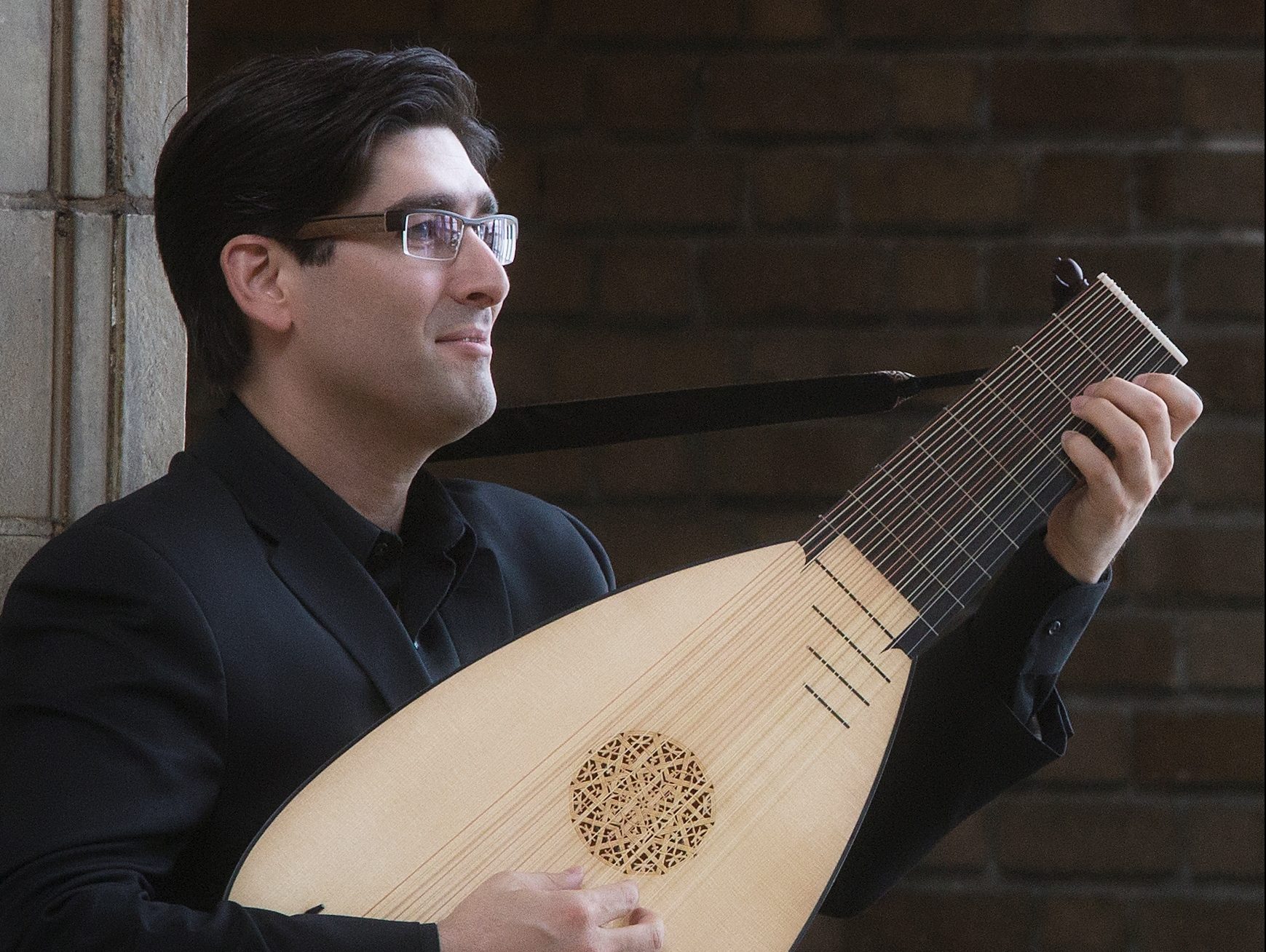
Michel Angers, baroque guitar, theorbo
Canadian guitarist/lutenist Michel Angers collaborates in numerous artistic projects for various ensembles as a continuo player (Tafelmusik, Constantinople, Les Violons du Roy, Les Idees Heureuses, Les Poètes de l’Amérique Française and Consort Laurentia) and as a soloist throughout Canada, America, and Europe. He is also a recording artist for renowned Italian label Stradivarius. Angers values the honour of educating others and maintains a successful private studio. He is a sought-after mentor serving on faculty with the Orford Center for the Arts and the Lunenburg Academy of Music Performance.
Upon receiving his Master of Music degree from Laval University in Québec, Angers was awarded the highest distinction from the Quebec Music Conservatory. In 2005, Angers won the classical guitar category of the prestigious Canadian Music Competition.
Receiving Numerous grants by many cultural organizations, he has been a scholar of Tafelmusik Baroque Summer Institute, Oberlin Baroque Performance Institute (Lucas Harris) and Early Music America which gave him the opportunity to attend the Accademia d’Amore in Seattle to study under the direction of Stephen Stubbs. In 2011, Michel Angers won the Award of Artistic Creation presented by the Conseil des arts et des lettres du Quebec. Twice a grant holder of the Marco Fodella Foundation, Angers specialized in early music under Paul Beier, at the Academy of Music in Milan.
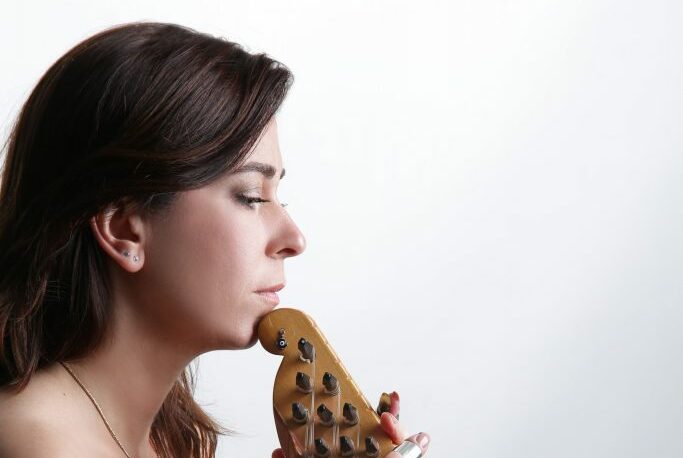
Didem Başar, kanun
Born in a family steeped in music, kanun (Turkish zither) player and composer Didem Başar began her music education at the Istanbul Turkish Music State Conservatory when she was 11 years old. After completing the Conservatory’s kanun program, she continued training at the same institution and received a bachelor’s degree in composition.
Her interest in examining the effects of art on society led her to pursue a master’s degree in the musical analysis of Mevlevi music at Marmara University. She gave lectures on Turkish music and kanun playing techniques at Halic University’s Turkish Music Conservatory and the Istanbul University State Conservatory from 2001 until she moved
to Canada in 2007. Relocating to Montreal has given Didem the opportunity to reinterpret her music in a new environment whose vividness is the result of the turbulent convergence of manifold cultures flowing from different parts of the world.
After composing for different ensembles and playing with different artists over the past 15 years, Didem Başar wanted to create her own project, which would intersect her two musical influences: Turkish and Western classical music. During an artistic residency at the World Musicians Centre in Montreal, she was able to call on the talents of Noemy Braun, a classical cellist with a flair for improvisation, Guy Pelletier, a flute virtuoso and highly versatile musician known for exploring different genres and styles, Brigitte Dajczer, a violinist rooted in Eastern European and Romani folk music, and Patrick Graham, another remarkably versatile musician with a broad knowledge of different percussion instruments from all over the world. The album, Levantine Rhapsody, was released in February 2020 and received the Opus Award for best world music album of the year, as well as many other prestigious nominations.
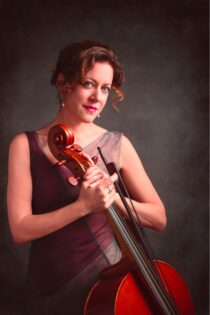
Elinor Frey, baroque cello
Elinor Frey is a leading Canadian-American cellist, gambist, and researcher. Her albums on the Belgian label Passacaille and Canadian label Analekta – many of which are world premiere recordings – are the fruit of long collaborations with artists such as Suzie LeBlanc, Marc Vanscheeuwijck, and Lorenzo Ghielmi, as well as with composers including Maxime McKinley, Linda Catlin Smith, Christian Mason, and Lisa Streich. Elinor’s recording of cello sonatas by Giuseppe Clemente Dall’Abaco received a Diapason d’Or and her critical editions of Dall’Abaco’s cello music is published in collaboration with Walhall Editions. Early Italian Cello Concertos, her album in collaboration with Rosa Barocca orchestra, won the 2023 JUNO Award for Classical Album of the Year (small ensemble).
Elinor is the artistic director of Accademia de’ Dissonanti, an organization for performance and research, and she has performed throughout the Americas and in Europe in recital and with numerous chamber ensembles and orchestras (Constantinople, Les idées heureuses, Il Gardellino, Tafelmusik, Pacific Baroque Orchestra, etc.). In March 2023, she performed Boccherini and Sammartini concertos with the Australian Brandenburg Orchestra.
Recipient of dozens of grants and prizes supporting performance and research, including the US-Italy Fulbright Fellowship (studying with Paolo Beschi in Como, Italy) and a recent research residency at the Orpheus Institute in Ghent, Elinor holds degrees from McGill, Mannes, and Juilliard. She teaches Baroque cello and performance practice at McGill University and the Université de Montréal and is a Visiting Fellow in Music (2020–2023) at Lady Margaret Hall, Oxford University. Frey was awarded Québec’s Opus Prize for “Performer of the Year” in 2021.
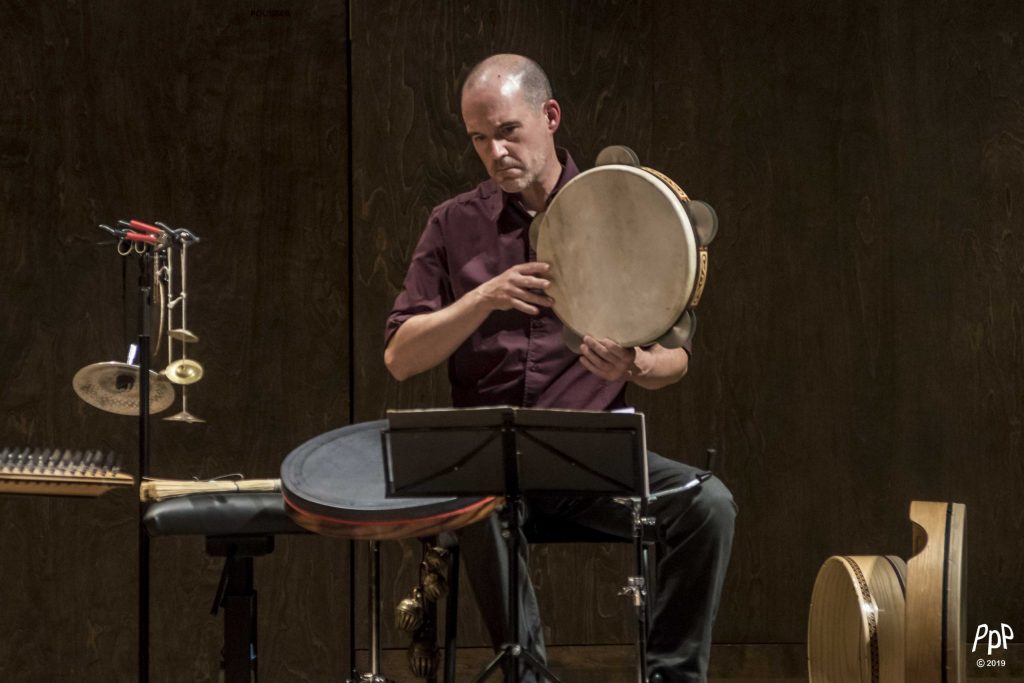
Patrick Graham, percussion
Over a two decades career based in Montreal, Canadian multi-percussionist Patrick Graham has been described as a “master improviser… on the border of several forms of traditional and creative music, embracing the world of rhythm as a whole” (Yves Bernard, Le Devoir). Patrick displays a talent for fusing an eclectic array of influences—ranging from Japanese percussion, through Indian and Irish rhythms, to Mediterranean frame drumming—as a well as a passion for new sounds and improvisation. This unique cross-genre approach is reflective of an extensive and ongoing study of the art of percussion, including a Bachelor of Music from McGill University in Montreal, as well as private training in several countries with Trichy Sankaran, Glen Velez, Carlo Rizzo, Zohar Fresco and Taichi Ozaki. In addition, Patrick has attended workshops and master classes at the Banff Centre for the Arts, Simon Fraser University, the Labyrinth centre in Crete and participated in the Taiko Koh-Kan workshops conducted by the group Kodō, on Sado Island in Japan.
Patrick performs, tours and records regularly with many groups and ensembles, including Constantinople, as well as contributing to productions by IMAX, Cirque du Soleil and Ubisoft Games. Alongside a busy performing and recording schedule, Patrick is also active as an instructor, teaching percussion and rhythm workshops in Canada, the USA, India, China and Japan, as well as for the Cirque du Soleil.
In March 2020, Patrick released Lumina, his latest solo project.
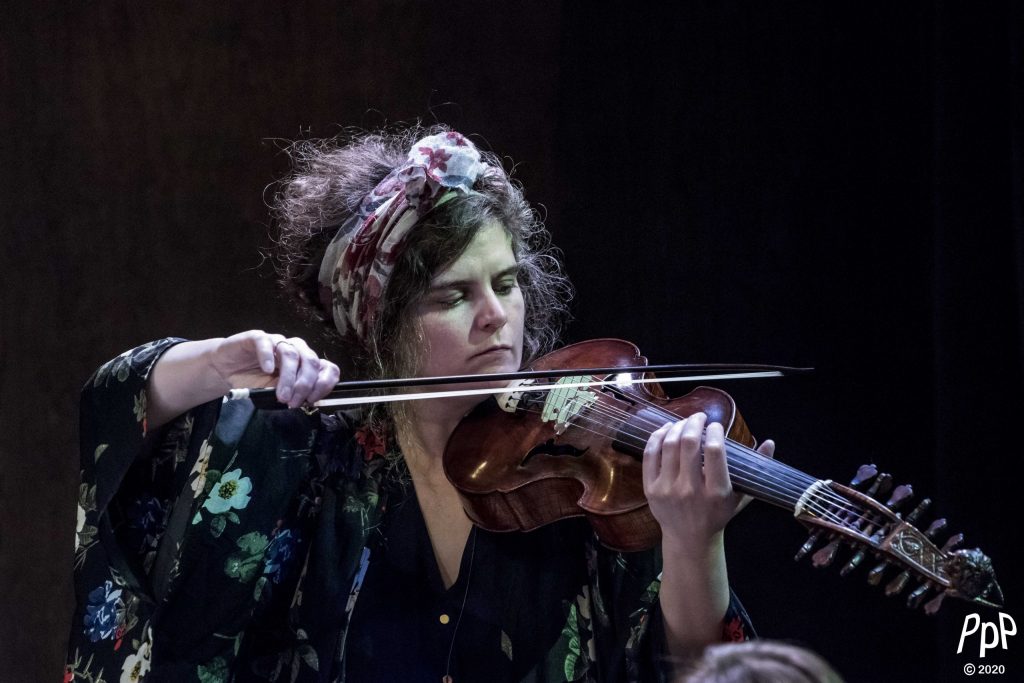
Tanya LaPerrière, baroque violin, viola d'amore
Recognized for the elegance and passion of her interpretations, Tanya LaPerrière is a graduated violin master of the Royal Conservatory of Brussels under the direction of Mira Glodeanu, as well as McGill University under the guidance of Chantal Rémillard. Co-solo violin of Arion orchestra, she also performs on Canadian and international stages with the celebrated ensembles Caprice, Constantinople, Studio de musique ancienne de Montréal, Clavecin en concert and Les Idées Heureuses. She is currently collaborating as a coach for the baroque orchestra at Université de Montréal (OBUM) alongside Luc Beauséjour.
She also leads as solo violin and founding member her quartet, Pallade Musica, winner of prestigious awards in Utrecht (Holland) and New York (United States), also nominated for two Opus Awards for their recordings on the Atma label. Ms. LaPerrière regularly performs as Concertmaster in Canadian ensembles and is building a solid reputation as a leader in early music throughout the country.
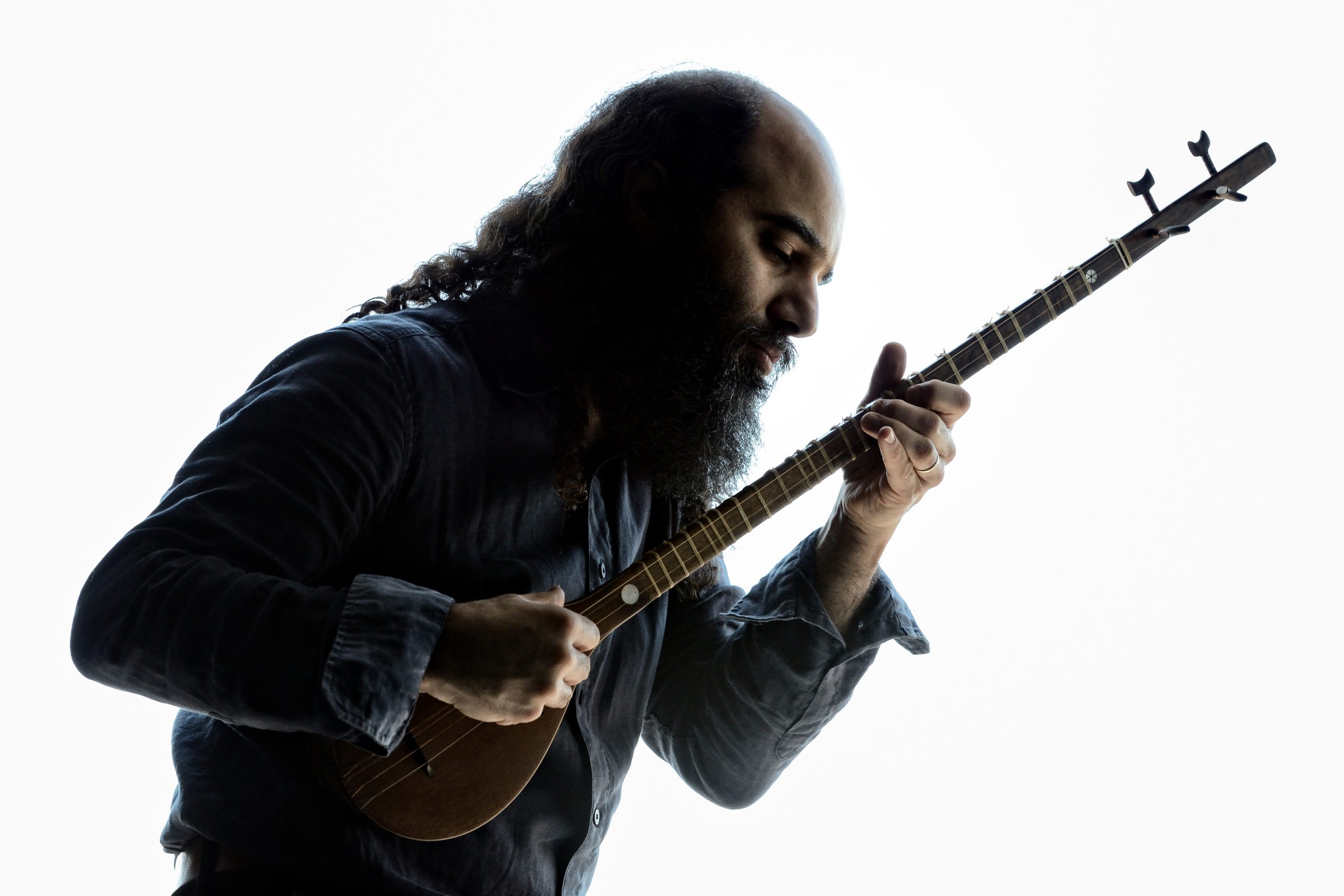
Kiya Tabassian, setar, shourangiz
In 1990, at age 14, Kiya Tabassian emigrated with his family to Quebec from his native Iran, bringing with him some initial musical training in Persian music. Determined to become a musician and composer, he continued his education in Persian music, studying with Reza Gassemi and Kayhan Kalhor. At the same time, he studied composition at the Conservatoire de musique de Montréal with Gilles Tremblay. In 1998, he co-founded Constantinople with the idea of developing an ensemble for musical creation that draws from the heritage of the Middle Ages and the Renaissance, of Europe, and of the Mediterranean and the Middle East. Serving as its artistic director, Kiya has developed close to 40 programs with Constantinople. Numerous musical groups and institutions have called upon his talents as a composer, including the Orchestre symphonique de Montréal, the Nouvel Ensemble Moderne and the European Broadcasting Union. He has also composed music for documentary and feature films, including Jabaroot and Voices of the Unheard. Since the summer of 2017, he has held the post of Associate Artist at Rencontres musicales de Conques festival in France. In 2017 he co-founded the Centre des musiciens du monde in Montreal. Kiya also sits on the Board of Conseil des arts et des lettres du Québec.