The Chan Centre | Map
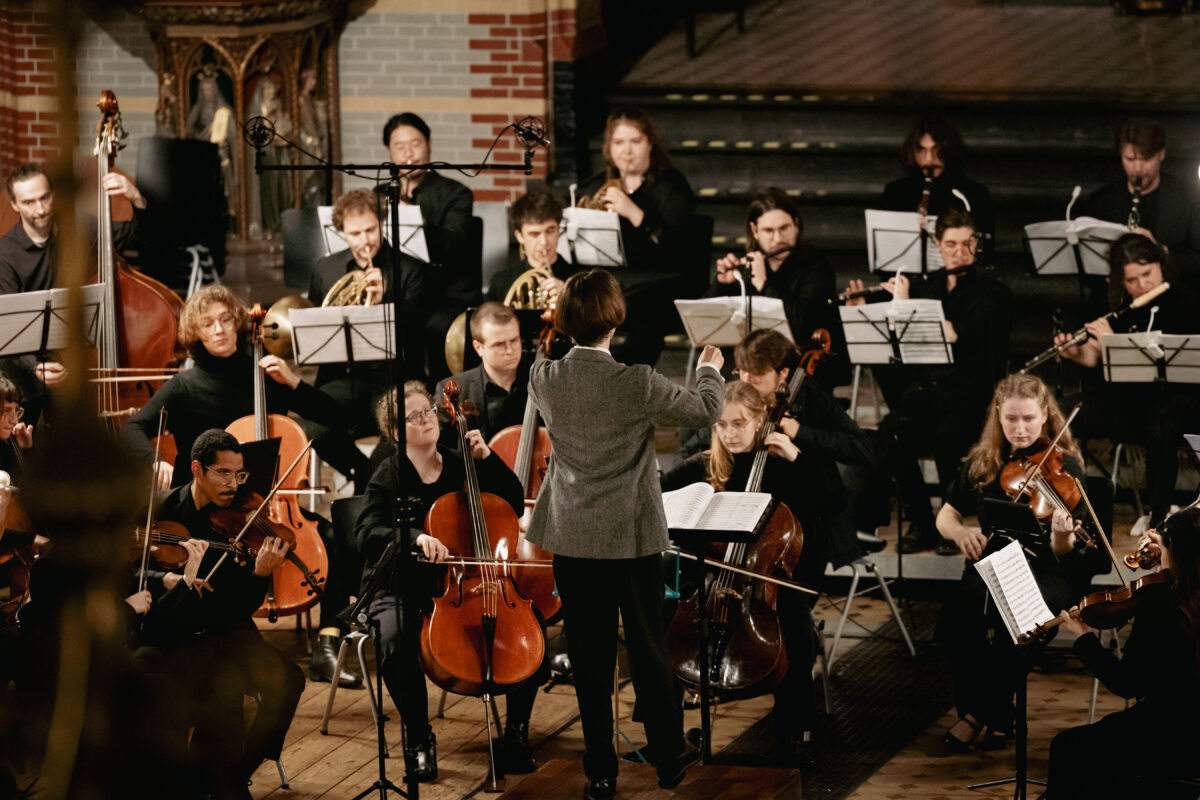
Stephen Stubbs, music director; Teresa Wakim, soprano; Krisztina Szabó, mezzo-soprano; Zachary Finkelstein, tenor; Sumner Thompson, baritone; and a 28-piece baroque orchestra; EMV Vocal and Instrumental Ensemble
“That Early Music Vancouver has presented a selection of these remarkable works annually for a decade, and to enthusiastic full houses at the Chan Centre, is one of the joys of the Vancouver holiday season… remarkable singing and fine ensemble work in music of utterly exceptional quality.” The Vancouver Sun Bach’s great Christmas Oratorio begins and ends with a clamour of trumpets and a great clatter of kettledrums. Celebrate the holiday season with a collection of North America’s most celebrated period instrumentalists and soloists in this festive performance of three of Bach’s six Christmas Oratorio Cantatas.





Programme
From Bach’s Christmas Oratorio Jauchzet, frohlocket! Auf, preiset die Tage, BWV 248/1 Herrscher des Himmels, erhöre das Lallen, BWV 248/3 Intermission Orchestral Suite No. 3 in D major, BWV 1068 Herr, wenn die stolzen Feinde schnauben, BWV 248/6
Programme notes
by JoAnn Taricani, University of Washington “Jauchzet! frohlocket!” (“Shout for joy! exult!”) The center of Leipzig hummed with anticipation in the third week of December 1734, with the sounds of Christmas rehearsals seeping out of the two Lutheran churches where Johann Sebastian Bach was preparing to launch a new, ambitious composition that would premiere over thirteen days, structured so that the congregations of his churches would return day after day to hear each next installment of this massive work: The Christmas Oratorio, a magnificent festival of six cantatas, composed for six feast days across the two weeks of Christmas liturgy, starting on Christmas Day and concluding on Epiphany, January 6. The anticipation of new music for Christmas in 1734 was heightened by the annual disappearance of cantata performances in Bach’s churches during the four Sundays of Advent, a musical silence that emphasized the quiet, reflective nature of the penitential season leading to the Christmas liturgy, similar to the season of Lent prior to Easter. The Christmas Oratorio would be a particularly rich feast after this musical fast, with an emphasis on the bright instrumentation Bach associated with festivals – and in fact, Bach based the Christmas Oratorio on celebratory cantatas he had written for the royal family of Dresden the preceding year. Indeed, the instrumentation of those 1733 royal cantatas, reinvented with sacred texts as the Christmas Oratorio, was typical of the festive orchestration associated with pieces such as Bach’s earlier Brandenburg Concertos – along with flutes and oboes, adding trumpets and timpani for a brilliant sound. This Christmas Oratorio gives us a window into Bach’s other major position in Leipzig, as the director of the city’s Collegium Musicum, for which he prepared weekly Friday evening concerts at Gottfried Zimmermann’s coffeehouse, just north of his two churches. There, he had access to virtuoso instrumentalists from the university; the music that eventually became the Christmas Oratorio initially was presented with those instrumentalists in the coffeehouse in Autumn 1733. You will hear the clear reference to the earlier royal cantatas in the opening measures of the Christmas Oratorio: the original 1733 text had ordered: “Tönet, ihr Pauken!” (“Sound, you drums!”), and was echoed immediately by a timpani solo that indeed answered the command by playing the melody back to the singers. For the 1734 Christmas Oratorio, Bach changed the words to “Jauchzet! frohlocket!” (“Shout for joy! exult!”), and the same echo emanates from the timpani, a reference his musicians and any keenly observant audience member would recognize. It is a dramatic yet charming statement and dialogue that highlights the importance of the elaborate instrumentation Bach has chosen for these secular and sacred celebrations. By commingling six cantatas to create an oratorio, Bach was stretching the German adaptation of the Italian oratorio, which had evolved over the past century in Italy as a non-staged musical drama based on Biblical stories, using the aria, recitative, and ensemble styles of Baroque opera to create sacred works that were primarily performed during Lent, when operas were not presented. In Protestant Germany, the concept of a musical Biblical drama often found expression as a Historia, a musical narrative, particularly about the Passion of Christ, and less frequently, about Christmas and Easter. But the Italian and German oratorios were intended to be performed in a single evening, whereas Bach reconceived the idea of an oratorio to stretch through the entire Christmas season. To fully appreciate the Christmas Oratorio, we need to explore the context in which it was presented: morning and afternoon in the two churches where Bach served as music director, the Thomaskirche (St. Thomas Church) and the Nicolaikirche (St. Nicholas Church). He was in his eleventh year at Leipzig by 1734, and had written three annual cycles of cantatas for performance in his churches during his first three years at Leipzig, between 1723 and 1725, so his cantata cycles had been in circulation for almost a decade. Composing a major new cycle for the 1734 Christmas season led him to the multi-day musical event, revealing Biblical stories over six Christmas feast days: the first three days of Christmas on December 25, 26, 27; the Sunday before the New Year; then the liturgies for January 1 and 6, the Feast of the Epiphany. The six cantatas of the Christmas Oratorio musically depict these stories, across two weeks: 1. The birth of Christ; 2. The annunciation to the shepherds; 3. The shepherds marveling at Mary and the child; 4. The circumcision of Christ; 5. The realization by Herod that a new King had been born; and 6. Herod sending the three wise men to find this child. Bach even had a libretto printed for the thousands of congregants, so they could read along with the performances and arrive at a deeper appreciation of the Nativity panorama. Bach himself peppered the opening of his libretto with excited punctuation for the holiday, opening with “Jauchzet! frohlocket! auf!” While Bach’s congregations heard the musical drama progress over time, in this concert we will hear the three parts (1, 3, and 6) that anchor the entire oratorio, the cantatas for December 25, 27, and January 6. Bach did not just connect the cantatas via the narrative; he also connected them musically, with an overarching key scheme and recurring music; the chorale you hear early in the first cantata recurs as the final movement of the entire oratorio. The three cantatas you will hear this evening are the three cantatas within the oratorio that are centered in the key of D major, with the internal movements progressing through related keys. Each of these three cantatas provides a sense of arrival by beginning and ending in D major. For Bach’s congregations, hearing the key structure throughout two weeks was probably not a focus, but in terms of the architecture of the piece, Bach provides a superb overall musical structure by stating the key on December 25 and closing with it on January 6. Each of the three cantatas you will hear this evening have a structure typical of Bach’s church cantatas: chorale movements for the choir, solo arias reflecting on the religious themes, and recitative sections, with nine to thirteen movements within each cantata. What distinguishes this Christmas Oratorio is the use of a narrator, named the Evangelist by Bach, who narrates the Christmas story by singing the Nativity sections of the New Testament books of Luke and Matthew. In the first cantata you will hear, for December 25, the first movement surges forward with the timpani, trumpets, and chorus, but the second and sixth movements austerely proceed with solo recitative that presents Luke 2:1-7, the same text the congregation would hear read as the Gospel following the cantata performance. In the final cantata, Bach gave the Evangelist the text of Matthew 2:7-12, the Gospel for Epiphany, telling the story of Herod sending the wise men to find Jesus, who are warned in a dream not to report back to Herod, thus concluding the Christmas story on January 6 by assuring the safety of the holy family. The surrounding aria and chorale movements provide reflection and reinforcement of the narrative, offering exquisite counterpoint and depth to the Christmas story. In the next few years, Bach would also write oratorios for Easter and the Ascension of Christ, but neither of those are on the scale of this complex Christmas Oratorio, which stands apart as one of his most ambitious compositions. Anyone interested in further exploring the complexity of Bach’s life, works, and recent discoveries might want to explore the Harvard scholar Christoph Wolff’s Johann Sebatian Bach: A Learned Musician (2001), which was a finalist for the Pulitzer Prize in biography in 2001 and is an approachable yet intensive exploration of Bach.
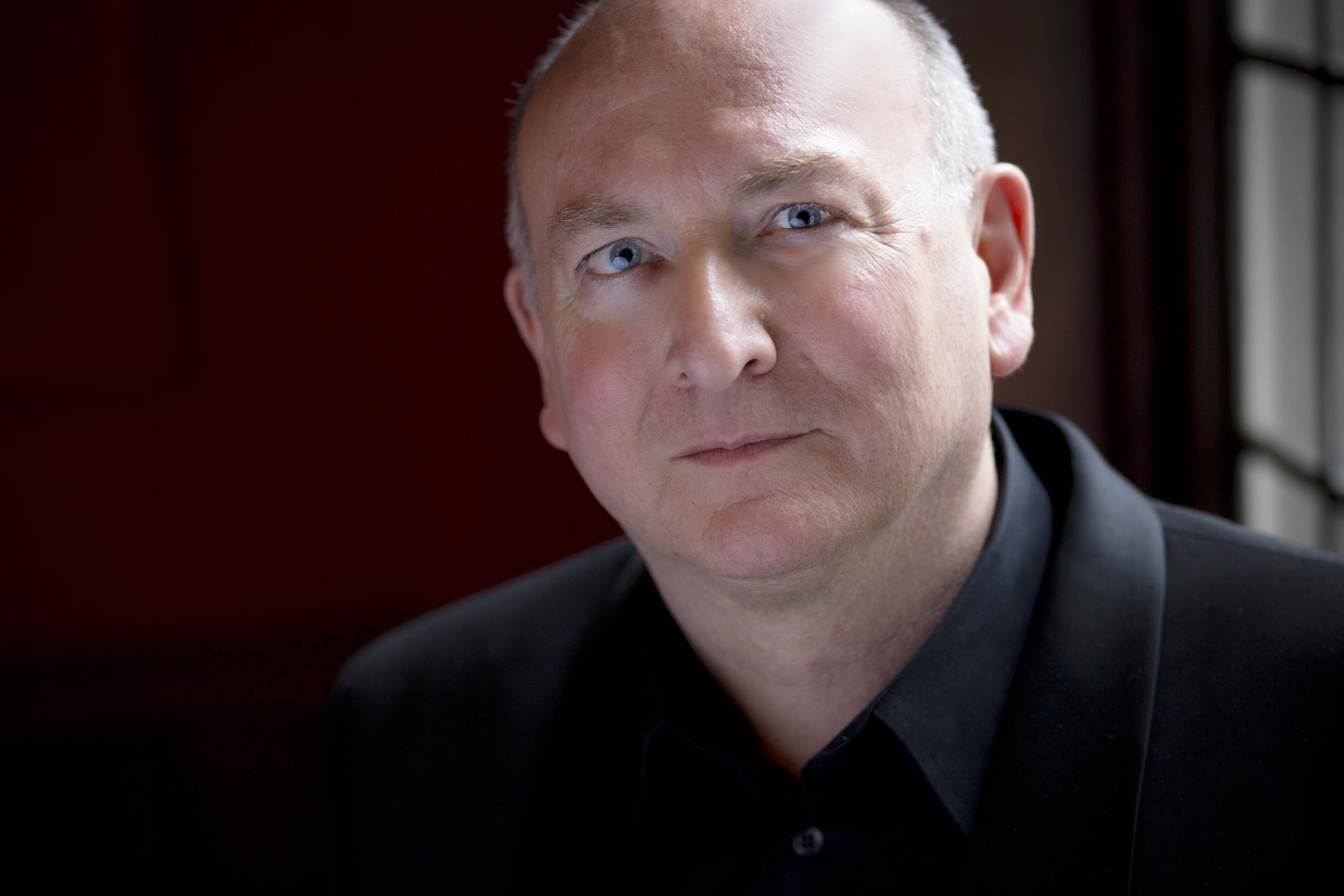
Stephen Stubbs, music director
Stephen Stubbs, who won the GRAMMY® Award as conductor for Best Opera Recording 2015, spent a 30-year career in Europe. He returned to his native Seattle in 2006 as one of the world’s most respected lutenists, conductors, and baroque opera specialists.
In 2007 Stephen established his new production company, Pacific MusicWorks, based in Seattle. He is the Boston Early Music Festival’s permanent artistic co-director, recordings of which were nominated for five GRAMMY awards. Also in 2015 BEMF recordings won two Echo Klassik awards and the Diapason d’Or de l’Année.
In addition to his ongoing commitments to PMW and BEMF, other recent appearances have included Handel’s Amadigi for Opera UCLA, Mozart’s Magic Flute and Cosi fan Tutte in Hawaii, Handel’s Agrippina and Semele for Opera Omaha, Cavalli’s Calisto and Rameau’s Hippolyte et Aricie for Juilliard and Mozart’s Il re pastore for the Merola program in San Francisco. He has conducted Handel’s Messiah with the Seattle, Edmonton, Birmingham and Houston Symphony orchestras.
His extensive discography as conductor and solo lutenist includes well over 100 CDs, which can be viewed at stephenstubbs.com, many of which have received international acclaim and awards.
Stephen is represented by Schwalbe and Partners (schwalbeandpartners.com).
Teresa Wakim, soprano
With “a gorgeous, profoundly expressive instrument,” “a bejeweled lyric soprano with an exquisite top register,” and as “a marvel of perfect intonation and pure tone,” American soprano Teresa Wakim is perhaps best-known as “a fine baroque stylist.”
Upon completion of her studies at the Oberlin Conservatory of Music and Boston University’s College of Fine Arts, she became a Choral Scholar with BU’s illustrious Marsh Chapel Choir, was soon named a Lorraine Hunt Lieberson Fellow at Emmanuel Music in Boston, and then won First Prize in the International Soloist Competition for Early Music in Brunnenthal, Austria. The last several seasons have seen her make solo debuts at Alice Tully Hall at Lincoln Center, Boston Symphony Hall, Grand Théâtre de Provence, Severance Hall in Cleveland, and Walt Disney Concert Hall in LA.
Recent concerts have included Bach’s Wedding Cantata Weichet nur betrübte Schatten and Mendelssohn’s Hear My Prayer with The Cleveland Orchestra, Bach’s Mass in B Minor and St. John Passion with the Amsterdam Baroque Orchestra, Messiah with the Charlotte Symphony, Tucson Symphony, and San Antonio Symphony, Mozart’s Exsultate Jubilate and Handel’s Jephtha with the Handel & Haydn Society, and Haydn’s Creation with New Bedford Symphony.
Although praised for her performances of Brahms and Mozart, as well as new music, Wakim’s affinity for the Baroque has brought her much success. She enjoys working with many of North America’s best period ensembles, including the Handel & Haydn Society, Boston Early Music Festival, Boston Baroque, Dallas Bach Society, Pacific Musicworks, Handel Choir of Baltimore, the Atlanta Baroque Orchestra, Apollo’s Fire, Bourbon Baroque, and Tragicomedia.
Work on the operatic stage includes roles in Handel’s Acis & Galatea (Galatea), Rameau’s Les Indes Galantes (Zima), Monteverdi’s Orfeo (Proserpina), Purcell’s Dido & Aeneas (Second Woman), Lully’s Psyche (Flore), Mozart’s The Magic Flute (Pamina), Mozart’s Abduction from the Seraglio (Blonde), Charpentier’s Acteon (Diane), Charpentier’s Les Arts Florissants (La Musique), Charpentier’s Les Plaisirs de Versailles (La Conversation), Handel’s Alcina (Morgana), and Mendelssohn’s Son & Stranger (Lisbeth).
Plans this season include Bach cantatas with San Francisco Symphony, Brahms’ Requiem with Omaha Symphony, Handel’s Messiah with Alabama Symphony, and the Exsultate Jubilate with New World Symphony. Future operatic projects include roles of Fortuna and Giunone in Monteverdi’s Il Ritorno d’Ulisse with Boston Baroque, and in Rameau’s Les Indes Galantes, the role of Zima with Bourbon Baroque. In addition, she will be a featured artist at the Boston Early Music Festival Chamber Opera Gala, reprising her roles in Acis & Galatea, Dido & Aeneus, and Acteon.
With a prolific discography, she has been featured as soloist on four Grammy-Nominated albums with the Boston Early Music Festival and Seraphic Fire. She can also be heard on numerous discs with Blue Heron, Handel & Haydn Society, Apollo’s Fire, and others.
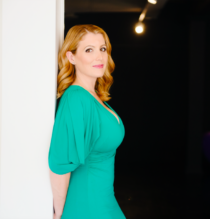
Krisztina Szabó, mezzo-soprano
Hungarian-Canadian mezzo-soprano Krisztina Szabó is highly sought after in North America and Europe as an artist of supreme musicianship and stagecraft. She is known for her promotion and performance of contemporary Canadian works. Among her many laudatory reviews, Opera Canada declared her to be an “exceptional talent” after her performance of the title role of Dido in Purcell’s Dido and Aeneas. After a performance with Tapestry Opera, the music blog, Schmopera wrote that “her instrument is one-of-a-kind and she has cemented herself as a darling of Canadian experimental music and opera…her sensibility and sensitivity to the material is truly inspiring”. In her hometown of Toronto, she has been nominated twice for a Dora Award for Outstanding Female Performance. Krisztina has recently been appointed Assistant Professor of Voice and Opera at the University of British Columbia School of Music.
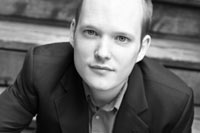
Zachary Finkelstein, tenor
In the five years since Zach left his political consulting career, he has performed as a soloist at Carnegie Hall, Sadler’s Wells, Lincoln Center, the Brooklyn Academy of Music, Benaroya Hall and the New York City Center. Recently hailed by Anthony Tommasini of the New York Times as a “compelling tenor,” American-Canadian Zach Finkelstein made his New York City Opera debut in April 2013 as Mambre in Rossini’s Mosè in Egitto, a production dubbed by Tommasini as one of the Top 10 classical events of 2013.
In the 2014-2015 season, Zach makes his debut with the Seattle Symphony as tenor soloist in the ‘Mozart Requiem’ with Ludovic Morlot conducting. Zach will also sing Damon onstage with the Mark Morris Dance Group (MMDG) in their coast-to-coast production of Handel’s ‘Acis and Galatea’. The Philharmonia Baroque’s Nic McGegan will conduct in the world premiere choreography at Berkeley, CA; the Handel and Haydn Society East Coast premiere in Boston, MA; as well as at Lincoln Center, NYC for the Mostly Mozart Festival; at the Krannert Center in Urbana, IL; and the Kauffman Theatre in Kansas City, MO. In November 2014, Zach will record his first album with the internationally renowned Berliner Philharmoniker’s Scharoun Ensemble in Germany: the new music composition ‘Threshold’ for tenor and orchestra, by Prix-de-Rome winner and fellow Tanglewood alum Jesse Jones.
In 2013-2014 Zach toured Satie’s monodrama Socrates- “beautifully sung”, according to the Daily Telegraph and “impeccably done” by the Seattle Times- and Beethoven’s The Muir in London, UK and Seattle, WA with the Mark Morris Dance Group (MMDG). Other 2013-2014 engagements include Zach’s Chicago debut with Nicholas Kraemer’s ‘Music of the Baroque’; Arvo Pärt’s ‘Stabat Mater’ with the Art of Time Ensemble in Toronto; Handel’s Messiah with the Kitchener-Waterloo Symphony; Mozart’s ‘C-Minor Mass’ at Seattle’s Benaroya Hall with the Northwest Chamber Chorus; Mozart ‘Requiem’ with the Seattle Chamber Singers; and Mozart’s ‘Coronation Mass’ with Jordan de Souza’s Ottawa Choral Society. As a recitalist this season, Zach will perform with Dan Anastasio, in Toronto with Rachel Andrist and sing Britten’s ‘Canticle V’ and ‘Birthday Hansel’ at New York City’s National Opera Center with harpist Tomina Parvanova.
In the 2012-13 season he also toured Socrates and The Muir with the Mark Morris Dance Group in Pittsburgh, Cleveland, Purchase, NY, Princeton and Fairfax, VA. Previous MMDG engagements include productions of Stravinsky’s Renard at Lincoln Center and Thomson’s Four Saints in Three Acts. Other concert engagements in 2012-13 included premieres of new works for tenor and orchestra by Jesse Jones and John Liberatore; the Mozart Requiem with the Kitchener-Waterloo Symphony, Bach Magnificat and Saint-Saëns’ Weihnachtsoratorium with the Toronto Classical Singers, Bach Cantata 60 with Metropolitan Opera conductor Matt Aucoin in Salem, MA , and Messiahs with both the Ontario Philharmonic and Julian Wachner’s Trinity Wall Street in New York at Lincoln Center.
Last summer, Zach sang Sir Phillip Wingrave/Narrator in Banff Opera’s production of Owen Wingrave, conducted by Guildhall’s Dominic Wheeler, and performed Britten art song as a Britten Pears Young Artist in Aldeburgh, UK under the tutelage of Ian Bostridge. A Vocal Fellow for two summers at Tanglewood, he was singled out as a “remarkable tenor” for his performances in Knussen’s Higglety Pigglety Pop! at the Festival of Contemporary Music.
In the media, Zach has performed opera excerpts on CBC’s ‘Saturday Afternoon at the Opera’ as well as Toronto’s Classical 96.3 FM. John Terauds, music critic for the Toronto Star, recently profiled Zach as one of Toronto’s “great tenors” on MusicalToronto.org. In their Summer 2013 issue, Opera Canada also profiled Zach as an ‘Artist On Stage’ and have reviewed him previously as a “lovely light tenor”. In February 2014, the Pacific Northwest’s King FM 98.1 interviewed Zach on his performances of ‘Socrates’ with the Mark Morris Dance Group.
Mr. Finkelstein is currently with Dean Artists Management and holds an Artist Diploma (Voice) from the Royal Conservatory of Music’s Glenn Gould School in Toronto and a Bachelor of Arts (Honors) in Political Science from McGill University, in Montreal. He studies privately with Lorna Macdonald in Toronto, Canada.
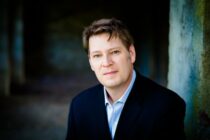
Sumner Thompson, baritone; and a 28-piece baroque orchestra
Praised for his “elegant style” (The Boston Globe), Sumner Thompson is one of today’s most sought-after baritones. He has performed across North America and Europe as a soloist with renowned ensembles such as Concerto Palatino, Tafelmusik, Apollo’s Fire, Les Boréades de Montréal, Les Voix Baroques, the King’s Noyse, Mercury Baroque, and the symphony orchestras of Charlotte, Memphis, and Phoenix. Recent highlights include Monteverdi’s Vespers of 1610 and the new Vespers of 1640 with the Green Mountain Project; Buxtehude’s Membra Jesu Nostri with Les Voix Baroques and Houston’s Mercury Baroque; Mozart’s Requiem at St. Thomas Church in New York City; a tour of Japan with Joshua Rifkin and the Cambridge Concentus; and Britten’s War Requiem with the New England Philharmonic. He most recently appeared with EMV last year in From War to Peace: Heinrich Schurz and His Time (November) and Festive Cantatas: JS Bach Magnificat (December).
EMV Vocal and Instrumental Ensemble
The Early Music Vancouver Vocal Ensemble is selected by Artistic Director Matthew White from an international pool of artists. Unburdened by a fixed membership, its greatest asset is its ability to assemble the ideal forces for any given project. Given the breadth and variety of repertoire we present at Early Music Vancouver, this flexibility allows the ensemble to fit the needs of the music and not the other way around.
Media
http://www.youtube.com/watch?v=bFnW_CrPUlA