Roy Barnett Recital Hall | Map
Lucas Harris, baroque lute; Alexander Weimann | Sponsored by Bruce Munro Wright, O.B.C., harpsichord
“The revelation of the concert was the Torontonian lutenist Lucas Harris, who weaved a poetic thread through his infinitely subtle interventions. The sweetness and patience of his playing . . . was astonishing.” – (Le Devoir)
Two venerated composers, two eminent soloists, and two distinguished instruments. This shared recital explores the blurring of the lines between lute and harpsichord repertoire in the eighteenth century, when lutenists imitated harpsichord music – and vice versa. Our exploration begins in Italy, continues to France, and finishes in Germany with a tête-à-tête between two compositional masters: Sylvius Leopold Weiss and Johann Sebastian Bach.

Mahony and Sons is proud to sponsor Early Music Vancouver. Join us before or after your concert and make your experience a great one. For reservations visit mahonyandsons.com. We validate parking at our UBC location.
Programme
Sonata a basso solo, Gregorio Strozzi (1615-1687)
Toccata per Spinettina sola, over Liuto, Girolamo Frescobaldi (1583 – 1643)
Canzone prima, Alessandro Piccinini (1566 – ca. 1638)
Toccata settima
Partite sopra la romanesca, Michelangelo Rossi (ca. 1601 – 1656)
Prélude non mesuré, improvised
Les Sylvains, Robert de Visée (ca. 1655 – 1732/1733) after F. Couperin
Prélude (non mesuré)
Passacaille, Louis Couperin (ca. 1626 – 1661)
Intermission
Ouverture (Largo & Allegro) from Sonata 52 in c minor, Sylvius Leopold Weiss (1686 – 1750)
Fantasia cromatica & Fuga in d minor, BWV 903, Johann Sebastian Bach (1685 – 1750)
Prélude & Fugue in Eb major from BWV 998, Bach
Adagio & Allegro from Sonata in Bb major (Dresden ms.), Weiss (reconstruction of lute II part by Karl-Ernst Schröder, adapted for harpsichord by Alexander Weimann)
Programme notes
Tonight’s program is about keyboard and fretted instruments, and their ambiguous relationship. From one point of view, the two instrument families share a close kinship: they tend towards similar musical textures and play a similar role in ensembles. Yet each has its own strengths and weaknesses: Keyboard instruments have a wide compass, facility in many different tonalities, produce a substantial amount of sound, and have impressive polyphonic possibilities. Fretted instruments in comparison have more polyphonic limitations, a narrower range, and are typically softer — yet they make up for this by having more control over dynamics and tone colour.
These different strengths complement each other very well, so that an accompaniment team built from both families can be highly effective. Claudio Monteverdi’s favourite continuo combination was organ and theorbo, and G.F. Handel had an archlute player reading over this shoulder as he directed his operas from the keyboard. Yet the question remains: if keyboards and lutes worked so well together as continuo partners, why does basically no duet repertoire survive which mixes these two noble instrument families?
Volume and timbre differences must be the largest factors, though another important issue was tuning: from around 1600 to 1650 it was assumed in treatises that keyboards were tuned in meantone temperament (where fifths were made quite narrow in order to produce pure major thirds), while fretted instruments were tuned in equal temperament. Count Bardi from the Florentine Camerata “felt like laughing” when he saw lutenists trying to tune their instruments to a keyboard. This tuning-system divergence continued into the later Baroque period, when keyboards were tuned using “well-temperaments.” These allowed a harpsichord to play in any tonality, but are difficult to realize on fretted instruments which prefer symmetrical temperaments.
So, keyboard players and pluckers were playing in ensembles together but not playing duets. Does this mean they were uninterested in each other’s repertoire, techniques, and sound?
With this program we hope to show that the answer is ‘no.’ Keyboard and lute players admired one another by writing pieces for or in imitation of each other, by transcribing or arranging pieces by each other, or even by modifying their instruments or developing new techniques in order to sound like each other. Our concert explores a few particular “moments in time” where the boundaries of keyboard and lute cultures were blurred in these ways.
The first of these “moments” is in Italy during the first half of the seventeenth century. We begin the program with one of the only compositions that can be almost called a duet for harpsichord and lute, Gregorio Strozzi’s Sonata di basso solo. Scored for harpsichord with either harp or lute (“Per Cimbalo, & Arpa ò Leuto”), a quotation from Ecclesiastes 4:10 appearing in the score speaks to the team-player culture of basso continuo players then and now: Væ soli: quia cum ceciderit, non habet sublevantem se (“Woe to him that is alone when he falleth; for he hath not another to help him to rise”). The two instruments are given only a bass line above which they are invited to improvise together. A section in the middle has a sequence of eleven long notes marked Piano, e vi si può diminuire (“Softly, and here you may play ornaments.”)
The great Roman keyboard virtuoso Girolamo Frescobaldi’s Toccata per Spinettina sola, over Liuto (“Toccata for solo spinet or lute”) invites an interpretation on either a keyboard or a lute. Less well-known among keyboard composers is Frescobaldi’s Roman contemporary Michelangelo Rossi. Rossi’s Toccata settima makes use of the intense chromaticism associated especially with Rome and Naples, and his Partite sopra la romanesca makes a virtuosic display of variation over a repeating bass pattern.
Alessandro Piccinini’s Canzone prima is one of the last great examples of a Renaissance lute genre which explored the limits of the instrument’s contrapuntal possibilities. In Piccinini’s lute treatise, he describes his ability to play a cadential trill with rapid up and down strokes with the index finger while playing another moving part with his thumb! This stunt is actually written out in the Canzone prima, and we might consider it one brave lutenist’s attempt to realize polyphony in a richness normally associated only with keyboard. Piccinini also describes the beautiful ‘silvery’ sound he was able to produce playing close to the bridge on a lute with metal strings. Did he have the sound of the harpsichord in his ear?
Our second “moment in time” is the music scene in Paris and Versailles in the second half of the seventeenth-century and the first part of the eighteenth. Louis Couperin’s Prélude and Passacaille from the Bauyn manuscript are written during the so-called “golden age” of the lute in France. Like many other keyboard players of the time, Louis wrote harpsichord music inspired by the style brisé of the French lute school. In 1680 the theorist Perrine published a volume which encouraged this influence. In his Pieces de luth en musique avec des regles pour les toucher parfaitement sur le luth et sur le clavessin, thirty-one lute solos by Ennemond and Denis Gaultier appear transcribed into staff notation (instead of lute tablature) and would therefore be playable by harpsichordists.
The work of Louis’s nephew François’s represents the pinnacle of French harpsichord repertoire, even as the French lute school was in decline by the time his Ordre 1er de clavecin was published in 1713. Yet, the court lutenist Robert de Visée made transcriptions for both lute and theorbo of Les sylvains from this work, completing a circle of influence by making a lute transcription of a keyboard work which was itself inspired by lute music.
Our final “moment in time” is in Leipzig 1739, where a meeting occurred between two of the greatest instrumentalists of the German Baroque. The lutenist Sylvius Leopold Weiss, by then the highest paid member of the famous Dresden court orchestra, made the trip from Dresden to Leipzig and visited the family home of J.S. Bach.
Weiss is considered then and now to be the greatest lute virtuoso in history. We might say that Weiss’s output represents the beginning of the lute’s “swann song”: the instrument was already falling out of favour in most musical circles, but Weiss showed that the instrument could keep pace in an increasingly keyboard-dominated music scene. Weiss was one of the few to write fantasies, fugues and overtures for the lute, complex genres that were more typically the domain of keyboardists. The Ouverture from Sonata 52 will give the listener an idea of Weiss’s ability to suggest a keyboard-like richness in a solo lute texture.
The music critic Johann Friedrich Reichardt went so far as to print this description of Weiss’s abilities (much-quoted by lutenists!): “Anyone who knows how difficult it is to play harmonic modulations and good counterpoint on the lute will be surprised and full of disbelief to hear from eyewitnesses that Weiss, the great lutenist, challenged J. S. Bach, the great harpsichordist and organist, at playing fantasies and fugues.” Yet Weiss seems to have admired and looked up to keyboard players. The hilarious print debate between the keyboardist Johann Mattheson and the lutenist Ernst Gottlieb Baron about the lute’s merit was resolved by Weiss in a diplomatic letter. He humbly states that “no lutenist, especially I, would wish to assert that the lute can be compared to keyboard instruments in perfection.”
Bach is well-known for his masterful keyboard works such as the Chromatic Fantasy and Fugue, BWV 903. Both Bach and Weiss had somewhat old-fashioned taste in their compositional styles. With BWV 903, Bach reanimates an old (and as of the later seventeenth century, somewhat outdated, but nevertheless noble) tradition: the improvisatory exploration of the “Dorian” key (or mode, as they would have called it). An important organizing element in this work is the basso di lamento (the descending tetrachord D-C-Bb-A), which is also used in other works such as the famous Chaconne for violin solo as well as (modulated to a major key) the Goldberg Variations.
We know of Bach’s interest in the lute through several manifestations: he wrote for the instrument in the St. John and St. Matthew Passions as well as the Trauerode. In the estate inventory taken at his death was listed a lute and two Lautenwerks. This later is a keyboard instruments strung with gut strings, meant to sound like a lute, and there is evidence that Bach may have even supervised the construction of a Lautenwerk. Another indication of Bach’s interest in lute music is the sonata for harpsichord and violin, BWV 1025: it turns out that the harpsichord part is an arrangement of a Weiss lute sonata, to which he added his own violin part to complete a trio sonata texture. BWV 1025 was performed by violinist Marc Destrubé twice for Early Music Vancouver: in 2009 with Robert Barto playing the lute, and in 2010 with Alexander Weimann on the harpsichord. The work was also recorded to CD by myself with violinist Geneviève Gilardeau, also in 2010.
Bach’s solo lute compositions also speak to his interest in the instrument. They have been successfully appropriated into the modern classical guitar repertory, though few lutenists dare to perform them because of their greater difficulty on their instrument. Indeed, the complexity in texture often stretches beyond what the lute can realistically accomplish at an appropriate tempo (except when a work is carefully composed by one who intimately knows the lute’s technique and tuning, such as Weiss). Partly on this basis, many argue that Bach’s lute works were conceived for (and are better realized on) a keyboard instrument. The Prelude, Fugue, and Allegro BWV 998 is a case in point: marked “per liuto o cembalo” (for the lute or harpsichord), this delicate work is most frequently performed today on the modern guitar and only occasionally on the harpsichord, but was possibly intended for the Lautenwerk. This concert attempts an interpretation on the lute, some of the awkwardness being overcome by using a special tuning and by leaving out the final movement (the one written in the most keyboard-specific texture).
And what might it have sounded like when Bach and Weiss played together? Our final selection makes a suggestion: Weiss’s Dresden manuscript includes four lute duets which are now a regular part of the lute repertoire thanks to the late lutenist Karl-Ernst Schröder who reconstructed the missing Lute 2 parts. Two of these Sonatas have a hand-written indication that the second lute parts can be found in an arrangement for harpsichord. Tonight we finish by offering you two movements of the Sonata in Bb with Schröder’s Lute 2 reconstructions adapted to the harpsichord.
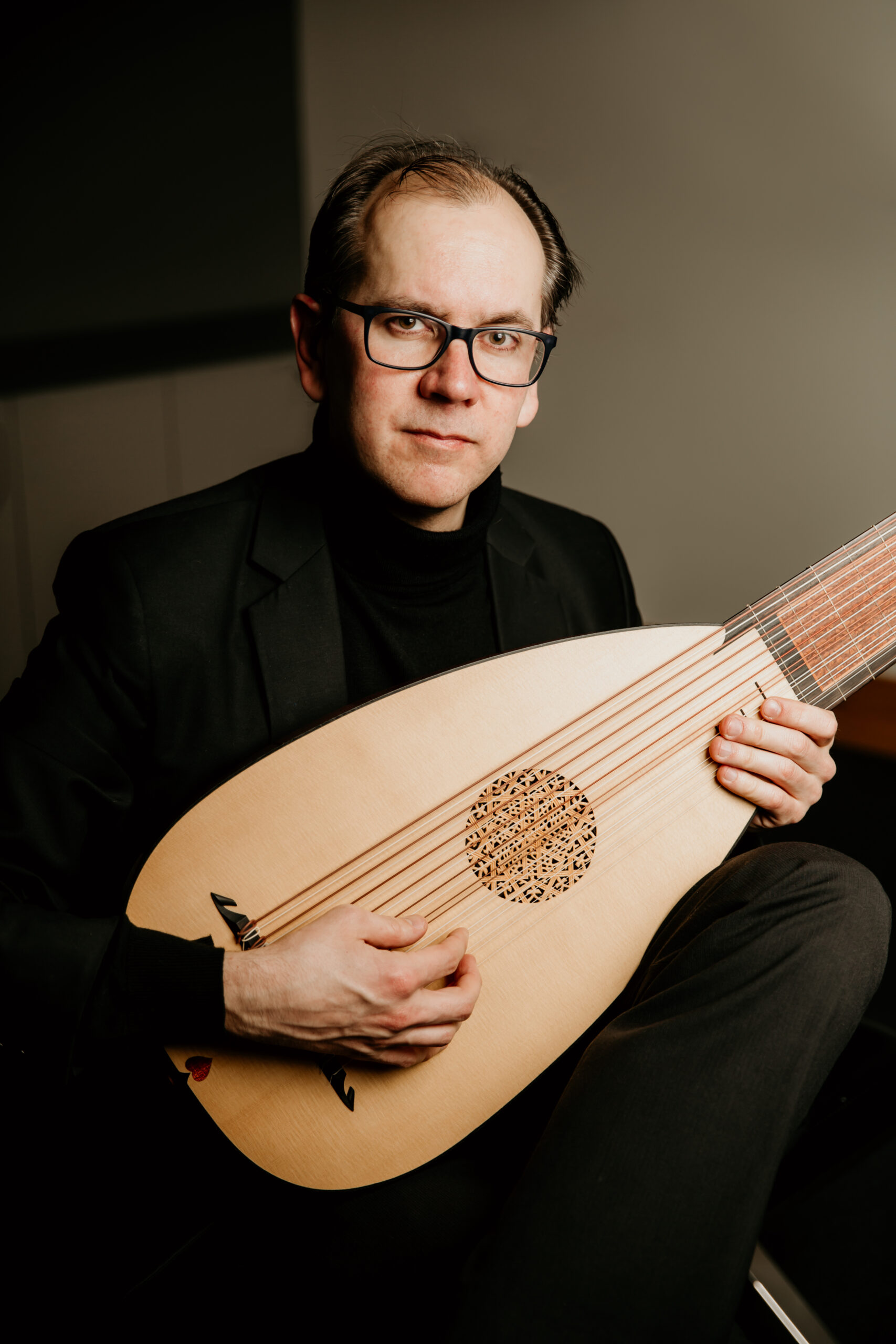
Lucas Harris, baroque lute
Toronto-based Lucas Harris discovered the lute during his undergraduate studies at Pomona College, and went on to study the lute and early music at the Civica scuola di musica di Milano and at the Hochschule für Künste Bremen. He is a founding member of the Toronto Continuo Collective, the Vesuvius Ensemble and the Lute Legends Collective (an association of specialists in ancient plucked-string traditions from diverse cultures) and is the regular lutenist for Tafelmusik Baroque Orchestra. Lucas plays with many other ensembles in Canada and the USA and has worked with the Smithsonian Chamber Players, Atalante, and Jordi Savall / Le Concert des Nations amongst others.
He teaches at the Tafelmusik Summer and Winter Baroque Institutes, Oberlin Conservatory’s Baroque Performance Institute, and the Canadian Renaissance Music Summer School, and is a regular guest artist with Early Music Vancouver. Lucas is also the Artistic Director of the Toronto Chamber Choir, for which he has created and conducted more than twenty themed concert programs. One of Mr. Harris’ many pandemic projects was the reconstruction of 12 solo voice motets by the Italian nun Chiara Margarita Cozzolani.

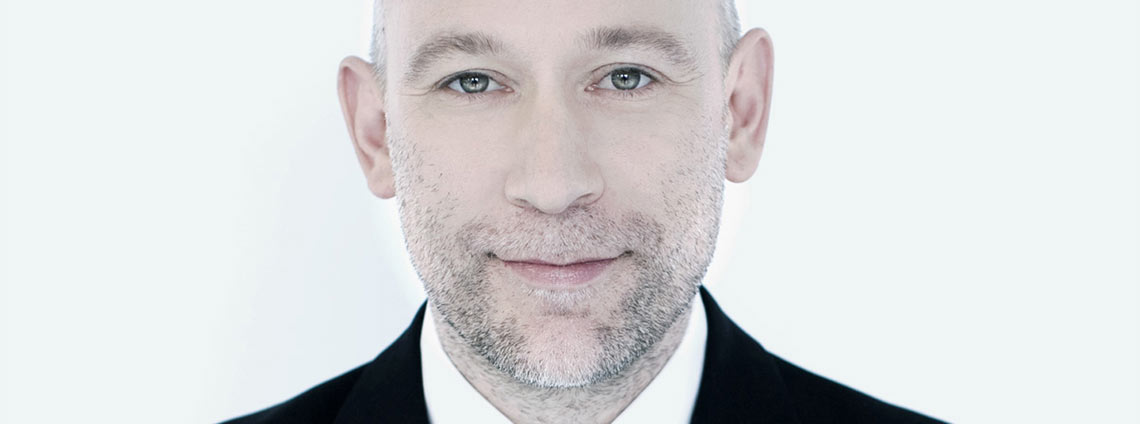
Alexander Weimann | Sponsored by Bruce Munro Wright, O.B.C., harpsichord
The internationally renowned keyboard artist Alexander Weimann has spent his life enveloped by the therapeutic power and beauty of making music. Alex grew up in Munich. At age three he became fascinated by the intense magic of the church organ. He started piano at six, formal organ lessons at 12 and harpsichord at university (along with theatre theory, medieval Latin and jazz piano.) He is in huge demand as a director, soloist and chamber player, traveling the world with leading North American and European ensembles. He is Artistic Director of the Pacific Baroque Orchestra in Vancouver and teaches at the University of British Columbia where he directs the Baroque Orchestra Mentorship Programme.
Alex has appeared on more than 100 recordings, including the Juno-award-winning album “Prima Donna” with Karina Gauvin and Arion Baroque orchestra. His latest album series “The Art of Improvisation” (Volume 1: A Prayer for Peace; Volume 2: Ad libitum; and Volume 3: Canavian Variations, released on Redshift, 2024) unites his passions for both baroque music and improvisation on organ, harpsichord, and piano.