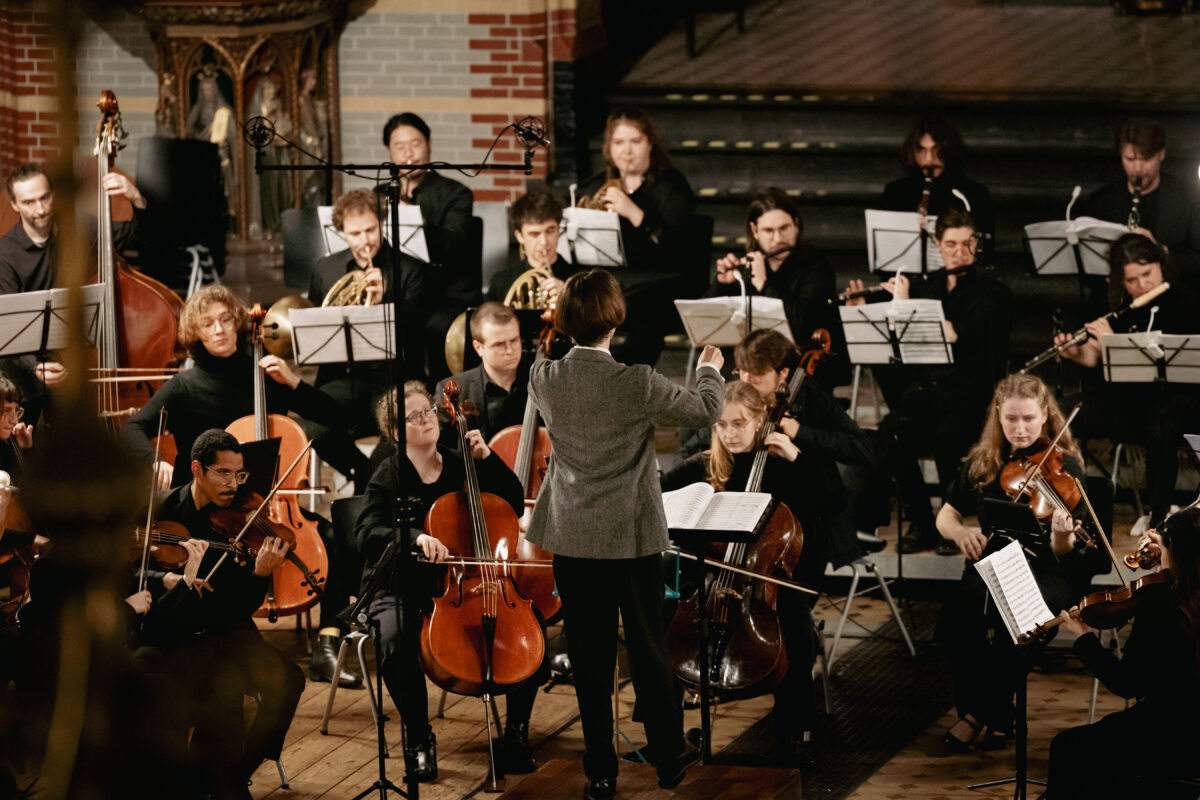
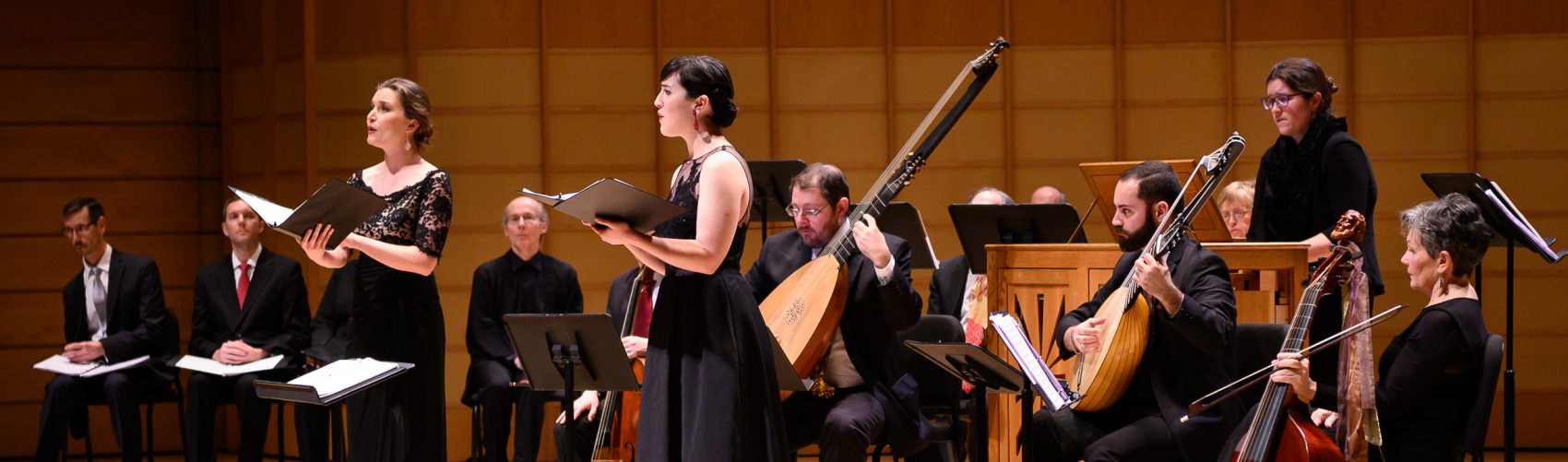
Chan Shun Concert Hall at the Chan Centre for the Performing Arts | Map
Bruce Dickey, director and cornetto; Arwen Myers, soprano; Danielle Reutter-Harrah, soprano; Vicki St. Pierre, alto; Festive Cantatas: Christmas in Gabrieli’s Venice, alto; Ross Hauck, tenor; Colin Balzer, tenor; Sumner Thompson, baritone; Martin Auclair, bass
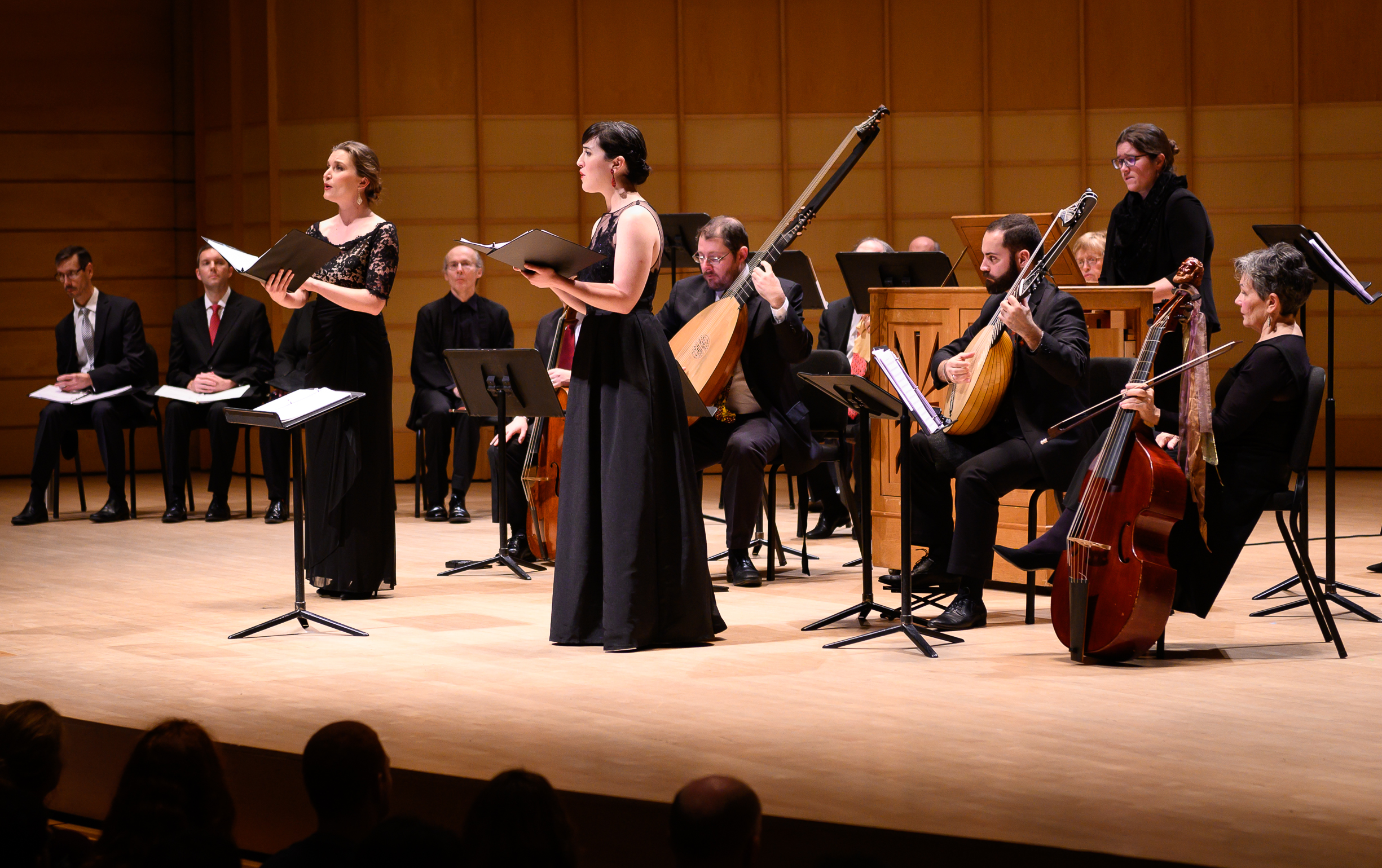
Giovanni Gabrieli, who died in 1612, was without a doubt the greatest composer of the Venetian High Renaissance. We celebrate the holidays this year with music by this Venetian master, his uncle Andrea, and their contemporaries. This is music that would have echoed from the mosaic-covered vaults of Saint Mark’s Basilica as well as other Venetian churches. The program consists of motets for from two to fifteen voices, as well as dazzling sonatas and canzonas for cornetti, trombones and strings – festive music worthy of the season but also of the pomp and brilliance of the Venetian State.
To view/download this programme, including texts & translations, click here.
“The plangent eloquence and dare-devil bravura of Bruce Dickey’s cornetto playing would charm the skin off a snake.” – BBC Music Magazine
This concert is generously supported by the Drance Family in honour of José Verstappen and Betty Drance, Dr. Katherine E. Paton, and an Anonymous Donor
Programme
Hodie Christus natus est
Christmas in Gabrieli’s Venice, ca. 1615
Canzon 5 duodecimi toni a 8 (1597)
Hodie Christus natus est a 7 (Giovanni Bassano)
Quem vidistis pastores a 8 (Andrea Gabrieli)
Canzon V a 7
Hodie nobis de caelo a 2 (Alessandro Grandi)
O Jesu mi dulcissime a 8
Canzon 8 duodecimi toni a 10 (1597)
Hodie Christus natus est a 8
Gloria in altissimus Deo a 7 (Gio. Battista Fergusio)
INTERMISSION
Canzon 9 duodecimi toni a 10 (1597)
Hodie Christus natus est a 10 (1597)
Angelus ad pastores a 8 (Bassano)
Natività di Christo, per canto solo da cantarsi nel Chitarone (Biagio Marini)
Jesu dulcissime a 6 (Ms. Kassel)
Salvator noster a 15
Canzon VI a 7
In ecclesiis a 14
All works composed by Giovanni Gabrieli and published in Venice in 1615 unless otherwise indicated.
PROGRAMME NOTES
The importance of St. Mark’s Basilica lay not as much in its ecclesiastical authority (it was not, after all, the cathedral of Venice) as from the power of the state, and particularly the Doge, whose private chapel it was. The Venetians loved pomp and splendor in all things; indeed, laws were periodically passed limiting public displays of wealth. On feast days of particular political importance to the Serenessima, the Doge sat on an impressive throne in front of the main altar, his guests at his side and the Venetian nobility arranged nearby. All would have been superbly placed to hear the musicians and singers deployed in the choir lofts above and in an array of little balconies and structures.
In this Christmas concert, we do not attempt to reconstruct any particular service or event, but rather to invite the listener to follow the Doge’s musical chapel to St. Mark’s and other Venetian churches, and experience the sumptuous sounds with which Venetians celebrated the holidays.
Most of the music was written by three musicians closely tied to the basilica: Giovanni Bassano, Andrea Gabrieli and, above-all, Andrea’s masterful nephew, Giovanni Gabrieli. The motets heard here include polychoral settings – and in some cases multiple settings – of some of the most familiar Latin Christmas texts: Hodie Christus natus est (Today Christ is born), Quem vidistis pastores (Whom do you see, Shepherds), and Angelus ad pastores (The angel said to the shepherds). We have used the first of these, based on a familiar Gregorian chant sung at Christmastime, as a kind of refrain in three different settings, one by Giovanni Bassano and two by Giovanni Gabrieli. The first of Gabrieli’s is a contrafactum with a sacred text on his madrigal, “O che felice giorno”.
Giovanni Bassano was a skilled composer in many genres, including grand polychoral sacred music. He was also a virtuoso of the cornetto, serving as director of the instrumental band at St. Mark’s for many years, until his death in 1617. He would have been one of the cornettists for whom Gabrieli wrote his wonderful instrumental canzonas and sonatas. Perhaps the figurations in some of these canzonas were inspired by Bassano’s playing and by his book on improvising ornamentation.
In 1557 Andrea Gabrieli unsuccessfully auditioned for the position of organist at St. Mark’s, being passed over in favor of Claudio Merulo. We should probably be thankful for his failure, because during the years prior to his appointment to a permanent position at St. Mark’s, Andrea would collaborate with Orlando di Lasso in the retinue of Albrecht V of Bavaria. Here he was exposed to a cosmopolitan musical culture and the grand ceremonial style of Lasso, which he would later adapt so successfully to Venetian circumstances. When Andrea joined the chapel at St. Mark’s in 1566, the polychoral concerto style, pioneered by Willaert a decade earlier, had not yet taken hold. Only Andrea was working consistently in this style, and two years after his death in 1585, his nephew Giovanni finally published his uncle’s monumental polychoral works.
Giovanni, on the other hand, virtually embodies the polychoral concerto, since all of his sacred works are in this genre. From the time of his successful audition in 1585 at the basilica until his death in 1612, Gabrieli held the position of first organist, a post which he inherited from his uncle. In his hands the Venetian concerto took on new brilliance through the extension of vocal and instrumental ranges, the use of affective, hyper-expressive harmonies, and the ample use of instrumental obbligati with elaborate written-out ornamentation. Even in motets without obbligati, however, the range of certain parts implies the use of instruments, and some pieces which are fully texted in all voices nonetheless carry the indication voce on only a few parts (usually one per choir). A clear example is Salvator noster à 15 heard here, a large-scale ceremonial work in which the forces were often more instrumental than vocal. In this practice the text must be “spoken” as much by the instruments as by the voices: the entire ensemble strives toward a blend in which the individual strands of polyphony or the “choral” declamation cannot always be identified as vocal or instrumental.
After the death of his uncle, Giovanni was the principal composer of ceremonial music at St. Mark’s. He was therefore responsible for finding and hiring extra singers and instrumentalists for major feast days. The players at his disposal, especially the cornettists and trombonists, were among the best to be found anywhere, and their virtuosity is clearly reflected in the music he wrote for them. While Gabrieli’s sacred concerted music was more influential in the long run, it is the instrumental music composed for these players which probably reached the highest artistic level and has the greatest power to touch modern audiences.
This is an astonishing achievement in a period when virtually all the most “serious” music was written for singers. Gabrieli was the first composer to elevate the genres of canzona and sonata to an artistic level equal to the best vocal music of the age. While full of virtuosic special effects, the truly revolutionary element of his instrumental music is not the specific devices he employed, but the astonishing quality that it consistently attains.
All of the ensemble canzonas heard on this concert come from Gabrieli’s two principal printed collections, the Sacrae symphoniae (1597) and the posthumous Canzoni e sonate (1615). No composer ever surpassed Giovanni Gabrieli in this genre. His canzonas remain unique instrumental monuments to a genius of the High Renaissance, created at a time when the currents of fashion were pulling in a different direction altogether.
Two other works on our program warrant special mention. The connection of Giovanni Battista Fergusio to Venice is admittedly tenuous. Indeed, Fergusio was Piemontese and died in Sardinia, but he published an interesting collection of Motetti e dialoghi per concertar in Venice in 1612. His motet so bursts with Venetian ideas that we can easily imagine him travelling to the lagoon city to oversee his publication. In this dialogue, the angels and shepherds are represented by groups of 3 and 4 voices. The angelic group sings with elaborate (celestial?) ornamentation, while the shepherds declame their story in a more prosaic manner.
A perhaps even more curious work is the strophic Italian solo song by the Venetian violinist Biagio Marini, Natività di Christo, sung to the theorbo with a ritornello for violin. The text presents an unsual metaphor, describing the baby Jesus as a chaste Cupid. Though without bow, arrows, and wings, the former is far more powerful than the latter, since just a glance from his eyes can lauch a thousand arrows. And if Venus is the mother of Cupid, the parents of Jesus are two chaste lovers. The poem is at the limits of blasphemy, but it is brought off with a taste that is deliciously Baroque.
If we have succeeded in this concert in mingling your Christmas imagery with the splendors of St. Mark’s mosaic-covered vaults, we will feel contented.
Bruce Dickey
Sala Bolognese
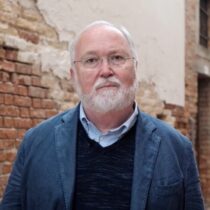
Bruce Dickey, director and cornetto
Bruce Dickey is one of a handful of musicians worldwide who have dedicated themselves to reviving the cornetto – once an instrument of great virtuosi, but which lamentably fell into disuse in the 19th century. The revival began in the 1950s, but it was largely Bruce Dickey, who, from the late 1970s, created a new renaissance of the instrument, allowing the agility and expressive power of the cornetto to be heard once again. His many students, over more than 30 years of teaching at the Schola Cantorum Basiliensis, have helped to consolidate and elevate the status of this once forgotten instrument. For his achievements the Historic Brass Society awarded him in 2000 the prestigious Christopher Monk Award for “his monumental work in cornetto performance, historical performance practice and musicological scholarship.” In 2007 he was honored by British conductor and musicologist Andrew Parrott with a “Taverner Award” as one of 14 musicians whose “significant contributions to musical understanding have been motivated by neither commerce nor ego.”
In the course of his long career as a performer and recording artist he has worked with most of the leading figures in the field of early music, including the legendary pioneers of historically informed perfomance, Gustav Leonhardt, Frans Brüggen and Nikolaus Harnoncourt. He was a member for over ten years of Jordi Savall’s Hesperion XX , and has frequently and repeatedly collaborated wth Ton Koopman, Monica Huggett, Philippe Herreweghe and many others. Of special importance has been his long-time friendship and collaboration with Andrew Parrott, and in more recent years with Konrad Junghänel.
Bruce Dickey can be heard on countless recordings. His solo CD (“Quel lascivissimo cornetto…”) on Accent with the ensemble Tragicomedia was awarded the Diapason d’or and was chosen in 2017 by Diapason Magazine as one of the 100 best CDs of Baroque Music of the past half century. His second solo CD, entitled “La Bella Minuta”, was released on the Passacaille label in 2011, and was described as, “simply a brilliant recording”.
In addition to performing, Bruce Dickey is much in demand as a teacher, both of the cornetto and of seventeenth-century performance practice. In addition to his regular class at the Schola Cantorum he has taught at the Royal Conservatory in The Hague, the Accademia Chigiana in Siena, and the Early Music Institute at Indiana University, as well as master classes in the United States, Canada, Europe and Japan. He is also active in research on performance practice, and has published, together with Michael Collver, a catalog of the surviving cornetto repertoire, and, together with trumpeter Edward Tarr, a book on historical wind articulation. In 1997, together with his wife Candace Smith, he founded Artemisia Editions, a small publishing house which produces editions of music from17th-century Italian convents.
For more information, please visit brucedickey.com.
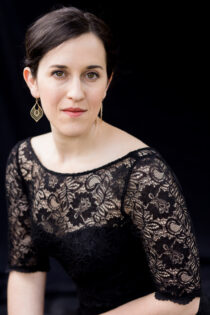
Arwen Myers, soprano
Praised for her “crystalline tone and delicate passagework” (San Francisco Chronicle), soprano Arwen Myers captivates audiences with her timeless artistry and exquisite interpretations. Transmitting a warmth and “deep poignancy” (Palm Beach Arts Paper) onstage, Arwen shines in solo performance across the US and beyond. With outstanding technique and mastery of a wide range of vocal colors, Arwen’s dazzling oratorio and solo appearances feature repertoire from the baroque to modern day, and everything in between. Her history includes appearances with Portland Baroque Orchestra, Early Music Vancouver, Pacific MusicWorks, Indianapolis Symphony Orchestra & Philharmonia Baroque Orchestra, working with such notable conductors as Nicholas McGegan, Monica Huggett, David Fallis, John Butt, David Hill, Scott Allen Jarrett, Erick Lichte & Matthew Dirst.
Recent highlights include Handel with Philharmonia Baroque Orchestra; Bach & Purcell with Portland Baroque Orchestra; Vivaldi, Monteverdi & Gabrieli with Early Music Vancouver; Handel with Oregon Bach Festival; Fauré with Indianapolis Symphony Orchestra; and the world premiere of Zachary Wadsworth’s JUNO-nominated When There is Peace with Chor Leoni, which received national broadcast across Canada. Of her title role in Handel’s Semele with American Bach Soloists Academy in 2018, San Francisco Classical Voice noted, “some of these star turns were shiny indeed, with soprano Arwen Myers leading the way… her musicality and demure demeanor remained a renewable pleasure.” An exceptionally talented and generous chamber musician, Arwen features with some of the nation’s premiere ensembles, including Seraphic Fire, Bach Akademie Charlotte, Spire Chamber Ensemble, and Bach Collegium San Diego, and Fear No Music. Arwen is represented by Aligned Artistry.
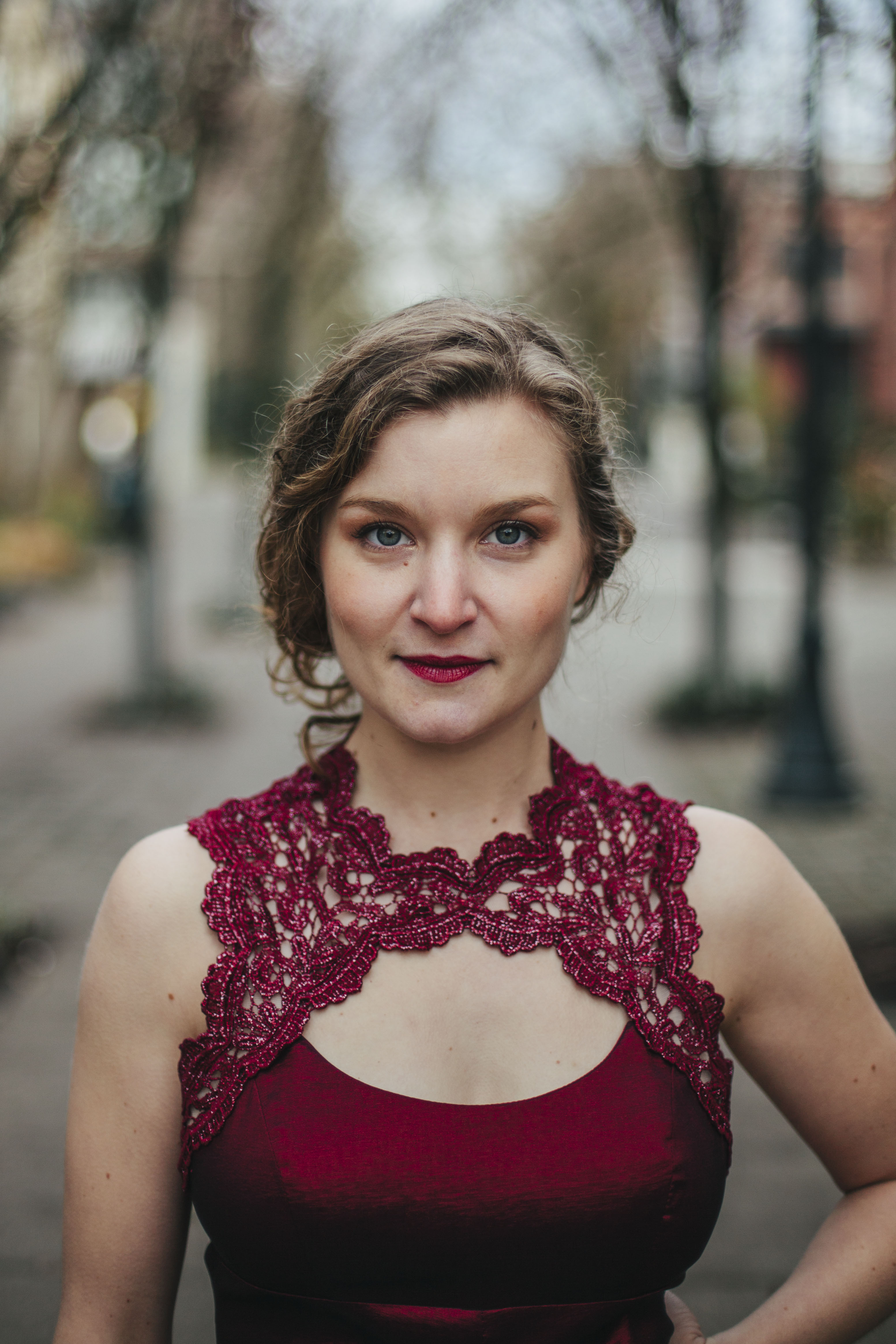
Danielle Reutter-Harrah, soprano
Danielle Reutter-Harrah has performed at the Boston Early Music Festival, with Seattle Symphony Orchestra, Seattle Opera, California Bach Society, American Bach Soloists, Baroque Chamber Orchestra of Colorado, Alabama Symphony, and Early Music Vancouver, among others. She most recently sang the role of Belinda in Baroque Chamber Orchestra of Colorado’s semi-staged rendition of Purcell’s Dido and Aeneas. In fall 2019 she performed with Pacific MusicWorks, the Byrd Ensemble and Early Music Vancouver. The 2018/19 season involved concerts of music by Brahms, Bach, Monteverdi, Handel, Clara Schumann and Fanny Mendelssohn, and others. Reutter-Harrah is a founding member of the voice and plucked strings duo Jarring Sounds, with Adam Cockerham on guitar, theorbo, Baroque guitar and lute. She sings frequently with Seattle’s Byrd Ensemble and Pacific MusicWorks. Danielle received her Bachelor’s of Music degree from the University of Denver’s Lamont School of Music and her Master of Music degree from the San Francisco Conservatory of Music. She lives in Seattle with her husband and son.
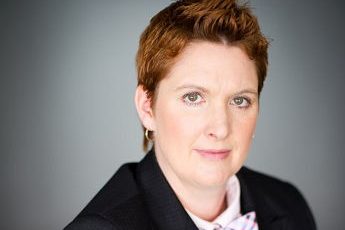
Vicki St. Pierre, alto
Contralto Vicki St. Pierre’s voice “invitingly combines clarity of expression and beauty of tone,” and is described as “rich with both a darkness and brightness.” As a specialist in early music, she has performed internationally with such groups as the Academy of Ancient Music, Tafelmusik, Les Violons du Roy, Portland Baroque Orchestra, Sacabuche, and the Pacific Baroque Orchestra. She has also performed with Symphony Nova Scotia, the Edmonton Symphony Orchestra, the Calgary Philharmonic Orchestra, and the Victoria Symphony Orchestra. She has appeared on the operatic stage with Opera Atelier, Ensemble Masques de Montreal, Toronto Masque Theatre, and Early Music Vancouver, among others. She has directed choirs across Canada and in the UK, and has been an assistant conductor with Opera Atelier. Vicki has a doctorate in vocal performance from the University of Toronto, and has been a faculty member at Mount Allison University in Sackville, NB since
2015. In 2020, Dr. St. Pierre was appointed Interim Dean of Arts, and in early 2021, she was offered the position of Dean of Arts for a 5-year term.
Festive Cantatas: Christmas in Gabrieli’s Venice, alto
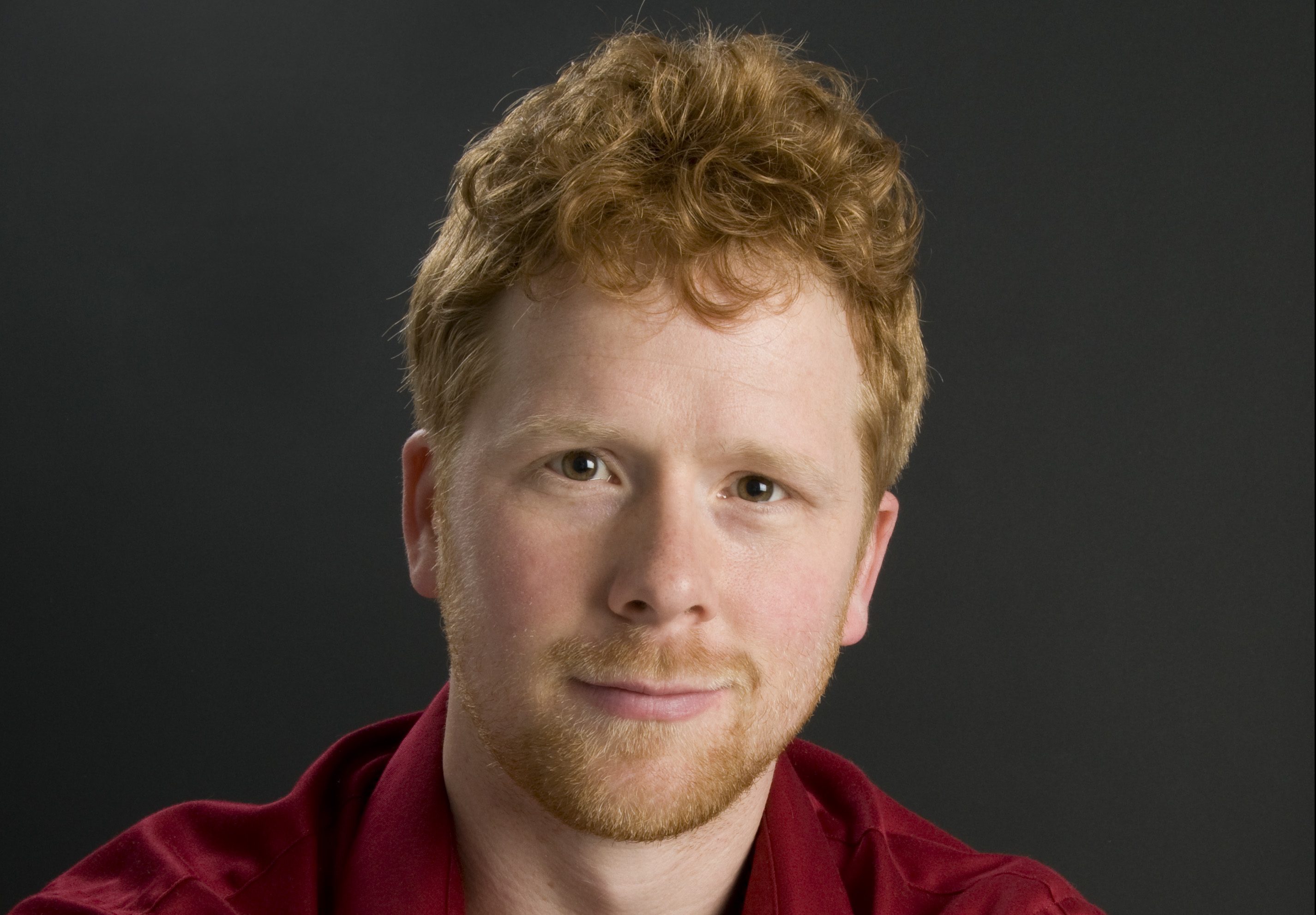
Ross Hauck, tenor
Tenor Ross Hauck is a specialist in sacred oratorio work, but is well-known for his versatility. His work in early music is often with Apollo’s Fire and Pacific MusicWorks. Recent concert credits include the symphonies of Baltimore, Phoenix, Dallas, Chicago, Grand Rapids, Kansas City, Portland, and the National Symphony. This season includes Carmina Burana with both the Seattle Symphony and the Hawaii Symphony, Messiah in both Cleveland and Seattle, Celtic Journey with the symphonies of Omaha and Edmonton (CA), and a UK tour of “Sugarloaf” mountain with Apollo’s Fire. Opera credits include lead roles with companies in Tacoma, Sacramento, Indianapolis, and Cincinnati, among others. An active recitalist, he has been heard live on PBS. Mr. Hauck is a distinguished alum of the Cincinnati-College Conservatory of Music, with further training at Tanglewood, Ravinia, Aspen and 2 seasons at the prestigious Filene Center at Wolf Trap. He is a former cellist, a professor of voice at Seattle University, and the music director at his home church in Washington state, where he lives with his wife and 4 children.
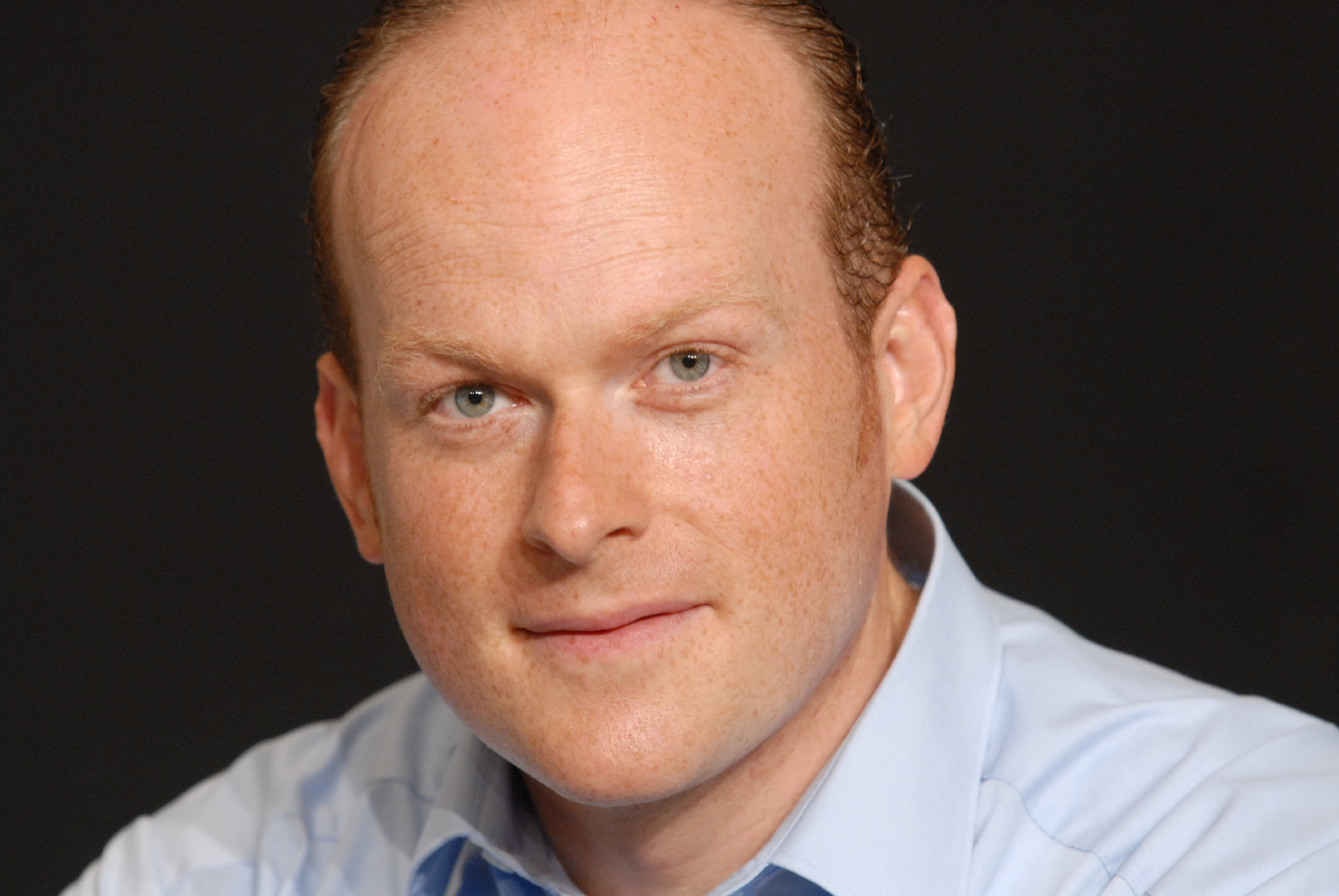
Colin Balzer, tenor
Canadian lyric tenor Colin Balzer’s North American engagements include recitals at New York’s Frick Collection and on the Philadelphia Chamber Music series; concerts with the Portland, New Jersey, Utah, Victoria, Ann Arbor, Québec, Atlanta, and Indianapolis Symphonies; Early Music Vancouver; Tafelmusik and the Toronto Mendelssohn Choir; Les Violons du Roy; the National and Calgary Philharmonics; Ottawa’s National Arts Centre Orchestra; Musica Sacra and the Oratorio Society of New York at New York’s Carnegie Hall. In addition, he is regularly featured in opera productions at the Boston Early Music Festival.
Guest soloist appearances abroad include work with Collegium Vocale Gent led by Philippe Herreweghe, Fundacao OSESP Orchestra and Louis Langrée, Les Musiciens du Louvre under Marc Minkowski, Rotterdam Philharmonic led by Yannick Nézet-Séguin, Akademie für alte Musik under Marcus Creed, and the RIAS Kammerchor, Scottish Chamber Orchestra, Radio Kamer Filharmonie, Estonian Chamber Choir, and Musik Podium Stuttgart. Operatic forays include the role of Don Ottavio in Mozart’s Don Giovanni at the Bolshoi and in Aix-en-Provence and Mozart’s La finta giardiniera in Aix and Luxembourg.
Particularly esteemed as a recitalist, he has been welcomed at London’s Wigmore Hall, the Britten Festival in Aldeburgh, the Vancouver Chamber Music Festival, the Wratislavia Cantans in Poland, and at the Festspielhaus in Baden-Baden. Recordings to date include Wolf’s Italienisches Liederbuch and Eisler and Henze song anthologies. Mr. Balzer holds the rare distinction of earning the Gold Medal at the Robert Schumann Competition in Zwickau with the highest score in 25 years. Born in British Columbia, he received his formal musical training at the University of British Columbia with David Meek and with Edith Wiens at the Hochschule für Musik Nürnberg, Augsburg.
Sumner Thompson, baritone
Praised for his “elegant style” (The Boston Globe), Sumner Thompson is one of today’s most sought-after baritones. He has performed across North America and Europe as a soloist with renowned ensembles such as Concerto Palatino, Tafelmusik, Apollo’s Fire, Les Boréades de Montréal, Les Voix Baroques, the King’s Noyse, Mercury Baroque, and the symphony orchestras of Charlotte, Memphis, and Phoenix. Recent highlights include Monteverdi’s Vespers of 1610 and the new Vespers of 1640 with the Green Mountain Project; Buxtehude’s Membra Jesu Nostri with Les Voix Baroques and Houston’s Mercury Baroque; Mozart’s Requiem at St. Thomas Church in New York City; a tour of Japan with Joshua Rifkin and the Cambridge Concentus; and Britten’s War Requiem with the New England Philharmonic. He most recently appeared with EMV last year in From War to Peace: Heinrich Schurz and His Time (November) and Festive Cantatas: JS Bach Magnificat (December).
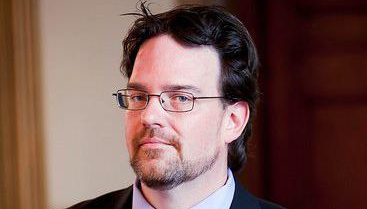
Martin Auclair, bass
At age 9, Montreal bass Martin Auclair began his musical training with Les Petits Chanteurs du Mont-Royal. His passion for singing, always increasing, led him to studies at the Conservatoire de musique du Quebec à Montreal and the Université de Montréal. The rich and unique timbre of his voice has given him the chance to be hired as a soloist and chorister by several ensembles in the greater Montreal area. He has been a soloist with the Studio de Musique Ancienne de Montréal (SMAM), the Opéra de Montréal, the Orchestre symphonique de Montréal, the Opéra de Québec, the Ottawa Bach Choir and Early Music Vancouver. He also participated in several recordings as a soloist and backing vocalist with the SMAM and other Montreal ensemble.