Christ Church Cathedral | Map
Janet See, flute; Bach for Two Flutes, flute; Christopher Bagan, harpsichord
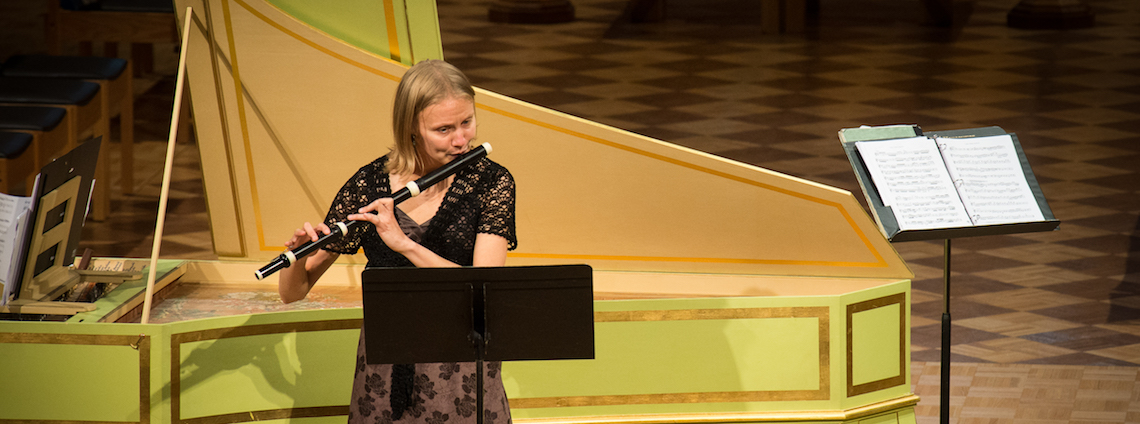
The sweet, matched voices of a pair of Baroque flutes will beguile your ears as two leading West Coast Baroque flutists come together to present chamber music by Bach and his sons. Bach’s exquisite trio sonata for two flutes and continuo BWV 1039 shares the programme with whimsical and joyous sonatas by two of Bach’s sons, Carl Philipp Emanuel Bach and Wilhelm Friedemann Bach.
Supported by Agnes Hohn

Click here for information about parking around / transiting to Christ Church Cathedral
Programme
J.S. Bach: Sonata for two flutes and continuo in G major BWV 1039
Wilhelm Friedemann Bach: Duet for two flutes in E minor
J.S Bach: Andante in three parts for organ in D major BWV 528/2 trans. for two flutes and continuo
C.P.E. Bach: Trio Sonata in D major Wq.151
Programme Notes
Today’s programme is a celebration of the beauty, intimacy and expressivity of a pair of Baroque flutes, through the chamber works of Bach, his sons, and transcriptions of Bach.
The flute was a relatively late addition to the world of Baroque music. Improvements to its predecessor, the Renaissance flute, were only made in the second half of the 17th century – re-positioning of the holes, additions of a key, conical bore, and splitting the instrument into three or four parts – made the flute, for the first time, truly chromatic, better in tune, and more flexible in tone colour and dynamic. The flute rapidly gained popularity in the first quarter of the 18th century, surpassing the recorder, and many composers such as Telemann, Leclair and Bach started exploring the expressive and virtuosic potential of the instrument in their works.
Having a number of flute players at his disposal, Bach started using flutes in his cantatas during his second year in Leipzig (1724). A pair of flutes became a standard part of the orchestra in his major works, and most of his chamber music for the instrument likely dates from his Leipzig-years.
Bach’s Trio sonata for two flutes and basso continuo BWV 1039 is one of only two trio sonatas that can be attributed to Bach. It is likely that this trio sonata precedes the version of the same sonata for solo viola da gamba and obligata harpsichord , BWV 1027. With its four movements, the sonata follows the Italian church sonata form (slow-fast-slow-fast), keeping the two top parts in close imitation of each other, the fast movements being masterful examples of Bach’s fugal skills.
Four of Bach’s sons followed their father’s footsteps and became composers. Wilhelm Friedemann Bach was Bach’s eldest son and his musical studies with his father are well documented in “Klavierbüchlein für Wilhelm Friedemann Bach”, a collection of graded keyboard works used for pedagogical purposes, including parts of the French Suite, Inventions, the Well-Tempered Clavier, and his Six organ trio sonatas (transcriptions of which can be heard at the concert on August 10th at this Festival). Despite being a master organist and improviser, Wilhelm Friedemann did not enjoy a successful career like his composer brothers did. He held a position as an organist in Halle 1746-64 – a post in which he was unhappy and eventually quit – and due to his difficult personality and poor career choices he failed to secure substantial employment and died in poverty. Only a handful of his compositions survive; however, they demonstrate distinct personal style, sophistication, and masterful counterpoint, as well as a refusal to give in to the over-simplification of the popular galant style. Wilhelm Friedemann wrote six three-movement duets for two flutes without bass, which stands as unique works within the flute repertoire. The duets are whimsical, virtuosic, and quick in turns of mood, perhaps hinting at the unstable character of the composer himself. The second movement of the Duet in E-minor heard today is a perfect canon between the two parts.
Bach’s second surviving son, Carl Philipp Emanuel Bach, surpassed his Father’s reputation during his career. He was renown for his virtuosity on the keyboard and as a master composer; it is Carl Philipp that Mozart referred to in his quote “Bach is the Father. We are the children.” Carl Philipp was an advocate for individual self-expression in music, empfindsamer Stil (sensitive style), and applied the principles of rhetoric in his works. He worked for thirty years, 1738-1768, as a court musician for Frederick the Great in Berlin, a dedicated flute player who would host daily concerts in which he performed himself. The Trio Sonata in D-major Wq. 151 was written in 1747, and originally scored for flute, violin, and continuo, but it also exists in a version for a solo flute and obligato harpsichord, written the same year. Distinctly different from his father’s style, Carl Philipp Emanuel’s writing gives way to the lighter and simpler classical style, free from complex counterpoint and harmony.
Just as Bach and his sons were accustomed to rework their musical ideas for different combinations of instruments and functions, so have we taken two of Bach’s works and transcribed them to suit our instrumentation in today’s concert. The Andante for organ BWV 528/2 is an alternative movement for one of his six organ trio sonatas. “Schafe können sicher weiden” is from his secular cantata Was mir behagt, ist nur die muntre Jagd, originally scored for two recorders, soprano and continuo, and is probably one of Bach’s most popular arias.
Programme notes by Soile Stratkauskas
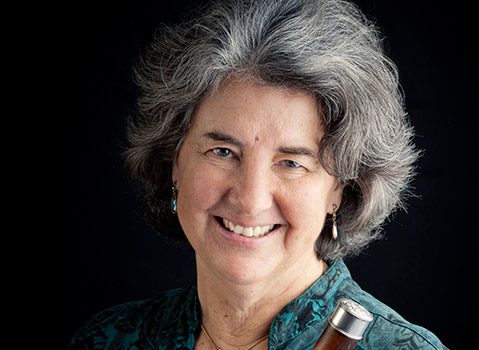
Janet See, flute
Janet See is one of today’s outstanding performers on baroque and classical flute. For over 35 years she has performed as a soloist, in chamber music and in orchestras throughout North America and Europe.
In London, where she lived for 12 years, Ms. See played principal flute for Sir John Eliot Gardiner’s two orchestras, and with those groups recorded the complete Mozart Operas, Beethoven Symphonies, and numerous other discs. In North America she plays principal flute with Philharmonia Baroque Orchestra under Nicholas McGegan, and with the orchestra has recorded Vivaldi and Mozart Concertos. Ms. See is also principal flutist with Portland Baroque Orchestra, Seattle Baroque Orchestra, and has also played principal flute with American Bach Soloists, Pacific Baroque Orchestra, and the San Diego Bach Collegium. In 2012 she had the pleasure of introducing Carmel Bach Festival audiences to the unique and beautiful qualities of the baroque flute.
Ms. See has recorded on the DG Archive, EMI, Erato, Hyperion, and Harmonia Mundi labels, and with the latter has made a highly acclaimed recording of the complete JS Bach Flute Sonatas. Her most recent recording features classical flute repertoire of Mozart and Haydn.
Janet is an active and enthusiastic teacher of early flutes and also of interpreting the nuance and language of baroque and classical music on modern flute. She is director of the popular Seattle Summer Baroque Flute Workshop, which draws students from all over the U.S. and Canada. Complementing Ms. See’s flute teaching is her qualification as a certified teacher of the FM Alexander Technique, having trained in London with Walter Carrington.
She currently lives on Bainbridge Island, Washington.
Bach for Two Flutes, flute
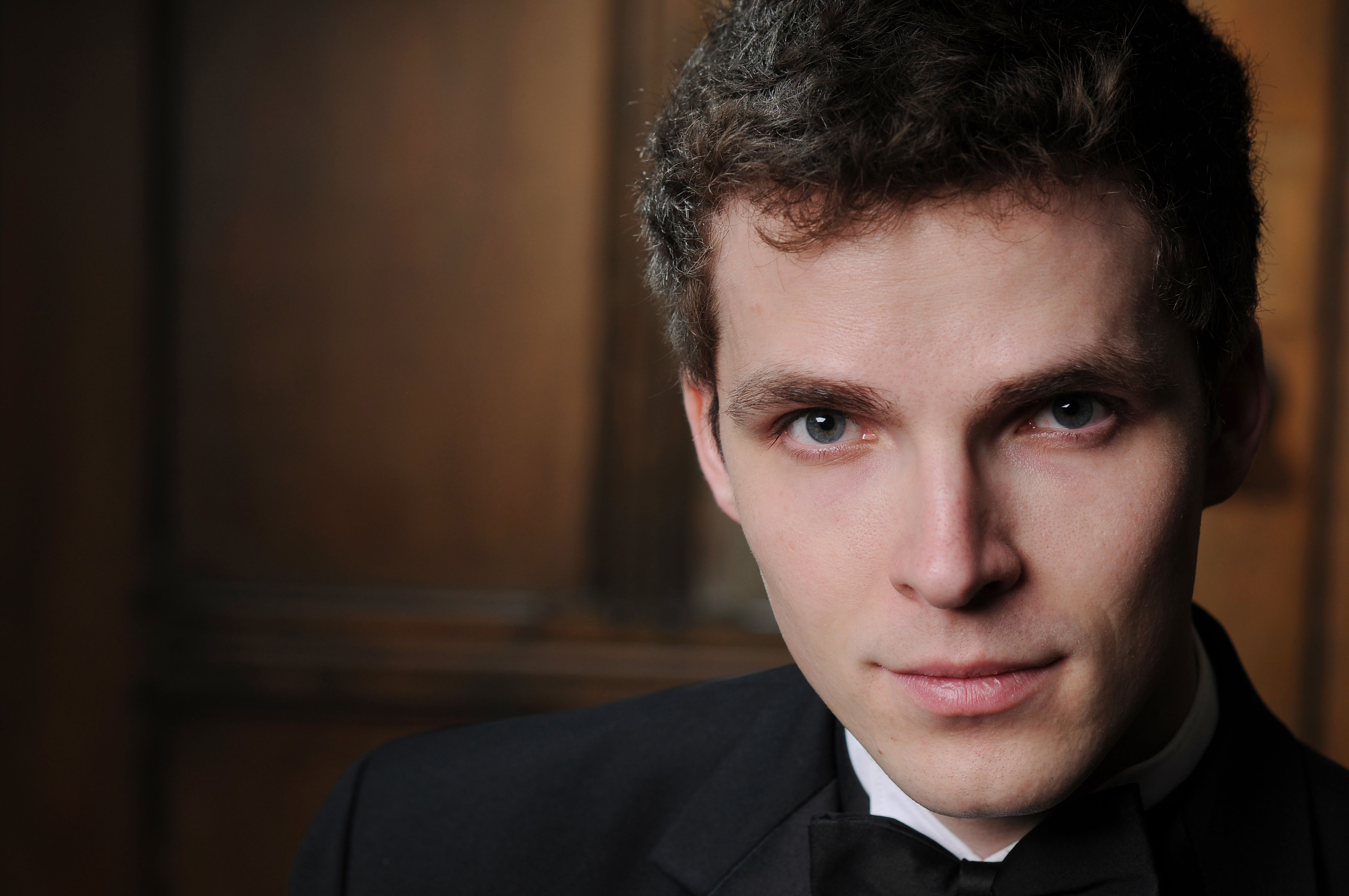
Christopher Bagan, harpsichord
Christopher Bagan is a versatile artist, equally at home on modern and historical keyboard instruments. He is in high demand as a collaborator, chamber musician and basso-continuo specialist. He has performed with many of the leading baroque singers, instrumentalists and conductors in North America and abroad. Christopher is particularly active in the field of baroque opera, working as the assistant conductor at Opera Atelier and as coach and repetiteur at the Canadian Opera Company. In 2015-16 Christopher was the Early Keyboard instructor at Case Western Reserve University and the head of Harpsichord at the Cleveland Institute of Music. He is currently on Faculty at the University of Toronto, working with the students in the historical performance program. He is also on faculty as a historical keyboard coach in the Canadian Opera Company's elite Ensemble training program.