
Christ Church Cathedral | Map
Alexander Weimann | Sponsored by Bruce Munro Wright, O.B.C.; Rodney Sharman; Reginald Mobley; Pacific Baroque Orchestra; Jocelyn Morlock
A collaboration with the Vancouver Symphony’s New Music Festival and the Pacific Baroque Orchestra
New Music for Old Instruments is a series. Click here for details on January 25th’s performance.
Co-Curated by EMV Composer in Residence Rodney Sharman and PBO Music Director Alexander Weimann.
EMV partners with the Pacific Baroque Orchestra and the Vancouver Symphony’s New Music Festival for a concert of contemporary compositions written for Baroque instruments and counter-tenor


Click here for information about parking around / transiting to Christ Church Cathedral
Programme
FALLING STILL (2001) – Emily Doolittle (b. 1972)*
violin soloist and string orchestra – 5′
RICERCAR (premiere, 2014) – Thierry Tidrow (b. 1986)*
solo violin – 9′
SINFONIA (premiere 2016) – Linda Catlin Smith (b. 1957)*
orchestra – 7′
SHE WALKS IN BEAUTY (2015) – Rodney Sharman (b. 1958)*
voice and lute – 4′
FANDANGO IMMANIS (2011) – André Ristic (b. 1972)*
2 violins, 2 gambas, cello, guitar, harpsichord – 13′
INTERMISSION
GOLDEN (2001) – Jocelyn Morlock (b. 1969)*
voice, string orchestra – 9′
LA BELLE-ANSE (2016) – Patrick Giguère (b. 1987)*
string orchestra – 7’
OBSESSIONS (2012/15) – Rodney Sharman (b. 1958)*
voice, string orchestra – 2′
LIEBESLEID/LOVEPAIN (2001)
voice, string orchestra – 3′
SONG FROM FAUST (2015/16) – Rodney Sharman (b. 1958)*
voice, string orchestra – 3′
LADY BE GOOD (1924) – George and Ira Gershwin (1898-1937, 1896-1983) arr. Alex Weimann
voice, full orchestra – 4′
BEIN’ GREEN (1970) – Joe Raposo (1937-1989) arr. Alex Weimann (b. 1965)
voice, string orchestra – 2′
EV’RY TIME WE SAY GOODBYE (1944) – Cole Porter (1891-1964) arr. Rodney Sharman
voice, full orchestra- 5′
PAUSE
Improvisations on Old Standards by Reggie Mobley, Bramwell Tovey and Alex Weimann and more.
*Canadian composer
Programme Notes
Three Songs: Obsessions, Liebesleid/Lovepain, Song from Faust
Obsessions (2012/15) is excepted from a music-dance-theatre piece, From the House of Mirth, James Kudelka, choreography, and Alex Poch-Goldin, text after the novel by Edith Wharton. It is sung by Selden (countertenor) to Lily, who perform a dance portraying the complexity of their tender, impossible relationship, which remains distant even though they love one another. I re-wrote the piece for voice and string orchestra in 2015 for the Prince George Symphony.
Liebesleid/Lovepain (2001) was written for countertenor and baroque strings, premiere by Matthew White, countertenor, innovations en concert, Montréal. I adapted the piece for baritone and modern strings for a larger piece premiered by the VSO in 2002, Love, Beauty, Desire. I wrote the text in German and English.
Song from Faust (2015/16) completes the cycle of three songs. I translated two of the most famous lines in all of German literature from Johann Wolfgang von Goethe’s Faust. I wrote this song for voice and modern strings for Robin Norman and the Prince George Symphony, rewriting it for countertenor and Baroque strings especially for Reggie Mobley, to whom it is dedicated.

Alexander Weimann | Sponsored by Bruce Munro Wright, O.B.C.
The internationally renowned keyboard artist Alexander Weimann has spent his life enveloped by the therapeutic power and beauty of making music. Alex grew up in Munich. At age three he became fascinated by the intense magic of the church organ. He started piano at six, formal organ lessons at 12 and harpsichord at university (along with theatre theory, medieval Latin and jazz piano.) He is in huge demand as a director, soloist and chamber player, traveling the world with leading North American and European ensembles. He is Artistic Director of the Pacific Baroque Orchestra in Vancouver and teaches at the University of British Columbia where he directs the Baroque Orchestra Mentorship Programme.
Alex has appeared on more than 100 recordings, including the Juno-award-winning album “Prima Donna” with Karina Gauvin and Arion Baroque orchestra. His latest album series “The Art of Improvisation” (Volume 1: A Prayer for Peace; Volume 2: Ad libitum; and Volume 3: Canavian Variations, released on Redshift, 2024) unites his passions for both baroque music and improvisation on organ, harpsichord, and piano.

Rodney Sharman
Rodney Sharman lives in Vancouver, BC. He has been Composer-in-Residence with the Victoria Symphony, the National Youth Orchestra of Canada and the Vancouver Symphony Orchestra. In addition to concert music, Rodney Sharman writes music for cabaret, opera and dance. He works regularly with choreographer James Kudelka, for whom he has written scores for Oregon Ballet Theatre, San Francisco Ballet and Coleman Lemieux & Co. (Toronto). Sharman was awarded First Prize in the 1984 CBC Competition for Young Composers and the 1990 Kranichsteiner Prize in Music, Darmstadt, Germany.
His score for the music-dance-theatre piece, From The House Of Mirth, won the 2013 Dora Mavor Moore Award for outstanding sound design/composition (choreography by James Kudelka, text by Alex Poch Goldin after Edith Wharton’s The House of Mirth). He was a 2014 Djerassi Artist-in-Residence, Woodside, California.
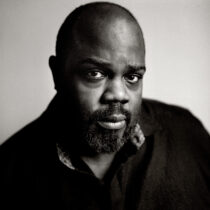
Reginald Mobley
Noted for his ‘shimmering voice’ (BachTrack), American countertenor Reginald Mobley is highly sought after for the baroque, classical and modern repertoire.
Reginald leads a very prolific career on both sides of the Atlantic. In the United States, where he resides, he became the first ever programming consultant for the Handel & Haydn Society following several years of leading H&H in his community engaging Every Voice concerts. He also holds the position of Visiting Artist for Diversity Outreach with the Baroque ensemble Apollo’s Fire, and is a regular guest with Cantata Collective, Musica Angelica, Agave Baroque, Charlotte Bach Akademie, Seraphic Fire, Quodlibet, Pacific Music Works, Bach Collegium San Diego, San Francisco Early Music Society and Philharmonia Baroque Orchestra.
Recent engagements have included concerts and recordings with the Chicago Symphony Orchestra, Opera Lafayette, Blue Heron, Chatham Baroque, Washington Bach Consort, Atlanta Baroque Orchestra and Early Music Seattle. Future highlights include Carmina Burana with the Chicago Symphony Orchestra, Messiah with the New York Philharmonic and Pittsburgh Symphony Orchestras, a debut at Carnegie Hall with Orchestra St Luke’s and at the Walt Disney Hall in Los Angeles.
In Europe, Reginald has been invited to perform with the OH! (Orkiestra Historycsna) in Poland, Vienna Academy in Austria (Musikverein), Musée d’Orsay in Paris, Royal Scottish National Orchestra, Academy of Ancient Music, City of Birmingham Symphony Orchestra, Balthasar Neumann Chor & Ensemble, Bach Society in Stuttgart, Holland Baroque Orchestra and in the autumn of 2021, he performed the role of Ottone in L’incoronazione di Poppea in Geneva, MUPA and Teatro di Vicenza in a European tour with The Budapest Festival Orchestra. He has also extensively toured with the Monteverdi Choir and Orchestra under the baton of John-Eliot Gardiner, and more recently performed a series of English music programmes in Germany with the Freiburger Barockorchester under the leadership of Kristian Bezuidenhout.
His recordings have been received with great critical acclaim, most recently American Originals with Agave Baroque ensemble, recorded with Acis Productions, which has been nominated for a GRAMMY Award, following A Lad’s Love with Brian Giebler on BRIDGE 9542 label. Reginald features on several albums with the Monteverdi Choir and Sir John Eliot Gardiner, including a recording of Bach’s St Matthew Passion and Magnificat, where Reginald ‘encapsulates whimsical pathos’ (Classical Music Magazine) His solo recording debut with ALPHA Classics will be released in June 2023. Reginald’s work has earned him both a 2023 Grammy Awards and 2023 Classical Music Awards Nomination.

Pacific Baroque Orchestra
Learn more about the PBO by clicking here.
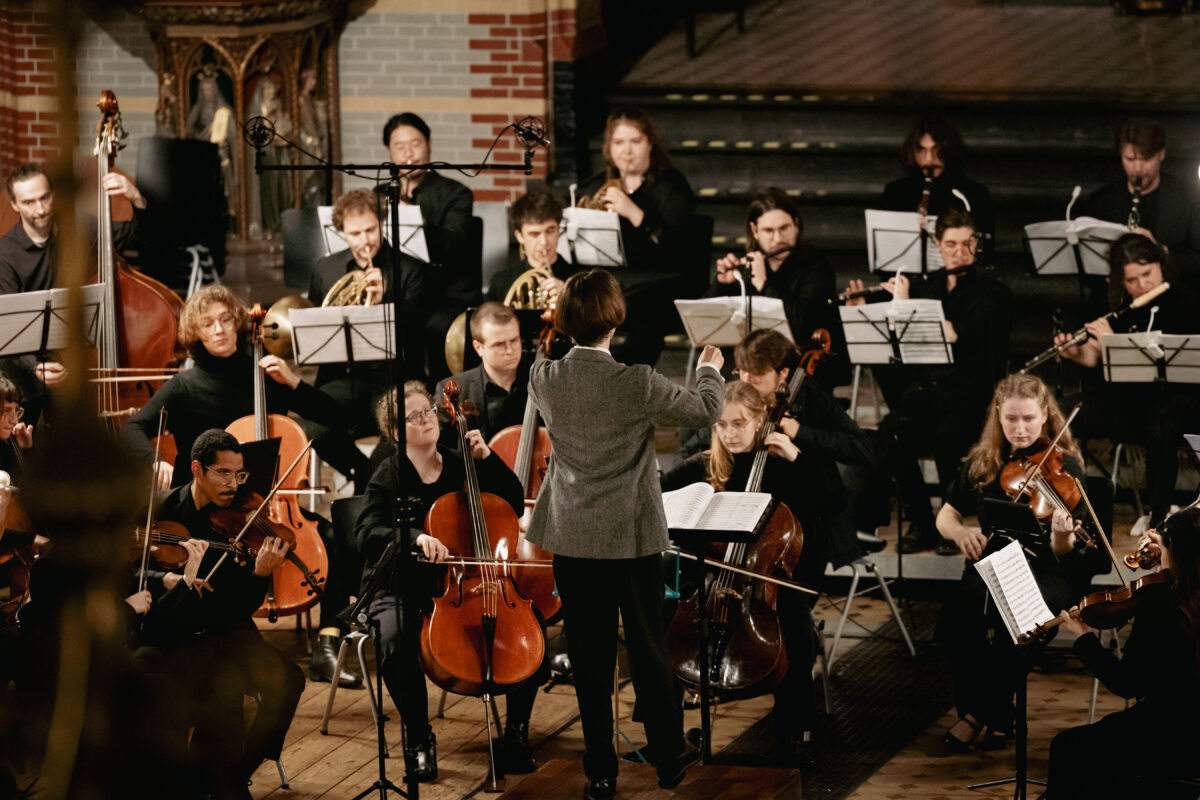
The ‘house band’ of Early Music Vancouver, The Pacific Baroque Orchestra (PBO) is recognized as one of Canada’s most exciting and innovative ensembles performing “early music for modern ears.” Formed in 1990, the orchestra quickly established itself as a force in Vancouver’s burgeoning music scene with the ongoing support of Early Music Vancouver. In 2009, PBO welcomed Alexander Weimann as Director. His imaginative programming, creativity and engaging musicianship have carved out a unique and vital place in the cultural landscape of Vancouver.
PBO regularly joins forces with internationally-celebrated Canadian guest artists, providing performance opportunities for Canadian musicians while exposing West Coast audiences to a spectacular variety of talent. The Orchestra has also toured throughout BC, the northern United States, and across Canada. Their 2019 East Coast Canadian tour with Canadian soprano Karina Gauvin culminated in a critically acclaimed album, Nuit Blanches, released by Atma Classique.
Jocelyn Morlock
Juno-nominated composer Jocelyn Morlock is one of Canada’s most distinctive voices. She began her term as the Vancouver Symphony Orchestra’s Composer in Residence on September 1, 2014, having just completed a term as the inaugural Composer in Residence for Vancouver’s Music on Main.
“A lyrical wonder, exquisite writing” with “an acute feeling for sonority” and an approach that is “deftly idiomatic” (Vancouver Sun), Morlock’s music has received numerous accolades, including: Top 10 at the 2002 International Rostrum of Composers; Winner of the 2003 CMC Prairie Region Emerging Composers competition; winner of the Mayor’s Arts Awards Emerging Artist (2008); Juno Nomination for Classical Composition of the Year in 2011. Her first full-length CD release, Cobalt, was nominated for three Western Canadian Music Awards and won Classical Composition of the year in 2015.
Highlights of recent premieres include Earthfall for the Vancouver Symphony Orchestra, Big Raven for the Emily Carr String Quartet, Ornithomancy, a concerto for flutist Paolo Bortolussi and the Vancouver Island Symphony, Three Meditations on Light for the Couloir duo, and Luft, a music and dance production with choreography by Simone Orlando, featuring Josh Beamish and the dancers of MOVE: The Company, written forTurning Point Ensemble’s prize-winning production Firebird 2011.