

The Vancouver Playhouse | Map
Yulia Van Doren; Douglas Williams; Pacific Baroque Orchestra; Alexander Weimann | Sponsored by Bruce Munro Wright, O.B.C.
A co-production with the Pacific Baroque Orchestra in partnership with White Rock concerts.
When public performances of opera were banned in Rome by papal edicts in the late seventeenth and early eighteenth centuries, opera audiences and composers turned to the dramatic cantata for their fix of lust, madness and death. Under the cover of portraying mythological or historical figures, cantatas could treat the same subjects that the Pope found so objectionable without fear of legal action. George Frideric Handel’s Apolle e Dafne is perhaps the greatest example of one of these mini operas masquerading under the convenient pseudonym of ‘cantata’. Full of exquisite music and the vitality that characterizes Handel’s early years.
PROGRAMME
J.S. Bach:
Orchestral Suite in C-major BWV 1066
G.F. Handel:
Chamber Duet “Tacete, ohimè,tacete” HWV 196
INTERVAL
G.F. Handel:
“Apollo e Dafne” HWV 122
PROGRAMME NOTES
To be cosmopolitan was all the rage in the eighteenth century. The Grand Tour, for instance, served as an educational rite of passage for young aristocrats. After completing their formal schooling, young men of means traveled the European continent, absorbing the cultural legacy of classical antiquity and the Renaissance, improving their language skills, and forging international connections. Promising musicians too sought to study abroad in major centers like Venice, Rome, and Paris. At the age of 21, Georg Friedrich Händel traveled to Italy at the invitation of members of the Medici family, where he worked with musicians like Arcangelo Corelli and became the darling of the high society circles surrounding cardinals Pietro Ottoboni, Benedetto Pamphili, and Carlo Colonna. Johann Sebastian Bach, orphaned at the age of 10 and descended from a family of church and civic musicians, lacked the financial resources for international travel, but actively collected and studied music by Girolamo Frescobaldi, Antonio Vivaldi, Nicolas de Grigny, and others, and sought to unite French and Italian influences in his music. The music on this evening’s programme celebrates musical diplomacy.
The surviving parts for Bach’s Orchestral Suite No. 1 in C Major date from 1725, when they were probably copied for the renowned Leipzig Collegium Musicum, a large student ensemble that performed weekly concerts at Zimmermann’s coffeehouse and entertained visitors at the thrice-yearly trade fairs. The suite comprises a French overture and a selection of popular dances of diverse international origin. According to Leipzig-based dance master Gottfried Taubert, the courante opened most balls in Germany. Bach’s contemporary, the German composer and lexicographer Johann Mattheson, describes it as a dance of “sweet hope and courage”. The gavotte had pastoral associations to which Bach alludes in Gavotte II with hunting horn calls played by the violas. The forlane was a lively Slavonic folk dance that retained its characteristic hops and jumps, when it was adopted as a French court dance. One of the best loved social dances, the menuet probably derived its name from “menu”, meaning small or slender, a reference to the dance’s excessively tiny steps to be performed with perfectly unaffected grace. The bourée began life as a French folk dance. Adapted for the ballroom, it became a fast duple meter dance that Mattheson described as “content and self-composed”. Bach scores the second bourée in this suite for woodwind trio alone, a characteristically French orchestration. The Orchestral Suite in C Major concludes with a pair of passepieds, fast minuets probably of English origin.
Handel’s duet Tacete, ohime, tacete dates from the very beginning of his Italian travels, when he was still signing his manuscripts with the German version of his name, “Händel”. He soon opted to Italianize its spelling as “Hendel” and later to adopt the English version “Handel” by which he is commonly known today. Apollo might have been considerably happier, had he heeded the message of this duet’s text, “Love is sleeping… Let there be no unwelcome voice bothering his sleep… It is only when Love sleeps that the world is at peace.”
Handel’s dramatic cantata Apollo e Dafne tells a well-known story from Ovid’s Metamorphoses. Apollo, who has recently freed Greece from the monster Python, boasts that that his archery is unparalleled, greater even than Cupid’s. To punish his arrogance, Cupid shots him, causing him to fall hopelessly in love with the nymph Daphne. Apollo exerts all of his artistic charms in an attempt to win her, but she rebuffs him, saying that she would rather die than lose her honour. Apollo becomes increasingly forceful and physical in his advances, but when he finally catches her, she is transformed into a laurel tree. Apollo laments and adorns his head and his lyre with laurel wreaths.
This iconic story of unrequited love inspired generations of artists and musicians, from the poet Petrarch, who named his unattainable love “Laura”, to the members of the Florentine Camerata, who chose to tell Dafne’s story in the first opera. Most musical settings predating Handel’s cantata avoided the challenge of setting the transformation scene. The Florentine Camerata, for instance, decided to have a messenger tell of Dafne’s metamorphosis. Handel met the challenge with a striking adaptation of musical form.
Early eighteenth century cantatas and operas were composed of regularly alternating recitatives and arias. Handel begins the chase scene in aria form, depicting the movements of Apollo and Dafne in the instrumental accompaniment. The solo violin runs in 16th notes, while the solo bassoon follows in 8th notes. Just as Apollo begins to catch up with Dafne (i.e. as the bassoon begins to play 16th notes) Dafne is transformed, and the aria disintegrates into recitative. Apollo mourns her loss with music that viscerally depicts his grief. He can hardly breath and his speech is broken. “Beloved plant [rest], with my tears [rest], I will water your leaves [rest]; with your branches [rest] triumphant [rest], the greatest heroes [rest], the greatest heroes I will crown.”
The story of Apollo and Dafne traveled Europe with Handel. Setting it first in Hamburg as a double opera in German, he returned to the story in Italy, where he began to compose the dramatic cantata. After many drafts, he finally finished the cantata for performance in Hanover, where he had become chapel master at the electoral court. In 1710, he also performed the cantata to great acclaim in London for the birthday celebrations of Queen Anne. Recent scholarship suggests that Handel was hired not as local music director in Hanover, but as a propagandist for the Hanoverian succession to the English throne and as the Elector’s spy in London. Like Apollo, Handel pursued his quarry with artistic charm, but his musical diplomacy triumphed when Elector Georg Ludwig succeeded Queen Anne as King George I of England.
– Christina Hutten
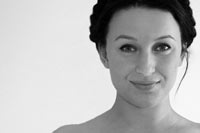
Yulia Van Doren
Recognized by Opera Magazine as “A star-to-be” following her Lincoln Center debut, young Russian-American soprano Yulia Van Doren’s debut with the Toronto Symphony Orchestra was acclaimed as a “revelation… a ravishing lyric voice and an ease with vocal ornamentation that turned her into an enchanted songbird” (Toronto Star). For her last minute step-in with the Cleveland Orchestra, The Cleveland Plain Dealer praised Van Doren as an artist of “melting poignancy” and added, “To Van Doren, one could easily have listened for hours.”
Highlighting Ms. Van Doren’s 2017/18 season are appearances with Colorado Symphony (Mozart’s Requiem); Music of the Baroque (Bach’s St. John Passion); her return to Milwaukee Symphony (Bach’s Magnificat); and performances of Handel’s Messiah with Houston Symphony, Early Music Vancouver, and Philharmonia Baroque Orchestra.
Especially recognized for her work in the baroque repertoire, Ms. Van Doren has performed with the majority of the North American Baroque festivals and orchestras, and has the distinction of being the only singer awarded a top prize in all four US Bach vocal competitions.
A dedicated interpreter of repertoire off the beaten path, career highlights include creating the lead female role in the world premiere of Shostakovich’s Orango with the Los Angeles Philharmonic, directed by Peter Sellars and released on Deutsche Grammophon; two Grammy-nominated opera recordings with the Boston Early Music Festival; the modern revival of Monsigny’s opera Le roi et le fermier at Opera de Versailles, Lincoln Center and the Kennedy Center (recorded for Naxos); and a tour of Handel’s Orlando with Philharmonia Baroque Orchestra to the Mostly Mozart, Ravinia and Tanglewood festivals.
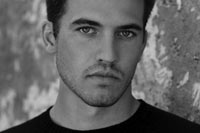
Douglas Williams
Douglas Williams, bass-baritone, has appeared this year in two landmark new opera productions from two of the world’s most celebrated director-choreographers: Handel’s Acis and Galatea in Mozart’s orchestration with Mark Morris at Lincoln Center in the role of Polyphemus, conducted by Nicolas McGegan, and Monteverdi’s Orfeo with Sasha Waltz at the Dutch National Opera in the role of Caronte, conducted by Pablo Heras-Casado. Both productions will tour this season taking Mr. Williams to the Grand Théâtre Luxembourg, Kansas City Kauffman Center, Bergen Festival,
Baden-Baden Festspiehaus, and Berlin Staatsoper. Other highlights of the season include Handel’s Agrippina with Boston Baroque, Pergolesi’s La Serva Padrona with the Boston Early Music Festival, and an appearance with James Levine and the Metropolitan Opera Chamber Ensemble at Carnegie Hall in Charles Wuorinen’s It Happens Like This, a piece that Mr. Williams premiered in 2011.
Visit Douglas on the web at: www.douglasrwilliams.com

Pacific Baroque Orchestra
The ‘house band’ of Early Music Vancouver, The Pacific Baroque Orchestra (PBO) is recognized as one of Canada’s most exciting and innovative ensembles performing “early music for modern ears.” Formed in 1990, the orchestra quickly established itself as a force in Vancouver’s burgeoning music scene with the ongoing support of Early Music Vancouver. In 2009, PBO welcomed Alexander Weimann as Director. His imaginative programming, creativity and engaging musicianship have carved out a unique and vital place in the cultural landscape of Vancouver.
PBO regularly joins forces with internationally-celebrated Canadian guest artists, providing performance opportunities for Canadian musicians while exposing West Coast audiences to a spectacular variety of talent. The Orchestra has also toured throughout BC, the northern United States, and across Canada. Their 2019 East Coast Canadian tour with Canadian soprano Karina Gauvin culminated in a critically acclaimed album, Nuit Blanches, released by Atma Classique.

Alexander Weimann | Sponsored by Bruce Munro Wright, O.B.C.
The internationally renowned keyboard artist Alexander Weimann has spent his life enveloped by the therapeutic power and beauty of making music. Alex grew up in Munich. At age three he became fascinated by the intense magic of the church organ. He started piano at six, formal organ lessons at 12 and harpsichord at university (along with theatre theory, medieval Latin and jazz piano.) He is in huge demand as a director, soloist and chamber player, traveling the world with leading North American and European ensembles. He is Artistic Director of the Pacific Baroque Orchestra in Vancouver and teaches at the University of British Columbia where he directs the Baroque Orchestra Mentorship Programme.
Alex has appeared on more than 100 recordings, including the Juno-award-winning album “Prima Donna” with Karina Gauvin and Arion Baroque orchestra. His latest album series “The Art of Improvisation” (Volume 1: A Prayer for Peace; Volume 2: Ad libitum; and Volume 3: Canavian Variations, released on Redshift, 2024) unites his passions for both baroque music and improvisation on organ, harpsichord, and piano.