The Vancouver Playhouse | Map
Steven Devine; Victoria Baroque
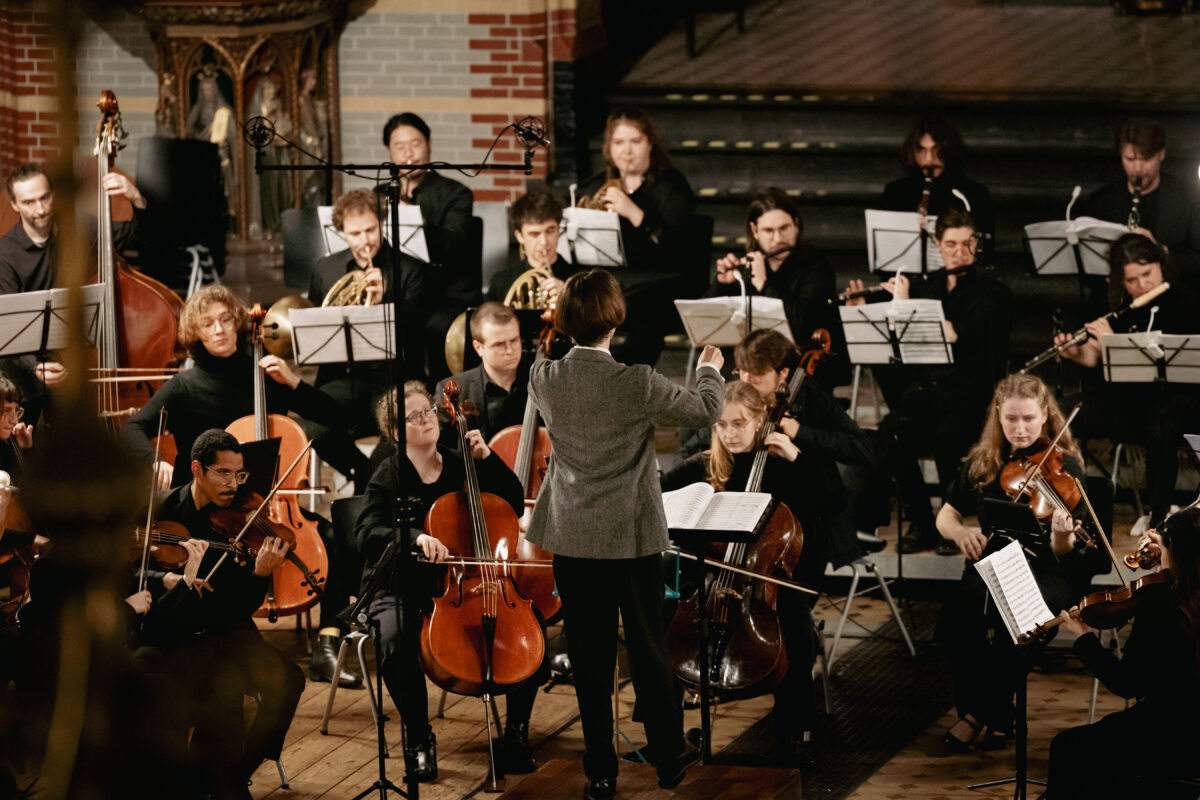
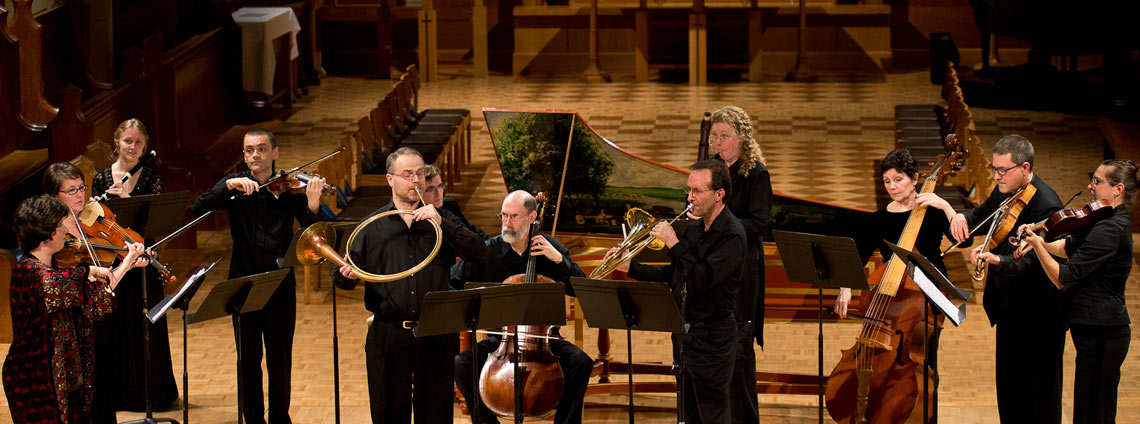
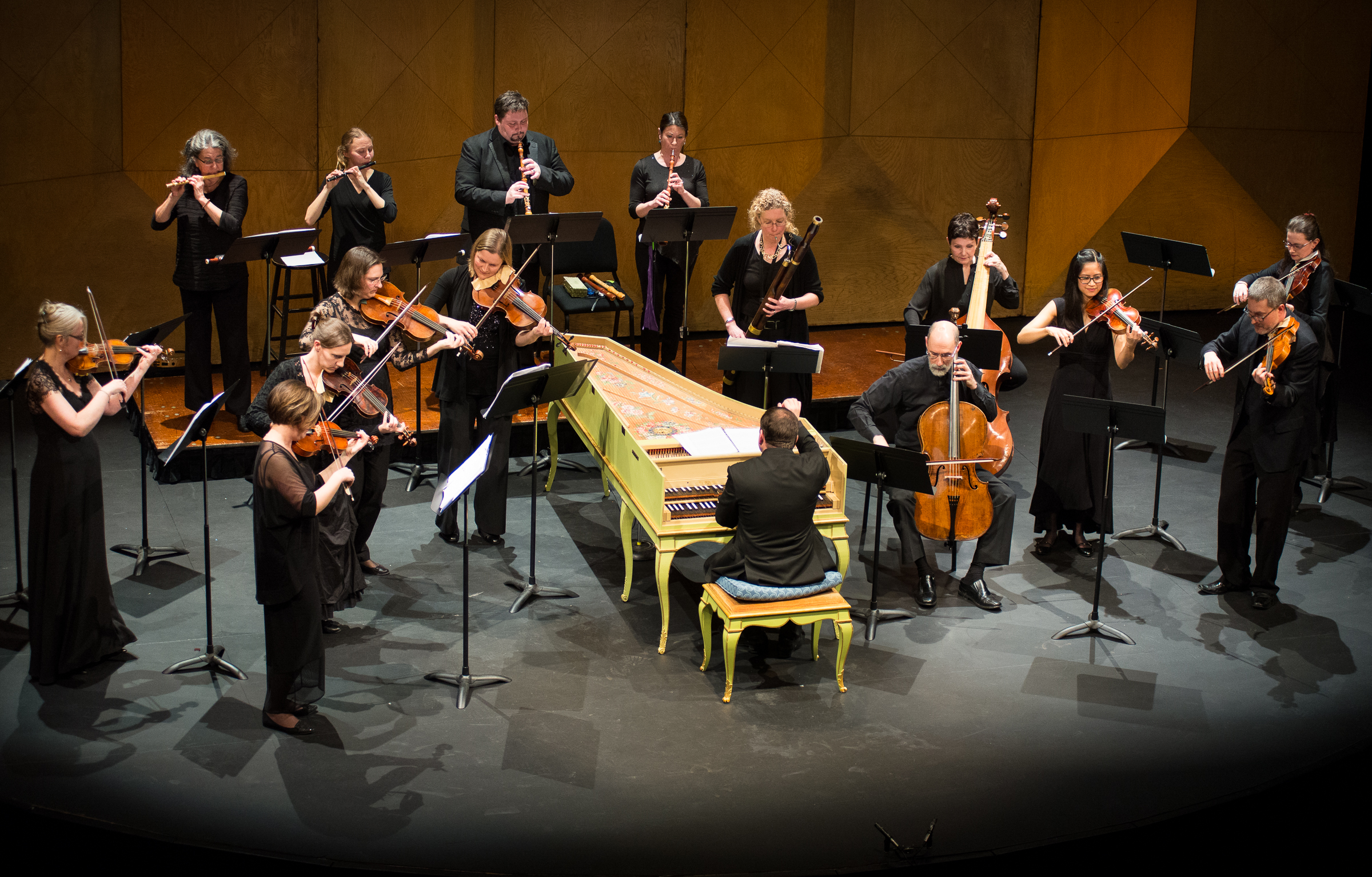
The Victoria Baroque Players
Steven Devine (leader & harpsichord)
Christi Meyers, Chloe Meyers, Ann Monnington, Paul Luchkow, Louella Alatiit, Kirsty Money (violins)
Mieka Michaux, Glenys Webster (viola)
Martin Bonham (cello)
Natalie Mackie (violone)
Soile Stratkauskas, Janet See (flute and piccolo)
Curtis Foster, Marea Chernoff (oboe and recorder)
Katrina Russell (bassoon)
Andrew Clark, Gavin Edwards, Steve Denroche, Holly Bryan (horns)
What happens when the best musical minds like Georg Philipp Telemann, George Frideric Handel, and Jean-Philippe Rameau are given free rein to depict royalty as well as the life of villagers and mariners? Find out in this grand Baroque orchestral programme in which the splendour of four hunting horns provide the platform for music of royal grandeur as well as well as the humorous characterization of animals and raucous village life. A concert of kings and princes, nymphs, merry sailors, frogs, and crows, all directed by the British harpsichord virtuoso Steven Devine from the Orchestra of the Age of Enlightenment.
PROGRAMME
G.F. Handel:
Sinfonias from Act III of Giulio Cesare
Sinfonia to scene 2, Act III
Sinfonia to the final scene Act III
G.P. Telemann:
Wassermusik “Hamburger Ebb und Fluth”
Ouverture
Sarabande: Die schlafende Thetis (Thetis sleeping)
Bourrée: Die erwachende Thetis (Thetis awakening)
Loure: Der verliebte Neptunus (Neptune in love)
Gavotte: Spielende Najaden (Naiads at play)
Harlequinade: Der schertzende Tritonus (Triton at play)
Der stürmende Aeolus (turbulent Aeolus)
Menuet: Der angenehme Zephir (agreeable Zephyrus)
Gigue: Ebb’ und Fluth (ebb and flow)
Canarie: Die lustigen Bots Leute (the merry mariners)
G.F. Handel:
Orchestral Suite from “Il Pastor Fido”
Ouverture
Ballo
Ballo di Cacciatori
Musette
Menuet
March – Pour les Chasseurs – March
Tambourin
Chacconne
INTERVAL
J.P. Rameau:
Orchestral Suite from “Castor and Pollux”
Ouverture
Gavotte I – Gavotte II
Passepied I – Passepied II
Gavotte Gai
Gavotte I – Gavotte II
Air des Demons
Tambourin – Menuet
G.P. Telemann:
Overture (Suite) in F “Alster Overture” TWV 55:F11
Ouverture
Die canonierende Pallas (Pallas’ welcome salute)
Das Älster Echo (the Alster echo)
Die Hamburgischen Glockenspiele (the bells of Hamburg)
Der Schwanen Gesang (the swans’ song)
Der Älster Schäffer Dorff Music (village music of the Alster shepherds)
Die concertirenden Frösche Krähen (concert of frogs and crows)
Der ruhende Pan (Pan resting)
Der Schäffer und Nymphen eilfertiger Abzug (the shepherds’ and nymphs’ hasty departure)
PROGRAMME NOTES
What happens when the best musical minds are given free reign to depict royalty as well as the life of villagers and mariners? In this grand Baroque orchestral programme, the splendour of four hunting horns provide the pomp and circumstance for music of royal grandeur, as well as well as the humorous characterization of animals and raucous village life. Orchestral highlights from operas by Handel and Rameau are featured alongside two of Telemann’s biggest concert pieces – his “Water Music” and “Alster Overture”, both of which provide musical descriptions of the ebb and flow of life along the rivers of Hamburg. This is a concert of kings and princes, gods of sea and the air, nymphs, merry mariners, frogs, and crows.
Contemporary audiences are accustomed these days to seeing orchestras sporting a horn section of four players, each playing an independent part. In the early to mid-eighteenth century, however, this was a very unusual and dramatic event. Handel was one of the first composers to invite the hunting horn from the forests and fields into the (usually!) more genteel milieu of the orchestra. Indeed, in the first performance of his now famous Water Music (1717) the British public heard horns in an orchestral concert for the first time. In keeping with European practices, from this point onwards horns were most generally used in pairs, but two of the works presented in today’s programme – one by Handel and one by his contemporary, Telemann – demonstrate the origins of the symphonic horn section of four players. It should be noted that this will be the first time the Victoria Baroque Players have allowed such a plethora of brass players into their ensemble!
All the works presented in this programme are taken from either the Operatic, or instrumental “programme music” vein, which brings to life specific sights and sounds through musical representation. The short opening Sinfonias both come from the Third Act of Handel’s opera Giulio Cesare, and apart from the work’s opening Overture, they are the only other purely instrumental pieces in the entire work. What they may lack in duration, however, is made up for in sheer dramatism! Handel’s use of two separate keys for the two pairs of horns (G and D) is the only example of such a compositional technique being used within the Baroque period. The next well-known example does not occur until Haydn’s Symphony No.39 in 1765. The success of Giulio Cesare is demonstrated by Handel’s run of 13 consecutive performances in London in 1724, followed by several revivals in later years.
Telemann’s Wassermusik or Hamburger Ebb und Fluth was performed on April 6th 1723 as part of the celebrations for the hundredth anniversary of the Hamburg Admiralty. It formed the opening part of a serenata (a costume drama, largely without action) with a text by Michael Richey (1678-1761). At the time, Telemann was responsible for composing and directing music in Hamburg, and was employed by the city in that role. The titles of the movements, apart from the overture, are references to Greek mythological characters and gods, which were (and are) commonly used to illustrate archetypal personalities in drama. Those chosen here are all associated with water, the sea or the wind. Their music is represented here in a series of dance movements, which reflect mood and character by the choice of instruments, tempo and tessitura (i.e. pitch or range), and dynamics. After the first performance it was reported in the Stats u. Gelehrte Zeitung that the music was ‘uncommonly well-suited to the occasion’.
Prompted by the rivalry in London in the 1730s between the Nobility Opera (led by Frederick, Prince of Wales) and the Royal Academy of Music (supported by King George II and directed by Handel), Handel revised (and revived) his 1712 opera Il Pastor Fido in 1734, adding dance music to each act, and preceding it by what the Daily Post described as “a new Dramatic Entertainment (in Musick), called Terpsichore”. This brought to the public the spectacle of the celebrated Mlle Sallé and her company of dancers. The press were a little shocked by her, as she “dared to appear… without pannier, skirt, or bodice, and with her hair down… Apart from her corset and petticoat she wore only a simple dress of muslin” (-Mercure de France), thus helping to draw the public’s attention in a way with which readers will no doubt be familiar. This was Handel’s only venture into French-style opera-ballet. We present a suite chosen from the dance music.
Rameau was born in Dijon, only a couple of years before Handel, but it was not until the age of 50 that his first Opera (Hippolyte et Aricie) was premiered in Paris. Castor and Pollux was the second of his Operas to be staged, opening on October 24th 1737, and it caused as much of a furor as the production of Hippolyte et Aricie had done, with critics claiming Rameau’s works to be greatly inferior to those of Lully – the heretofore undisputed king of French opera. Rameau’s critics claimed his musical style was distasteful, too Italianate for French sensibilities, and too expressive! To compound matters, the libretto was heavily criticized, and the controversy ensured that the premiere of Castor and Pollux was a noteworthy event. Nonetheless, it was a success, initially receiving twenty performances. The opera was revived in 1754 with a profoundly modified libretto and a greatly re-worked score. This new version was a resounding success, with many critics both then and since, claiming Castor and Pollux to be Rameau’s greatest achievement.
The plot, in a nutshell, revolves around Castor and Pollux who are fraternal twins. According to Greek mythology, Leda, their mother, was visited on the same night by Jupiter (disguised as a swan) and by her husband Tyndarus, King of Sparta. As a result, Pollux is the son of Jupiter and is immortal, while Castor is the son of Tyndarus and is a mortal. Castor is killed defending his beloved Télaire (daughter of Apollo) from an abduction attempt. Pollux then resolves to give up his immortality and take Castor’s place in the Underworld. After extended debate over who will live and who will die, the brothers are eternally united by being transformed into the constellation Gemini.
This orchestral suite of some of the opera’s dance movements was compiled especially for this programme, with the majority of material coming from the later 1754 version, but with a few dances retained from the earlier rendition.
It is very likely that the Alster Overture was also composed by Telemann for another serenata, in this case it would have been the now lost Auf zur Freude, zum Scherzum, zum Klingen, performed on June 4th, 1725 to honour a state visit by the Duke of Brunswick-Lüneburg. The reference to Pallas in the second movement is most likely a comparison of the visiting Duke to the Greek Titan god.
The Alster is a tributary river, joining the Elbe in Hamburg. Engineers ponded it in the 13th century and created two artificial lakes called the Außenalster and the Binnenalster, used as recreational parks in the heart of the city. It is possible that the piece was performed outdoors in one of these parks. Telemann seemed to have a lot of fun with this work, drawing on several local references such as the native wildlife and village music. Much of the humour in the music is obvious, but it is worthwhile to point out the comparison between village music of the Alster shepherds of movement VI and Mozart’s Musical Joke: deliberate “wrong notes” in the harmony and the use of bag-pipe effects, perhaps leading to speculation that Mozart knew this work. The Concert of frogs and crows (VII) also draws on “wrong note technique” in the harmony and outrageous character stylization – perhaps here Telemann also wished to portray the horn players as drunks, possibly dragging the oboes with them!
We hope you enjoy the journey from Princes to frogs…
– Katrina Russell & Andrew Clark, 2015
Steven Devine
Steven Devine enjoys a busy career as a music director and keyboard player working with some of the finest musicians.
Since 2007 Steven has been the harpsichordist with London Baroque in addition to his position as Co-Principal keyboard player with the Orchestra of the Age of Enlightenment. He is also the principal keyboard player for The Gonzaga Band, Apollo and Pan, The Classical Opera Company and performs regularly with many other groups around Europe. He has recorded over thirty discs with other artists and ensembles and made six solo recordings. His recording of Bach’s Goldberg Variations (Chandos Records) has received critical acclaim – including Gramophone magazine describing it as “among the best”. Volumes 1 and 2 of the complete harpsichord works of Rameau (Resonus) have both received five-star reviews from BBC Music Magazine; and Steven’s new recording of Bach’s Italian Concerto has been voted Classic FM’s Connoisseur’s choice.
He made his London conducting debut in 2002 at the Royal Albert Hall and is now a regular performer there – including making his Proms directing debut in August 2007 with the Orchestra of the Age of Enlightenment. He has conducted the Mozart Festival Orchestra in every major concert hall in the UK and also across Switzerland. Steven is Music Director for New Chamber Opera in Oxford and with them has performed repertoire from Cavalli to Rossini. For the Dartington Festival Opera he has conducted Handel’s Orlando and Purcell’s Dido and Aeneas.
From 2016 Steven will be Curator of Early Music for the Norwegian Wind Ensemble and will complete his complete Rameau solo recording for Resonus Classics.
Victoria Baroque
Artistic Director - Soile Stratkauskas
Now in its eighth season, Victoria Baroque brings together early music specialists from Vancouver Island and beyond. Victoria Baroque’s home venue is the Church of St John the Divine in downtown Victoria, and invitations for guest performances have included Early Music Vancouver, Early Music Society of the Islands, Cowichan Symphony Society, Artspring, and Vancouver Island Chamber Music Festival. The ensemble’s repertoire ranges through chamber, orchestral, vocal, and choral works from the Baroque and Classical periods. Collaborations with international guest artists are an integral part of the ensemble's programming, and past guest directors and soloists have included Tafelmusik's Jeanne Lamon; leader of the English Baroque Soloists, Kati Debretzeni; British harpsichordist Steven Devine; Pacific Opera Victoria's Timothy Vernon; and soprano Nancy Argenta. Victoria Baroque is passionate about outreach and engaging with emerging young talent through community workshops, school concerts, and collaborations with the Victoria University School of Music, Victoria Conservatory of Music, and the Greater Victoria Youth Orchestra. Victoria Baroque's debut CD, Virtuosi of the Baroque, on Marquis Classics, was nominated for a Western Canadian Music Award in 2014.