Roy Barnett Recital Hall | Map
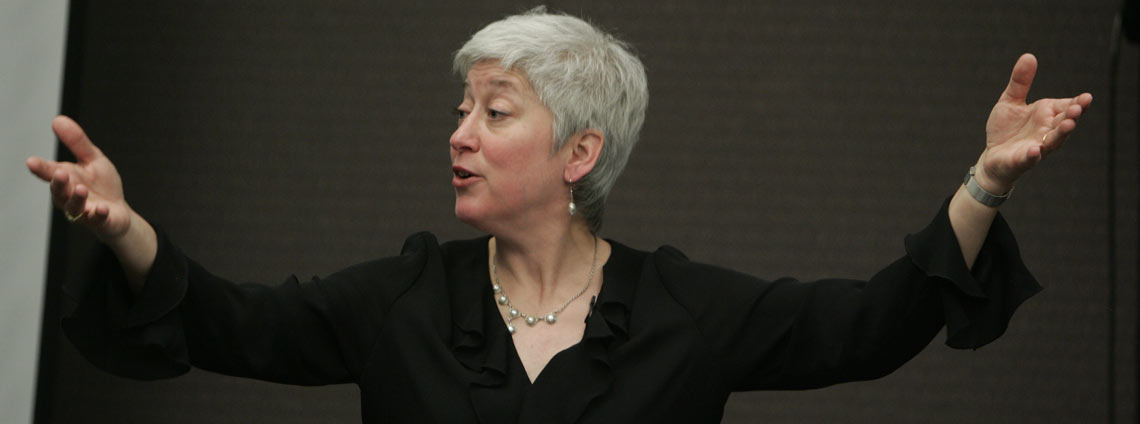
Ellen Hargis, soprano; Marie-Nathalie Lacoursière, baroque dance; Christopher Bagan, harpsichord; Paul Luchkow, violin; Lucas Harris, lute
Preconcert chat at 6:45 PM with Ellen Hargis, Marie-Nathalie Lacoursière, and Matthew White
A musical account of the life of Queen Christina of Sweden, one of Europe’s most eccentric monarchs and personalities. Featuring music and dance by Luigi Rossi, Alessandro Scarlatti, Jean-Baptiste Lully, Arcangelo Corelli, and others.
PROGRAMME
Queen Christina: the Girl King (TEXTS AND TRANSLATIONS)
Stockholm: the Court of The Lion of the North
Music for a Swedish Princess
La Verginella Baldassare Donato (c. 1530 –1603)
Ciaccona Angelo Michele Bartolotti (d.before 1682)
The Death of Gustavus Adolphus
Un ferito cavaliero Luigi Rossi (c. 1597-1653)
Abdication and the Road to Rome
A royal conversion in Innsbruck
Excerpts from the prologue of L’Argia Antonio Cesti (1623-1669)
The world’s most celebrated Catholic
Excerpt from Gustate et Videte Domenico Mazzocchi (1592-1665)
Variations on La Follia Archangelo Corelli (1653-1713)
INTERMISSION
A Queen without a Realm
At the court of the Sun King
Récit, Air et Suite from Ballet d’Alcidiane Jean-Baptiste Lully (1632-1687)
Return to Rome
At home in the Eternal City
Variations in G major Bernardo Pasquini (1637-1710)
Excerpts from La Vita Humana Marco Marazzoli (1602-1662)
Love and Death in the Vatican
Rimante in pace omai Giacomo Carissimi (1605 -1674)
Passacaille del seigneur Luigi Luigi Rossi
Queen Christina: the Girl King
Kristina Augusta, Queen of the Swedes, Goths, and Wends, Grand Princess of Finland, Duchess of Estonia, Livonia and Karelia, Bremen-Verden, Pomerania, and Vandalia, Lady of Ingria and Wismar, was born to Gustav II Adolph, King of Sweden, and Maria Eleanora of Brandenburg in 1626 at the Tre Kronor palace in Stockholm. She was the sole survivor of three daughters born to the couple, and was proclaimed a boy – a prince at last – immediately upon her birth. Only later was it revealed (or discovered) that the hairy, lustily squalling baby was in fact a princess. Gustav was delighted nonetheless and commanded that she should be educated as well as a prince, and Christina took enthusiastically to her studies of classics, philosophy, music, dance, languages and history, as well as horsemanship and marksmanship.
The ambiguity about her gender continued; she was described as both beautiful and odd-looking, and her habits of dress, of swearing like a sailor, and of being general boisterous and coarse drew comments throughout her life. She scorned feminine clothing and wore men’s boots and trousers (sometimes with a short skirt over top). She took no care of her complexion, showing a sunburnt face after outdoor sports, and often went about with her wig or hair undressed. She claimed to aspire to a life like that of Elizabeth I, refusing to marry, and even expressing a horror of physical love. She had frequent crushes on both men and women however, and while there is no evidence of the physical consummation of any relationship, she expressed passion beyond that of friendship in her letters, and kept her paramours near her at court. Throughout her life, she was dogged by rumors of lesbianism, hermaphroditism, and general deviance.
Christina was intelligent but quickly bored, curious but undisciplined, creative but often unsubtle. She must have had tremendous personal charisma to lead such an unconventional life of a celebrity citizen, dependent on the generosity of so many friends and acquaintances of note. The list of luminaries with whom she was closely associated reads like a Who’s Who of the 17th century: the philosopher Descartes, the sculptor Bernini, the Cardinals Barbarini and Mazarin, Popes Alexander II and Clement IX, and many musicians, including Corelli, Carissimi, Rossi, Cecconi, Scarlatti, among others.
Music for a Swedish Princess
Stockholm was a cold, plain, Lutheran city in the early 1600’s. Possibly to please his wife, who had enjoyed a much more urbane life at the Brandenburg Court, Gustav set about to improve the cultural climate in the capital. He imported musicians from Germany, England, and Italy, and started a music collection that included madrigals, and sacred and chamber music by Schütz, Banchieri, Donato, Vecchi, and the Swede Gustav Düben. Madrigals were performed by instruments or voices, but were often turned into solo pieces for keyboards or lutes as well. You’ll hear a madrigal by Donato on the Ariosto poem about the “fair young virgin” entabulated for harpsichord.
The theorbist, guitarist and composer Bartolotti was part of a troupe of Italian musicians invited to the Swedish court. He was employed there by Christina, and later followed her to Innsbruck and then to Rome. He dedicated his second book of guitar solos to the Queen.
The Death of Gustavus Adolphus
Christina’s father was a charismatic leader, called by some “the Lion of the North”. Christina was a great admirer of his, and he was fond of her – certainly more so than was her mother, who was still disappointed not to have produced a male heir. Gustav was determined to make Sweden a world power, and from his coronation at age sixteen until his untimely death at age of 38, he often led his armies in battle himself, and finally was killed at Lützen in 1632. The young composer Luigi Rossi wrote a lament on his death, sung in the voice of his widow Maria Eleanora; Un ferito cavaliero follows the standard form of the female lament in the period, with alternating expressions of grief, anger, desperation, and grim acceptance.
A royal conversion in Innsbruck
The regent Count Axel Ostierna ruled Sweden until Christina’s coronation at age 18. She was still in need of much counsel, and while she was eager to engage in political subterfuge, she proved clumsy and tactless. She also displayed a reckless lack of financial prudence, and nearly bankrupted the court with purchases of works of art, productions of ballet and music, and the like. Christina loved being a queen, but disliked being a ruler. She adored attention, adulation, and entertainment, but was bored with the business of government. Eventually her dissatisfaction with her royal duties, her fascination with the Roman Catholic faith and her lifelong desire to live in southern climes moved her to attempt abdication, to convert and eventually to move to Rome. She studied religion in secret (Catholicism was illegal in Sweden), and made plans to relinquish her throne and move to Italy.
Abdication was a tricky matter – she appealed several times to the very reluctant Swedish government before they finally acceded to her demands, and with the generous golden handshake she insisted on. Christina had been making her own provisions for her future, sending works of art, silver, books, and other valuables out of the country to be stashed away for her security once safely out of Sweden. The journey to Rome was long, and involved several protracted visits along the way. In Brussels, she finally realized her dream of conversion, and after a private ceremony in her chambers, she continued to Innsbruck, where a lavish public display was mounted to celebrate her new faith. She was honored with a new opera written for the occasion of her conversion by the young Antonio Cesti. The plot featured a cross-dressing heroine, improbable plot twists, comedy, and romance. The Prologue praises the Queen by name, describing her various physical and mental attributes with dazzling coloratura and extravagant verbal imagery.
In Rome, Christina was paraded as a poster child for conversion by the Church, and she was welcomed with much fanfare, with a grand procession and musical festivities in her honor. Domenico Mazzochi was a Roman composer of vocal music and worked for several popes; we will perform an excerpt from his communion motet Gustate et Videte. The renowned violinist Archangelo Corelli wrote that he had entered her service and was busy writing music for her to the exclusion of other commissions. His variations on “La Follia” will be danced this evening; we can imagine the Queen herself taking to the floor with music this engaging.
A Queen without a Realm
Once established in her temporary new home, the Palazzo Farnese, Christina had occasion to make several journeys away from her adopted country. Always in need of money, she returned twice to Sweden to seek financial relief, and on other occasions, to investigate the possibility of a new throne in Naples, and in Poland. During a trip north, she was received at the court of the young Louis XIV, and there was treated to a performance of the new Ballet-Opéra L’Alcidiane, composed by the expatriate Giovanni Battista Lulli (now Jean-Baptiste Lully). Louis himself danced in the opera, and Christina is said to have loved it so much that she saw it three times during her stay.
At home in the Eternal City
Christina eventually settled into a happy domestic pattern at her own Palazzo Riari. Surrounding herself with her art collection, her servants, and her roster of musicians, she entertained lavishly. Bernardo Pasquini, who was a student of Cesti and a composer as well as a virtuoso harpsichordist, (according to the New Grove, his reputation as a keyboard player was equal to that of Corelli as a violinist), wrote fifteen operas, two for his patron Christina. He also wrote oratorios, cantatas, and chamber sonatas, but tonight we’ll hear one of his famous variations on a theme for harpsichord.
Marco Marazzoli, known as Christina’s “virtuoso da camera”, was a priest, and in the employ of the Papal Chapel as a tenor in the choir as well as a composer. He also enjoyed the patronage of the Barbarini family, and was a first-rate addition to Christina’s musical entourage. His opera “La Vita Humana, ovvero Il trionfo della pietà” (Human Life, or The Triumph of Piety), with a libretto by Giulio Rospigliosi, later to become Pope Clement IX, was dedicated to the Queen. You’ll hear several excerpts tonight, displaying a number of stock forms in 17th c. vocal writing: a double-echo aria for three debating characters, an aria in passacaglia for the search for truth, and a shipwreck or storm aria for a troubled soul.
Love and Death in the Vatican
Among the frequent visitors to the Palazzo Riari was Cardinal Decio Azzolino, the Pope’s personal representative to Christina. Warm, witty, intelligent, but with a somewhat tarnished reputation for womanizing, he and Christina struck up a close friendship, and later, a likely unrequited romance that lasted until their deaths. He managed her financial affairs, and was her sole heir at her death. They exchanged countless letters during their various absences from each other, most burnt by mutual consent, but enough survive to tell us of a mutual admiration and deep attachment that survived the political vagaries of Roman society and the Vatican.
Christina had named Giacomo Carissimi her “Maestro di capella del concerto di camera”, and while we cannot claim that the achingly beautiful “Rimanti in Pace”
has any personal connection to Christina and Azzolino, the text certainly seems to express the grief we know the Cardinal felt upon her death. We finish with the touching Passacaglia by Luigi Rossi, bookending our programme with the same composer who memorialized the event that launched her extraordinary public life.
Note: Selections on tonight’s programme originally written for larger forces have been adapted for our performance tonight to suit the membership of our ensemble.
Ellen Hargis, soprano
Ellen Hargis is one of America’s premier early music singers, specialising in repertoire ranging from ballads to opera and oratorio. She has performed with many of the foremost period music conductors of the world including Andrew Parrott, Gustav Leonhardt, Paul Goodwin, Monica Huggett, Jane Glover, Simon Preston, Daniel Harding, Paul Hillier, Harry Bickett, Craig Smith and Jeffrey Thomas.
She has performed with the Estonian National Symphony Orchestra, Saint Paul Chamber Orchestra, Virginia Symphony, Washington Choral Arts Society, Long Beach Opera, CBC Radio Orchestra, Freiburg Baroque Orchestra, Philharmonia Baroque Orchestra, Teatro Lirico, Tragicommedia, New York Collegium, The Mozartean Players, Fretwork, Emmanuel Music and the Mark Morris Dance Group, and has been regular performer with Chicago’s Music of the Baroque, the American Bach Soloists, Seattle Baroque and the Portland Baroque Orchestra. She has appeared at many of the world’s leading festivals including the Adelaide Festival (Australia), Utrecht Festival (Holland), Resonanzen Festival (Vienna), and Festival Vancouver, Tanglewood, the Berkeley Festival and New Music America Festival. She has been featured in successive seasons of the Boston Early Music Festival where she has sung Aeglé in Lully’s Thésée, the title role in Luigi Rossi’s L’Orfeo, Queen Pasiphae in Conradi’s Ariadne and Irina in Johann Mattheson’s 1710 opera, Boris Goudenow. Lully’s Thésée and Conradi’s Ariadne were recorded for CPO and were nominated respectively for 2007 and 2006 Grammys.
Recent engagements include a performance and recording of Música Celestial, music from a 17th c. Mexico City convent, which Ms. Hargis researched and directed as well as sang in with the Newberry Consort. On tour with The Newberry Consort, she performed the Cantigas de Santa Maria in New York, Boston, Milwaukee and Pittsburgh. She returned to The Chicago Chorale to sing Bach’s St. Matthew Passion, and performed Monteverdi’s Vespers under the direction of Paul O’Dette.
Ms. Hargis is also a stage director, and worked for three seasons with the Haymarket Opera Company in Chicago, where she directed Charpentier’s La Descente d’Orphée aux Enfers, and Actéon, Purcell’s Dido and Aeneas, and two chamber operas by Handel. As Assistant Director at the 2015 Boston Early Music Festival, she oversaw the revival of Gilbert Blin’s 2009 production of Monteverdi’s L’Incoronazione di Poppea.
Ellen Hargis has a longstanding musical partnership with the great lutenist Paul O’Dette with whom she records and tours regularly. They have performed together throughout the United States, Canada, Austria, France Spain, Russia and Asia. Two recordings on the Noyse Productions label: The Power Of Love and A Christmas Album, have been met with critical acclaim. She is also featured on a dozen Harmonia Mundi recordings including a widely-acclaimed solo recital disc of music by Jacopo Peri, and in Arvo Pärt’s Berlin Mass with Theatre of Voices. She appears on a recording of Handel solo cantatas with the Seattle Baroque Orchestra on Wild Boar, the premiere recording of the Bonporti motets for soprano on Dorian, and several recordings for BMG Classics, Vanguard Classics, Virgin Classics, Erato, Dorian Classics and Berlin Classics. Her recording of Tristan et Iseult with The Boston Camerata was winner of the Grand Prix du Disque.
Ellen Hargis is a visiting professor at the Eastman School of Music, and will teach residencies at the Oberlin Conservatory, The Julliard School, and the University of Wisconsin during the 2015-2016 academic year. She is an Artist-in-Residence with the Newberry Consort at the University of Chicago and Northwestern University and directs at Early Music Vancouver’s annual Vancouver Baroque Vocal Programme.

Marie-Nathalie Lacoursière, baroque dance
A recipient of grants from the Canada and Quebec Arts Council, Marie-Nathalie Lacoursière has a multidisciplinary background in music, acting (specialising in commedia dell’arte) and dancing. She is an associate partner with Toronto Masque Theatre and with Le Nouvel Opéra (Montreal), and she is the artistic director of Les Jardins chorégraphiques in Montreal.
For over 20 years she directed, choreographed or danced with many groups in Canada, the United States and Europe. She was invited in many festivals: the Festival of ideas (Edmonton), Orford Festival, the Boston Early Music Festival, (Lully’s Psyché), the Vancouver Early Music Festival, the New Zealand Chamber Music Festival, the Festival de Lanvellec in France, the Festival Musicale Estense in Modena (Italy), and at The International Baroque Festival in Lamèque. For the past six years she has directed and choreographed the finale of the Festival Montréal Baroque.
She has choreographed all of Purcell stage works for the Toronto Masque Theatre, and has created Mozart a Milano (2006) and Purcell’s The Fairy Queen (2009) which were both nominated for the Opus Prize best performance of the year.
She has also gained a reputation as a stage director for many opera productions: Donizetti’s L’elisir d’amore and Offenbach’s Tales of Hoffmann for Youth and Music Canada; Bizet’s Carmen for the Opera-Theatre in Rimouski; Purcell’s Dido and Aeneas for Appolo’s Fire in Cleveland; Rossini et ses muses, le Grand Dîner, Visibilia (Monteverdi), and La Belle Danse for L’opéra de Montréal; and Rameau’s Pygmalion for Le Nouvel Opéra and the Vancouver Early Music Festival.
At the University of Montreal opera division she has directed Handel’s Giulio Cesare, Strauss’ Zigeunerbaron and Fledermaus, Monteverdi’s L’Incoronazione di Poppea, Purcell’s The Fairy Queen, and Campra’s Les fêtes vévitiennes and L’Europe Galante. For McGill University she has directed Monteverdi’s Il Ritorno d’Ullisse in Patria and Lully-Molière’s Les jeux de l’Amour, and choreographed Rameau’s Les Indes Galantes.
Ms Lacoursière is a Professor of gesture and baroque dance at the University of Montreal, and also taught at Université du Québec à Montréal, Stanford University in California, Indiana University, the University of Alberta and the University of Sackville in New Brunswick. She created Lully’s Le Ballet de l’Impatience which premiered at the Festival Montréal Baroque in June 2011.
Christopher Bagan, harpsichord
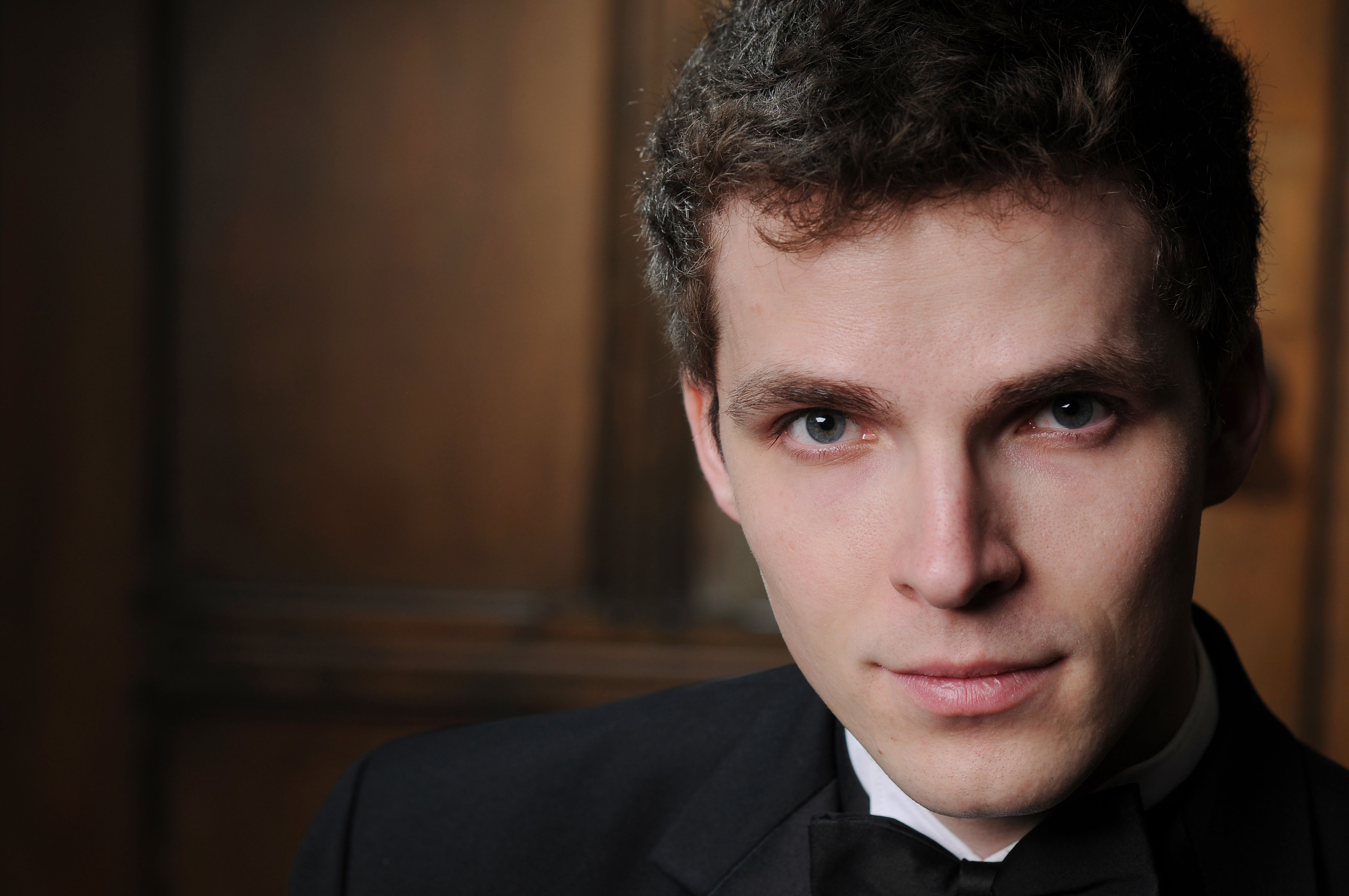
Christopher Bagan is a versatile artist, equally at home on modern and historical keyboard instruments. He is in high demand as a collaborator, chamber musician and basso-continuo specialist. He has performed with many of the leading baroque singers, instrumentalists and conductors in North America and abroad. Christopher is particularly active in the field of baroque opera, working as the assistant conductor at Opera Atelier and as coach and repetiteur at the Canadian Opera Company. In 2015-16 Christopher was the Early Keyboard instructor at Case Western Reserve University and the head of Harpsichord at the Cleveland Institute of Music. He is currently on Faculty at the University of Toronto, working with the students in the historical performance program. He is also on faculty as a historical keyboard coach in the Canadian Opera Company's elite Ensemble training program.
Paul Luchkow, violin
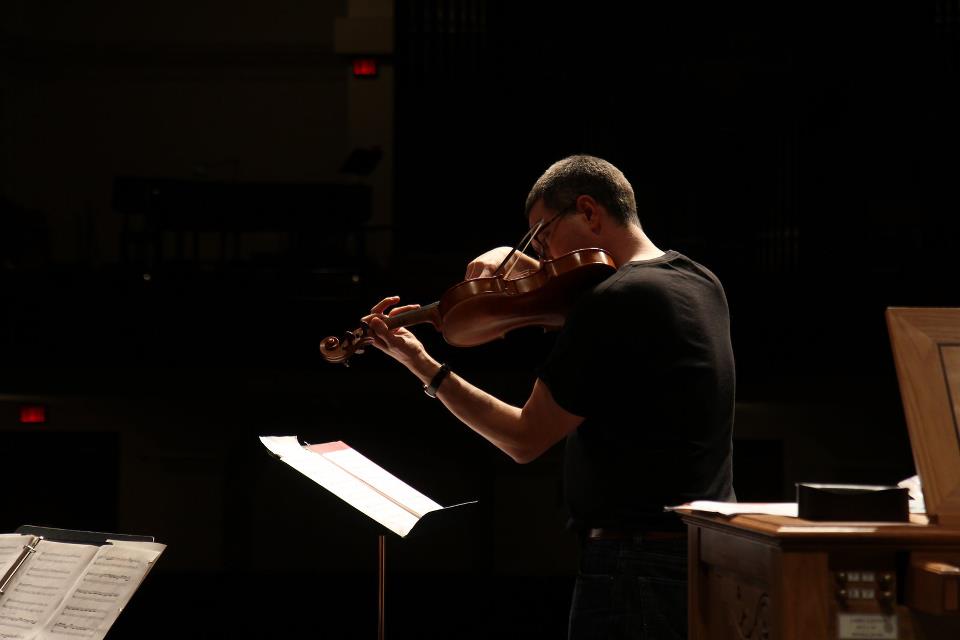
Paul Luchkow is a versatile violinist and violist whose activities cover the range of music from the 17th Century to the present day on modern and period instruments. In addition to the Victoria Baroque Players, he is a regular feature of Vancouver’s Early Music scene. Paul is a long-time member of the Pacific Baroque Orchestra and appears frequently in concerts for Early Music Vancouver, the Early Music Society of the Islands, as well as at Victoria’s Pacific Baroque Festival.
In demand as a leader, guest director, and educator, Paul has worked with Per Sonatori: Regina’s Baroque period-instrument ensemble, VoiceScapes and Spiritus Chamber Choir in Calgary, and he has given performances and masterclasses at universities across western Canada. As an adjudicator, Paul frequently hears and encourages young musicians across British Columbia.
A highlight of recent years has been his work with fortepianist Michael Jarvis and their exploration of Baroque, Classical and Romantic sonata repertoire on period instruments. They have two recordings: One of Hummel Sonatas (nominated for a Western Canada Music Award) for fortepiano and violin / viola on the Marquis Classics label, and a self-released recording of sonatas by Mozart. A third recording, Sonatas by the French composer Michel Corrette, will be released on Marquis in Spring 2017.
Paul makes his home in Victoria with his wife and children.
Lucas Harris, lute
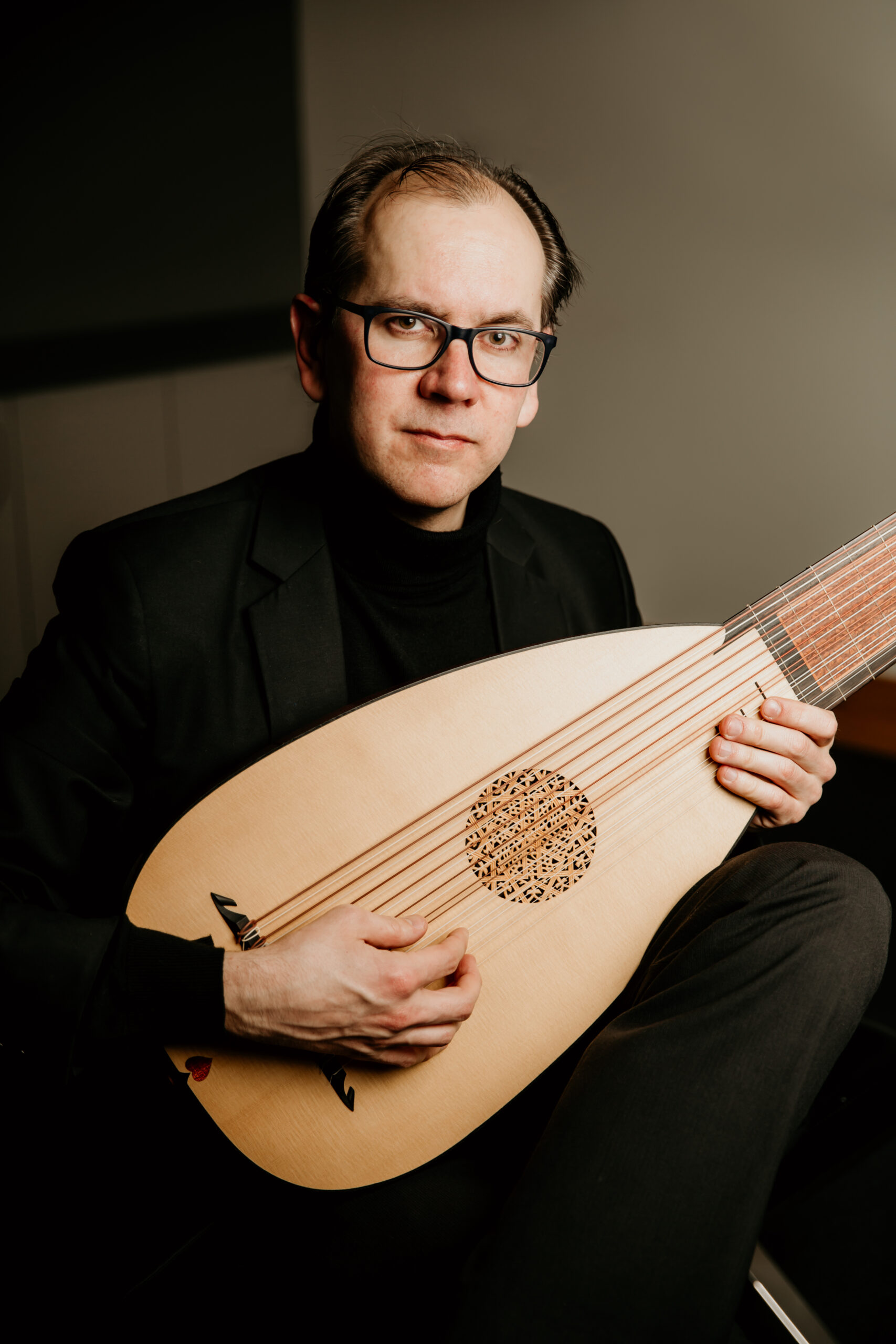
Toronto-based Lucas Harris discovered the lute during his undergraduate studies at Pomona College, and went on to study the lute and early music at the Civica scuola di musica di Milano and at the Hochschule für Künste Bremen. He is a founding member of the Toronto Continuo Collective, the Vesuvius Ensemble and the Lute Legends Collective (an association of specialists in ancient plucked-string traditions from diverse cultures) and is the regular lutenist for Tafelmusik Baroque Orchestra. Lucas plays with many other ensembles in Canada and the USA and has worked with the Smithsonian Chamber Players, Atalante, and Jordi Savall / Le Concert des Nations amongst others.
He teaches at the Tafelmusik Summer and Winter Baroque Institutes, Oberlin Conservatory’s Baroque Performance Institute, and the Canadian Renaissance Music Summer School, and is a regular guest artist with Early Music Vancouver. Lucas is also the Artistic Director of the Toronto Chamber Choir, for which he has created and conducted more than twenty themed concert programs. One of Mr. Harris’ many pandemic projects was the reconstruction of 12 solo voice motets by the Italian nun Chiara Margarita Cozzolani.
Media
YouTube (Ellen Hargis): “Mentre io godo in dolce oblio” by Alessandro Scarlatti