• My Account
  • Cart
  • About
    • Who is Early Music Vancouver
    • What is Early Music?
    • OUR INSTRUMENT COLLECTION
    • Employment Opportunities
    • Annual General Meeting 2025
    • 2024/25 Annual Report
  • Pacific Baroque Orchestra
    • Goldberg Variations Tour 2025
  • EVENTS
    • Summer Festival 2026: The Power of Music
    • EMV’s 2026-2027 Main Season
    • Digital Concert Hall
    • Free Events
    • Past Events
  • Learn
    • PROGRAMMES
    • Artist Interviews
    • Instrument Videos
  • Support Us
    • Donate Now
    • Corporate Opportunities
    • Volunteer
    • Host an EMV Musician
  • Ticketing Info
    • BOX OFFICE
    • Gift Vouchers
    • Venues
  • Press Centre
    • Media Releases
    • EMV PRESS KIT
    • EMV in the News
Early Music Vancouver
  • My Account
  • Cart
  • Donate
  • Buy Tickets
  • Gift Vouchers
  • Get our newsletter
Toggle Menu
  • About
    • Who is Early Music Vancouver
    • What is Early Music?
    • OUR INSTRUMENT COLLECTION
    • Employment Opportunities
    • Annual General Meeting 2025
    • 2024/25 Annual Report
  • Pacific Baroque Orchestra
    • Goldberg Variations Tour 2025
  • EVENTS
    • Summer Festival 2026: The Power of Music
    • EMV’s 2026-2027 Main Season
    • Digital Concert Hall
    • Free Events
    • Past Events
  • Learn
    • PROGRAMMES
    • Artist Interviews
    • Instrument Videos
  • Support Us
    • Donate Now
    • Corporate Opportunities
    • Volunteer
    • Host an EMV Musician
  • Ticketing Info
    • BOX OFFICE
    • Gift Vouchers
    • Venues
  • Press Centre
    • Media Releases
    • EMV PRESS KIT
    • EMV in the News
Home  >  Early Music Vancouver Events  >  Florilegium: Songs of Medieval England

Wednesday, August 5, 2026 | 1pmChrist Church Cathedral

Buy Tickets

Florilegium: Songs of Medieval England

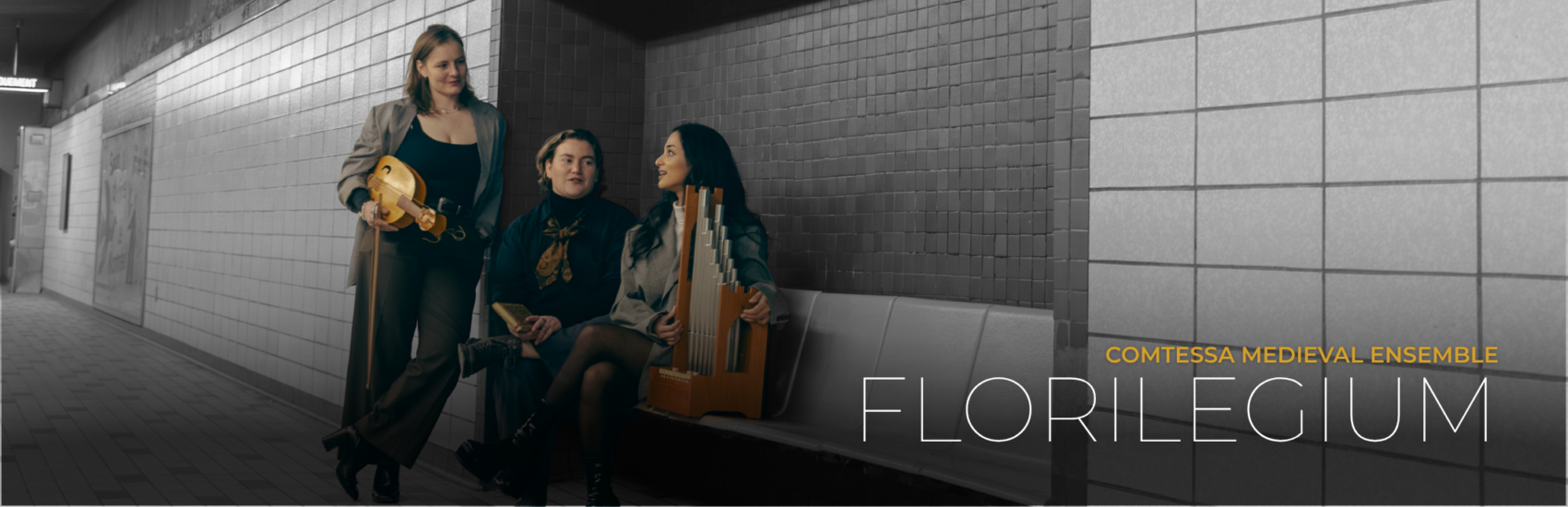
COMTESSA Medieval Ensemble

Artists: Len Torrie, voice, Isabelle Douailly-Backman, medieval fiddle; Maria Gajraj, organetto (Mentored by Benjamin Bagby)

Pre-Concert Chat: 12:30pm hosted by Benjamin Bagby with COMTESSA

Run Time: 60 Minutes, No Interval

Rising medieval ensemble COMTESSA present a program that offers a rare glimpse into the vibrant musical culture of the British isles from 1150 to 1300. The influence of Celtic folk songs and dances, troubadour music, and plainchant is evident in these pieces, which often employ themes of nature and allegory. COMTESSA curates this collection of English medieval songs to follow the lifecycle of a flower. The term “Florilegium,” derived from the Latin words “flos” (flower) and “legere” (to gather), was historically used for treatises on flowers or a compilation of excerpts from other writings, an offshoot of the common placing tradition. These songs, rich in themes of nature, offer a comprehensive overview of the medieval musical landscape in the British Isles. Presented with authentic medieval performance practices and period instruments, this program brings the past vividly to life.

COMTESSA will be presenting this programme following a 4-day mentorship with Benjamin Bagby (Sequentia) sponsored by Elaine Adair and EMV. Benjamin Bagby will be giving a pre-concert chat at 12:30pm.

Generously sponsored by Elaine Adair.


PROGRAMME

Ver • Spring
Sumer is icumen
Veri floris sub figura


Aestas • Summer
[Dance]
Byrd on a brere
Flur de virginité
Flos convallis est egressus


Autumnus • Fall
Mirie it is while sumer ilast
[Estampie]
Scribere proposui


Hiems • Winter
Foweles in Þe frith
Ar ne kuthe
Encore
El tens d’iver
Len Torrie, Voice

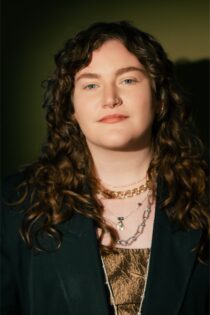
Len Torrie is an Ontario-born, soprano and project maker living in Montreal who just completed a master’s degree in early music performance at McGill University under the tutelage of Dominique Labelle. Most recently, Len sang the title role in Charpentier’s oratorio Judith with ensemble Capella Antica and is lead soprano at Christ Church Cathedral, Montreal.

While studying music therapy at Acadia University, Len appeared frequently as a soloist with local ensembles including Symphony Nova Scotia, and was lead soprano of the Manning Chapel Choir from 2014-2018. In 2017, Len was awarded the Canadian Federation of University Women scholarship which funded their participation in Accademia Europea Dell’Opera in Lucca, Italy, where they played Oberto in Handel’s Alcina. This experience motivated Len to pursue a career in performance and upon graduation, Len moved to Montreal to study with soprano Suzie LeBlanc.

Len frequently returns to the Maritimes for solo recitals, collaborations, and residencies. Len also recently completed an artist residency at Banff Arts and Creativity Centre with Canadian tenor Kerry Bursey, as the newly formed early music/folk duo Kalliope. Len is currently exploring the practice of self-accompanying early music on baroque guitar. As a queer, non-binary musician, Len is inspired by the possibility that their queer ancestors had their own musical traditions and that through research, creative speculation, and performance, we can tell a more inclusive and rich story about music and humanity.
read more...

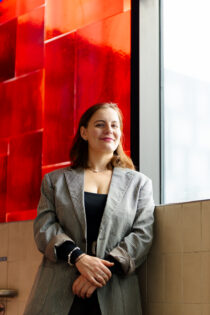
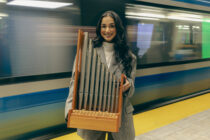
Isabelle Douailly-Backman, Medieval Fiddle

Isabelle Douailly-Backman (she/her/they/them) is a Montreal-based historical string player. Originally from Chicago, she moved to Montreal to pursue a degree in modern viola at McGill University. There she discovered a love for early music and has since completed a B.Mus in Baroque Viola and a M.Mus in Baroque Violin from McGill University under the tutelage of Hélène Plouffe and Olivier Brault.

Today, Isabelle frequently performs on baroque violin, viola, and medieval vielle with ensembles and festivals in Canada, including Ensemble Caprice, Arion Baroque Orchestra, Tenet Vocal Artists, L’Harmonie des Saisons, Musique Royale, and Montreal Baroque Festival. She is also currently studying medieval vielle at the prestigious Schola Cantorum in Basel, Switzerland, under the tutelage of Baptiste Romain. She is the artistic director and founder of COMTESSA, an historically-informed ensemble who performs 11th to 15th century music on medieval period instruments. Isabelle is the 2023 recipient of the Barbara Thorton Memorial Scholarship, a biennial scholarship awarded by Early Music America and members of Sequentia to “an outstanding and highly motivated young performer of medieval music.” Isabelle also collaborates outside the early music scene with groups like the queer arts collective Sapphonix.
read more...

Maria Gajraj, Organetto

Maria Gajraj is a Montréal-based organist and Doctoral Candidate at McGill University. Her research focuses on 20th-century Caribbean organ repertoire. She is the co-founder of Sapphonix Collective, which promotes women, queer, and racialized classical musicians, and has been featured on CBC Radio. Maria is also the executive director of medieval ensemble COMTESSA, in which she plays organetto.

Maria has performed internationally, at venues like Salle Bourgie, Maison Symphonique, and the Orgelpark (Amsterdam) and in series such as Cal Performances (USA) and Bergen Orgelsommer (Norway). A recipient of the Godfrey Hewitt Scholarship (2022) and other awards, her doctoral research is funded by the FRQ (Fonds de Recherche du Quebec).

In her concert programs, Maria is passionate about highlighting women and composers of colour. As Deirdre Piper wrote in “Pipelines”, Maria’s “spirited, clean, and colourful performance lent real meaningful significance” to this music. By creating engaging concert programs, and by featuring the organ in innovative and multidisciplinary contexts, Maria strives to break stereotypes, and to make the organ more accessible to everyone.

read more...


Media

1254 W 7TH AVE
VANCOUVER, BC, V6H 1B6

(604) 732-1610
staff@earlymusic.bc.ca

  • About EMV
    • What is Early Music?
    • Staff
    • Partners
    • Board of Directors
    • Venues
  • Education & Community
    • BC Scholarship Programme – 2026/2027
    • OUR INSTRUMENT COLLECTION
  • Press Centre
  • Join Our Mailing List
Facebook URLTwitter URLYoutube URLInstagram URL

Copyright © 2026 EARLY MUSIC VANCOUVER | EMV | PHOTOS BY JESS MACALEESE, MARK MUSHET AND JAN GATES.
CONTACT EMV FOR INDIVIDUAL CREDITS. | site by DFS Digital Fusion Studios web designAND MEDIUM RARE Medium Rare Interactive

Een Romantische Johannes Passion

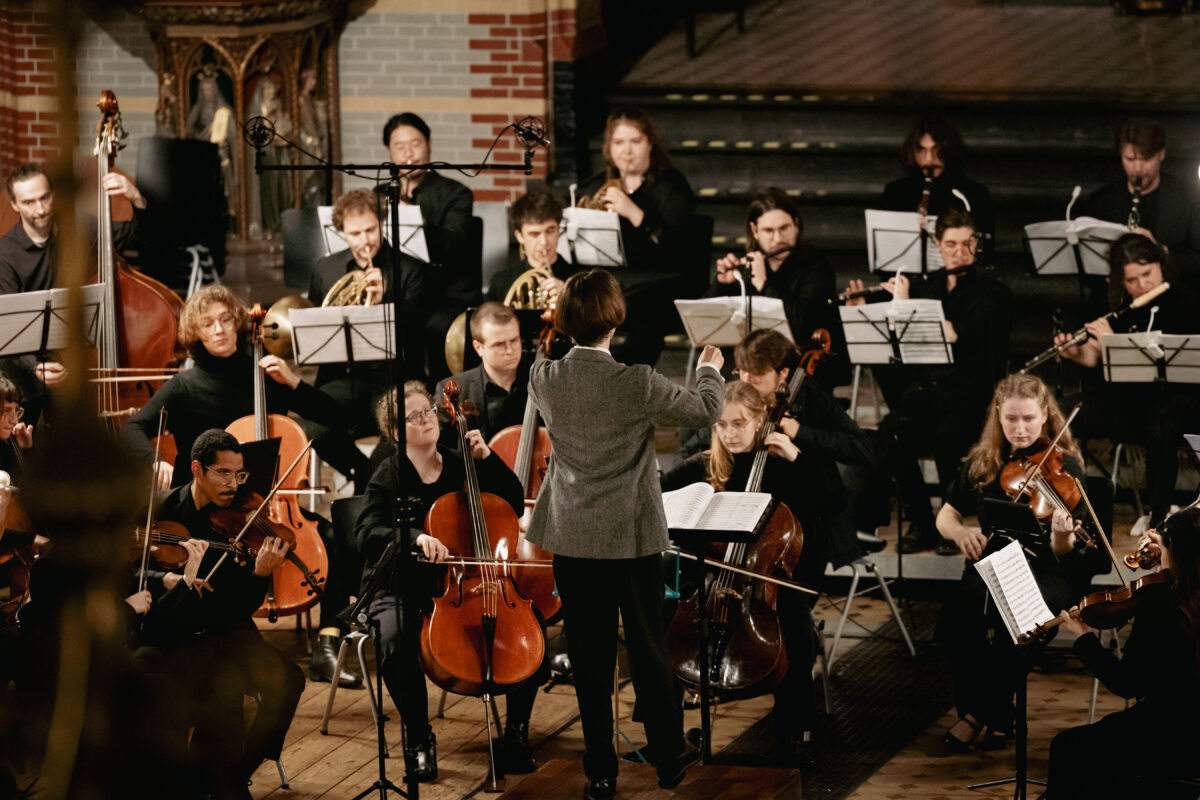
Historical Performance has been steadily looking toward the nineteenth-century as a source of inspiration, and Orchestra Lagrandt wants to lead the charge into Romantic orchestral performance practice. As an orchestra of ambitious musicians in their twenties from 25 different nations, we aspire to represent the voice of the new generation in Historical Performance.

Een Romantische Johannes Passion is an ongoing project to reimagine the Johannes Passion of J. S. Bach in a late nineteenth century style. The first Passion revivals in the Netherlands took place in Rotterdam in 1870, featuring large symphonic orchestrations, and a radically different musical language than that of the HP and modern classical worlds. In our initial performance with the Tangram Chamber Choir, we pushed the boundaries of what Romantic Bach might have sounded like: exploring changes in orchestration, stoic tempi, rubato, phrasing, nineteenth- century bowing practices, and even portamento. We plan to establish this project as an annual tradition every Easter season, reworking the arrangement each time in the spirit of Romantic spontaneity.


One of the wonderful things about the Historical Performance movement is that we are able to use forgotten practices, this time hailing from the nineteenth century, to present such a beloved and well known-work in a new light.

The world is familiar with stories of clever forgers whose life’s mission is to cunningly reproduce the light and shadows of historical masterworks, from Vermeer’s brushstrokes to Da Vinci’s proportional precision… but what if these crimes of craftsmanship were to extend beyond the visual arts? What if the pieces we know to be by Palestrina, Monteverdi or even Johann Sebastian Bach were in fact stylistic copies, artfully composed by a secret circle of music forgers and passed off as the work of the greats? What if those music forgers are at work as we speak? 

This premise inspires our original program The Music Forgery Workshop. Our early music comedy imagines the lives of such a circle of musical criminals, offering a fresh and lively presentation of historical compositions, not as museum artifacts but as living works in progress. The workshop itself is set up on the stage and its members carry forth the plot in music and words. A narrator in the role of a suspicious inspector lends the performance a theatrical flow. The listener is invited into a satire on high society’s art commerce, while the performers make fun of themselves for having devoted their lives to the niche subject of historical music performance. 

Violinist Elizabeth Sommers combines her skills and experience in traditional music with expertise in the performance and improvisation of medieval and Renaissance repertoires. Multi-instrumentalist Eliot X. Dios (keyboards, bagpipes and flutes) works wholeheartedly to employ storytelling techniques developed through the history of literature and cinema in his early music concerts. Composer Gunnar Haraldsson (violin, guitar) seeks to translate the forms and intentions of early composition for a modern audience. Halldór B. Arnarson (keyboards, voice) has devoted his career to bringing musical craftsmanship from the era of counterpoint to the attention of the public and comedy to the early music scene. Singer and storyteller Ásta S. Arnardóttir brings the storyline to the public with personal immediacy, and through her character work defines the different veins of the show, sometimes hilarious and sometimes serious. 

The story is narrated by the character of the Inspector, acted out by the members of the MFW, and told in rhyming Icelandic verse in one musical pillar of the show, a madrigal composed by our very own 

Halldór in the style of Monteverdi. The show has an entertaining educational dimension. The audience is exposed to a broad sweep of historical and musical information in a condensed form, necessary to understand the musical humour, while dramatic rhythm and scenographic effects prevent overwhelm. We also place particular emphasis on theatrical illusion and synchronisation. One example appears in the opening scene, in which the inspector is seen watching television. On stage, this becomes a complex exercise in coordination: each time the inspector presses a button on the remote control, the musicians instantly switch pieces, creating the impression of rapidly changing television channels. 

This opening scene establishes the tone of the entire show, comical and satirical in its storytelling and diverse in its musical language. It not only introduces the wide range of musical styles that appear throughout the performance, but also functions as the plot’s inciting incident, as the inspector hears a news report about the discovery of a previously unknown concerto by Vivaldi. 

Another important scene takes place when one forger is alone on stage in low light, perusing books on medieval music, while the musicians perform and sing offstage, sounding his audiation as he reads. This intimate moment evokes the sleepless nights spent studying facsimiles and learning historical compositional techniques, by which the forger acquires the inspiration and the expertise necessary to his art, and reveals a hidden side of musical performance: the immense amount of study and preparation that precedes the moment on stage. This setting also creates space for visual and musical comedy, as seen in the trailer video, where a 14th-century melody is played backwards because Halldór is unknowingly reading the facsimile upside-down, only realising the mistake when the music begins to sound absurd. 

Fun and friendship are at the heart of the whole project, though the link between music and crime is an important historical consideration. Classical music was often used as the demonstration of a monarch’s power, music teaching as a cover up for secret affairs, and pieces were published under another’s name for profit. Such examples of “inappropriate practices” carry an exciting and attractive element for the audience which the MFW seeks to exploit. Under this light-hearted surface lies a more serious layer of questions concerning our present-day existence, such as excessive materialism in high society and the threat posed on human craftsmanship and skill by the rise of artificial intelligence. 

Please Note:

The main applicant and creative/intellectual driver of the project must be 30 or under (on May 15th).

The average age of all musicians must not be older than 32, and the maximum age of supporting musicians must be no more than 35 (on May 15th.)