Richmond & Vancouver
Handel’s Messiah
Artists: Myriam Leblanc, soprano; Cecilia Duarte, alto; Jacob Perry, tenor; Sumner Thompson, bass; the Vancouver Chamber Choir and the Pacific Baroque Orchestra directed by Alexander Weimann
Run time: Approximately 130 min + 20 min interval
Early Music Vancouver and Vancouver Chamber Choir’s joint mounting of Handel’s indomitable Messiah returns to The Orpheum with a stellar lineup of soloists. At times reflective, joyful, solemn, and mysterious, this monumental work speaks to audiences across all worlds, bringing a fundamental message of hope. Alexander Weimann’s direction of this masterpiece is spell-binding.
Richmond performance generously sponsored by The Graham & Gayle Cooke Foundation.
Vancouver performance generously sponsored by Dr. Katherine E. Paton, In Memory of Dr. Gunnar Brosamier, Bryan Atkins, and Eric Wyness.
December 12, 2025 at 7pm | Fraserview Mennonite Church, Richmond
December 13, 2025 at 7pm | The Orpheum, Vancouver
Click here to read programme notes by Connor Page
Presented in collaboration with the Vancouver Chamber Choir

PROGRAMME
George Frideric Handel (1685-1759)
Messiah
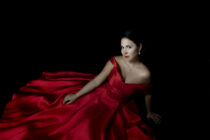
Myriam Leblanc, soprano
A graduate of McGill University, Myriam Leblanc obtained a master’s degree in choral conducting direction from the University of Sherbrooke. She was a First Prize winner and People’s choice Award winner at the Orchestre symphonique de Trois-Rivières Competition, a Jeune Ambassadrice Lyrique in 2014 (Prix Québec-Bavière), Audience Choice Award winner at the Canadian Opera Company Centre Stage Competition, Third Prize winner at the Ottawa Choral Society New Discoveries contest, holder of the Excellence grant given annually by l’Atelier lyrique de l’Opéra de Montréal, First Prize winner in the Mathieu-Duguay Early Music Competition at the 2017 Lamèque International Baroque Music Festival. She has been working in the world of music for few years. Leblanc is recognized for the purity of her tone, a flexible and warm voice and her mastery of both technique and musical expressiveness.
In 2016, she made her debut with the Opéra de Montréal in the role of the High Priestess in Verdi’s Aida. La Presse music critic Caroline Rodgers described her voice as one of “rare beauty”. Her more recent performances (2017-2018) include Milica in Sokolovic’s Svadba with Opéra de Montréal, Micaela in Bizet’s Carmen with Opéra de Québec and concerts with conductors such as Yannick Nézet-Séguin, Kent Nagano, Matthias Maute and Jonathan Cohen. In 2018-2019, she sang a Gilda in Verdi’s Rigoletto, the soprano solos on Handel’s Messiah with Ensemble Caprice, the Mendelssohn’s Symphony No.2 “Lobgesang” with l’Orchestre Metropolitain under Yannick Nézet-Séguin’s direction. Recently, she was a soloist with Les Violons du Roy under Jonathan Cohen’s direction.
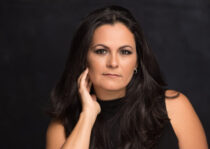
Cecilia Duarte, alto
“A creamy voiced mezzo-soprano.” -The New York Times-
Soloist in the Grammy-Winning album Duruflé: The Complete Choral Works, Cecilia specializes in early music and contemporary opera. Role premieres include Renata in the Mariachi Opera Cruzar la Cara de la Luna, (HGO, Chicago Lyric Opera, San Diego Opera, El Paso Opera, NYCOpera, Europe and South America); as well as Renata in El Milagro del Recuerdo, (HGO, Arizona Opera); Jessie Lydell in A Coffin in Egypt, (HGO and the Wallis Annenberg Center in L.A.); Harriet/First Responder in After the Storm (HGO); Alicia in Some Light Emerges (HGO); and Alma in the new opera web series Star Cross’d, with Houston Grand Opera.
Other operatic roles include Linda Morales in Laura Kaminski and Kimberly Reed’s Hometown to the World, Maria in Maria de Buenos Aires, Loma Williams in Cold Sassy Tree, and Sarelda in The Inspector. Concert collaborations include the Five Boroughs Music Festival in NY, ROCO Houston, and the Kaleidoscope Ensemble. Early music experience includes Ars Lyrica Houston, The Boston Early Music Festival, Mercury Houston, Seraphic Fire, and the Bach Collegium San Diego, among others. Cecilia just released her first solo album, Reencuentros, a compilation of Latin American songs under the Reference Recordings label. Upcoming performances include the Boston Early Music Festival, Minnesota Opera, The Bach Collegium San Diego, and Pacific Music Works.
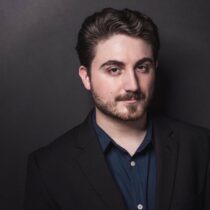
Jacob Perry, tenor
Jacob Perry, tenor, is lauded for his stylish interpretations of early music. As a soloist, he lends his graceful sense of phrasing and luminous tone to engagements with American Classical Orchestra, Apollo’s Fire, Bach Collegium San Diego, Jacksonville Symphony, Philharmonia Baroque, Portland Baroque Orchestra, Tafelmusik, Tempesta di Mare, Washington Bach Consort, and the Washington National Cathedral. Jacob joined the Carmel Bach Festival in 2022 as the tenor participant in the Virginia Adams Best Masterclass.
Deeply immersed in vocal chamber music, Jacob enjoys active membership in Les Canards Chantants, a soloist-ensemble based in Philadelphia, as well as engagements with ensembles such as the Ampersand, Art of Early Keyboard (ARTEK), Cathedra, Ensemble Altera, The Leonids, New Consort, Res Facta, and TENET Vocal Artists. He has explored the vocal works by contemporary composers through engagements with Third Practice, hexaCollective, and Great Noise Ensemble. As Co-Artistic Director of Bridge, a genre-defying vocal collective based in Washington, he draws on his instincts for theatricality and story-telling, as the group explores the connections between early masterpieces and ground-breaking new works.
Career highlights include his recent solo debut with the New York Philharmonic singing Handel’s “Israel in Egypt”, headlining the inaugural festival of Western Early Music at the Beijing Central Conservatory of Music with Les Canards Chantants, and “English Orpheus”—a tour de force exploration of love songs and poems from the Elizabethan, Restoration, and early 18th-century periods he performed with Tempesta di Mare.
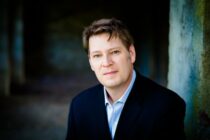
Sumner Thompson, bass
Praised for his “elegant style” (The Boston Globe), Sumner Thompson is one of today’s most sought-after baritones. He has performed across North America and Europe as a soloist with renowned ensembles such as Concerto Palatino, Tafelmusik, Apollo’s Fire, Les Boréades de Montréal, Les Voix Baroques, the King’s Noyse, Mercury Baroque, and the symphony orchestras of Charlotte, Memphis, and Phoenix. Recent highlights include Monteverdi’s Vespers of 1610 and the new Vespers of 1640 with the Green Mountain Project; Buxtehude’s Membra Jesu Nostri with Les Voix Baroques and Houston’s Mercury Baroque; Mozart’s Requiem at St. Thomas Church in New York City; a tour of Japan with Joshua Rifkin and the Cambridge Concentus; and Britten’s War Requiem with the New England Philharmonic. He most recently appeared with EMV last year in From War to Peace: Heinrich Schurz and His Time (November) and Festive Cantatas: JS Bach Magnificat (December).

Vancouver Chamber Choir
Artistic Director Kari Turunen began leading the Vancouver Chamber Choir (VCC), one of Canada’s premier professional choral ensembles, in September 2019. Founded by Jon Washburn in 1971 the VCC has enjoyed amazing success -, ranking with the handful of North America’s best professional choruses and noted for its diverse repertoire and performing excellence. In addition to concerts at home in Vancouver and across Canada, international excursions have taken them to the USA, Mexico, Japan, China, Hong Kong, Taiwan, South Korea, Finland, France, Germany, the Czech Republic, Russia, Estonia, Latvia, Lithuania and Ukraine.
VCC has performed countless concerts and broadcasts, released 36 recordings and received numerous awards including the Margaret Hillis Award for Choral Excellence by Chorus America. Foremost supporters of Canadian music, they are responsible for commissions and premieres of nearly 400 choral works by 150 composers and arrangers, most of whom are Canadian. Over the years the choir has sung over 4,000 performances of works by Canadian composers, in addition to their extensive international repertoire. The choir’s award-winning educational programs include the Conductors’ Symposium for advanced choral conductors, Interplay interactive workshops for choral composers, Focus professional development program for student singers, OnSite visitations for school choirs, the biennial Young Composers’ Competition, and many on-tour workshops and residencies.

Pacific Baroque Orchestra
The ‘house band’ of Early Music Vancouver, The Pacific Baroque Orchestra (PBO) is recognized as one of Canada’s most exciting and innovative ensembles performing “early music for modern ears.” Formed in 1990, the orchestra quickly established itself as a force in Vancouver’s burgeoning music scene with the ongoing support of Early Music Vancouver. In 2009, PBO welcomed Alexander Weimann as Director. His imaginative programming, creativity and engaging musicianship have carved out a unique and vital place in the cultural landscape of Vancouver.
PBO regularly joins forces with internationally-celebrated Canadian guest artists, providing performance opportunities for Canadian musicians while exposing West Coast audiences to a spectacular variety of talent. The Orchestra has also toured throughout BC, the northern United States, and across Canada. Their 2019 East Coast Canadian tour with Canadian soprano Karina Gauvin culminated in a critically acclaimed album, Nuit Blanches, released by Atma Classique.

Alexander Weimann | Sponsored by Bruce Munro Wright, O.B.C., director
The internationally renowned keyboard artist Alexander Weimann has spent his life enveloped by the therapeutic power and beauty of making music. Alex grew up in Munich. At age three he became fascinated by the intense magic of the church organ. He started piano at six, formal organ lessons at 12 and harpsichord at university (along with theatre theory, medieval Latin and jazz piano.) He is in huge demand as a director, soloist and chamber player, traveling the world with leading North American and European ensembles. He is Artistic Director of the Pacific Baroque Orchestra in Vancouver and teaches at the University of British Columbia where he directs the Baroque Orchestra Mentorship Programme.
Alex has appeared on more than 100 recordings, including the Juno-award-winning album “Prima Donna” with Karina Gauvin and Arion Baroque orchestra. His latest album series “The Art of Improvisation” (Volume 1: A Prayer for Peace; Volume 2: Ad libitum; and Volume 3: Canavian Variations, released on Redshift, 2024) unites his passions for both baroque music and improvisation on organ, harpsichord, and piano.