Chan Centre for the Performing Arts
SOLD OUT
Mozart’s Requiem
Artists: Magali Simard-Galdès, soprano; Emma Parkinson, alto; Jacob Perry, tenor; Drew Santini, baritone; the Pacific Baroque Orchestra and the Vancouver Cantata Singers, directed by Alexander Weimann.
Pre-Concert Chat: 6:45pm hosted by Jesse Read with Alexander Weimann, Drew Santini and Magali Simard-Galdès at Chan Shun Concert Hall.
Runtime: Approximately 60 min, no interval
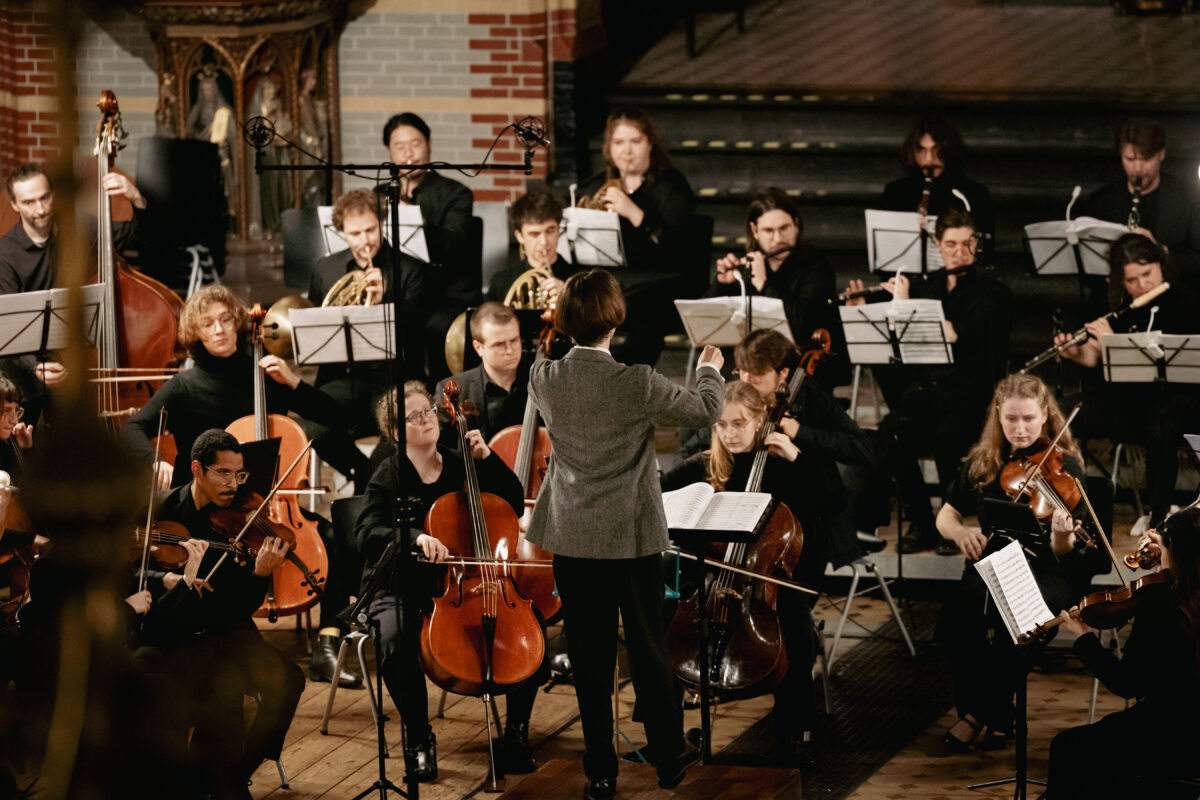
One of the most beloved musical works of all time, Mozart’s Requiem has its Early Music Vancouver debut. Led by our esteemed music director, Alexander Weimann, this performance features the Pacific Baroque Orchestra, the Vancouver Cantata Singers, and four outstanding vocal soloists.
Beginning with the weight of earthly sorrow, its soaring choral lines and radiant harmonies gradually lift the spirit toward transcendence. Through its sublime beauty, the Requiem transforms grief into a luminous journey—one where the soul, unburdened, rises toward serenity and eternal joy.
Shrouded in mystery and left unfinished upon the composer’s death in 1791, the Requiem presents intense questions about life, death, and the afterlife. This performance presents a modern completion from 2024 by English conductor and composer Howard Arman, a fruitful approach that leads to new listening experiences in this timeless work.
Click here to read programme notes by Connor Page
Clicl here for the text and translation
Generously sponsored by The Graham & Gayle Cooke Foundation
PROGRAMME
Wolfgang Amadeus Mozart (1756-1791)
Requiem in D minor, K. 626

Magali Simard-Galdès | Sponsored by Denise and Eric Pugash, soprano
Quebec soprano Magali Simard-Galdès is distinguished by a broad repertoire ranging from Baroque music, which she is particularly fond of, to contemporary music, for which she possesses all the precision required.
On the operatic stage, Magali imposes a celebrated presence and theatrical ease. Her ability to blend in with each character has enabled her to take on roles as diverse as Agnès (Benjamin, Written on skin), Musetta (Puccini, La Bohème), Micaëla (Bizet, Carmen), Tytania (Britten, A Midsummer Night’s Dream), Gilda (Verdi, Rigoletto), Roxane (DiChiera, Cyrano de Bergerac), Constance (Poulenc, Dialogues des carmélites) and Nicette (Hérold, Le pré aux clercs), performing in many prestigious venues, such as, the Vancouver and Montreal Operas, Opera Carolina, Toledo Opera, Tapestry Opera and the Wexford Festival Opera, not forgetting the Cologne Opera and the Auditorium du Nouveau Siècle in Lille.
On the concert platform, Magali displays the charisma, performing with world renowned specialist ensembles such as Le Cercle de l’Harmonie, Les Violons du Roy, Arion Orchestre baroque and Ensemble Caprice.
She performs just as regularly with symphonic ensembles and conductors such as Orchestre National de Lille, Orchestre Classique de Montréal, the National Arts Center Orchestra in Ottawa, the Houston Symphony and Orchestre symphonique de Québec, Orchestre Métropolitain and Orchestre du Festival Classica in Quebec, conducted by Yannick Nézet-Séguin, Jacques Lacombe, Jean-Marie Zeitouni, Bernard Labadie, Jean-François Rivest, Mathieu Lussier, François-Xavier Roth, Jérémie Rhorer and Alexandre Bloch.
Alongside a busy international career, Magali can be regularly heard on Radio-Canada ICI Premiere as an sustainability consultant.

Emma Parkinson, alto
Chinese-Canadian mezzo-soprano Emma Parkinson has performed across Canada and internationally, she has been hailed as “an outstanding voice” (La Scena Musicale). This season, Emma performed in the world premiere of Chinatown with City Opera Vancouver, and in the Canadian premiere of Du Yun’s Angel’s Bone with re:Naissance Opera and Sound the Alarm Music Theatre. Past seasons have seen Emma perform with Vancouver Opera as Jade Boucher in Jake Heggie’s Dead Man Walking, and with Pacific Opera Victoria in the Canadian premiere of Rattenbury.
Emma has appeared with Burnaby Lyric Opera in the title role of Carmen, and, as Suzuki in Madama Butterfly. As an alumnus of the Atelier lyrique of Opéra de Montréal, she performed Orlofsky in Opéra de Montréal’s production of Die Fledermaus. In Europe, Emma debuted with Seefestspiele Berlin as Mercédès in Carmen, and performed a concert with Les Chorégies d’Orange in France. Her concert highlights include soloist appearances with the Alberta Baroque Ensemble, Vancouver Bach Choir, Kingston Symphony Orchestra, Slovak State Philharmonic Orchestra, Montreal Symphony Orchestra, and the Orchestre Métropolitain, under the baton of Yannick Nézét-Seguin. Emma was honoured to perform as a special guest soloist for Ballet BC’s 35th Anniversary Gala.
Jacob Perry, tenor
Jacob Perry, tenor, is lauded for his stylish interpretations of early music. As a soloist, he lends his graceful sense of phrasing and luminous tone to engagements with American Classical Orchestra, Apollo’s Fire, Bach Collegium San Diego, Jacksonville Symphony, Philharmonia Baroque, Portland Baroque Orchestra, Tafelmusik, Tempesta di Mare, Washington Bach Consort, and the Washington National Cathedral. Jacob joined the Carmel Bach Festival in 2022 as the tenor participant in the Virginia Adams Best Masterclass.
Deeply immersed in vocal chamber music, Jacob enjoys active membership in Les Canards Chantants, a soloist-ensemble based in Philadelphia, as well as engagements with ensembles such as the Ampersand, Art of Early Keyboard (ARTEK), Cathedra, Ensemble Altera, The Leonids, New Consort, Res Facta, and TENET Vocal Artists. He has explored the vocal works by contemporary composers through engagements with Third Practice, hexaCollective, and Great Noise Ensemble. As Co-Artistic Director of Bridge, a genre-defying vocal collective based in Washington, he draws on his instincts for theatricality and story-telling, as the group explores the connections between early masterpieces and ground-breaking new works.
Career highlights include his recent solo debut with the New York Philharmonic singing Handel’s “Israel in Egypt”, headlining the inaugural festival of Western Early Music at the Beijing Central Conservatory of Music with Les Canards Chantants, and “English Orpheus”—a tour de force exploration of love songs and poems from the Elizabethan, Restoration, and early 18th-century periods he performed with Tempesta di Mare.
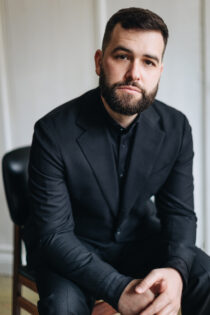
Drew Santini, baritone
Canadian baritone Drew Santini performs opera, oratorio and chamber music, and collaborates on a diverse gamut of musical projects. Comfortable in repertoire of many periods, he is particularly known for his stylish, sensitive performances of Bach and his contemporaries performing with such groups as Freiburg Baroque Orchestra, Gli Angeli Genève, The English Concert, Tafelmusik Baroque Orchestra, The Orchestra of the 18th Century, Ensemble Masques and Netherlands Bach Society.
The 23/24 season began with a debut appearance with the Orchestra of the 18th Century singing Guglielmo in their tour of Mozart’s Così fan tutte with conductor Manoj Kamps and stage director Lisenka Heijboer Castañón. Other highlights of the season included performances of John Blow’s Venus & Adonis with Ensemble Masques in France and Spain, a tour of Handel’s Messiah with Nieuwe Philharmonie Utrecht led by Johannes Leertouwer, a program with the Luthers Bach Ensemble and guest conductor Ton Koopman, Bach’s Matthäus-Passion with the Dutch Bach Society led by Johanna Soller and Bach’s Mass in B minor in Hungary with Capella Savaria and guest conductor Bart Van Reyn.
Drew has recorded albums with Gli Angeli Genève, La Bande Montréal Baroque, BachPlus, and Oerknal! New Music Collective. He appears in over 25 works on ‘All of Bach’, a project by the Dutch Bach Society to record the complete oeuvre.
Drew originally hails from Stratford, Ontario. He holds degrees from The Juilliard School (MM) and Manhattan School of Music (BM). He currently lives in The Hague, Netherlands. drewsantini.com

Pacific Baroque Orchestra
The ‘house band’ of Early Music Vancouver, The Pacific Baroque Orchestra (PBO) is recognized as one of Canada’s most exciting and innovative ensembles performing “early music for modern ears.” Formed in 1990, the orchestra quickly established itself as a force in Vancouver’s burgeoning music scene with the ongoing support of Early Music Vancouver. In 2009, PBO welcomed Alexander Weimann as Director. His imaginative programming, creativity and engaging musicianship have carved out a unique and vital place in the cultural landscape of Vancouver.
PBO regularly joins forces with internationally-celebrated Canadian guest artists, providing performance opportunities for Canadian musicians while exposing West Coast audiences to a spectacular variety of talent. The Orchestra has also toured throughout BC, the northern United States, and across Canada. Their 2019 East Coast Canadian tour with Canadian soprano Karina Gauvin culminated in a critically acclaimed album, Nuit Blanches, released by Atma Classique.

Alexander Weimann | Sponsored by Bruce Munro Wright, O.B.C., Director
The internationally renowned keyboard artist Alexander Weimann has spent his life enveloped by the therapeutic power and beauty of making music. Alex grew up in Munich. At age three he became fascinated by the intense magic of the church organ. He started piano at six, formal organ lessons at 12 and harpsichord at university (along with theatre theory, medieval Latin and jazz piano.) He is in huge demand as a director, soloist and chamber player, traveling the world with leading North American and European ensembles. He is Artistic Director of the Pacific Baroque Orchestra in Vancouver and teaches at the University of British Columbia where he directs the Baroque Orchestra Mentorship Programme.
Alex has appeared on more than 100 recordings, including the Juno-award-winning album “Prima Donna” with Karina Gauvin and Arion Baroque orchestra. His latest album series “The Art of Improvisation” (Volume 1: A Prayer for Peace; Volume 2: Ad libitum; and Volume 3: Canavian Variations, released on Redshift, 2024) unites his passions for both baroque music and improvisation on organ, harpsichord, and piano.
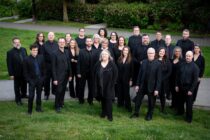
Vancouver Cantata Singers
The Vancouver Cantata Singers (VCS) is one of Canada’s preeminent, award-winning choral ensembles. Known for its exceptional artistry, technical virtuosity and exquisite tonal blend, the choir maintains the highest standards of performance in repertoire encompassing 500 years. VCS have been awarded the Canada Council’s top prize in choral singing, the Healey Willan Grand Prize, more than any other choir in the country. Led by Paula Kremer since 2013, VCS also commissions new works from critically acclaimed composers which have led to extremely successful and innovative collaborations with regional and international artists and ensembles.
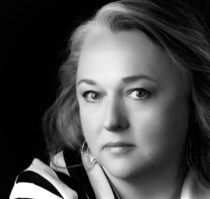
Paula Kremer, Artistic Director of the Vancouver Cantata Singers
Born in Vancouver and educated at the University of British Columbia and the Vancouver Academy of Music, Paula Kremer has studied choral conducting at Eton College, Westminster Choir College, the Eastman School of Music and the University of Michigan. An accomplished vocalist and pianist, Paula studied voice with Phyllis Mailing, Bruce Pullan, Marisa Gaetanne and Laura Pudwell and piano with Margot Ehling. As permanent faculty member of the School of Music at Vancouver Community College, Paula teaches choral techniques, voice and solfege. She was previously the Director of Vancouver Bach Choir ensembles for young adults, the Vancouver Bach Youth Choir and Sarabande Chamber Choir. Paula joined the alto section of our choir in 1994 and has been the Artistic Director of the Vancouver Cantata Singers since 2013.