Chan Shun Concert Hall at the Chan Centre for the Performing Arts | Map
The Tallis Scholars; Peter Phillips, Music Director
Designed by Peter Phillips to commemorate the centenary of the end of the First World War in 1918, a complete Mass provides the framework, put together from war-like sources. These come either from the tradition of the Armed Man (L’homme armé), or are based on a chanson actually describing a battle (La batalla). The peaceful element of the programme is provided by two movements from Victoria’s 6-voice Requiem Mass and partly by some deeply moving funeral motets: Tavener’s work was sung at the funeral of Princess Diana; Mouton’s at the funeral of Anne of Brittany; and Lobo’s at the funeral of Philip II of Spain. In Arvo Pärt’s beautiful The Woman with the Alabaster Box, Christ refers to his own burial.
Soprano: Amy Haworth, Emma Walshe, Emily Atkinson, Charlotte Ashley
Alto: Caroline Trevor, Alex Chance
Tenor: Steven Harrold, Simon Wall
Bass: Tim Scott Whiteley, Rob Macdonald
Supported by the Nemetz Foundation

Click here for information about parking around / transiting to Christ Church Cathedral
Programme
War and Peace: A program commemorating all those who lost their lives in the First World War 1914 – 1918.
Monody
L’Homme Armé
Josquin
Kyrie from the Missa L’Homme Armé
Guerrero
Gloria from the Missa Batalla
Pärt
The Woman with the Alabaster Box
Mouton
Quis dabit oculis
Lobo
Versa est
Guerrero
Credo from the Missa Batalla
Victoria
Requiem aeternam (from the Missa pro Defunctis)
Guerrero
Sanctus from the Missa L’Homme Armé
Tavener
Song for Athene
Palestrina
Agnus dei from the Missa Papae Marcelli
Victoria
Libera me (from the Missa pro Defunctis)
Programme Notes
The armed man is to be feared.
In the Europe of the fifteenth century, when the anonymous French song L’homme armé first became popular, war was an omnipresent threat. Many watched aghast as the old order seemed to crumble before their eyes. In 1453, the Ottoman Empire had sacked Constantinople, putting an end to the thousand-year old Byzantine empire. Later that same year, the Hundred Years War between England and France culminated in a bloody battle at Castillon. The song obviously resonated with a people preoccupied with war: the armed man was indeed to be feared.
Composers of the early Renaissance, of whom Josquin des Prez was the most renowned, frequently turned to secular songs as models for sacred compositions. Tapping into contemporary popular songs allowed them not only to pepper their music with familiar motifs, but to allude to the content of those songs, creating multiple layers of meaning. Josquin composed two masses on the L’homme armé theme. The later of the two, in the sixth mode or sexti toni, is a polyphonic tour de force, incorporating several complex canonic and imitative techniques.
Francisco Guerrero, born some years after Josquin’s death, also based mass settings on existing works. His Missa de la batalla ecoutez derives material from a song by Janequin, an extended piece which depicts the sounds of battle in an unusually dramatic way. Guerrero’s mass tempers the exuberance of his source, using passages from the beginning of the song as his main material – though the rapid declamation of the original can be detected in the ‘Qui tollis’ section of the Gloria.
Though written many centuries later, the work of contemporary Estonian composer Arvo Pärt owes much to the Renaissance manner of musical expression. A number of his works set passages from the Gospels, in a narrative manner that eschews overt text expression in favour of lending the words a sort of gilded clarity. The Woman with the Alabaster Box is an almost trance-like recitation, beautiful in its restraint, condensing the texture for Jesus’ words before expanding it again for the climax.
During the Renaissance, musicians often survived by deftly navigating the courts of the noble and wealthy and securing their favour. In return, there was an expectation that this beneficence be recognized in the output of the artists in their employ. Funeral motets were one opportunity for composers to display their gratitude (and help ensure their continued favour with the next generation). The first is a work by Jean Mouton, written to mark the passing of his patron Queen Anne of Brittany, the wife of Louis XII. Quis dabit oculis is appropriately sombre in character, though not without moments of powerful rhetoric, as when the name of Anna causes the voices to pause, as if from deep sadness.
In a similar vein, Alonso Lobo’s beautiful motet Versa est in luctum was written for the funeral of the Spanish King Philip II in 1602. The expressive imagery – ‘my heart is tuned to mourning’ – finds a parallel in Lobo’s musical language, in which the descending lines of the six voices evoke inconsolable grief.
The first half ends with the Credo from Guerrero’s mass. It radiates hope in salvation through the resurrection, a character most evident in the awed full texture of ‘Et incarnatus est’ – the mystery of the incarnation, words whose utterance would have been accompanied by a genuflection.
In 1603, the Dowager Empress Maria, sister of Philip II, died. It was the duty of her chaplain and choirmaster, Victoria, to provide music for her funeral rites. In doing so, he was writing for the twelve singing priests and four boys who comprised the singers of the Royal Convent, a relatively lavish set-up which enabled polyphony in many parts. Accordingly, the Missa pro Defunctis, the Mass of the Dead or simply ‘Requiem’, is in six parts, with divided trebles and tenors. After the intonation Requiem aeternam, given in the treble part, the polyphony unfolds slowly and majestically around the ancient plainchant melody. The plainchant acts as an anchor, a throughline which gives the piece as a whole an awesome solidity.
It is followed by a movement from one of Guerrero’s takes on the L’homme armé mass. Unusually, it is scored for four higher voices, the tessitura giving it an intriguingly weightless feel, and one which suits the character of the Sanctus, which evokes the song of the angels. In the livelier Hosanna, the triple time meter of the original tune is used, with the alto and tenor parts singing it in imitative canon.
John Tavener’s Song for Athene, written after the unexpected death of a family friend, Athene Hariades, became embedded in the public consciousness after it was performed at the funeral of Princess Diana in 1997. The sincerity and impact of the words, fashioned from a fusion of Orthodox ritual and Shakespeare, together with its radiantly optimistic, alleluiatic conclusion, struck an instant chord with a grieving public.
The Council of Trent, a gathering of the Catholic world which took place in the middle of the sixteenth century, was convened to discuss responses to the movement of Protestant reform sweeping across the continent. Many delegates felt that secular music was an inappropriate model, and that words had become unintelligible. Legend has it that the Missa Papae Marcelli was written to prove that polyphony could fulfil these requirements. The Agnus Dei is classic Palestrina, a seamless and smooth polyphony.
Finally, we return to Victoria’s music for the Requiem Mass, and its closing cry of Libera me. The ancient words – angry, fearful, finally hopeful – remain deeply relevant in a world which has yet to eradicate the threat of armed conflict.
© James M. Potter, 2018
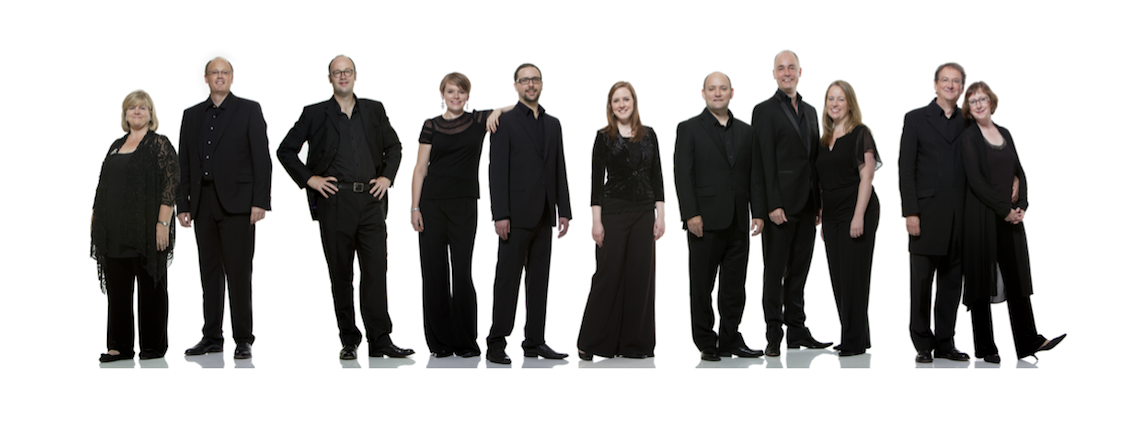
The Tallis Scholars
Founded in 1973 by their director, Peter Phillips, the Tallis Scholars have established themselves as the leading exponents of Renaissance sacred music throughout the world. The ensemble is renowned for its purity and clarity of sound in its presentation of the Renaissance repertoire. The Tallis Scholars give around 80 concerts each year. In 2013 they celebrated their 40th anniversary with a World Tour, and now look ahead to their 50th anniversary in 2023.
Upcoming highlights include performances in Australia, New York and Boston, Amsterdam, Zurich, Paris, tours of Italy, a number of appearances in London as well as their usual touring schedule around the USA, Europe and the UK. In July 2022, to mark Josquin des Prez’ 500th anniversary celebrations The Tallis Scholars sang all eighteen of the composer’s masses over the course of 4 days at the Boulez Saal in Berlin.Recordings by The Tallis Scholars have attracted many awards throughout the world. The latest recording of Josquin masses including Missa Hercules Dux Ferrarie was released in November 2020 and was winner of the BBC Music Magazine’s much coveted ‘Recording of the Year Award’ in 2021 and the ‘2021 Gramophone Early Music Award.’ This disc was the last of nine albums in The Tallis Scholars’ project to record and release all Josquin’s masses before the 500th anniversary of the composer’s death.
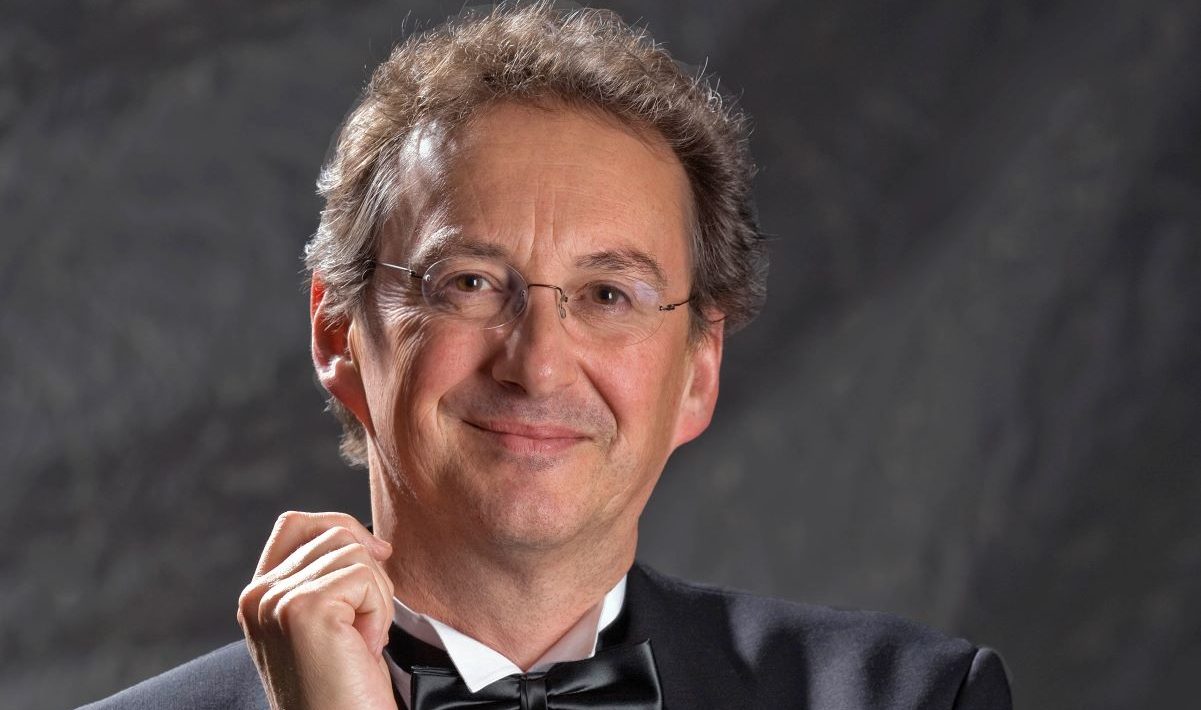
Peter Phillips, Music Director
‘‘I got the polyphony bug when an undergraduate at Oxford in 1973. An ideal choral sound got fixed in my head at that time, and I’ve spent all the years since then trying to recapture it. Hence The Tallis Scholars. I haven’t done much else of creative importance – no novels or films – just a lot of concerts and recordings, and endless travelling. This in turn has piqued an interest in exploring the cuisines of the world, and even some of the languages, though rarely the right ones. A thorough grasp of Latin would have been good; Arabic has proved of limited value as a tool for promoting Christian sacred music. Other daft things I’ve done include: starting a choral foundation in Oxford’s oldest and most beautiful college chapel; writing a music column in the London Spectator for more than 33 years, planning a choir trip to the Antarctic so that the penguins may get to hear some decent music; and visiting a restaurant near my house so often that I now have my own table there. The best thing I’ve done is marry Caroline Trevor and help to bring up three children who, to my lasting relief and delight, have grown into very civilised people.’’
“Speaking of birds, it was also wonderful to glimpse Peter Phillips’s conducting: hands opening as if setting free a dove, or closing to punctuate with dotting-the-i’s exactitude. I found myself wishing I could get a choir’s-eye view to witness Phillips’ complete – lifelong – inhabiting of this music.” The Observer, September 2015