Christ Church Cathedral | Map
Ensemble Fuoco E Cenere; Julie Fioretti; Philippe Cantor; Denis Leroy; Patricia Lavail; Mike Fentross; Jay Bernfeld; Véronique Samakh
A collaboration with Alliance Française
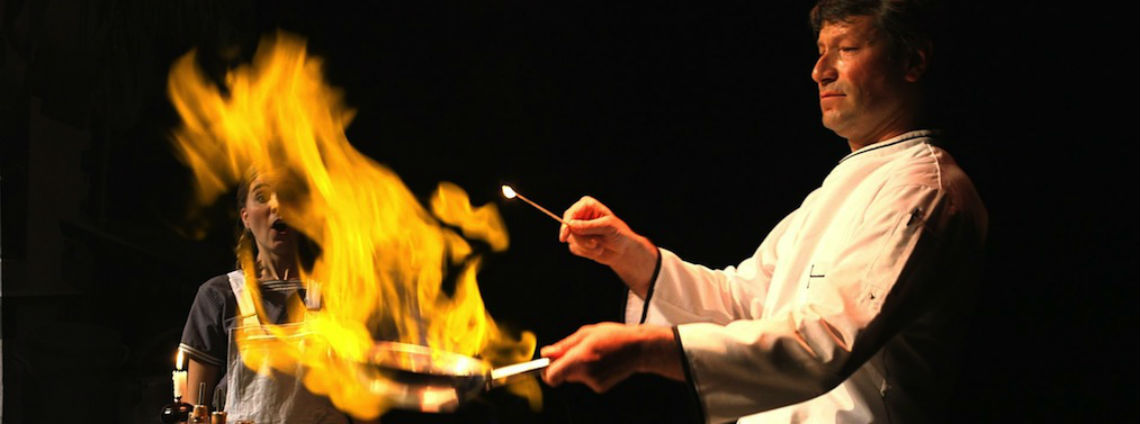
Toque of the Town is a theatrical celebration and tantalizing tribute to the history of French gastronomy. Boasting an on-stage chef, two singers, an instrumental ensemble, and a wonderfully convivial tasting menu at the end of the performance served up by the performers, this is a unique event to suit all lovers of food, wine, theatre and music.
Cast
Julie Fioretti, Margoton
Philippe Cantor, Maître d’Hôtel
Denis Leroy, Chef Cuisinier
Patricia Lavail, recorder
Mike Fentross, theorbo
Jay Bernfeld, viola de gamba & direction
Staged by Véronique Samakh
Based on an original recipe by Jay Bernfeld
Scenography Agnès Marin
Costumes Aurélie Chamouard
Lighting Olivier Oudiou
Stage manager Jennifer Montesantos and François Luberne
Presentation:
Take one Party Prince and one golden fingered Chef.
Shake them up with the delightful Margoton, fresh off the farm.
Sprinkle them all with the sweet sounds of recorder, viol and theorbo,
And a smattering of breathtaking baroque music from France….
Voilà, the delicious recipe for Complètement Toqué!
Recently ranked as a world heritage by UNESCO, France’s legendary gastronomic savoir-faire was in large part dreamed up by the culinary wizards who worked their magic at the court of Louis XIV. Remembered for the sauces have inspired today’s Haute Cuisine, their reputations were built on richly appointed tables, as well as dazzling Musical and Theatrical entertainments that spiced up their memorable festive meals. Fuoco E Cenere has concocted a highly original musical entertainment honoring these purveyors of “taste” and shares the stage with Chef Denis Leroy.
Synopsis:
The Maître d’Hôtel and Chef are under great pressure to pull off another of their celebrated feasts. Margoton the farm girl, and symbol of France’s great natural bounty, is nowhere to be seen. With her are the products which will be so artfully employed by the Chef under the watchful gaze of the Maître d’Hôtel. The tardy Margoton is forced to stay and lend a hand. Amidst all these splendid recipes the lovelorn Margoton has lost her appetite, but is quickly enticed by a Chocolate Cream recipe whipped up by our two culinary magicians. Inspired by her imaginative friends and their heady creations, Margoton is herself transformed: a baroque My Fair Lady!
To recreate the excitement of preparing one of these special events where music, dance, theatre and fabulously creative food left lasting impressions on the lucky visitors, we have chosen from the many volumes of collected songs published by the Ballard family, instrumental works, airs and ritornellos by Lully, Charpentier and the less well known Pascal Colasse as well as the stunning cantata Zéphire et Flore by Louis Nicolas Clérambault. Descriptions of the banquets come from several of the cookbooks mentioned, and the dance sequence is adapted from the Bourgeois Gentilhomme by the great Molière.
”Dishing up platters of well simmered baroque music – artfully slicing the ingredients into thin strips of staccato – and the whole served all with talent, humour and joie de vivre. What marvelous idea…
Straight to the heart, bravo!”
– Jacques Duffourg, Appogiature (May 2013)
Supported by Mark Vessey and Maya Yazigi

Click here for information about parking around / transiting to Christ Church Cathedral
Programme
Gastronomic and musical program
Carrot cream with coconut milk
Chicken liver mousse with Port-soaked raisins
Apple chutney
Accompanied by choice morsels…
Marc-Antoine Charpentier, Marin Marais, Michel de La Barre, Jean-Philippe Rameau, Jean-Baptiste Lully, Louis Nicolas Clérambault …
Duration: approx. 1h without intermission
Concert followed by a tasting in the company of the artists
Programme Notes:
Toque of the Town tips it hat to French Cuisine, recently elevated to the rank of World Heritage by UNESCO. This honor wakened our interest to examine the origins of modern French cooking, situated at the very outset of the baroque era, and its special relation to the other arts… and specifically to the world of music.
Ironically it was the marriage of that cultivated Florentine Marie de Medicis with Henri II that triggered a new interest in the culinary arts in France. The new queen brought with her Italian musicians, actors and above all talented chefs who introduced new techniques and products, not the least of which the divine truffle! She also introduced the idea of sumptuous banquets, and the novel idea of food as theatre, which sparked a gastronomic revolution. This explosion in interest produced a series of first cookbooks, starting with “La Cuisine Françoise” by Pierre François de la Varenne. Many sauces and techniques still a part of modern French cooking appear in print for the first time. Included in these pages is the first recipe for a napoleon, La Varenne calling his creation a millefeuille, thousand leaves – Napoléon himself is not born for another century. Other important cookbooks, aimed not just at royalty but at a growing middle class, rapidly followed. One such volume, which inspired this evening’s entertainment is “The Festin Joyeux” or the Happy Banquet (J. Lebas – 1738), where all the recipes are very remarkably sung to the tunes of the greatest hits of the day. In tonight’s presentation, you will hear a recipe for a chocolate cream sung to the tune of an aria from Lully’s Atys.
When the young Louis XIV ascends to the throne, France enters a golden age of cuisine. Louis becomes quickly known for the splendid lengthy celebrations where all the arts conspire to produce divertissements of remarkable sophistication. During the very first of the Fêtes at Versailles, Molière collaborates with Lully for the first time. Louis was a force of nature, and justly celebrated for his immense appetite. Descriptions of banquet menus of the time inspire awe, with upwards of forty dishes placed before the guests. In a new innovation, instead of all being served at once, certain dishes are allied and served in a first, then replaced by a second service. A dozen dishes in each service and five such services were not uncommon. And the fork makes its first appearance during Louis’s reign!
To give an idea of the theatrical approach to the art of presentation, here is one of the stranger recipes of the era:
How to make moo, as if alive, a calf’s head cooked and served at table
You will produce a great effect with the following simple and innocent stratagem.
Take a live frog and place it inside the head, under the calf’s tongue, which you will then let cover it, taking special care to place the frog in place just prior to serving the dish! The heat of the tongue never fails to make the frog croak, and coming from inside and therefore slightly muted perfectly imitates the moo of the cow!
P.S. Don’t try this at home!
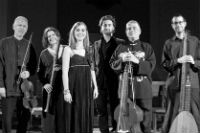
Ensemble Fuoco E Cenere
Now in its fifteenth year, Fuoco E Cenere has established itself as an arena for sensational musical adventures. The ensemble has ever since retained an often remarked daring in its choice of repertoire. Eager to preserve the unique freshness of the concert-going experience Fuoco E Cenere has devised quite a number of original entertainments, including recent intriguing mixes of music and puppetry, or music and haute cuisine.
Story telling through song and translating emotions and dreams into music are the missions we have readily accepted. In our musical laboratory we eagerly juxtapose, metamorphose outstanding works, permitting the listener to view these gems of a bygone era in a new light, frequently imagining entertainments that delight both young and old, the novice and the connoisseur.
Spurred on by director Jay Bernfeld’s love of song, Fuoco E Cenere has been pleased to collaborate with many of today’s finest voices as well as the stars of tomorrow. The ensemble is proud to have presented several forgotten masterpieces to an appreciative public. Fuoco E Cenere is 10 recording covering 1000 years of music.
Its first recording, Fantasy in Blue – Purcell meets Gershwin, was hailed by Le Monde as a « veritable knock-out ». The ensemble’s recording of Marco da Gagliano’s little known masterpiece La Dafne was awarded the prestigious Orphée d’Or by the Académie du Disque Lyrique, and unanimously lauded by international critics. Our most recent recording, Judith & Esther, divine destinies, recounts the universal stories of two biblical super-women, who with force and tenderness vanquished oppression and injustice.

Julie Fioretti
Julie Fioretti began her musical studies at the age of six. In addition to her vocal training in Paris under Armande Olivier, she joined the Opera Fuoco Atelier Lyrique, which led her to recreate the role of Silvera in J.C. Bach’s long lost opera Zanaida, for the Leipzig Bachfest. This production was also performed at the Cité de la Musique in Paris, at the Manoel Historic Theatre in Valletta in Malta and at the Vienna Konzerthaus, where “the enchanting Julie Fioretti, combining a clear and graceful timbre with flawless technique” was praised by the critics.
She was recently heard as Diana in Gluck’s Iphigenie in Aulide at the Versaille Royal Opera House, and played the role of Yum-Yum in one of the rare French revivals of Gilbert & Sullivan’s Mikado. A regular accomplice of the Fuoco E Cenere ensemble, she took part in the creation of Divagations Vénitiennes in 2012 and of Judith and Esther in 2013 for the Miami Bach Society.
Year 2013 culminated with Julie winning second prize in the prestigious Concorso Renata Tebaldi in San Marino. 2014 has also begun on high note, with the release of her first recording, Judith & Esther, with the Fuoco E Cenere Ensemble.

Philippe Cantor
Philippe Cantor began his vocal career as a soloist with the french ensemble Les Arts Florissants. Remarked and encouraged by Jean-Claude Malgoire, he soon started appearing with La Grande Ecurie et la Chambre du Roy. He has since then collaborated with such illustrious names as Sigiswald Kuijken, René Jacobs, Daniel Cuiller, Christophe Coin, Jean-Christophe Frisch, Gilbert Bezzina…
He divides his time between recitals with his faithful accompanist Sophie Rives, chamber music and the stage. His recent roles include Don Alfonso (Cosi fan Tutte), Orphée (Gluck), and Golaud (Pelléas et Mélisande). He is a frequent guest at Opera de Lausanne and at Lausanne’s Theatre du Loup assumed the title role in Sondheim’s Sweeney Todd.
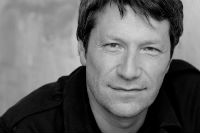
Denis Leroy
Inspired by the pleasure of welcoming guests into his own kitchen, Denis Leroy attended the École Hôtelière du Touquet from where he then sallied forth, serving in various luxury establishments culminating in a stint at the prestigious Hôtel St James et Albany in Paris.
While still on the job Denis came down with a sever case of stage fever and following his instinct, pushed open the door of Janine Berdin’s acting school. Now an actor, the roles have never ceased to flow. He has toured all over France and Switzerland in a gaiety of plays. He is also active in television and has appeared in ad campaigns and commercials.
For the past ten years he has initiated a group of High School students into the theatre arts and continues to mix cuisine and theatre amidst his circle of appreciative friends and family.

Patricia Lavail
Recorder player Patricia Lavail is renowned as both performer and pedagogue. Quite impressively she began her teaching career in her late teens. As head of the early music department of the Conservatory of Saint Cloud, near Paris, she formed quite a number of flutists of the current generation.
Daughter of Eliane Lavail, one of France’s first woman conductors, she was lulled in her cradle with renaissance polyphony. That, coupled with her own passion for French chanson throughout the ages, including the post Jacques Brel generation, have helped her create a uniquely vocal approach to her instrument.
At the Early Music Competition of Bruges, she was awarded a prize in the Instrumental Solo category, becoming the first French musician to be so recognized. A founding member of Fuoco E Cenere, Patricia Lavail has appeared in every season of the ensemble since its creation
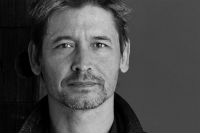
Mike Fentross
Mike Fentross has more than won his spurs as an early music specialist. He has been active since 1988 as a lutenist and since 1999 as a musical director. He has appeared as a lutenist with musicians including Ton Koopman, William Christie, Yo Yo Ma, Skip Sempé and Gerard Lesne, and can be heard on more than 60 CD recordings.
In 1999 Mike Fentross made his debut as a conductor in a production of the New Opera Academy with the opera La Dafne by Marco da Gagliano. In August 2006, in the presence of Queen Beatrix of The Netherlands, he conducted the Festival Oude Muziek Utrecht’s jubilee production of the modern-day revival of the opera l’Ipermestra by Francesco Cavalli.
Mike Fentross is the founder and artistic director of La Sfera Armoniosa Ensemble and Orchestra and professor of lute and ensemble playing at the Royal Conservatoire in The Hague.

Jay Bernfeld
Jay Bernfeld considers the rich cultural life of his native New York an integral musical apprenticeship. Following his studies at the Schola Cantorum Basiliensis, Jay Bernfeld appeared with Hesperion XX in concerts and recordings.
Newly installed in Paris, he participated in several of the exciting early recordings of William Christie’s Arts Florissants.
He toured and recorded extensively with the Capriccio Stravagante and directed with Skip Sempé a series of ‘first operas’ for the Ambronay Festival, the Athens Concert Hall and Versailles Opera Royal.
Jay Bernfeld has been hailed for his work on the Basso Continuo, that key element in the art of Baroque accompaniment. He is passionately interested in the rediscovery and development of 17th century Theater and opera as witnesses the repertoire of Fuoco E Cenere, the ensemble which he directs.

Véronique Samakh
After Classical studies, Véronique Samakh enrolled in Paris’ Conservatoire National Supérieur d’art dramatique. Her debut was in Double Inconstance by Marivaux.
Along side a prospering acting career, she is passionately interested in bring theatre to children, teens, the handicapped, unemployed, and youth in difficulty. She has enjoyed great success and much satisfaction in mounting productions with these unlikely groups.
Recent productions include La Maison qui Chante, a young audience opera by Betsy Jolas, an evening of haiku and tales of travel from Japan titled La Ronde des Saisons, and following her interest in Japanese culture she has directed a rare french production of Gilbert & Sullivan’s Mikado at the Scène Nationale de Saint-Quentin-en-Yvelines.