• My Account
  • Cart
  • About
    • Who is Early Music Vancouver
    • What is Early Music?
    • OUR INSTRUMENT COLLECTION
    • Employment Opportunities
    • Annual General Meeting 2025
    • 2024/25 Annual Report
  • Pacific Baroque Orchestra
    • About
    • August 7 | Vivaldi’s The Four Seasons
    • December 20 | Festive Cantatas
    • October 17 | A Little Night Music with Mozart 
    • March 25, 2027 | Handel’s La Resurrezione
  • EVENTS
    • Summer Festival 2026: The Power of Music
    • EMV’s 2026-2027 Main Season
    • Digital Concert Hall
    • Free Events
    • Past Events
  • Learn
    • PROGRAMMES
    • Artist Interviews
    • Instrument Videos
  • Support Us
    • Donate Now
    • Corporate Opportunities
    • Volunteer
    • Host an EMV Musician
  • Ticketing Info
    • BOX OFFICE
    • Gift Vouchers
    • Venues
  • Press Centre
    • Media Releases
    • EMV PRESS KIT
    • EMV in the News
Early Music Vancouver
  • My Account
  • Cart
  • Donate
  • Buy Tickets
  • Gift Vouchers
  • Get our newsletter
Toggle Menu
  • About
    • Who is Early Music Vancouver
    • What is Early Music?
    • OUR INSTRUMENT COLLECTION
    • Employment Opportunities
    • Annual General Meeting 2025
    • 2024/25 Annual Report
  • Pacific Baroque Orchestra
    • About
    • August 7 | Vivaldi’s The Four Seasons
    • December 20 | Festive Cantatas
    • October 17 | A Little Night Music with Mozart 
    • March 25, 2027 | Handel’s La Resurrezione
  • EVENTS
    • Summer Festival 2026: The Power of Music
    • EMV’s 2026-2027 Main Season
    • Digital Concert Hall
    • Free Events
    • Past Events
  • Learn
    • PROGRAMMES
    • Artist Interviews
    • Instrument Videos
  • Support Us
    • Donate Now
    • Corporate Opportunities
    • Volunteer
    • Host an EMV Musician
  • Ticketing Info
    • BOX OFFICE
    • Gift Vouchers
    • Venues
  • Press Centre
    • Media Releases
    • EMV PRESS KIT
    • EMV in the News
Home  >  Early Music Vancouver Past Events  >  The Small Rain feat. Isaiah Bell, tenor & Alexander Weimann, keyboard | EMV DCH

The Small Rain feat. Isaiah Bell, tenor & Alexander Weimann, keyboard | EMV DCH

Wednesday May 5, 2021 | 7:30PM

Isaiah Bell, tenor; Alexander Weimann | Sponsored by Bruce Munro Wright, O.B.C., keyboard


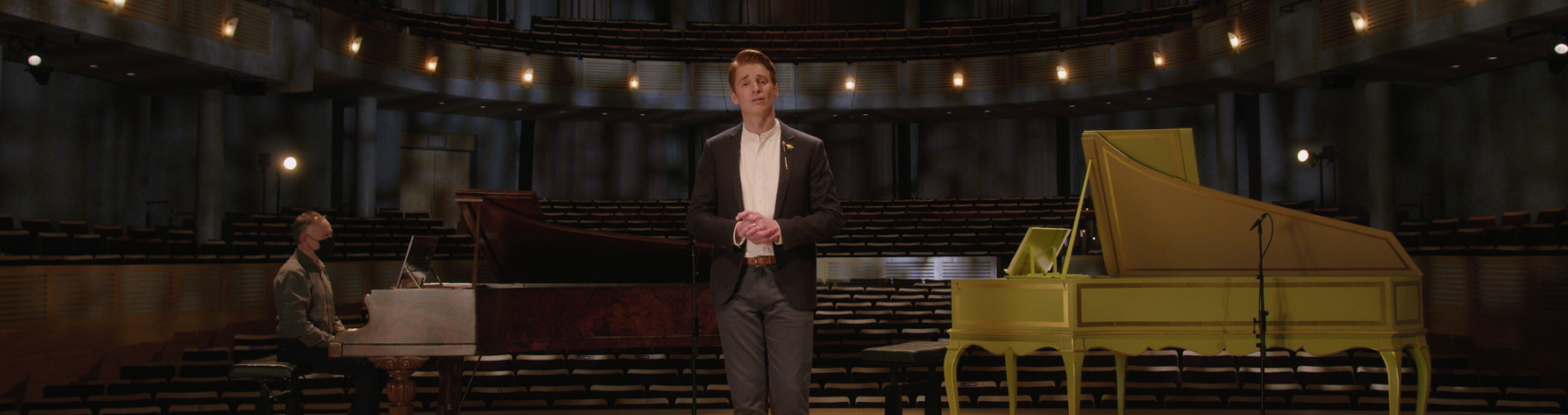
Join Isaiah Bell, one of Canada’s most promising young tenors, on a musical exploration of the self. This program transcends eras with music that includes traditional folk songs, works by Handel, Britten, and Schubert, all interlaced with Isaiah’s own philosophical poetry. This thoughtfully crafted concert examines our relationship with nature, our own personhood, and the existential questions in between. Alexander Weimann accompanies on EMV’s 1874 Broadwood piano and double-manual harpsichord.

“The star of the evening was surely tenor Bell. Moments of stillness, smooth-as-silk coloratura, careful attention to every note, even a fun treading of the line between Baroque-style straight-tone and full-throated operatic vibrato – Bell had the chance to offer it all, and he did so with poise.” – The Globe and Mail

This concert is generously sponsored by Mark De Silva


How to watch:

Online: Watch the concert online by clicking here
This concert is available to watch for free thanks to the generosity of donors. To support our programming by making a tax-deductible donation, click here.

Concert will remain available for one year from premiere date


Programme

Isaiah Bell
O Western Wind

Henry Purcell
The Fairy Queen
“When a cruel long winter”

Franz Schubert
Winterreise
“Wasserflut”

Vincenzo Bellini
Vaga luna

Trad.
“Ah toi, belle hirondelle” (a capella)

Georg Frideric Handel
Almira
“Liebliche Wälder”

Constant Lambert
A Summer Day

Alec Roth
Songs in Times of War
“Thoughts while travelling at night”

Handel
La resurrezione
“Ecco il sol”

Francesco Cavalli
La Calisto
“Piante ombrose”

Benjamin Britten/Trad.
The Last Rose of Summer

Trad.
La belle rose (a capella)

Joseph Haydn
Das Leben ist ein Traum

Healy Willan/Trad.
La plainte du coureur-des-bois


Texts & Translations

To view/download texts & translations for this concert, click here.


Programme Notes

Are we part of nature or are we separate from it? What happens when we see ourselves as individuals alone against the wild world? What happens when we don’t?

There are two of me. There’s the self who identifies with my name and personal history, who is deeply invested in the story of my flaws, longings, ambitions, success, setbacks. Then there’s the self who is more expansive, more generous, more permeable; the deeper self, without such a crisp outline, who belongs to something larger. 

When I am identified with just the former, I usually feel myself stuck and struggling… alone on a journey, doing battle, reaching, clinging, defending. When I’m remembering the latter, I connect to a deep well of possibility; I cannot be lost if I am part of the greater world.

It seems to me that one of life’s natural cycles is always to be forgetting and remembering, forgetting and remembering: who we are, where we belong, what matters. We are amalgamations of the individual and the universal, fusions of the little self going about daily life and the big self listening for meaning, for connection.

The combined music and words of this concert attempt to point to that; it is a personal collection of notes and ideas, but it also represents a hope to transcend the personal. I often return to this quote from Virginia Woolf’s diary when attempting to draw life’s disparate experiences and influences together into something more:

What sort of diary should I like mine to be? Something so elastic that it could embrace anything, solemn, slight, or beautiful, that comes into my mind. I should like it to resemble some deep old desk, in which one flings a mass of odds and ends, without looking them through. I should like to come back, after a year or two, and find that the collection had sorted itself and refined itself and coalesced, as such deposits so mysteriously do, into a mould, transparent enough to reflect the light of our life.

This recital is rather pointedly unmusicological, in the sense that the music is woven together by feeling alone. I always like to think that juxtaposing repertoire from different eras and styles makes it easier for us to hear each piece with fresh ears. I also love to follow how a certain feeling or idea appears again and again in different clothes. That said, the idea of “early music” is a thread that runs through all of these songs. There is music from Baroque masters (Purcell, Handel, Cavalli), and Classical and early Romantic music that feels connected to that tradition (Haydn, Schubert, Bellini). There is also early music in the form of folk songs, traditional tunes that survive by sticking in the ear, mutating as they pass from hand to hand. Here there are folk songs converted to art songs by modern-era composers (Britten, Healy Willan), as well as a couple of my favourite French Canadian songs sung a capella with my own personal mutations. There is also O Western Wind, the iconic anonymous medieval poem fragment that is, to me, the ultimate (and most pithy) image of a person’s desires positioned against the enormity of nature. I wrote the basic tune for it years ago, but it has kicked around in my head so long that it felt like an inherited folk song by the time I expanded it into this form for a 2020 pandemic project. Finally, there are two modern English art songs, by Constant Lambert and Alec Roth, on texts by the two pillars of ancient Chinese poetry, Li Po and Tu Fu. These heartbreaking miniature masterpieces have been inspiring artists for more than a millenium, and to me they feel as fresh as they feel ancient.

The spoken text that joins these songs may seem somewhat abstract, but I hope it can be heard as impressionistic rather than obtuse. I’ve used the haiku form (occasionally in a loose interpretation) to render the songs’ translations, and the concert’s through-line, with maximum concision.

Isaiah Bell, tenor

Canadian-American tenor Isaiah Bell sings across North America as a soloist in concert and opera. Having distinguished himself early as an interpreter of Handel, Benjamin Britten, and Bach’s Evangelists (Lincoln Center, Edinburgh Festival, Toronto Symphony), he has also found an artistic home in new creations. He was Antinous in the world premiere of Rufus Wainwright and Daniel MacIvor’s Hadrian at the Canadian Opera Company (2018), and brought “immense stage presence” and a “powerful, beautiful instrument” to La Reine-garçon (Bilodeau/Bouchard, 2024) at Opéra de Montréal. Reviewing his queer pandemic-era revamp of Poulenc’s La voix humaine, Opera Canada admired “a finely tuned performance, so perfectly married to his own sensitive and intelligent adaptation.”

Isaiah also composes and writes for the theatre. His chamber-opera/cabaret-theatre solo show The Book of My Shames has garnered overwhelming audience response: “impossibly beautiful” … “broke my heart wide open with the pure honesty, raw vulnerability and humanity of it” … “I honestly thought this was one of the most compelling shows I’ve ever seen.” The piece, a genre-defying, funny, and shockingly candid theatrical fusion co-created with director Sean Guist, has toured Canada in versions for piano, chamber ensemble, and orchestra.

Upcoming engagements for Isaiah include a return to La Reine-garçon (Canadian Opera Company, 2025), Haydn’s Creation with the Vancouver Symphony and the Elora Festival, and the world premiere of Leslie Uyeda’s opera Silence, commissioned to celebrate Opera NUOVA’s 25th season. He also returns to “Banned from the Concert Hall” (an irreverent mashup he co-created for Victoria Baroque and Early Music Vancouver) and “The Traveller,” an interweaving of the music of Robert Schumann with folk songs and original compositions and poetry. Isaiah also appears on the newly released world premiere recording of Mendelssohn’s transcription of the Matthew Passion, with the Bach Choir of Bethlehem.

read more...

Alexander Weimann | Sponsored by Bruce Munro Wright, O.B.C., keyboard

The internationally renowned keyboard artist Alexander Weimann has spent his life enveloped by the therapeutic power and beauty of making music. Alex grew up in Munich. At age three he became fascinated by the intense magic of the church organ. He started piano at six, formal organ lessons at 12 and harpsichord at university (along with theatre theory, medieval Latin and jazz piano.) He is in huge demand as a director, soloist and chamber player, traveling the world with leading North American and European ensembles. He is Artistic Director of the Pacific Baroque Orchestra in Vancouver and teaches at the University of British Columbia where he directs the Baroque Orchestra Mentorship Programme.

Alex has appeared on more than 100 recordings, including the Juno-award-winning album “Prima Donna” with Karina Gauvin and Arion Baroque orchestra. His latest album series “The Art of Improvisation” (Volume 1: A Prayer for Peace; Volume 2: Ad libitum; and Volume 3: Canavian Variations, released on Redshift, 2024) unites his passions for both baroque music and improvisation on organ, harpsichord, and piano.

read more...


Media

1254 W 7TH AVE
VANCOUVER, BC, V6H 1B6

(604) 732-1610
staff@earlymusic.bc.ca

  • About EMV
    • What is Early Music?
    • Staff
    • Partners
    • Board of Directors
    • Venues
  • Education & Community
    • BC Scholarship Programme – 2026/2027
    • OUR INSTRUMENT COLLECTION
  • Press Centre
  • Join Our Mailing List
Facebook URLTwitter URLYoutube URLInstagram URL

Copyright © 2026 EARLY MUSIC VANCOUVER | EMV | PHOTOS BY JESS MACALEESE, MARK MUSHET AND JAN GATES.
CONTACT EMV FOR INDIVIDUAL CREDITS. | site by DFS Digital Fusion Studios web designAND MEDIUM RARE Medium Rare Interactive

Een Romantische Johannes Passion

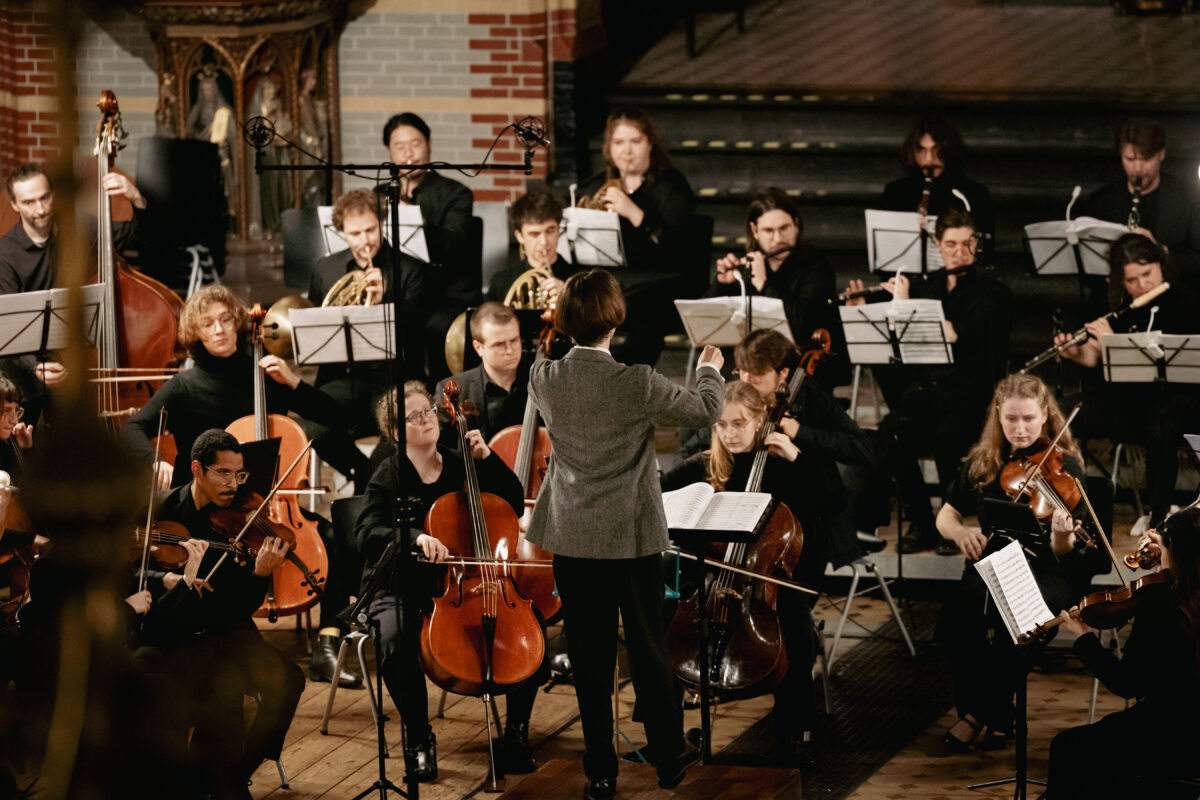
Historical Performance has been steadily looking toward the nineteenth-century as a source of inspiration, and Orchestra Lagrandt wants to lead the charge into Romantic orchestral performance practice. As an orchestra of ambitious musicians in their twenties from 25 different nations, we aspire to represent the voice of the new generation in Historical Performance.

Een Romantische Johannes Passion is an ongoing project to reimagine the Johannes Passion of J. S. Bach in a late nineteenth century style. The first Passion revivals in the Netherlands took place in Rotterdam in 1870, featuring large symphonic orchestrations, and a radically different musical language than that of the HP and modern classical worlds. In our initial performance with the Tangram Chamber Choir, we pushed the boundaries of what Romantic Bach might have sounded like: exploring changes in orchestration, stoic tempi, rubato, phrasing, nineteenth- century bowing practices, and even portamento. We plan to establish this project as an annual tradition every Easter season, reworking the arrangement each time in the spirit of Romantic spontaneity.


One of the wonderful things about the Historical Performance movement is that we are able to use forgotten practices, this time hailing from the nineteenth century, to present such a beloved and well known-work in a new light.

The world is familiar with stories of clever forgers whose life’s mission is to cunningly reproduce the light and shadows of historical masterworks, from Vermeer’s brushstrokes to Da Vinci’s proportional precision… but what if these crimes of craftsmanship were to extend beyond the visual arts? What if the pieces we know to be by Palestrina, Monteverdi or even Johann Sebastian Bach were in fact stylistic copies, artfully composed by a secret circle of music forgers and passed off as the work of the greats? What if those music forgers are at work as we speak? 

This premise inspires our original program The Music Forgery Workshop. Our early music comedy imagines the lives of such a circle of musical criminals, offering a fresh and lively presentation of historical compositions, not as museum artifacts but as living works in progress. The workshop itself is set up on the stage and its members carry forth the plot in music and words. A narrator in the role of a suspicious inspector lends the performance a theatrical flow. The listener is invited into a satire on high society’s art commerce, while the performers make fun of themselves for having devoted their lives to the niche subject of historical music performance. 

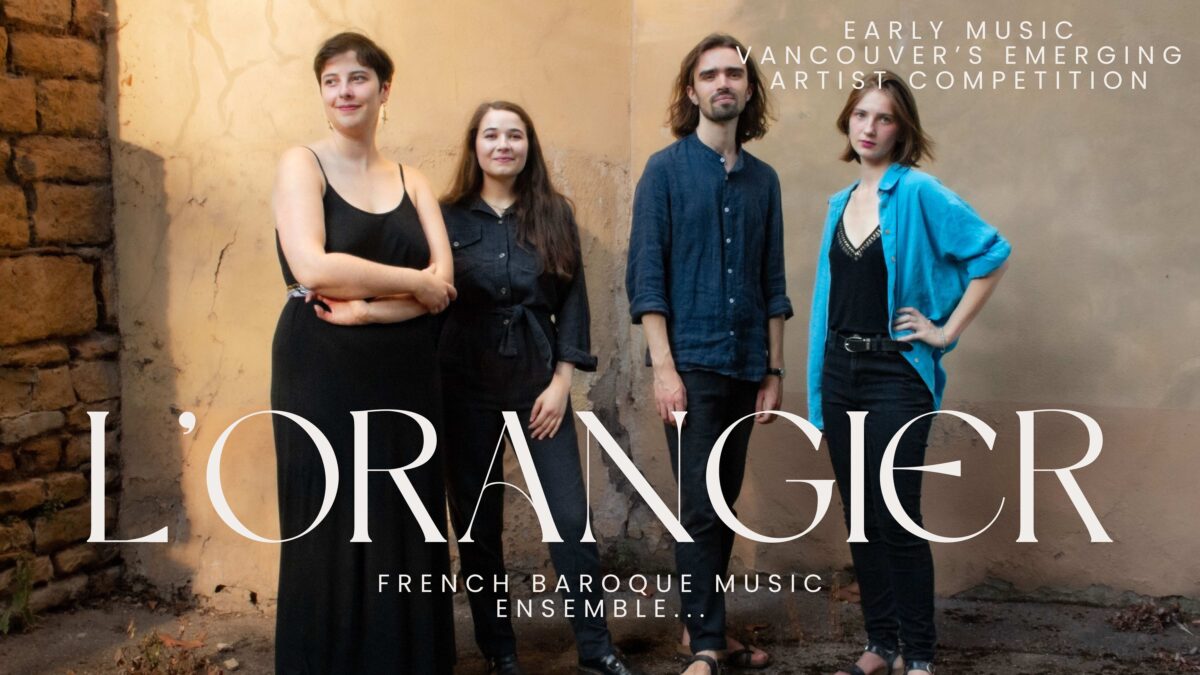
Violinist Elizabeth Sommers combines her skills and experience in traditional music with expertise in the performance and improvisation of medieval and Renaissance repertoires. Multi-instrumentalist Eliot X. Dios (keyboards, bagpipes and flutes) works wholeheartedly to employ storytelling techniques developed through the history of literature and cinema in his early music concerts. Composer Gunnar Haraldsson (violin, guitar) seeks to translate the forms and intentions of early composition for a modern audience. Halldór B. Arnarson (keyboards, voice) has devoted his career to bringing musical craftsmanship from the era of counterpoint to the attention of the public and comedy to the early music scene. Singer and storyteller Ásta S. Arnardóttir brings the storyline to the public with personal immediacy, and through her character work defines the different veins of the show, sometimes hilarious and sometimes serious. 

The story is narrated by the character of the Inspector, acted out by the members of the MFW, and told in rhyming Icelandic verse in one musical pillar of the show, a madrigal composed by our very own 

Halldór in the style of Monteverdi. The show has an entertaining educational dimension. The audience is exposed to a broad sweep of historical and musical information in a condensed form, necessary to understand the musical humour, while dramatic rhythm and scenographic effects prevent overwhelm. We also place particular emphasis on theatrical illusion and synchronisation. One example appears in the opening scene, in which the inspector is seen watching television. On stage, this becomes a complex exercise in coordination: each time the inspector presses a button on the remote control, the musicians instantly switch pieces, creating the impression of rapidly changing television channels. 

This opening scene establishes the tone of the entire show, comical and satirical in its storytelling and diverse in its musical language. It not only introduces the wide range of musical styles that appear throughout the performance, but also functions as the plot’s inciting incident, as the inspector hears a news report about the discovery of a previously unknown concerto by Vivaldi. 

Another important scene takes place when one forger is alone on stage in low light, perusing books on medieval music, while the musicians perform and sing offstage, sounding his audiation as he reads. This intimate moment evokes the sleepless nights spent studying facsimiles and learning historical compositional techniques, by which the forger acquires the inspiration and the expertise necessary to his art, and reveals a hidden side of musical performance: the immense amount of study and preparation that precedes the moment on stage. This setting also creates space for visual and musical comedy, as seen in the trailer video, where a 14th-century melody is played backwards because Halldór is unknowingly reading the facsimile upside-down, only realising the mistake when the music begins to sound absurd. 

Fun and friendship are at the heart of the whole project, though the link between music and crime is an important historical consideration. Classical music was often used as the demonstration of a monarch’s power, music teaching as a cover up for secret affairs, and pieces were published under another’s name for profit. Such examples of “inappropriate practices” carry an exciting and attractive element for the audience which the MFW seeks to exploit. Under this light-hearted surface lies a more serious layer of questions concerning our present-day existence, such as excessive materialism in high society and the threat posed on human craftsmanship and skill by the rise of artificial intelligence. 

Please Note:

The main applicant and creative/intellectual driver of the project must be 30 or under (on May 15th).

The average age of all musicians must not be older than 32, and the maximum age of supporting musicians must be no more than 35 (on May 15th.)