Christ Church Cathedral | Map
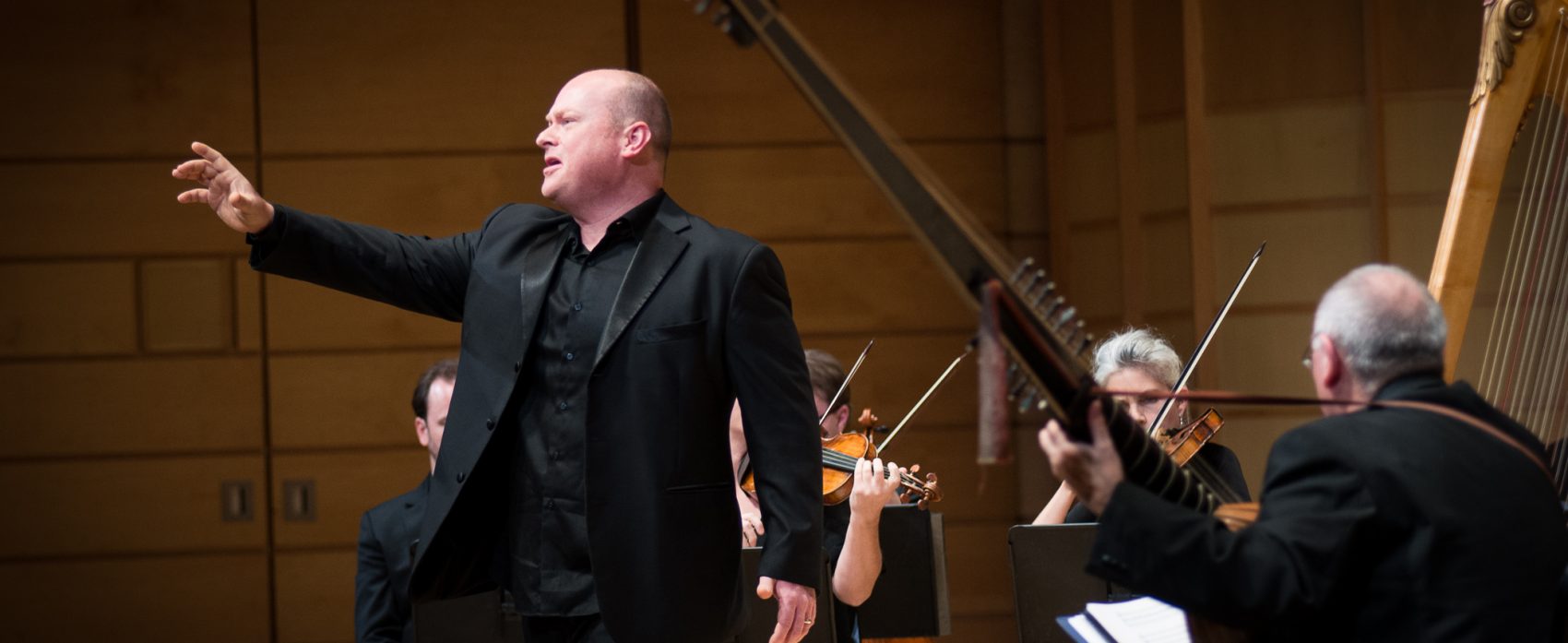
Colin Balzer, tenor; Lucas Harris, 19th-century guitar
A new mania for the guitar swept Europe during the first forty years of the nineteenth century, most especially in Vienna. This very portable and soulful instrument was closely associated with song accompaniment, and was often used in “Schubertiades” where Franz Schubert himself was present (he apparently owned two guitars during his life). No wonder that during Schubert’s lifetime, a handful of his most wonderful lieder were published with guitar accompaniments by prominent players of the day, such as the virtuoso Johann Kaspar Mertz. This intimate recital features these and other lieder sung by Colin Balzer and accompanied by Lucas Harris on a recently-restored 1831 guitar by Gaetano Guadagnini.
This concert is generously supported by David McMurtry
To download/view the programme page, notes, texts and translations, click here.

Click here for information about parking around / transiting to Christ Church Cathedral
Programme
FRANZ SCHUBERT (1797-1828)– Das Wandern (Wilhelm Müller) Op 25 Nr 1 (arr. Franz von Schlechta 1796-1875)
– Die Neugierige (Wilhelm Müller) Op 25 Nr 6 (arr. Franz von Schlechta 1796-1875)
– Die Post (Wilhelm Müller) Op 89 Nr 13 (arr. Johann Kaspar Mertz 1806-1856)
MAURO GIULIANI (1781-1829)
– Ständchen (Christoph August Tiedge) Op 89 Nr 5
– An das Schicksal (Louis von Reissig) Op 89 Nr 6
EMILIA GIULIANI (1813-1850)
-Prelude op 46 no. 6 Allegro
LOUIS SPOHR (1784-1859)
– Beruhigung (anon) Op 72 Nr 4
– Getrennte Liebe (Heinrich Schmidt) Op 37 Nr 5
– Der erste Kuss (Moritz Kartscher) Op 41 Nr 5
FRANZ SCHUBERT (1797-1828)
– Erste Verlust (Johann Wolfgang von Goethe) Op 5 Nr 4 (arr. Franz von Schlechta 1796-1875)
– Nachtstück (Johann Baptist Mayrhofer) Op 36 Nr 2 (arr. Friedrich Pfeifer)
FRANZ SCHUBERT (1797-1828)
Aufenthalt D 957 Nr 5 (transcription by Johann Kaspar Mertz 1806-1856)
CARL MARIA VON WEBER (1786-1826)
– An den Mond (Georg Reinbek) Op 13 Nr 4
– Die Zeit (Jos. Ludwig Stoll) Op 13 Nr 5
– Der arme Minnesänger (Aus dem Lustspiel von August von Kotzebue) Op 25 Nr 2
– Lass mich Schlummern (August von Kotzebue)
FRANZ SCHUBERT (1797-1828)
– Sei mir gegrüßt (Friedrich Rückert) (arr. Napoléon Coste 1805-1883)
– Ständchen (Horch, horch, die Lerch) (from Shakespeare’s “Cymbeline”, German translation by Friedrich Reil) (arr. Napoléon Coste 1805-1883)
Programme Notes
“Very often one hears in a house violin playing on the ground floor, piano on the first floor, flute on the second, singing and guitar on the third…”
Vienna paints a contrasting picture in the period following the Napoleonic Wars. The city’s population was increasing as people abandoned rural life, and while rapid industrialization brought with it smog, dirt, and disease, it also gave rise to a new urban middle class. The conservative and authoritarian government made heavy handed use of both the secret police and censorship to quash open political discussion, and yet art, music, and literature flourished with an unpretentious and carefree style which came to be known as the Biedermeier period. One manifestation of this post war sense of social optimism and cultural vitality was the emergence of casual middle class parlour gatherings featuring songs and dances often accompanied by the guitar.
The popularity of the guitar flourished alongside this surge of cultural expression in Vienna due in part to its portability and relative affordability, as well as changes made to the nature of the instrument itself. Foremost among these changes were the movement from double-strung courses to six single strings, and the adoption of fixed metal frets. This resulted in greater pitch clarity and enabled a wider variety of musical expression, allowing guitarists to expand beyond the role of strummed accompaniment in chamber music to more virtuosic and articulated solo repertoire. In response to the guitar’s popularity, well known composers from across Europe began producing music for it. Among these were the composers Diabelli, Hummel, Rossini, Verdi, Paganini, Boccherini, Berlioz, Louis Spohr and Carl Maria von Weber. During the Biedermeier period Vienna was home to many successful solo guitarists not the least of which was Mauro Giuliani, a celebrated virtuoso, prolific composer, and author of guitar methods whose daughter Emilia would later emerge as a guitar virtuoso and composer in her own right.
While scholars may debate whether or not Schubert played the guitar himself, the fact that he was very familiar with the instrument seems undeniable. Throughout Schubert’s life one finds evidence of exposure to the guitar. The poet-guitarist Theodor Körner was said to have given Schubert lessons. His one-time roommate, the poet Johann Mayrhofer, and the singer Johann Michael Vogl, for whom Schubert wrote many songs, both played guitar. The composer and publisher Anton Diabelli, who published many of Schubert’s early works (some of which were initially published as transcriptions for voice and guitar) was a professional guitarist. The music of Schubert was featured in prominent concerts In Vienna on at least one occasion alongside works composed by Giuliani featuring the guitar. Perhaps most importantly was the role that the guitar played in the previously mentioned musical gatherings hosted by Leopold von Sonnleithner, Johann Umlauff, Franz von Schlechta, and Anna Fröhlich: all of whom were either professional or amateur guitarists themselves (it is reportedly the sister of Anna Fröhlich, Käthi, who first used the term ”Schubertiade”). Here the guitar had a well established roll, and there are several accounts of performances where Schubert’s songs were performed specifically for the composer himself by his friends but sung with guitar accompaniment.
Schubertiades were usually gatherings held in private dwellings where, in addition to music, there was often poetry reading, dancing, and even charades. The patronless Schubert found both financial support and artistic inspiration from this dynamic community of musicians, painters, poets, and fans, and there was considerable cross-pollination among the disciplines. Music at these gatherings was not limited to that of Schubert, and the songs of composers like Spohr and Weber (both of whose music Schubert was also familiar with) as well as Giuliani would have been right at home.
That Schubert wrote any Lieder specifically with guitar accompaniment in mind is unclear. However, the arpeggiated articulation and the use of close chord voicings in many of Schubert’s piano accompaniments evokes the idiomatic style of the period’s emerging guitar repertoire. In addition, the keys of many of Schubert’s songs take advantage of the use of the guitar’s open strings. While not necessarily intentional, these factors allowed many of Schubert’s songs to be transcribed with minimal need for arranging. Adapting music for the guitar was an accepted practice of the time and transcriptions of songs by Haydn, Mozart, and Beethoven were common, as were transcriptions of arias from popular italian operas. This tradition of transcribing Schubert’s songs which began with his guitarist friends and acquaintances Anton Diabelli, Franz von Schlechta, Joseph Wanczura, and Friedrich Pfeifer, was continued after his death by guitar virtuosos such as Napoléon Coste and Johann Kaspar Mertz (Mertz was so inspired by Schubert’s songs that he adapted several of them into solo guitar pieces), and is a tradition which is continued by guitarists to this day.
Colin Balzer
Programme Texts and Translations
To download/view the programme page, notes, texts and translations, click here.
Colin Balzer, tenor
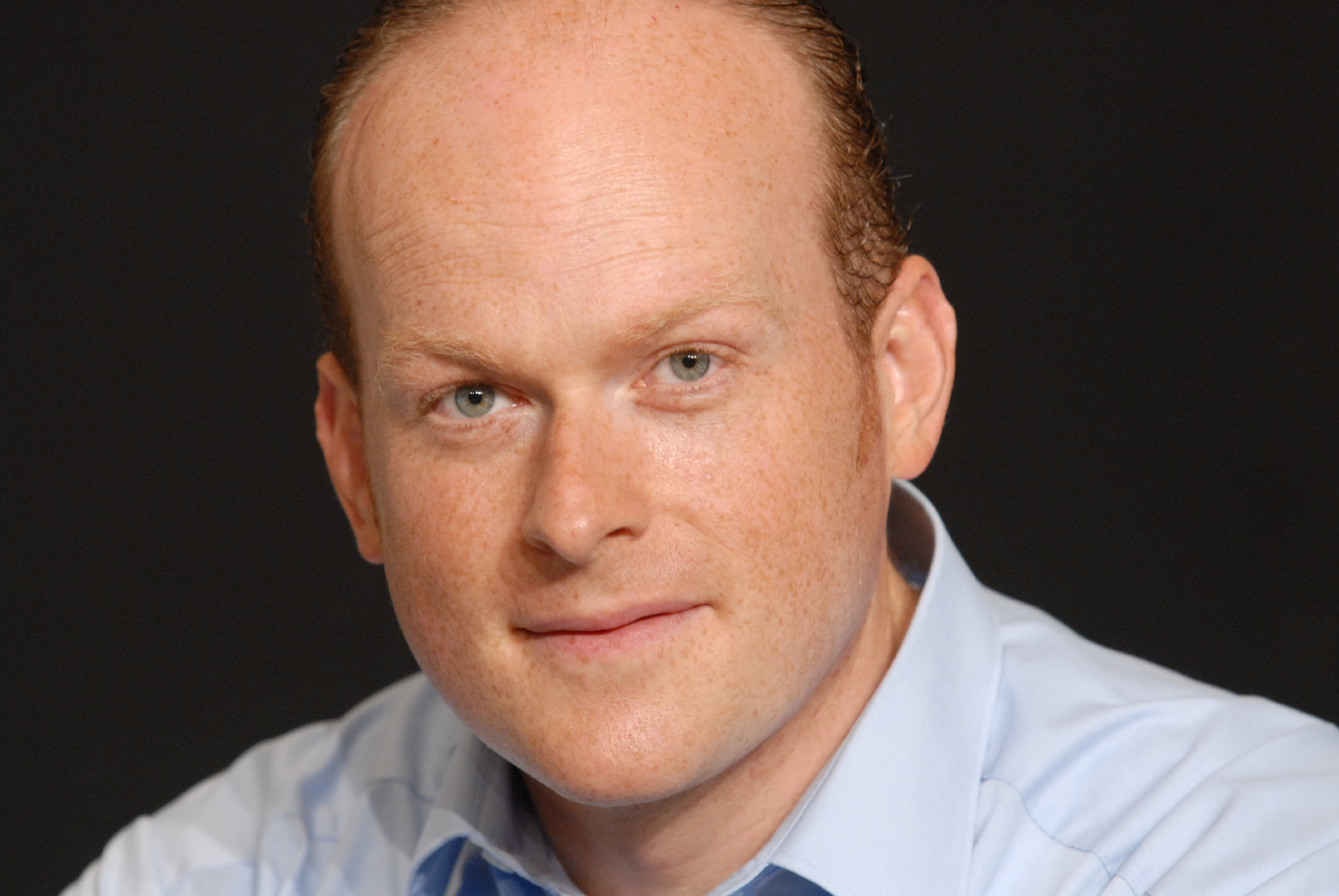
Canadian lyric tenor Colin Balzer’s North American engagements include recitals at New York’s Frick Collection and on the Philadelphia Chamber Music series; concerts with the Portland, New Jersey, Utah, Victoria, Ann Arbor, Québec, Atlanta, and Indianapolis Symphonies; Early Music Vancouver; Tafelmusik and the Toronto Mendelssohn Choir; Les Violons du Roy; the National and Calgary Philharmonics; Ottawa’s National Arts Centre Orchestra; Musica Sacra and the Oratorio Society of New York at New York’s Carnegie Hall. In addition, he is regularly featured in opera productions at the Boston Early Music Festival.
Guest soloist appearances abroad include work with Collegium Vocale Gent led by Philippe Herreweghe, Fundacao OSESP Orchestra and Louis Langrée, Les Musiciens du Louvre under Marc Minkowski, Rotterdam Philharmonic led by Yannick Nézet-Séguin, Akademie für alte Musik under Marcus Creed, and the RIAS Kammerchor, Scottish Chamber Orchestra, Radio Kamer Filharmonie, Estonian Chamber Choir, and Musik Podium Stuttgart. Operatic forays include the role of Don Ottavio in Mozart’s Don Giovanni at the Bolshoi and in Aix-en-Provence and Mozart’s La finta giardiniera in Aix and Luxembourg.
Particularly esteemed as a recitalist, he has been welcomed at London’s Wigmore Hall, the Britten Festival in Aldeburgh, the Vancouver Chamber Music Festival, the Wratislavia Cantans in Poland, and at the Festspielhaus in Baden-Baden. Recordings to date include Wolf’s Italienisches Liederbuch and Eisler and Henze song anthologies. Mr. Balzer holds the rare distinction of earning the Gold Medal at the Robert Schumann Competition in Zwickau with the highest score in 25 years. Born in British Columbia, he received his formal musical training at the University of British Columbia with David Meek and with Edith Wiens at the Hochschule für Musik Nürnberg, Augsburg.
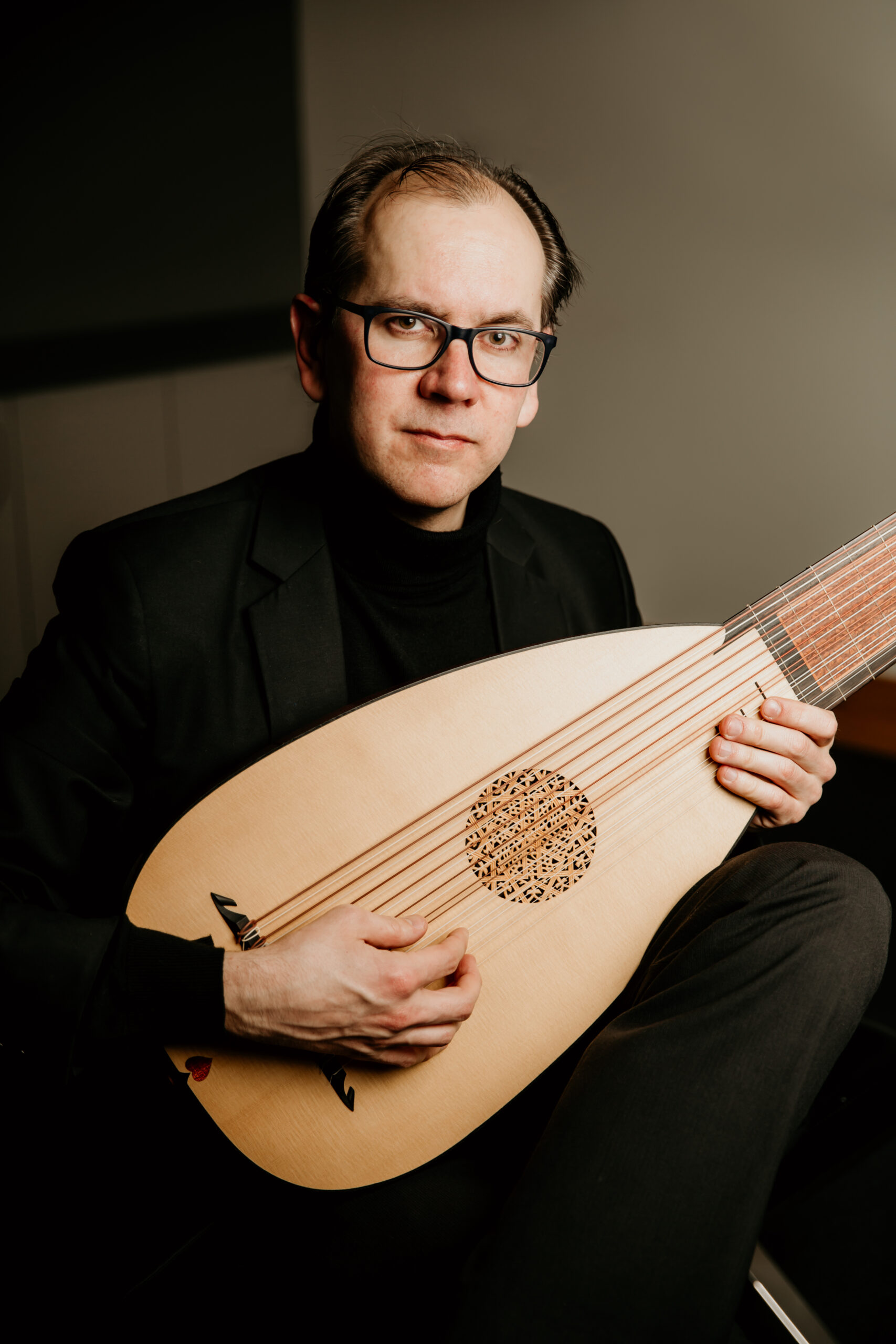
Lucas Harris, 19th-century guitar
Toronto-based Lucas Harris discovered the lute during his undergraduate studies at Pomona College, and went on to study the lute and early music at the Civica scuola di musica di Milano and at the Hochschule für Künste Bremen. He is a founding member of the Toronto Continuo Collective, the Vesuvius Ensemble and the Lute Legends Collective (an association of specialists in ancient plucked-string traditions from diverse cultures) and is the regular lutenist for Tafelmusik Baroque Orchestra. Lucas plays with many other ensembles in Canada and the USA and has worked with the Smithsonian Chamber Players, Atalante, and Jordi Savall / Le Concert des Nations amongst others.
He teaches at the Tafelmusik Summer and Winter Baroque Institutes, Oberlin Conservatory’s Baroque Performance Institute, and the Canadian Renaissance Music Summer School, and is a regular guest artist with Early Music Vancouver. Lucas is also the Artistic Director of the Toronto Chamber Choir, for which he has created and conducted more than twenty themed concert programs. One of Mr. Harris’ many pandemic projects was the reconstruction of 12 solo voice motets by the Italian nun Chiara Margarita Cozzolani.