The Vancouver Playhouse | Map
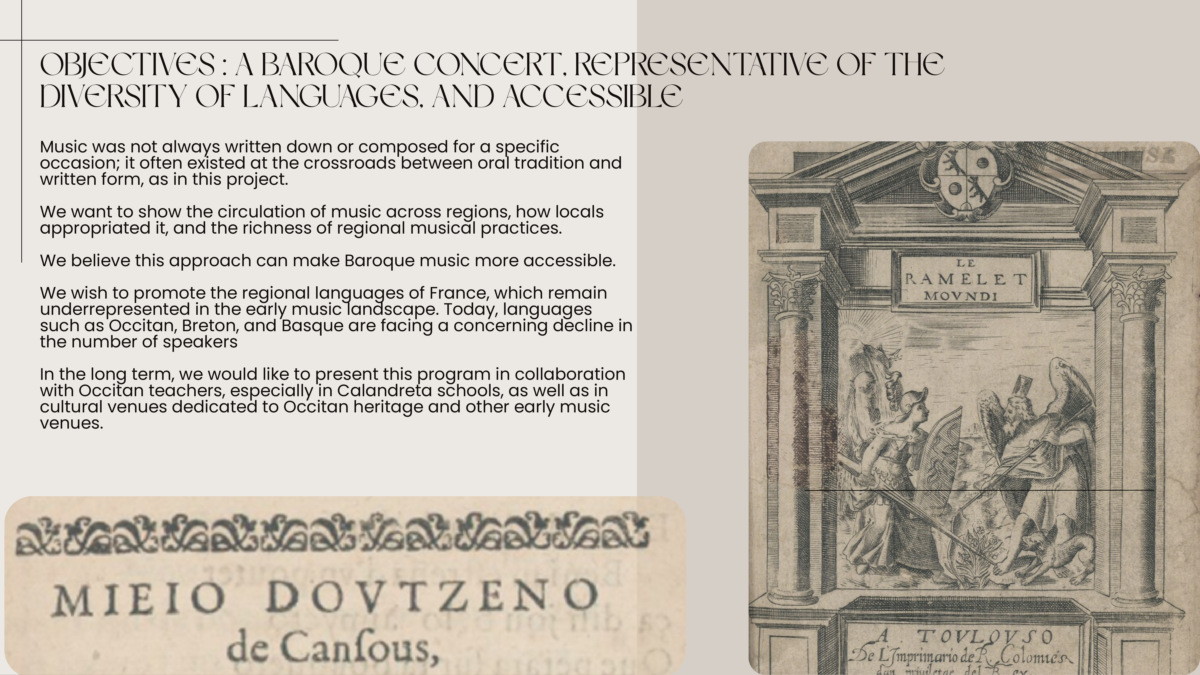
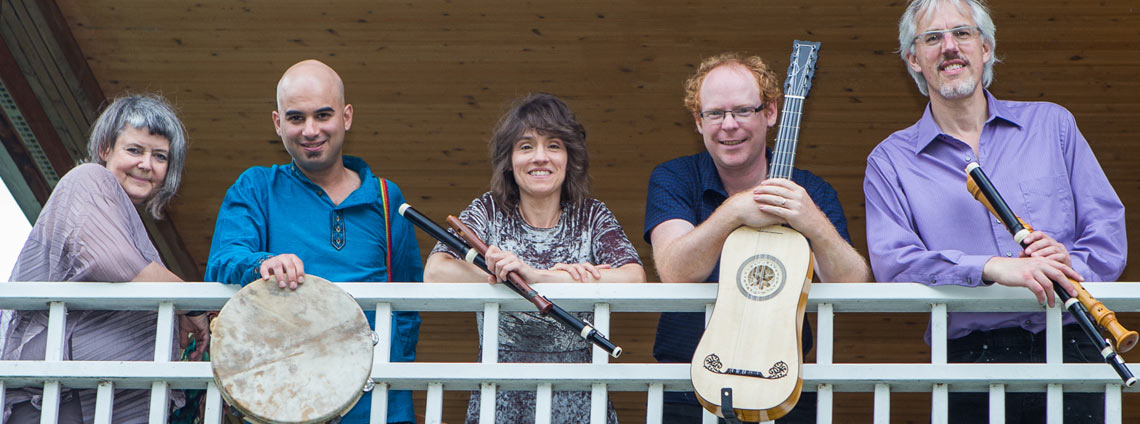
Ensemble Caprice; Matthias Maute; Sophie Larivière; Susie Napper; David Jacques; Ziya Tabassian
Ensemble Caprice
Matthias Maute (recorder & traverso)
Sophie Larivière (recorder & traverso)
Susie Napper (cello)
David Jacques (guitar)
Ziya Tabassian (percussion)
During the sixteenth and seventeenth centuries, the musical dialogue between the Old and the New Worlds produced extraordinary results. This fascinating blend of European polyphony and Latin American traditional music created a unique style that is exemplified by the villancicos of the Bolivian composer Juan de Araujou and the colourful guarachas of his contemporaries. Also included in the programme are sonatas by Falconieri, a European composer who was influenced by this Latin American style. Gems from this spectacular musical era will be performed on instruments that were common at the time: flutes and recorders, baroque guitar, cello and various percussion instruments.
“The ensemble has established itself as an immensely thoughtful and progressive force on the musical scene.” – New York Times
PROGRAMME
Santiago de Murcia (1673 – 1739):
¡Jácaras!
Anonyme (published in Cuzco, Perú, 1631):
Hanacpachap cussicuinin
Anonyme (coll. Flores de música, 1706-1709):
Chacona
Santiago de Murcia (1673 – 1739):
Tarantelas
Andrea Falconieri (1586-1656):
La suave melodia
Diego Ortiz (publ. 1553):
Doulce mémoire
Santiago de Murcia (1673 – 1739):
Canarios
Gaspar Fernandes (c. 1570 – 1629):
Xicochi Conetzintle
Antonio Martín y Coll (c.1660-c.1740):
Pasacalles de 2o tono
Santiago de Murcia (1673 – 1739):
Marizapolos
Andrea Falconieri (1586-1656):
La Folia
Antonio Martín y Coll (c.1660-c.1740):
Differenzias sobre la Gayta
Juan de Araujo (1648 – 1712):
Los coflades de la estleya
INTERVAL
Domenico Zipoli (1668 – 1726):
Pastorale: Allegro / Piva / Pastorale
Anonyme (coll. Truxillo del Perú II, c. 1780):
Lanchas para baylar
Domenico Zipoli:
Battalia: imperiale / dolorosa / furiosa
Santiago de Murcia (1673 – 1739):
La Jota
Antonio Martín Y Coll (c.1660-c.1740):
Temblante estilo italiano (collection Flores de música)
Henry de Bailly (c. 1585 – 1637):
Yo soy la locura (excerpt of Ballet de la Follie)
Antonio de Salazar (c. 1650 – 1715):
Tarará
Antonio Martín y Coll:
Discurso con ecos
Antonio Martín Y Coll:
Danza del hacha
Antonio Martín (late 17th century):
Canarios
Anonyme (trad. Argentine):
Wainjo
Heinrich Ignaz Biber (1644-1704):
Chaconne (The nightwatch)
Juan García de Zéspedes (1619 – 1678):
Convidando está la noche
PROGRAMME NOTES
One can describe baroque music of Latin America as a fusion of harmonies and rhythms of Europe and Africa blended with Amerindian nuances and styles. This unique fusion dates back to the 16th century and gave rise to a complex and fascinating multitude of musical forms resulting in a great variety of instrumentations, structures, and rhythmic and melodic phrasing.Salsa is the Spanish word for sauce, designating at the same time a dance as well as a family of musical genres in Latin-American music. It is this latter meaning and its ancient roots that, together with a bit of humour, we have taken to give the title Salsa baroque to our project. Despite the human and political tragedies surrounding the colonization of the South-American continent, the multipolar musical culture that resulted is distinguished by its fiery spirit and passion: here is music with a unique character that enriches the repertoire of the 17th century with refreshing novelties. Gaspar Fernandes (c. 1570-1629) was Portuguese by birth, but emigrated to Mexico, where he became a chapel musician at the cathedrals of Guatemala and Puebla. His villancicos (a popular song form of Spanish origin) often have texts written in a mixture of an Amerindian language with Spanish or the local dialect. The touching lullaby Xicochi conetzintle utilizes the Nahuatl language of the Aztecs. The collection of roughly 250 works from the pen of Gaspar Fernandes forms the largest source of 17th-century secular music from the New World. Juan de Araujo (1648-1712), born in Spain, also spent his life as a musician in Peru and Bolivia where he was appointed Choirmaster of the cathedral in La Plata. His Los coflades de la estleya (with the subtitle Black Song for the Birth of Our Lord) and the Convidando está la noche by Juan García de Zéspedes (1619-1678) distinguish themselves through the use of African rhythms juxtaposed with sections of European counterpoint. It is perhaps through these two short masterpieces of mixed colouring that the peculiar ambiance that reigned in Latin America in the 17th century is best conveyed. The Christmas music, Tarará, of Antonio de Salazar (c. 1650-1715), as well as the Pastorale of Domenico Zipoli (1668-1726) display the originality of composers in the New World who were able to meld their European background with—from a European point of view—the exotic sonorities of their Latin-American environment. The audacious final melody of the Pastorale gives us an inkling of the creative desires of an immigrant musician. Spanish music is represented by instrumental works from the vast collection of Antonio Martín y Coll (1671-1734) that encompasses some hundred pieces of music in its 4 volumes called Flores de música. The Chacona and the Xácara are enriched with complex rhythms that approach those of another contemporary Spanish composer who had travelled in Latin America, Santiago de Murcia (1673-1739), whose Tarantelas, Jacaras and La Jota draw on a rich repertoire of dance rhythms. It is evident that geographic separation did not impede the relatively rapid transfer of musical styles and genres, despite the problems imposed by the very limited means of international and intercontinental travel. The Canción de clarín con eco a discreción, also taken from the Flores de música collection, as well as the Temblante estilo italiano clearly show the Italian influence on the Iberian Peninsula. Conversely the airde-cour Yo soy la locura by Henry de Bailly (c. 1585-1637) has a Spanish text in spite of the French nationality of the composer. The rite Hanacpachap cussicuinin was sung and performed during religious processions in church. Published in 1631 in Peru, this the very first polyphony published in the Americas. It is a very touching piece of music, born of different cultural worlds united by the beauty of music.
– Matthias Maute
Ensemble Caprice is represented by Agency Station Bleue, Montreal, Quebec – Élisabeth Comtois
e.comtois@stationbleue.com Ensemble Caprice appear by arrangement with SLAGZ, Sylvie Lange & George Zukerman, Tour Development and Management.
Ensemble Caprice
Since it was founded by flautist Matthias Maute three decades ago, Ensemble Caprice has made its mark as one of the most sought-after ensembles on the classical music scene.
Caprice has gained a solid reputation for its innovative programming and vibrant, compelling performances.The musicians of Ensemble Caprice have travelled to the four corners of the globe, giving performances in dozens of countries on four continents. It has been featured at many prestigious festivals around the world including the Lufthansa Festival of Baroque Music in London, the Felicia Blumental International Music Festival in Tel Aviv, Musikfestspiele Potsdam Sanssouci in Germany, the Boston Early Music Festival, Ottawa Chamber Music Festival, the Elora Festival and the International Festival Domaine Forget. This impressive roadmap bears witness to the fact that Caprice is recognised as being one of today’s leading baroque ensembles.
Besides its international tours, the group performs a regular Montreal concert series in the Montreal Museum of Fine Arts’ Bourgie Hall.Ensemble Caprice also has a flourishing recording career, with some twenty recordings on the Analecta, ATMA Classique and Antes labels, sold in nearly 50 countries. These recordings have received numerous critical distinctions, including a Juno Award and four Prix Opus awards to name only two of many.
Matthias Maute
Maestro Maute concertizes as a member of the New York based ensemble REBEL in North America and Europe. He has been invited to perform as guest soloist or conductor by the world’s most eminent baroque orchestras, including: Seattle Baroque, the Portland Baroque Orchestra, the Cleveland Baroque Orchestra, and the Magnificat Baroque Ensemble. In recent years he has also been invited to conduct other renowned orchestras, including I Musici de Montreal and Symphony of Nova Scotia. Mr. Maute is celebrated for his work as artistic director and conductor of Ensemble Caprice and tours extensively with the ensemble, being regularly invited to take part in prestigious festivals around the globe.
Under his direction, Ensemble Caprice was granted an esteemed JUNO award in 2009 for best vocal/choral classical music album of the year. His compositions are highly regarded and have been published by Breitkopf & Härtel, Amadeus, Moeck, and Carus. He has some thirty recordings to his credit on the Analekta, Vanguard Clasics, Bella Musica, Dorian, Bridge and ATMA Classique labels. Maestro Maute teaches at McGill University’s Schulich School of Music and at the Faculty of Music of the Université de Montréal.

Sophie Larivière
Sophie Larivière Sophie Larivière has been a member and co-artistic director of Ensemble Caprice since 1997. In this capacity, she has been instrumental in developing the unique and innovative identity of this ensemble which provides concert goers with an exciting blend of virtuosity and musical expressiveness. As a member of Caprice, she has played in numerous concerts in Canada, the Middle East, Europe and the USA.
Among these performance venues, the following are of particular note: The Mediterranean Arts Festival in Tel Aviv, the Lufthansa Festival of Baroque Music in London, the Musikfestspiele Potsdam Sanssouci near Berlin, as well as concerts in Stuttgart, at the Library of Congress in Washington D.C., in Los Angeles, at New York’s Frick Collection and Miller Theater, in Chicago, and at the Boston Early Music Festival. Much appreciated for the flowing, expressive beauty of her playing, Sophie Larivière is regularly invited to perform with many early music ensembles. She has played with Arion Orchestre Baroque, l’Opéra de Montréal, the Studio de Musique ancienne de Montréal, the Theater of Early Music, the New York Rebel ensemble, the Violons du Roi in Quebec City, New York’s Trinity Choir as well as the Concert Spirituel in Paris. She has performed under the baton of noted conductors Andrew Parrot, Bernard Labadie, Christopher Jackson, Julian Armour and Hervé Niquet. Sophie Larivière has taken part in some thirty recording projects for the Analekta, Virgin Classics, Atma Classique, Antes Edition and Interdisc labels. She is a devoted teacher, and for decades has been transmitting her passion for music to a younger generation of performers as well as to amateur musicians in music camps and workshops. She currently teaches at Cégep St-Laurent in Montreal.
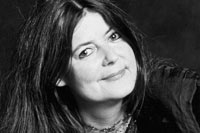
Susie Napper
Cellist, gambist, continuo player par excellence, Susie Napper is known for her colorful, even controversial performances of both solo and chamber repertoire of the 17th and 18th centuries. Having spent her childhood in an artistic milieu in London, in her late teens she moved to New York to study at the Juilliard School, then to the Paris Conservatoire. San Francisco followed, where, after a foray into contemporary music, she co-founded and directed the Philharmonia Baroque Orchestra.
Since then, she has spent two decades with a foot on either side of the Atlantic as principal cellist with several groups including Stradivaria in France, the Studio de Musique Ancienne de Montréal and Les Boréades in Montreal, and the Trinity Consort of Portland. Her concert tours have taken her as far afield as China, Japan, New Zealand, India, the Middle East, as well as most European countries.
As a member of the very active viol duo Les Voix humaines, she has discovered a new facet of musical expression in the form of musical arranging, thus providing an endlessly fascinating new repertoire for two viols. Susie Napper teaches at McGill University, and founded the Festival international Montréal Baroque which is presented in Montreal in June since 2001. She was awarded the Prix Opus 2002 for “Personality of the Year” by the Conseil québécois de la musique.
Her recordings, which include most of the known repertoire for two viols, can be heard on Harmonia Mundi, EMI, Erato, ADDA, CBC Records, Naxos, and most notably on the ATMA label. But her true vocation is not on the concert stage or the recording studio. The kitchen is the center of her domain, where she creates dishes both colorful and controversial for her own pleasure as well as that of her guests.

David Jacques
David Jacques was born in 1978 in Saint-Georges, Quebec, Canada. He is completing in 2007 a Doctorate in music performance at the University of Montreal. He also has a Master in performance from Laval University, a First Prize in guitar, a Prize with high distinction in chamber music from the Quebec Conservatory of Music and a Bachelor in music teaching from Laval University. Moreover, he has studied jazz guitar at the same University.
Many times a finalist and semi-finalist in international and national competitions, he has won many of them. He received grants and sponsorships from many organisms and associations. Since 2002, he has played with many early music groups like Anonymus, Caprice, Bande Montreal Baroque, Les Voix humaines, les voix Baroques, Stadacone, Musica Divina, etc. He has published many arrangements for guitar for Les Productions d’OZ. He recorded more than 16 CDs with major labels like XXI-21, Universal records, Analakta and Atma Classique. He gave classical concerts in USA, France, Poland, Austria, Bosnia, Croatia, Mexico, Chile, Vietnam, Brazil, Argentina, India, Nepal, Taiwan, Pakistan, Indonesia, Brunei, Singapore, New-Zealand, Australia and Canada. With such success, he was invited to give concerts for many well-known names like the president of USA, the prime minister of Canada and for four prime ministers of Quebec.
As a pedagogue, he is sharing his knowledge in private lessons and master classes for many years and is teaching at the Ste-Foy’s College since 2005. In 2002, he created the company Productiosn DJ and works restlessly to promote the classical guitar at local, national and international level.

Ziya Tabassian
Born in 1979, Ziya Tabassian starts learning tombak (a Persian percussion) at the age of ten. From 1994 to 2001 he studied western classical percussion with Julien Grégoire in Montreal, and has completed a Bachelor degree in percussion interpretation at the Université de Montréal. In 2003, he completed a residency at the Banff Centre for the arts, where he explored the contemporary music on the Persian percussions.
He continues to search his own style by studying on short periods with Bahman Rajabi (Tehran), Aziz Alami (Fez), Trichy Sankaran (Toronto) and Misirli Ahmet (Istanbul).
He plays in several early, contemporary and world music ensembles and is an active and a co-fonder member of Constantinople ensemble (www.constantinople.ca). Ziya has performed several concerts in Canada, Mexico, Europe, the U.S.A., Middle East and Hong Kong.
He has received several grants from the Canada Council for the Arts and the Conseil des arts et des lettres du Québec. He released many CDs in duo with his brother, Kiya Tabassian and Constantinople on the ATMA label, and recorded for many other productions, such with the Kronos Quartet, Hossein Omoumi, En Chordais, Mercan Dede, the Nouvel Ensemble Moderne and Lo’Jo. He is frequently heard on CBC Radio and Radio-Canada. In 2007, he released his first solo album called TOMBAK, on Ambiances Magnétiques label.