Roy Barnett Recital Hall | Map
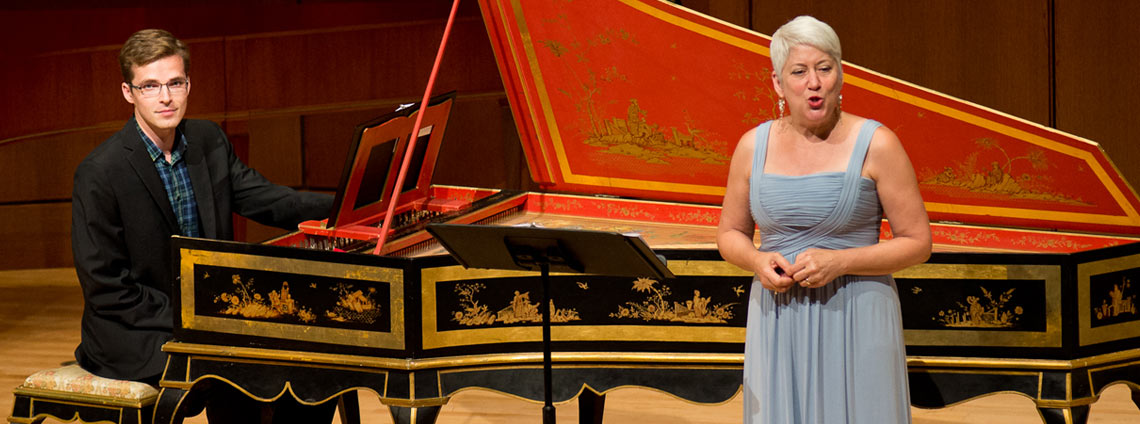
Ellen Hargis, soprano; Sylvia Szadovszki, mezzo-soprano; Natalie Mackie, viola da gamba; Marc Destrubé, violin; Christopher Bagan, harpsichord
“Hargis used her colorful, versatile voice to blend seamlessly into the instrumental ensembles at times and to soar above them at other points in the program. More than just an able technician, she sang with an exquisite sense of line and highly communicative style.” – Milwaukee Journal Sentinel – March 18, 2012
Hot on the heels of a performance by a grand master of early music, we bring you a concert featuring a rising star. Renowned soprano Ellen Hargis curates this recital of Rameau cantatas and instrumental works, performing the famous Orphée cantata and lending her guidance and expertise in this elegant music to young mezzo-soprano Sylvia Szadovszki. Recently seen as Nancy in Vancouver Opera’s Albert Herring, Sylvia joins Ellen and a team of skilled performers of early music in her first appearance with Early Music Vancouver.

Mahony and Sons is proud to sponsor Early Music Vancouver. Join us before or after your concert and make your experience a great one. For reservations visit mahonyandsons.com. We validate parking at our UBC location.
Programme
Deuxième concert (Second Concert in G major), Jean-Philippe Rameau
La Laborde
La Boucon
L’agaçante
Premier menuet, Deuxième menuet
CANTATA TBD, Rameau
Intermission
Cinquième concert (Fifth Concert in D minor), Rameau
La Forqueray
La Cupis
La Marais
CANTATA TBD, Rameau
Programme notes
In 1683, Jean-Philippe Rameau was the 7th of eleven children born to his mother Claudine and father Jean, in Dijon. For many years his father held the post of organist of the collegiate church of St. Étienne, as well as a post at the abbey of St. Bénigne, eventually moving on to the cathedral of Notre-Dame in the same town.
Jean-Philippe was sent to school at the Jesuit Collège des Godrans, where, although he was quick in his musical studies, was an otherwise poor student and was asked to leave, thereby crushing his parents’ hopes that he would enter the profession of law.
As a young man Rameau spent a short time in Milan, joining a group of touring Milanese musicians, as a violinist, and by 1702, at the age of 19, he was engaged temporarily as an organist in Avignon, before signing a six-year contract to be the organist at the cathedral in Clermont. Already beginning to show signs of his itinerant nature, he left after four years to live in Paris, where his first book of harpsichord pieces was published and he again found work as an organist. By 1709 he was back in Dijon, succeeding his father as organist at Notre-Dame, only to venture briefly to Lyons, and then again to Clermont, where he signed a 29-year contract as cathedral organist and teacher. It was likely here that he worked on his Traité de l’Harmonie, and Nouveau Système de musique théorique, and for the greater part of his life he was known primarily as a theorist because of these seminal works. Feeling constrained in Clermont, and eager to have his treatise published, he asked to leave his position to travel to Paris, where he remained for the rest of his life.
Rameau, at the age of 50, was relatively late in coming into his own as an opera composer. His first opera, Hippolyte et Aricie, premiered in Paris in 1733, its striking harmonies inciting a flurry of chatter amongst the musical intelligentsia and inflaming the divide between the conservative Lullists and the more progressive Ramistes.
He went on to compose operas of stunning originality, demonstrating an exceptionally imaginative ability to create, both vocally and in his orchestration, the depth and breadth of musical evocation, from cacophony, triumph, and stormy fury, to tenderness and sorrow.
Of all of Rameau’s cantatas, the two we will perform are his earliest, likely composed around 1715 in either Lyons or Clermont.
Aquilon et Orithie (or L’Enlèvement d’Orithie) recounts the Greek myth in which Boreas (Aquilo in Roman mythology), the god of the North Wind, falls in love with Oreithyia, princess of Athens. She initially rebuffs his advances and is met with a more forceful expression of his passion, including a storm and a kidnapping; in the end, capitulating to his desires. In this cantata, Rameau lets loose an Italianate rage in the violin, in the air “Servez mes feux”, but returns to a tender and very French final air in e minor.
Of the two cantatas, Thétis is unapologetically French throughout, and again we encounter the motifs of thunder (preceding Jupiter’s air) and a storm passage (following Neptune’s air), both dramatic elements favoured in French opera. Thétis is an exceptionally beautiful sea goddess, courted by both Zeus (Jupiter) and Poseidon (Neptune); loud and terrifying male figures, vying for power and for her affections. Alas, their grandiloquent displays hold no sway with Thétis, for she follows her heart and chooses a mere mortal, Peleus, for her lover. The cantata concludes with the adjuration:
“Lovely ladies, your great fortune destines you to choose your victor for yourselves. That love alone may guide you Only consult your own heart…”
The instrumental music on this programme is part of the tradition of French accompanied keyboard music which began to emerge around the third decade of the 18th century, most famously in Mondonville’s Op. 3, c. 1738. This genre is distinguished from the Italian trio sonata where the harpsichord functions as a continuo instrument, playing the bass line and realizing the harmonies as indicated by figures.
Rameau’s “Pieces de clavecin en concerts”, published in 1741, consists of a fully conceived and written out keyboard part, with two accompanying parts; either a violin or German flute, and a viola (da gamba), or 2nd violin. In his introduction Rameau explains that he has presented the music in score “because the Harmony of the three instruments must, not only, be blended together, but also the Performers understand each other, and above all the Violin and Viola be subservient to the Harpsichord, in distinguishing what is accompaniment, from what makes a part of the Subject, to soften still more in the first case.”
While the addition of the accompanying instruments is not superfluous, and indeed creates a beguiling and shimmery effect, Rameau emphasizes the importance of the harpsichord, declaring that “these pieces perform’d upon the Harpsichord alone, leave the mind perfectly satisfied.”
This experimentation with obligato and optional accompanying instruments with keyboard emerged during the fertile period of simmering debates amongst the public, musicians, and music critics regarding the merits of national styles, particularly highlighting the differences between French and Italian styles, but also, as previously mentioned, between those who were loyal to Lully and those in thrall to Rameau. It was also a time when the inevitable sharing of tastes and styles, “les goûts réunis”, was transpiring both in discourse and in composition. While Mondonville’s Op. 3 shows a deliberate inclusion of Italian style, Rameau’s “Pièces de clavecin en concert” are perhaps less hybrid and more quintessentially French, with their idiomatic writing for harpsichord and the partiality to dance movements and programmatic or referential titles. The titles of the various movements, such as “La Laborde, La Boucon, La Forqueray”, etc. make reference to musical acquaintances, while “L’Agaçante” is likely a character piece, perhaps referring to something or someone who is contrary or vexatious.
Natalie Mackie
Ellen Hargis, soprano
Ellen Hargis is one of America’s premier early music singers, specialising in repertoire ranging from ballads to opera and oratorio. She has performed with many of the foremost period music conductors of the world including Andrew Parrott, Gustav Leonhardt, Paul Goodwin, Monica Huggett, Jane Glover, Simon Preston, Daniel Harding, Paul Hillier, Harry Bickett, Craig Smith and Jeffrey Thomas.
She has performed with the Estonian National Symphony Orchestra, Saint Paul Chamber Orchestra, Virginia Symphony, Washington Choral Arts Society, Long Beach Opera, CBC Radio Orchestra, Freiburg Baroque Orchestra, Philharmonia Baroque Orchestra, Teatro Lirico, Tragicommedia, New York Collegium, The Mozartean Players, Fretwork, Emmanuel Music and the Mark Morris Dance Group, and has been regular performer with Chicago’s Music of the Baroque, the American Bach Soloists, Seattle Baroque and the Portland Baroque Orchestra. She has appeared at many of the world’s leading festivals including the Adelaide Festival (Australia), Utrecht Festival (Holland), Resonanzen Festival (Vienna), and Festival Vancouver, Tanglewood, the Berkeley Festival and New Music America Festival. She has been featured in successive seasons of the Boston Early Music Festival where she has sung Aeglé in Lully’s Thésée, the title role in Luigi Rossi’s L’Orfeo, Queen Pasiphae in Conradi’s Ariadne and Irina in Johann Mattheson’s 1710 opera, Boris Goudenow. Lully’s Thésée and Conradi’s Ariadne were recorded for CPO and were nominated respectively for 2007 and 2006 Grammys.
Recent engagements include a performance and recording of Música Celestial, music from a 17th c. Mexico City convent, which Ms. Hargis researched and directed as well as sang in with the Newberry Consort. On tour with The Newberry Consort, she performed the Cantigas de Santa Maria in New York, Boston, Milwaukee and Pittsburgh. She returned to The Chicago Chorale to sing Bach’s St. Matthew Passion, and performed Monteverdi’s Vespers under the direction of Paul O’Dette.
Ms. Hargis is also a stage director, and worked for three seasons with the Haymarket Opera Company in Chicago, where she directed Charpentier’s La Descente d’Orphée aux Enfers, and Actéon, Purcell’s Dido and Aeneas, and two chamber operas by Handel. As Assistant Director at the 2015 Boston Early Music Festival, she oversaw the revival of Gilbert Blin’s 2009 production of Monteverdi’s L’Incoronazione di Poppea.
Ellen Hargis has a longstanding musical partnership with the great lutenist Paul O’Dette with whom she records and tours regularly. They have performed together throughout the United States, Canada, Austria, France Spain, Russia and Asia. Two recordings on the Noyse Productions label: The Power Of Love and A Christmas Album, have been met with critical acclaim. She is also featured on a dozen Harmonia Mundi recordings including a widely-acclaimed solo recital disc of music by Jacopo Peri, and in Arvo Pärt’s Berlin Mass with Theatre of Voices. She appears on a recording of Handel solo cantatas with the Seattle Baroque Orchestra on Wild Boar, the premiere recording of the Bonporti motets for soprano on Dorian, and several recordings for BMG Classics, Vanguard Classics, Virgin Classics, Erato, Dorian Classics and Berlin Classics. Her recording of Tristan et Iseult with The Boston Camerata was winner of the Grand Prix du Disque.
Ellen Hargis is a visiting professor at the Eastman School of Music, and will teach residencies at the Oberlin Conservatory, The Julliard School, and the University of Wisconsin during the 2015-2016 academic year. She is an Artist-in-Residence with the Newberry Consort at the University of Chicago and Northwestern University and directs at Early Music Vancouver’s annual Vancouver Baroque Vocal Programme.
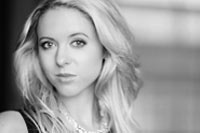
Sylvia Szadovszki, mezzo-soprano
Mezzo-soprano Sylvia Szadovszki studied at the Manhattan School of Music (B.Mus.‘06) and the University of British Columbia (M.Mus.’09/DMPS.’11). Most recently, Sylvia sang the role of Nancy in Albert Herring with Vancouver Opera. She was a member of the Yulanda M. Faris Young Artist Program at Vancouver Opera during their 2012/2013 season, singing the roles of Papagena in The Magic Flute and Kate in The Pirates of Penzance.
Sylvia made her German debut as Rosina in Theater Hof’s new production of Der Barbier von Sevilla in 2012. She also joined Pacific Opera Victoria’s Resident Artist Program that year, singing Mercedes in Carmen. Sylvia sang the role of Hansel in the Vancouver Opera In Schools 2011 fall tour of Hansel and Gretel. She was selected as a Northwest Region Finalist in the Metropolitan Opera National Council Auditions in both 2011 and 2012. Sylvia has performed as a soloist with the Vancouver Symphony Orchestra, the Victoria Symphony, the West Coast Symphony, the Vancouver Metropolitan Orchestra, the Vancouver Academy Orchestra and the Northern Czech Philharmonic. Sylvia will make her debut with Edmonton Opera this fall, singing Rosina in Il Barbiere di Siviglia.
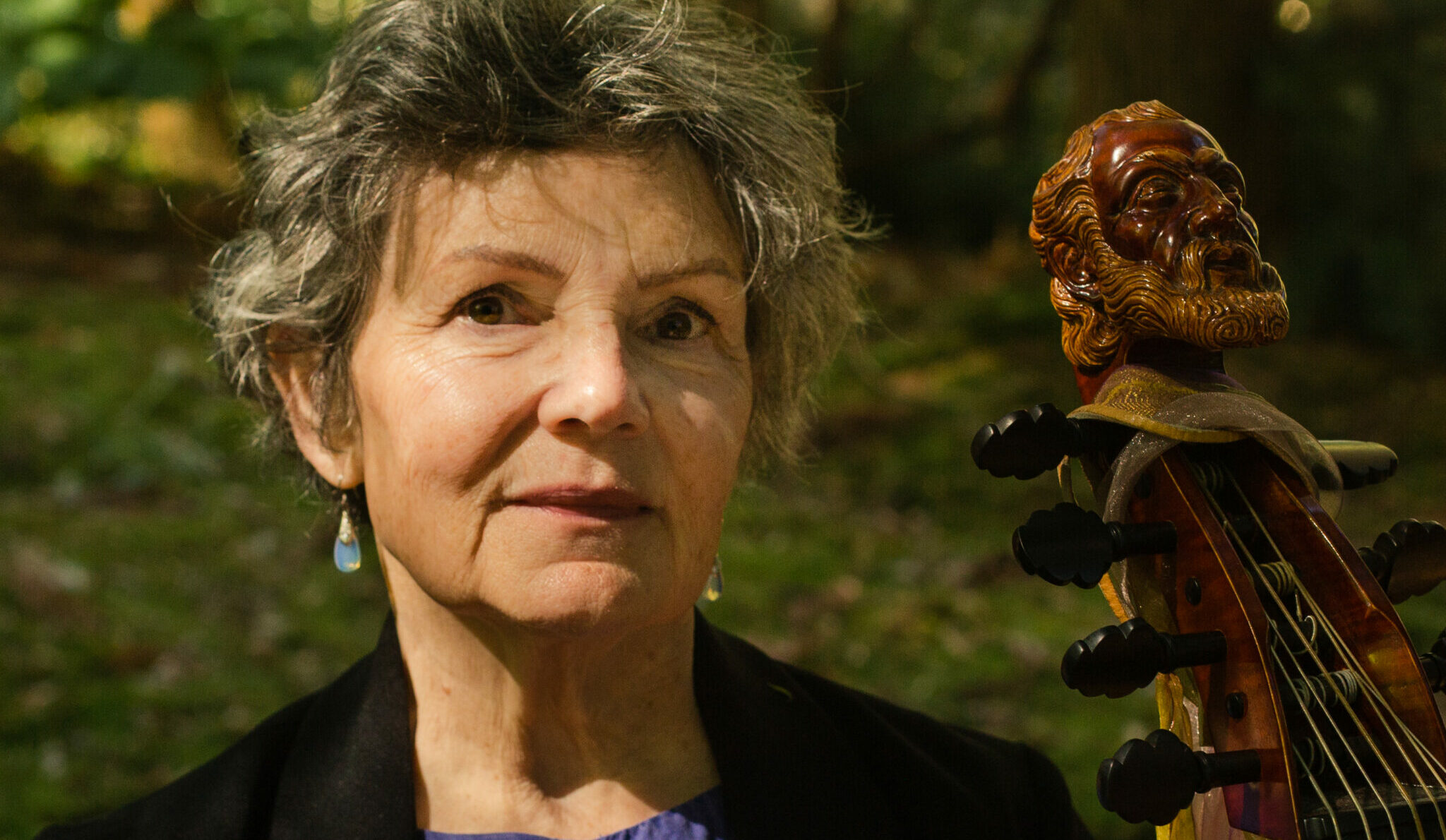
Natalie Mackie, viola da gamba
Natalie Mackie studied cello at the Conservatoire de Musique (Québec), followed by a degree from the School of Music, University of British Columbia. While at UBC she was introduced to the viola da gamba, and following graduation, she pursued further studies at the Koninklijk Conservatorium in The Hague. Natalie has played with many ensembles in Canada and the US, including New World Consort, Les Coucous Bénévoles, Tafelmusik, Portland, and Seattle Baroque Orchestras, Les Voix Humaines, Tempo Rubato, Les Voix Baroque, Oregon Bach Festival Orchestra, Victoria Baroque, and Vancouver Intercultural Orchestra among others. Natalie is a member of Pacific Baroque Orchestra and the chamber ensemble “La Modestine”- both Vancouver-based ensembles. She has toured throughout Canada, Europe, and the US and recorded for Radio France, German Radio, BBC, CBC, and NPR, as well as the Canadian label Atma Classique. Natalie is a regular performer in the Pacific Baroque Festival, held annually in Victoria, BC, and teaches in the Baroque Orchestra Mentorship Program at the University of British Columbia.
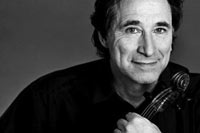
Marc Destrubé, violin
Canadian violinist Marc Destrubé is equally at home as a soloist, chamber musician, concertmaster or director/conductor of orchestras and divides his time between performances of standard repertoire on modern instruments and performing baroque and classical music on period instruments.
As a concertmaster, he has played under Sir Simon Rattle, Kent Nagano, Helmuth Rilling, Christopher Hogwood, Philippe Herreweghe, Gustav Leonhardt and Frans Brüggen. He is co-concertmaster of the Orchestra of the 18th Century with which he has toured the major concert halls and festivals of the world. He was concertmaster of the CBC Radio Orchestra from 1996 to 2002, concertmaster of the Oregon Bach Festival Orchestra, and founding director of the Pacific Baroque Orchestra.
He is first violinist with the Axelrod String Quartet, quartet-in-residence at the Smithsonian Institution in Washington D.C., where the quartet plays on the museum’s exceptional collection of Stradivari and Amati instruments. He has also performed and recorded with L’Archibudelli and is a member of the Turning Point and la Modestine ensembles and Microcosmos string quartet in Vancouver.
He has appeared as soloist and guest director with symphony orchestras in Victoria, Windsor, Edmonton and Halifax as well as with the Australian Brandenburg Orchestra, Portland Baroque Orchestra and Lyra Baroque Orchestra. A founding member of Tafelmusik Baroque Orchestra, he has appeared with many of the leading period-instrument orchestras in North America and Europe including as guest concertmaster of the Academy of Ancient Music and of the Hanover Band.
Marc has recorded for Sony, EMI, Teldec, Channel Classics, Hänssler, Globe and CBC Records.
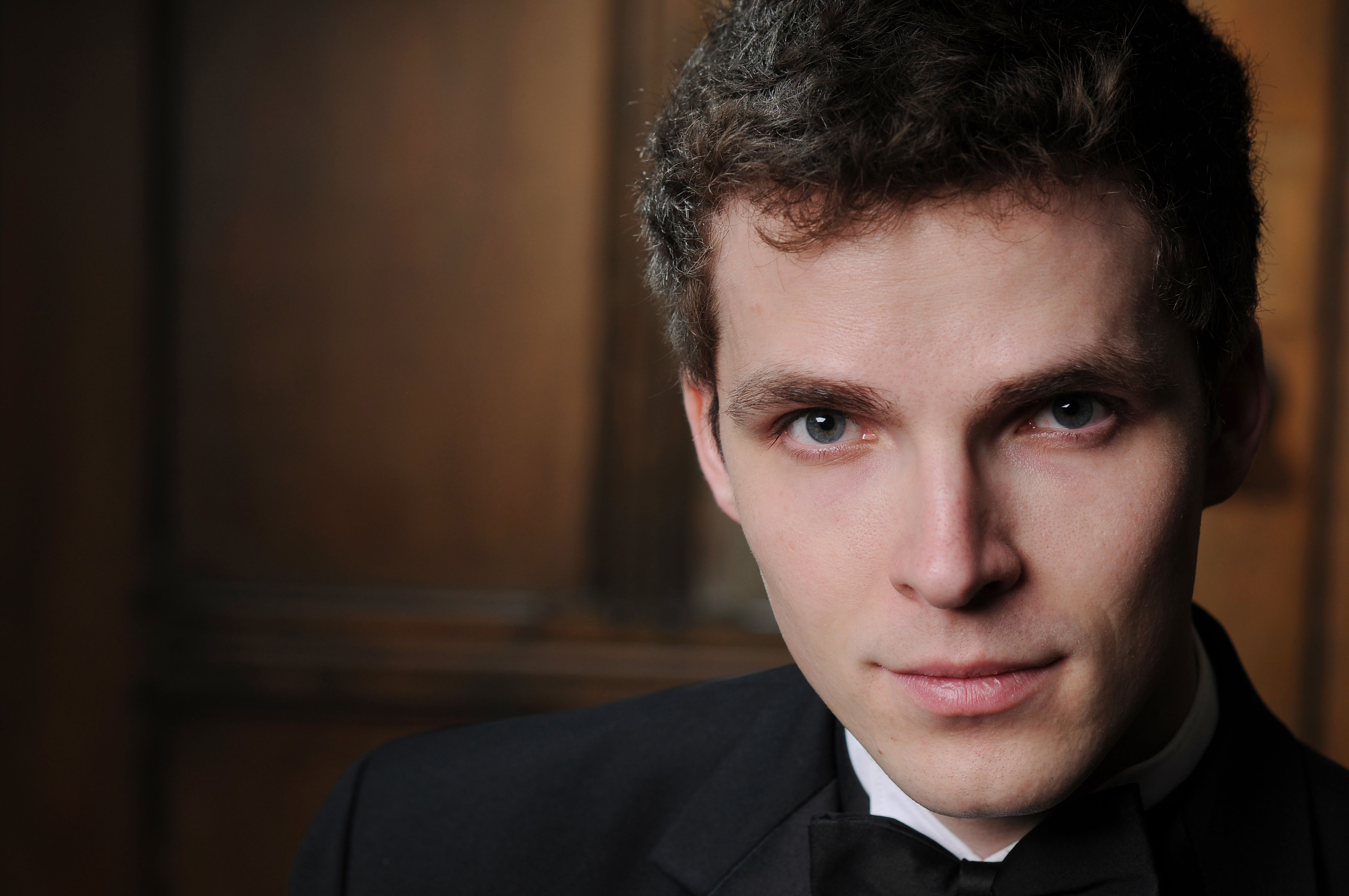
Christopher Bagan, harpsichord
Christopher Bagan is a versatile artist, equally at home on modern and historical keyboard instruments. He is in high demand as a collaborator, chamber musician and basso-continuo specialist. He has performed with many of the leading baroque singers, instrumentalists and conductors in North America and abroad. Christopher is particularly active in the field of baroque opera, working as the assistant conductor at Opera Atelier and as coach and repetiteur at the Canadian Opera Company. In 2015-16 Christopher was the Early Keyboard instructor at Case Western Reserve University and the head of Harpsichord at the Cleveland Institute of Music. He is currently on Faculty at the University of Toronto, working with the students in the historical performance program. He is also on faculty as a historical keyboard coach in the Canadian Opera Company's elite Ensemble training program.