Christ Church Cathedral | Map
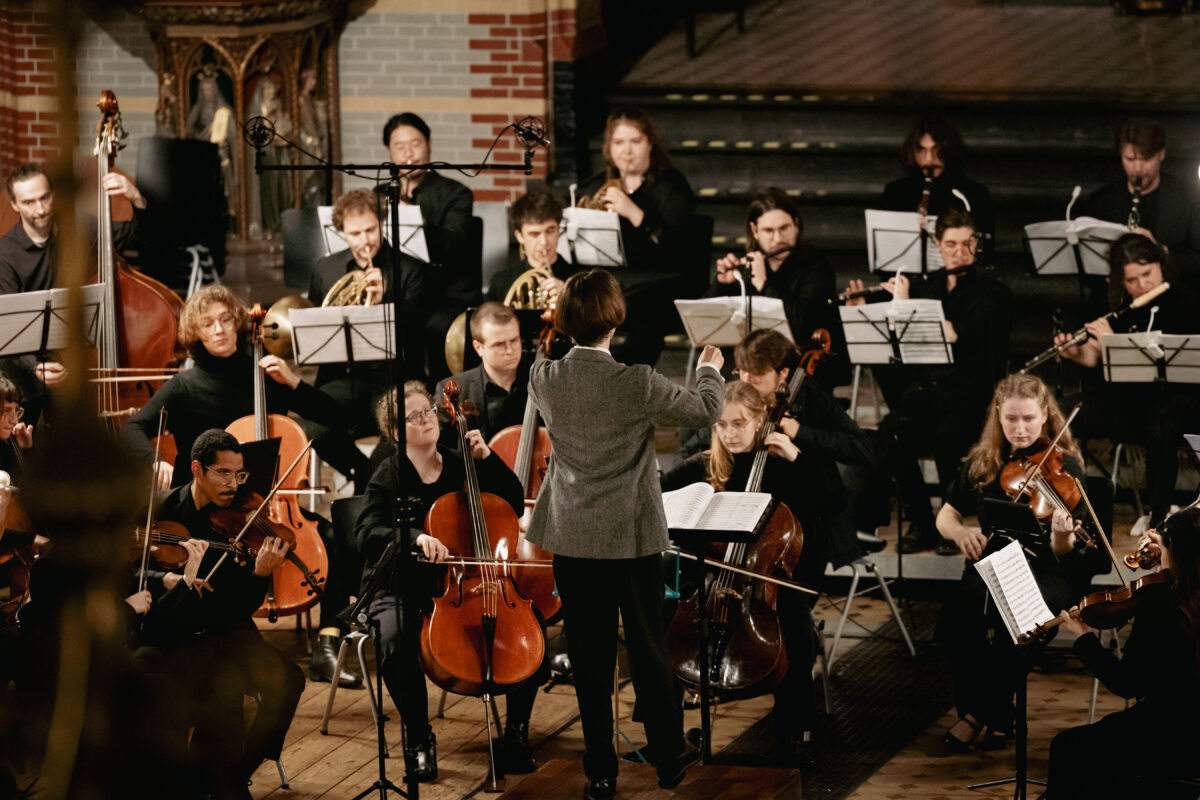
Pacific Baroque Orchestra; Alexander Weimann | Sponsored by Bruce Munro Wright, O.B.C., Music Director; Rodney Sharman, Curator
Bach-inspired work by composers Jocelyn Morlock, Douglas Finch, Rodney Sharman, and Bramwell Tovey. The program is completed by Györgi Ligeti’s neo-Baroque gem, Passacaglia ungherese, and JS Bach’s Brandenburg Concerto #5, perhaps his most quirky and radical work, described by Susan McClary as an expression of emancipation of the individual. This is a collaboration with the Vancouver Symphony Orchestra’s New Music Festival.
This concert is being recorded by CBC Radio 2 for future broadcast on In Concert, heard Sundays from 11 am to 3 pm with host Paolo Pietropaolo.

Click here for information about parking around / transiting to Christ Church Cathedral
Programme
Snared Harmony – Rodney Sharman
Chorale Threnody – Douglas Finch
Revenant – Jocelyn Morlock
Improvisations performed by Bramwell Tovey and Alexander Weimann
INTERVAL
Passacaglia ungherese – Györgi Ligeti
Brandenburg No. 5 – JS Bach
Sinfonia Della Passione – Bramwell Tovey
Programme Notes
This concert features Bach-inspired work by Jocelyn Morlock, Douglas Finch, Rodney Sharman, and Bramwell Tovey. The programme is completed by Györgi Ligeti’s neo-Baroque gem, Passacaglia Ungherese, and Johann Sebastian Bach’s Brandenburg Concerto No. 5, perhaps his most quirky and radical work, described by Susan McClary as an expression of emancipation of the individual.
Why rewrite an older piece by another composer?
New music based on older music is a time-honoured practice in the West dating to pre-Christian times. Even the slow movement of Bach’s Brandenburg Concerto No. 5 is based on music by Bach’s French contemporary, Louis Marchand (1669 –1732). New pieces by Rodney Sharman and Bramwell Tovey were written to complement the Bach, taking aspects of BBC5 as points of departure for their compositions. Douglas Finch’s work is a kind of fantasy-transcription on J.S. Bach’s D♯ minor Fugue from the first book of the Well-tempered Clavier. Jocelyn Morlock’s piece is based on J.S. Bach’s Musical Offering, itself written on a theme by another composer (Frederick the Great? Carl Phillip Emanuel Bach?).
Why Brandenburg Concerto No. 5?
One of the mysteries of music is that it can evoke imprecise thoughts and feelings with precise means. The long solo towards the end of the first movement of Brandenburg Concerto No. 5 is strictly written, yet sounds improvisatory. It feels disconnected to the rest of the piece: strange, wild, unexpected. Do we sense playfulness? Whimsy? Anger? Is it, as McClary says, a traditional accompanying instrument revealing its individuality in a musical-political act of rebellion? Perhaps a composer rebellion? (JS Bach is, after all, one of the few composers to have been imprisoned for breaking a contract.) Even if we are deeply familiar with the work, its innovation is ever new.
Why seven instruments in a concerto?
Scholarship tells us the premiere of the first version of Brandenburg Concerto No. 5 was likely in Cöthen around 1719 with one instrument on a part. Our ears tell us that the balance with the harpsichord is better.
Why new music and old music together?
My experience of Early Music Vancouver’s concerts is often that of discovery: a composer I’ve never heard of, an instrument I’ve never seen or heard live before, music that is so new, even strange to me that I feel the excitement of learning. All this is common to hearing new music. To me the juxtaposition of the new and the old is a natural one. Fortunately for living composers, early music specialists are often skilled and devoted performers of new music, too.
Why Bach?
The music of J.S. Bach balances the structural, the technical, the spiritual and the sensual. There are hundreds (thousands?) of pieces modelled on Bach’s music from the Romantic period through to our own. Bramwell Tovey, Jocelyn Morlock, Douglas Finch, Györgi Ligeti and myself have played Bach’s music and studied his scores. I venture we have all marvelled at the marrying of precision and passion, and have studied the music in order to become better composers. More simply put, we want to learn from the best. This programme places newer work by five composers alongside the newness of Bach.
– Rodney Sharman, Composer-in-Residence, New Music for Old Instruments, Early Music Vancouver

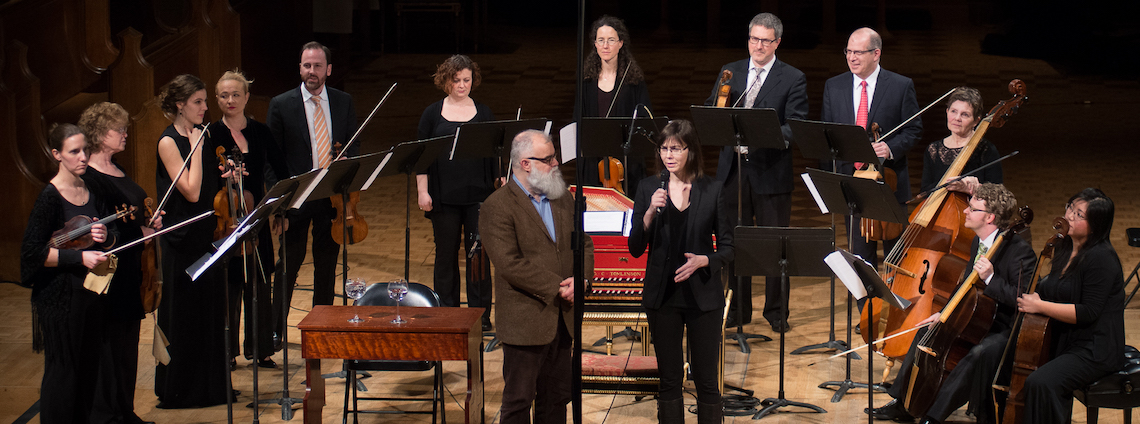
Pacific Baroque Orchestra
Learn more about the PBO by clicking here.
The ‘house band’ of Early Music Vancouver, The Pacific Baroque Orchestra (PBO) is recognized as one of Canada’s most exciting and innovative ensembles performing “early music for modern ears.” Formed in 1990, the orchestra quickly established itself as a force in Vancouver’s burgeoning music scene with the ongoing support of Early Music Vancouver. In 2009, PBO welcomed Alexander Weimann as Director. His imaginative programming, creativity and engaging musicianship have carved out a unique and vital place in the cultural landscape of Vancouver.
PBO regularly joins forces with internationally-celebrated Canadian guest artists, providing performance opportunities for Canadian musicians while exposing West Coast audiences to a spectacular variety of talent. The Orchestra has also toured throughout BC, the northern United States, and across Canada. Their 2019 East Coast Canadian tour with Canadian soprano Karina Gauvin culminated in a critically acclaimed album, Nuit Blanches, released by Atma Classique.

Alexander Weimann | Sponsored by Bruce Munro Wright, O.B.C., Music Director
The internationally renowned keyboard artist Alexander Weimann has spent his life enveloped by the therapeutic power and beauty of making music. Alex grew up in Munich. At age three he became fascinated by the intense magic of the church organ. He started piano at six, formal organ lessons at 12 and harpsichord at university (along with theatre theory, medieval Latin and jazz piano.) He is in huge demand as a director, soloist and chamber player, traveling the world with leading North American and European ensembles. He is Artistic Director of the Pacific Baroque Orchestra in Vancouver and teaches at the University of British Columbia where he directs the Baroque Orchestra Mentorship Programme.
Alex has appeared on more than 100 recordings, including the Juno-award-winning album “Prima Donna” with Karina Gauvin and Arion Baroque orchestra. His latest album series “The Art of Improvisation” (Volume 1: A Prayer for Peace; Volume 2: Ad libitum; and Volume 3: Canavian Variations, released on Redshift, 2024) unites his passions for both baroque music and improvisation on organ, harpsichord, and piano.
Rodney Sharman, Curator
Rodney Sharman lives in Vancouver, BC. He has been Composer-in-Residence with the Victoria Symphony, the National Youth Orchestra of Canada and the Vancouver Symphony Orchestra. In addition to concert music, Rodney Sharman writes music for cabaret, opera and dance. He works regularly with choreographer James Kudelka, for whom he has written scores for Oregon Ballet Theatre, San Francisco Ballet and Coleman Lemieux & Co. (Toronto). Sharman was awarded First Prize in the 1984 CBC Competition for Young Composers and the 1990 Kranichsteiner Prize in Music, Darmstadt, Germany.
His score for the music-dance-theatre piece, From The House Of Mirth, won the 2013 Dora Mavor Moore Award for outstanding sound design/composition (choreography by James Kudelka, text by Alex Poch Goldin after Edith Wharton’s The House of Mirth). He was a 2014 Djerassi Artist-in-Residence, Woodside, California.