Chan Shun Concert Hall at the Chan Centre for the Performing Arts | Map
Stephen Stubbs; Jolle Greenleaf; Catherine Webster; Laura Pudwell; Reginald Mobley; Charles Daniels; Zachary Wilder; Monteverdi Vespers of 1610; Douglas Williams; Charles Robert Stephens
A co-production with Pacific MusicWorks and The Vancouver Chamber Choir
Stephen Stubbs (music director)
Jolle Greenleaf, Catherine Webster (sopranos)
Laura Pudwell, Reginald L. Mobley (altos)
Charles Daniels, Zachary Wilder, Ross Hauck (tenors)
Douglas Williams, Charles Robert Stephens (bass-baritones)
The Vancouver Chamber Choir – conductor Jon Washburn
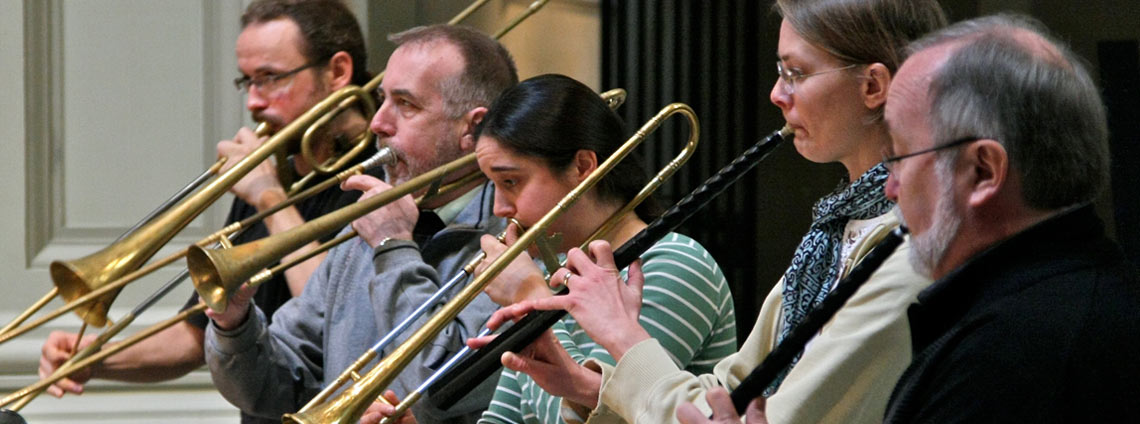
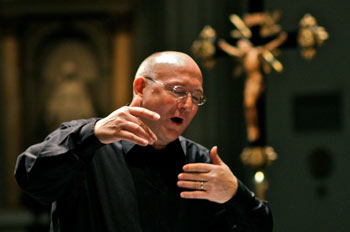
Monteverdi’s Vespers is a undisputed masterpiece. Conductor and lutenist Stephen Stubbs leads nine soloists, the Vancouver Chamber Choir, and a collection of North America’s best seventeenth-century instrumentalists including the peerless Bruce Dickey on cornetto.
“this was an utterly thrilling Vespers, of a quality you are unlikely ever to encounter anywhere else in the world.” – The Seattle Times


Concert Programme
TEXTS AND TRANSLATIONS
PROGRAMME
Claudio Monteverdi (1567-1643):
Deus in adiutorium
Domine ad adiuvandum
Psalmus 109: Dixit Dominus
Concerto: Nigra sum
Psalmus 112: Laudate pueri
Concerto: Pulchra es
Psalmus 121: Lætatus sum
Concerto: Duo seraphim
Psalmus 126: Nisi Dominus
Concerto: Audi Cœlum
INTERVAL
Lauda, Jerusalem
Sonata sopra “Sancta Maria, ora pro nobis”
Hymnus: Ave maris stella
Magnificat
I Magnificat
II Et exultavit
III Quia respexit
IV Quia fecit mihi magna
V Et misericordia
VI Fecit potentiam
VII Deposuit potentes
VIII Esurientes implevit bonis
IX Suscepit Israel
X Sicut locutus est
XI Gloria Patri
XII Sicut erat in principio
PROGRAMME NOTES
Anyone who sets out to perform Monteverdi’s 1610 Vespers in the early 21st century is in the lucky position of standing on the shoulders of giants. First and foremost that musical giant, Monteverdi himself, whose powerful and individual voice still speaks so clearly across the intervening centuries; but also those adventurous souls who pioneered the revival of the instruments and techniques which over the last 50 years have made it ever more possible to hear the sonorities that Monteverdi would have known. The work itself has become one of the most performed and beloved masterpieces from the 17th century.
My personal experience with the Vespers goes back to my hometown of Seattle on the eve of my departure for Europe in the late 70s. I had only had a chitarrone for a matter of weeks, and this was my first outing with that extinct giraffe-like instrument. I fell in love permanently with both the instrument and Monteverdi’s music.
During the 80s, as a freelance lutenist living in Germany, I was often called upon to play in the Vespers with various local choir directors who would hire outstanding tenor soloists and a few professional specialists of the cornetto and chitarrone (Bruce Dickey and myself amongst others).
There were also many performances under the direction of Jürgen Jürgens in Hamburg. As the founder of the Monteverdi-Chor and the editor of Universal-Edition’s widely-performed 1977 edition of the Vespers, Jürgen (who died in 1994) was responsible for making the work more widely known and popular.
But by the 1980s his “Monteverdi” choir had reached mammoth proportions. These performances varied in quality, but left me and my fellow professionals with the conviction that Monteverdi could not have intended these pieces for performance by large amateur choirs.
The 1980s were also the years when Joshua Rifkin challenged more than a century of performance practice by asserting that Bach’s “choral” works had been written for solo voices, not choruses in the modern sense. Considered highly controversial at the time, Rifkin’s ideas are now almost universally accepted as the norm for baroque music.
These new notions informed the annual performances of the Vespers that began at Leiden’s Pieterkerk in the Netherlands in 1998, with an ensemble of marvelous soloists, my instrumental ensemble Tragicomedia, and Bruce Dickey’s wind band Concerto Palatino.
The version of the piece that you will hear tonight in Vancouver represents what I feel, from experience, represents a sort of “ideal hybrid” of these two performing traditions. In our version, nine solo voices cover much of the florid and clearly solistic musical material backed up by a professional chorus for the more solid but splendid homophonic moments. After performing this work for over 35 years, the Monteverdi Vespers of 1610 is a still a revelation to me.
– Stephen Stubbs
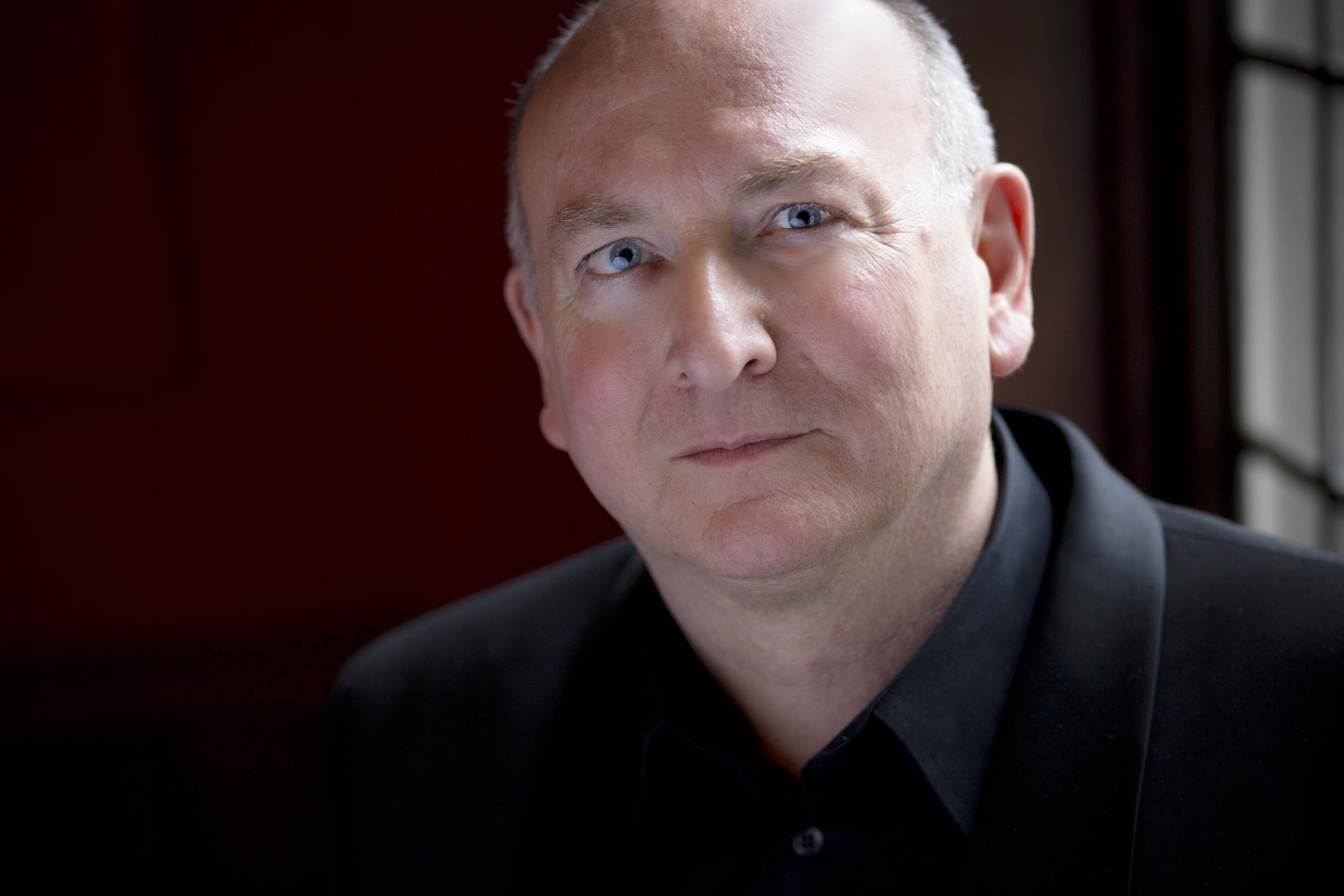
Stephen Stubbs
Stephen Stubbs, who won the GRAMMY® Award as conductor for Best Opera Recording 2015, spent a 30-year career in Europe. He returned to his native Seattle in 2006 as one of the world’s most respected lutenists, conductors, and baroque opera specialists.
In 2007 Stephen established his new production company, Pacific MusicWorks, based in Seattle. He is the Boston Early Music Festival’s permanent artistic co-director, recordings of which were nominated for five GRAMMY awards. Also in 2015 BEMF recordings won two Echo Klassik awards and the Diapason d’Or de l’Année.
In addition to his ongoing commitments to PMW and BEMF, other recent appearances have included Handel’s Amadigi for Opera UCLA, Mozart’s Magic Flute and Cosi fan Tutte in Hawaii, Handel’s Agrippina and Semele for Opera Omaha, Cavalli’s Calisto and Rameau’s Hippolyte et Aricie for Juilliard and Mozart’s Il re pastore for the Merola program in San Francisco. He has conducted Handel’s Messiah with the Seattle, Edmonton, Birmingham and Houston Symphony orchestras.
His extensive discography as conductor and solo lutenist includes well over 100 CDs, which can be viewed at stephenstubbs.com, many of which have received international acclaim and awards.
Stephen is represented by Schwalbe and Partners (schwalbeandpartners.com).
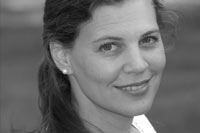
Jolle Greenleaf
Hailed as a “golden soprano” and called “a major force in the New York early music-scene” by the New York Times, Jolle Greenleaf is one of the leading voices in the field. She is a much sought-after soloist in music by Bach, Handel, Haydn, Purcell, Mozart and, most notably, Claudio Monteverdi. Her performances have earned raves from the Oregonian, “[Greenleaf] sang with purity and beguiling naturalness,” and the New York Times, who called her “An exciting soprano soloist… beautifully accurate and stylish…”
Ms. Greenleaf is also the artistic director of the virtuoso one-voice-per-part ensemble TENET, where she creates programs, directs and sings in performances of repertoire spanning the Middle Ages to the present day. TENET’s programming has been lauded by the New York Times as “smart, varied and not entirely early.”
Ms. Greenleaf has balanced a career as a top soloist and innovative impressaria. In January of 2010, she spearheaded a performance of Monteverdi’s Vespers of 1610, (the first performance of the work to celebrate its 400th anniversary), by creating the Green Mountain Project (a special TENET initiative). For the Green Mountain Project she engaged singers and instrumentalists as well as managed all the logistics of mounting a major musical production. A live CD recording was made of the performance and the program has become an annual event that plays to overflow audiences and earns rave reviews. Greenleaf frequently invites top-notch musicians from the New York-based early music community to guest direct TENET projects and strives to combine forces with other ensembles to share idea.
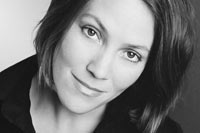
Catherine Webster
Soprano Catherine Webster is engaged regularly by many leading early music and chamber ensembles in North America. She has appeared as a soloist with Tafelmusik, Tragicomedia, Theatre of Voices, Netherlands Bach Society, Apollo’s Fire, American Baroque Orchestra, Magnificat, Musica Angelica, El Mundo, Four Nations Ensemble, Studio de Musique Ancienne de Montreal, Ensemble Masques, Les Voix Baroques, Early Music Vancouver, and at the Vancouver, Berkeley, Montreal and Boston Early Music Festivals.
Active also in contemporary music, Webster has appeared with The Kronos Quartet in Terry Riley’s Sun Rings and with Theatre of Voices and the Los Angeles Philharmonic in John Adam’s Grand Pianola Music.
Catherine Webster is a frequent collaborator with baroque opera directors Stephen Stubbs and Paul O’Dette, appearing under their direction in Early Music Vancouver’s production for the 2013 edition of Festival Vancouver in Monteverdi’s L’Incoronazione di Poppea and the premiere of Mattheson’s Boris Goudenov for the Boston Early Music Festival. She has recorded for Harmonia Mundi, Naxos, Musica Omnia, Analekta and Atma.
Catherine holds a Master’s in Music from the Early Music Institute at Indiana University and has been a guest faculty member and artist for The San Francisco Early Music Society’s summer workshops and the Madison Early Music Festival.

Laura Pudwell
Grammy-nominated Laura Pudwell’s reputation as a superb vocalist has been well-established as a result of her performances in London, Paris, Salzburg, Houston, Vienna and Boston. Her vast repertoire ranges from early music to contemporary works. Ms. Pudwell is equally at home on the opera, oratorio or recital stage, and has received international acclaim for her recordings.
A frequent guest of many national and international presenters, Ms. Pudwell has had the privilege of working with many outstanding conductors, including Hans Graf, Hervé Niquet, Andrew Parrott, Ivars Taurens, Bernard Labadie, Lydia Adams, Howard Dyck and Robert Cooper.
On the opera stage, she has performed across Canada with such companies as Opera Atelier, the Calgary Opera, Vancouver Early Music and Festival Vancouver, as well as with the Houston Grand Opera and the Cleveland Opera. Her many roles include Cornelia (Giulio Cesare), Marcelina (Le Nozze di Figaro), Nerone and Arnalta (L’Incoronazione di Poppea) and Dido/Sorceress (Dido & Aeneas), which also was an award-winning recording performed by Ms. Pudwell in Paris.
Laura Pudwell is a regular participant in many festivals, including Festival Vancouver, the Ottawa Chamber Music Festival, the Banff Summer Festival, the Elora Festival, the Boston Early Music Festival and the WinterPark Bach Festival in Orlando.
Ms. Pudwell appears regularly with the Toronto Consort, and is a frequent guest soloist with Tafelmusik, the Calgary Philharmonic Orchestra, the Toronto Chamber Choir, Symphony Nova Scotia, the St. Lawrence Choir, Le Concert Spirituel and the Menno Singers.
Ms. Pudwell lives in Kitchener-Waterloo, Ontario with her husband and two children.
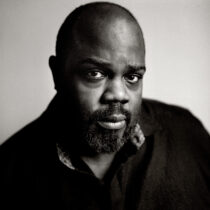
Reginald Mobley
Noted for his ‘shimmering voice’ (BachTrack), American countertenor Reginald Mobley is highly sought after for the baroque, classical and modern repertoire.
Reginald leads a very prolific career on both sides of the Atlantic. In the United States, where he resides, he became the first ever programming consultant for the Handel & Haydn Society following several years of leading H&H in his community engaging Every Voice concerts. He also holds the position of Visiting Artist for Diversity Outreach with the Baroque ensemble Apollo’s Fire, and is a regular guest with Cantata Collective, Musica Angelica, Agave Baroque, Charlotte Bach Akademie, Seraphic Fire, Quodlibet, Pacific Music Works, Bach Collegium San Diego, San Francisco Early Music Society and Philharmonia Baroque Orchestra.
Recent engagements have included concerts and recordings with the Chicago Symphony Orchestra, Opera Lafayette, Blue Heron, Chatham Baroque, Washington Bach Consort, Atlanta Baroque Orchestra and Early Music Seattle. Future highlights include Carmina Burana with the Chicago Symphony Orchestra, Messiah with the New York Philharmonic and Pittsburgh Symphony Orchestras, a debut at Carnegie Hall with Orchestra St Luke’s and at the Walt Disney Hall in Los Angeles.
In Europe, Reginald has been invited to perform with the OH! (Orkiestra Historycsna) in Poland, Vienna Academy in Austria (Musikverein), Musée d’Orsay in Paris, Royal Scottish National Orchestra, Academy of Ancient Music, City of Birmingham Symphony Orchestra, Balthasar Neumann Chor & Ensemble, Bach Society in Stuttgart, Holland Baroque Orchestra and in the autumn of 2021, he performed the role of Ottone in L’incoronazione di Poppea in Geneva, MUPA and Teatro di Vicenza in a European tour with The Budapest Festival Orchestra. He has also extensively toured with the Monteverdi Choir and Orchestra under the baton of John-Eliot Gardiner, and more recently performed a series of English music programmes in Germany with the Freiburger Barockorchester under the leadership of Kristian Bezuidenhout.
His recordings have been received with great critical acclaim, most recently American Originals with Agave Baroque ensemble, recorded with Acis Productions, which has been nominated for a GRAMMY Award, following A Lad’s Love with Brian Giebler on BRIDGE 9542 label. Reginald features on several albums with the Monteverdi Choir and Sir John Eliot Gardiner, including a recording of Bach’s St Matthew Passion and Magnificat, where Reginald ‘encapsulates whimsical pathos’ (Classical Music Magazine) His solo recording debut with ALPHA Classics will be released in June 2023. Reginald’s work has earned him both a 2023 Grammy Awards and 2023 Classical Music Awards Nomination.
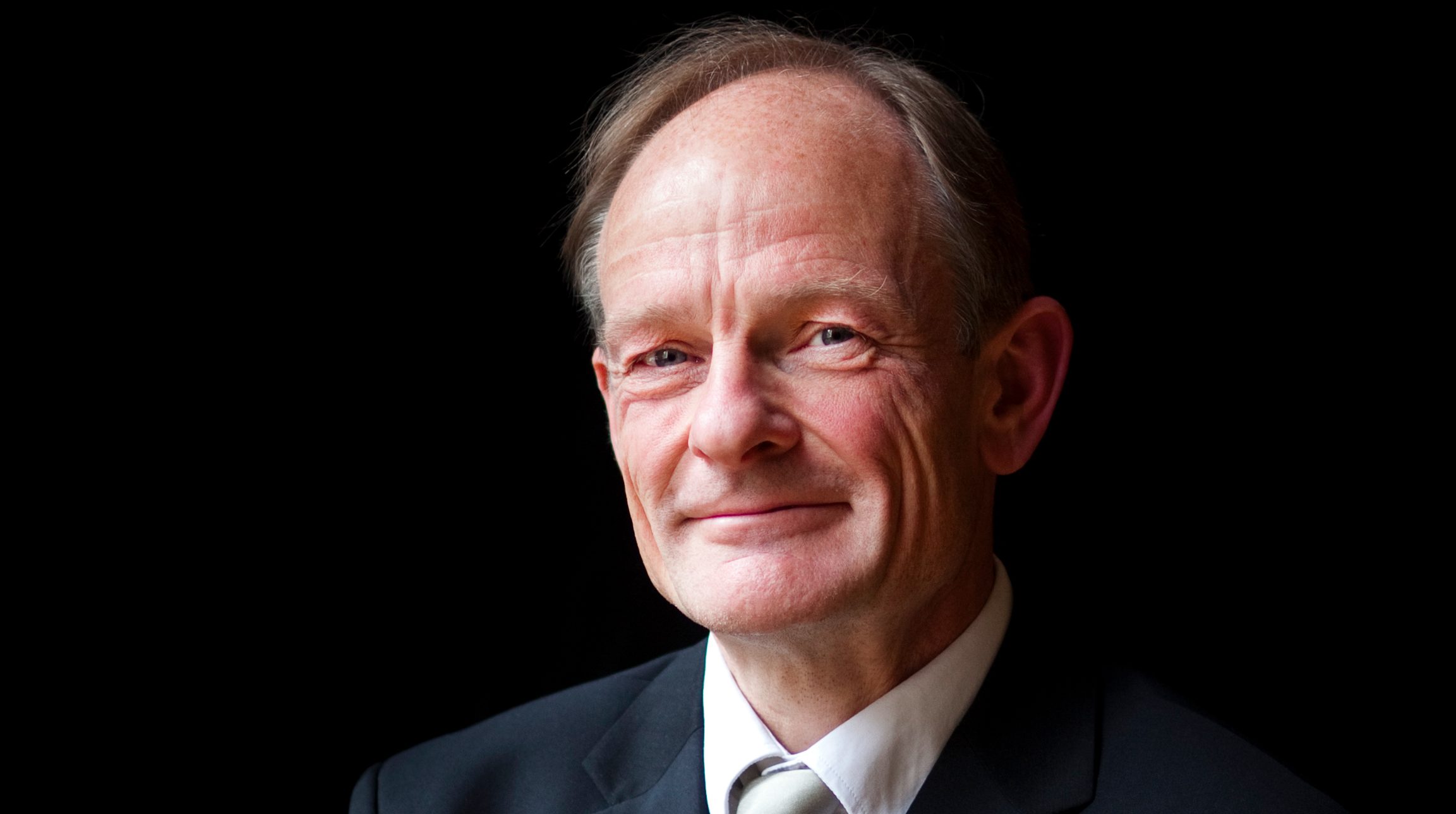
Charles Daniels
Charles Daniels is a noted interpreter of Baroque music, though his narrative gifts are praised for music as diverse as Machaut Virelais and Graham Treacher’s Visions (2016). His recordings include Monteverdi’s L’Orfeo with Andrew Parrott, Bach’s Matthäus Passion with the Bach-Stiftung; Schütz Weihnachtshistorie, Monteverdi’s Vespers and Purcell’s Fairy-Queen with the Gabrieli Consort; Heracleitus with the Bridge Quartet and Lambert airs with Fred Jacobs; Kilar’s Missa Pro Pace with the Warsaw Philharmonic; much Bach and recent Purcell releases with the King’s Consort.
He created the dual role of Ulisse and John Gregory Dunne to critical acclaim in last year’s Bayerische Staatsoper production of Il Ritorno d’Ulisse/Jahr des magisches Denken His concert appearances span the intimate and the grand, from BBC Radio 3 recitals with lutenist Elizabeth Kenny, domestic music of Bach for Nederlandse Bach Vereniging and Handel Chandos Anthems in their original setting of the Canons Estate church, to performances of Britten’s War Requiem (Canterbury, Lille) and Elgar’s Dream of Gerontius (Cardiff, Wroclaw). Recent concerts include Dowland in Japan with Les Voix Humaines, Viadana in Verona and Switzerland with Bruce Dickey, a Weckmann programme in Vienna’s Konzerthaus and the 50th birthday celebration in Oxford of Andrew Parrott’s Taverner Consort.
Charles’ reconstructions of Gesualdo’s Sacrae Cantiones à6 have been premiered by the Gesualdo Consort of Amsterdam and his completion of Purcell’s court Ode Arise my Muse was broadcast on Radio-Canada during the Montréal Baroque Festival. He is delighted to return to EMV for this summer’s Festival.
Zachary Wilder
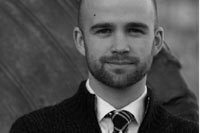
Described as possessing a “remarkably clear, flexible lyric tenor,” and a “radiant tone,” Zachary Wilder is a much sought after performer on both the operatic and concert stage. He has performed with numerous groups internationally, including Ars Lyrica Houston, Back Bay Chorale, Blue Heron, Boston Early Music Festival, Britten-Pears Baroque Orchestra, Camerata Ventepane, Cappella Mediterranea, Emmanuel Music,
Ensemble Clematis, A Far Cry, Festival D’Aix en Provence, Green Mountain Project, Handel & Haydn Society, Harvard Baroque Orchestra, Houston Bach Society, les Arts Florissants, Mark Morris Dance Group, Mercury Orchestra, Pacific Musicworks, Portland Baroque Orchestra, Tenet Ensemble, and Tesserae. He was chosen by William Christie for the 2013 edition of Jardin des Voix, was named a Lorraine Hunt Lieberson Fellow at Emmanuel Music, Adams Masterclass Fellow at the Carmel Bach Festival, a former Gerdine Young Artist at the Opera Theatre of Saint Louis, as well as a Tanglewood Music Center Fellow. He can be heard on Boston Early Music Festival’s grammy nominated recording of Lully’s Psyché, as well as their recordings of Charpentier’s Actéon and John Blow’s Venus and Adonis on the CPO label.
Monteverdi Vespers of 1610
Douglas Williams
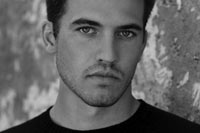
Douglas Williams, bass-baritone, has appeared this year in two landmark new opera productions from two of the world’s most celebrated director-choreographers: Handel’s Acis and Galatea in Mozart’s orchestration with Mark Morris at Lincoln Center in the role of Polyphemus, conducted by Nicolas McGegan, and Monteverdi’s Orfeo with Sasha Waltz at the Dutch National Opera in the role of Caronte, conducted by Pablo Heras-Casado. Both productions will tour this season taking Mr. Williams to the Grand Théâtre Luxembourg, Kansas City Kauffman Center, Bergen Festival,
Baden-Baden Festspiehaus, and Berlin Staatsoper. Other highlights of the season include Handel’s Agrippina with Boston Baroque, Pergolesi’s La Serva Padrona with the Boston Early Music Festival, and an appearance with James Levine and the Metropolitan Opera Chamber Ensemble at Carnegie Hall in Charles Wuorinen’s It Happens Like This, a piece that Mr. Williams premiered in 2011.
Visit Douglas on the web at: www.douglasrwilliams.com
Charles Robert Stephens
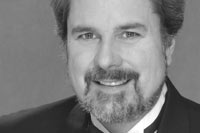
Charles Robert Stephens has enjoyed a career spanning a wide variety of roles and styles in opera and concert music. His performances have shown “a committed characterization and a voice of considerable beauty.” (Opera News, 1995) At the New York City Opera he sang the role of Professor Friedrich Bhaer in the New York premiere of Adamo’s Little Women, and was hailed by the New York Times as a “baritone of smooth distinction.”
Other New York City Opera roles since his debut as Marcello in 1995 include Frank in Die Tote Stadt, Sharpless in Madame Butterfly, and Germont in La Traviata. He has sung on numerous occasions at Carnegie Hall in a variety of roles with Opera Orchestra of New York, the Oratorio Society of New York, the Masterworks Chorus, and Musica Sacra.
Now based in Seattle, he has sung with Seattle Symphony, Tacoma and Spokane Symphony and Opera Companies, Portland Chamber Orchestra and others. He joins the roster of Seattle Opera in 2010 for the premiere of Amelia by Daron Hagen. Upcoming performances include two concerts with Stephen Stubbs: Handel’s Esther and Monteverdi Vespers a return engagement with Seattle Symphony in “Opera Festival,” a debut with Boston Early Music Festival in Steffani’s Niobe, Queen of Thebes and a return engagement with the American Classical Orchestra as Jesus in Bach’s St. Matthew Passion at St. John the Divine in NYC.
On the international stage he has sung Rigoletto at Taipei’s National Theater, Sharpless in Santo Domingo, Germont and Valentin (Faust) in Montevideo, Uruguay, and Montano (Otello) in Mexico City. Concert tours have taken him to France, Russia, and Canada. Mr. Stephens has worked closely with composers in the preparation and performance of new works for the concert hall and the stage, taking part in many premieres at Lincoln Center and as part of “Regina Resnik Presents” television. A native of New London, Connecticut, Mr. Stephens received his training at the University of Connecticut, Boston University, the Goldovsky Opera Institute, and the Santa Fe Opera.