The Chan Centre | Map
Nathalie Paulin, soprano; Krisztina Szabó, mezzo-soprano; Lawrence Zazzo, countertenor; Zachary Wilder, tenor; Matthew Brook, bass-baritone; Alexander Weimann | Sponsored by Bruce Munro Wright, O.B.C., music director; Pacific Baroque Orchestra; Vancouver Cantata Singers



“Handel doesn’t miss a trick in creating spectacular choral effects; neither did music director Alexander Weimann in bringing them to life with theatrical cunning and an all-embracing sense of joy” The Vancouver Sun, review of G.F. Handel’s Israel in Egypt
“Alexander Weimann’s pacing of the action, choice of tempi and shaping of orchestral ritornellos are marvellous…One of the most consistently charming Handel opera recordings I’ve reviewed in ages.” Gramophone Magazine, review of Handel’s Orlando
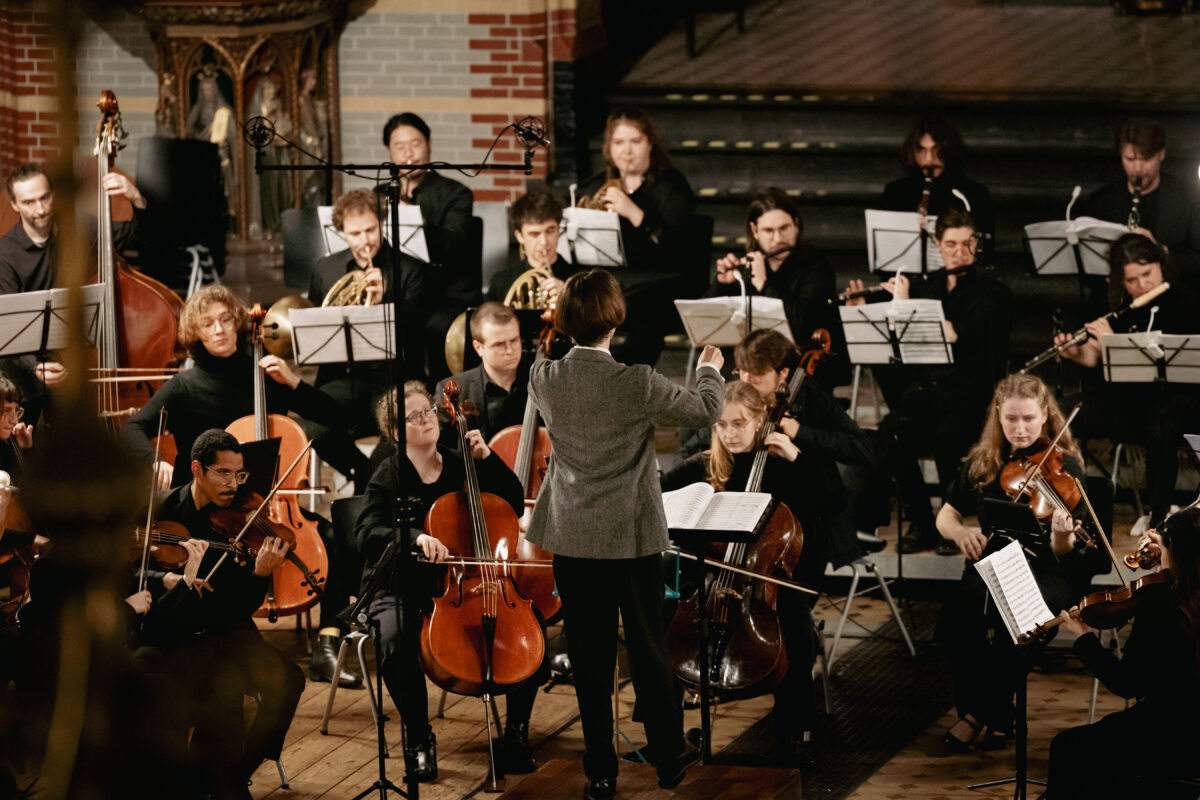
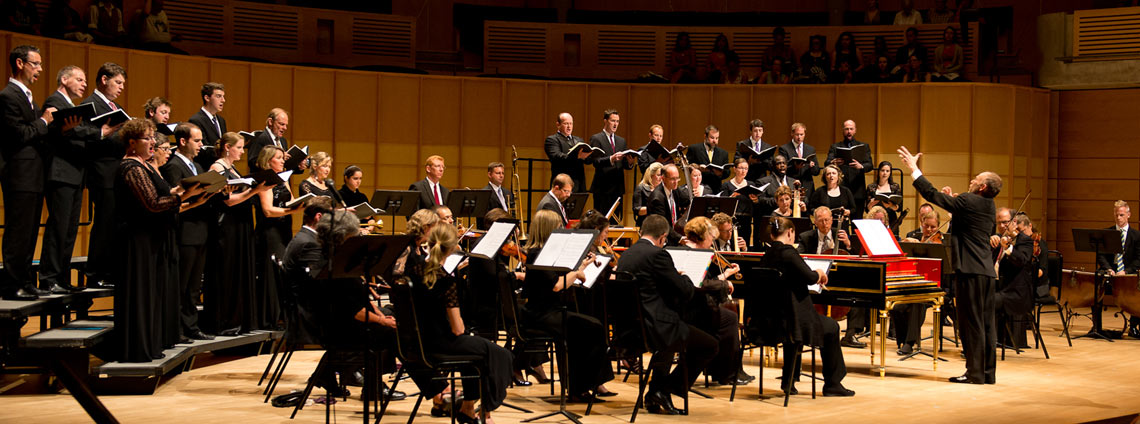
Theodora is of one of Handel’s largest-scale oratorios for soloists, choir and orchestra and was his personal favourite. Featuring some of the composer’s most glorious music, this tragic work depicts the self-sacrificial love between a Christian virgin and a Roman imperial bodyguard. It serves as a timeless parable of spiritual resistance to tyranny and an indictment of persecution, topics that still resonate with audiences today. This production features 28 members of the Pacific Baroque Orchestra, 40 members of the Vancouver Cantata Singers and five international soloists, all under the direction of Alexander Weimann.
Programme
To be added soon…
Programme notes
By 1749, George Frideric Handel (Georg Friedrich Händel) was still revered as England’s foremost composer, though keeping ahead of the ever-changing whims of London’s notoriously fickle audiences was an ongoing challenge. The 65-year-old’s obligations for the coming season were daunting. He was to provide Fireworks Music in celebration of the recent Treaty of Aix-la-Chapelle, inspect and inaugurate the new pipe organ he was donating to the Foundling Hospital (his favourite charity), write several more organ concerti, and contract soloists and instrumentalists for multiple performances of several earlier oratorios. Finding time to write even a single new oratorio for the coming Lenten Season would be difficult.
Only 38 years earlier, this young German’s Italian opera Rinaldo had been so successful that the king and others persuaded Handel to move to London. But by 1741 and 37 operas later, ticket receipts were no longer covering costs. The Londoners’ former thirst for Italian opera had been well-quenched. Fortunately, the enterprising Handel had already begun offering entertaining oratorios in English in 1732 for the austere weeks of Lent, when society’s upper classes felt obliged to submit to ecclesiastical admonitions to forego secular theatrical performances during the season of repentance. Handel realized how readily texts extoling heroic biblical figures could supplant those about ancient deities and Roman politicians. Omitting stage sets and staging helped to quiet uneasy consciences even further, and yet the oratorio libretti, operatic soloists, choir and orchestra could remain as dramatic as in any opera. Being sung in English also worked, as Handel learned when he presented Esther in London (1732, libretto by Alexander Pope—not to be confused with Pope Alexander). By the 1740s, Handel was managing to write one, and sometimes two new oratorios for the coming Lenten season’s concerts. Yes, his audiences still adored Messiah year after year, but they wanted other oratorios as well—annually.
Thus it was that in 1749, when Handel turned his attention to the coming 1750 Lenten season, he quite naturally asked his latest favourite librettist, the Rev. Thomas Morell (1703-84) to create something special. Morell had been reading Love and Religion Demonstrated in the Martyrdom of Theodora, and of Didymus (London: John Taylor, 1703), written by the Irish physicist and chemist, Robert Boyle (1627-91, best known for “Boyle’s Law”). Settling on the more manageable title Theodora, Morell created a libretto which he felt would both stimulate Handel’s creativity and appeal to English audiences. Rather than another story from Hebrew scripture (Deborah, Saul, Israel in Egypt, Joseph and his Brethren, Joshua, Solomon) or the Apocrypha (Judas Maccabaeus), Morell turned to this legendary story of two martyred saints set in the societal and political struggles between the established Roman state religion and the new faith becoming known as Christianity. This offshoot of Judaism was increasingly attracting slaves and women—the marginalized who had little to lose by exploring the ideals of equality and economic charity advocated by Jesus and St Paul. By the third century, Christianity was beginning to infiltrate certain isolated circles of Roman noble women, occasionally an entire Roman household, and even individual Roman soldiers secretly converted. The oratorio’s opening pages reveal the growing opposition to the old religious thinking. Constantine’s Edit of Milan would decriminalize Christianity in 313, but our story takes place 302-305, in Antioch during the reign of Diocletian.
Morell saw how a story focusing on two individuals in this environment could give expression to profound conflicts of loyalties between friends, the struggle between the status quo and new ideas, and the inner anguish over whether to remain a secret Christian, recant Christianity or die for your faith. Add to this the tension between physical and platonic love, and Theodora’s inner struggle (as a Christian virgin of noble birth) between the expediency of escaping a sentence of enforced prostitution (occasionally associated with certain religious festivals) and the agony of renouncing her faith—there is more than enough dramatic fodder for each aria and recitative. In all this turmoil, Morell found ways to insert subtle pleas for freedom of thought and even religious freedom, topics of contemporary interest as Methodism gained adherents at the expense of the established national church in the midst of an increasingly secular society. Whatever its merits, this story about two Roman Christian martyrs was far-removed from the previous year’s oratorios featuring the magnificent pageantry of Solomon or the charming rural comedy of Susanna.
Handel considered the libretto for Theodora to be the best and most stimulating he had ever encountered. Indeed, the role of Theodora is generally considered his best for soprano. Successful oratorios, like all theatrical works set to music, require emotive texts which encourage the composer to create music supporting each distinct emotion through the character of its accompanying melody, and by the rhythms reflecting the relative intensity or contemplative nature of the words. Most wonderfully of all, the orchestra’s changing colours and moods continually depict the passing emotional landscapes on the expansive musical canvas. But even small touches can transform us, as when, in the Symphony which opens Act II, Scene 2 (set in prison), the strings play repeated chords, which are answered by a single note held by the flutes—a melody which is as fettered as Theodora herself. It is always fascinating to follow what Handel does with the orchestra in the succession of arias, now simply undergirding the vocalist, now providing a melodic counterfoil, now vigorously competing for attention, now outshining even the most acrobatic vocal arabesques.
Julian Herbage once quipped that “Handel’s pagans always have an ear for a catchy tune, and an almost complete ignorance of counterpoint.” By contrast, the Christians get the more profound choruses—often with superb counterpoint. Biographia Dramatica reports that Handel was asked “whether he did not consider the grand [Hallelujah] Chorus in The Messiah as his masterpiece. ‘No,’ said he, ‘I think the chorus, “He saw the lovely youth,” at the end of the second part in Theodora far beyond it.’” Contemplative choruses can be truly effective for the sensitive listener.
One wonders why such an oratorio did not initially succeed in London. Handel once quipped that it was because “The Jews will not come to it as to Judas because it is a Christian story; and the ladies will not come because it is a virtuous one.” Charles Burney writing of slim attendances at Handel’s concerts one season, reported, “Sometimes, however, I have heard him, as pleasantly as philosophically, console hi[s] friends, when, previous to the curtain being drawn up, they have lamented that the house was so empty, by saying, ‘Nevre moind; di moosic vil sound de petter.’” Fortunately, today’s audiences are embracing Theodora wholeheartedly, as the recent Glyndebourne Festival Opera’s 1996 revival proved. Be prepared to be amazed by how effectively this wonderful music continues to speak to us 266 years after it was written by the composer, who—single-handedly—began the English world’s love affair with English oratorio.
-J. Evan Kreider
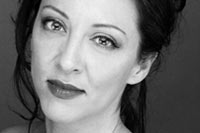
Nathalie Paulin, soprano
Soprano Nathalie Paulin has established herself in the United States, Canada, Europe and the Far East as an interpretive artist of the very first rank. Winner of a Dora Mavor Moore Award for Outstanding Opera Performance, she has collaborated with internationally renowned conductors including Jane Glover, Yannick Nézet-Séguin, Antony Walker, Sir Roger Norrington, Andrew Parrott, Jonathan Darlington, Hervé Niquet, David Agler, Richard Bradshaw, Bernard Labadie, Michael Christie, Robert Spano, Mario Bernardi, Graeme Jenkins, Andrew Litton and Yoav Talmi on both the concert platform and in opera.
As well, critics have been lavish in their praise. Reviewing from Chicago, John van Rhein noted that “Paulin in particular is a real find; her rich, agile voice possesses great depth and allure, her manner radiates sensuous charm.” Ms. Paulin debuted for L’Opéra de Montréal as Mélisande in PÉLLÉAS ET MÉLISANDE and for Chicago Opera Theater as Galatea in ACIS AND GALATEA. She was re-engaged by Chicago Opera Theater for the title role in SEMELE and for Mary in LA RESURREZIONE, both by Handel. She has also been heard as Constance in DIALOGUES DES CARMÉLITES for Calgary Opera, Zerlina in DON GIOVANNI for L’Opéra de Québec and Susanna in LE NOZZE DI FIGARO for Cincinnati Opera. The Dallas Opera featured her in CARMEN and CUNNING LITTLE VIXEN.
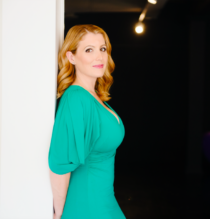
Krisztina Szabó, mezzo-soprano
Hungarian-Canadian mezzo-soprano Krisztina Szabó is highly sought after in North America and Europe as an artist of supreme musicianship and stagecraft. She is known for her promotion and performance of contemporary Canadian works. Among her many laudatory reviews, Opera Canada declared her to be an “exceptional talent” after her performance of the title role of Dido in Purcell’s Dido and Aeneas. After a performance with Tapestry Opera, the music blog, Schmopera wrote that “her instrument is one-of-a-kind and she has cemented herself as a darling of Canadian experimental music and opera…her sensibility and sensitivity to the material is truly inspiring”. In her hometown of Toronto, she has been nominated twice for a Dora Award for Outstanding Female Performance. Krisztina has recently been appointed Assistant Professor of Voice and Opera at the University of British Columbia School of Music.
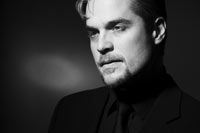
Lawrence Zazzo, countertenor
The American countertenor Lawrence Zazzo is one of the most outstanding singers of his generation. A native of Philadelphia and a graduate in both English and Music from Yale University and King’s College, Cambridge, Lawrence made his operatic debut as Oberon A Midsummer Night’s Dream to great acclaim while completing his vocal studies at the Royal College of Music, London.
He has since appeared in many of the world’s finest opera houses and concert halls. His opera roles include the title role in Giulio Cesare(Metropolitan OperaNew York, Paris, London, Brussels, Seville, Bilbao), the title role in Gluck’s Orfeo (Vienna, Toronto, Oslo, Netherlands), Oberon A Midsummer Night’s Dream (Rome, Lyon, Toronto), Farnace Mitridate (Munich), the title role in Radamisto (English National Opera), Arsamene Serse (Theatre des Champs-Elysees, English National Opera), Goffredo Rinaldo (Berlin Staatsoper, Zurich, Opéra de Montpellier); Ottone Agrippina (Brussels, Frankfurt, Theatre des Champs-Elysees), Endimione La Calisto (Munich, Brussels, Paris), Ottone L’incoronazione di Poppea (Vienna, Berlin, Brussels, Munich), Ruggiero in Orlando Furioso (Frankfurt), and the title roles in Handel’s Sosarme (Sao Carlos, Lisbon) and Alessandro(Karlsruhe).
Lawrence is also a keen advocate of 20th century and contemporary music. He created the role of Trinculo in Thomas Ades’ The Tempest at the Royal Opera House Covent Garden, and his Paris Opera debut was as Kreon in Liebermann’s Medea. He has also sung Sciarrino’s Luci mie traditrici in Brussels, New York, and Rouen, and is closely associated with the role of Mascha in Peter Eötvos’ Three Sisters which he has performed in several productions in Lyon, Brussels, Edinburgh, Vienna, and the Netherlands. He made his BBC Symphony Orchestra debut in their commission of Jonathan Dove’s Hojoki, sang the Refugee in Jonathan Dove’s Flight for the Glyndebourne Festival, and made his Wigmore recital debut with a programme of 20th-century American songs.
Lawrence has worked with many distinguished conductors in the fields of Baroque and contemporary music, including René Jacobs, William Christie, Nikolaus Harnoncourt, Rinaldo Alessandrini, Christophe Rousset, John Nelson, Ivor Bolton, James Conlon, Alan Curtis, Hervé Niquet, Harry Bicket , Joshua Rifkin, Christopher Hogwood, Peter Eötvos, Jean-Claude Malgoire, Trevor Pinnock, Jordi Savall, Harry Christophers, and Paul Goodwin. He was the first western countertenor invited to China to sing Messiah at the Shanghai Opera. His international concert career highlights include: the title roles of Handel’s Lotario and Riccardo Primo with the Kammerorchester Basel in a European tour and recording with Paul Goodwin, Messiah with Rene Jacobs and the Freiburger Barockorchesterand in Notre Dame Cathedral with John Nelson and L’ensemble orchestrale de Paris, Bach Lutheran Masses under Joshua Rifkin in Leipzig, the St. Matthew Passion in Ambronay and Köthen with the Akademie für Alte Musik, the title role in Handel’s Amadigi with Christopher Hogwood and the AAM in London and Birmingham, the title role in Mozart’s Ascanio in Alba with the Berliner Symphoniker, Vivaldi’s Nisi Dominusand Gloriawith the Israel Camerata, the B Minor Mass with Ivor Bolton in Salzburg, Jephtha in Graz with Nikolaus Harnoncourt, Theodora in Paris and Vienna with Hervé Niquet and Le concert spirituel, and Saul in Berlin and Lisbon with René Jacobs and Concerto Köln. An accomplished recitalist, he has given many around Europe, most recently at the Wigmore Hall, the Norwegian Opera, the Festival d’Opera Baroque de Beaune, the Rheinvokal Festival, the MA Festival Bruges, and the Vienna Konzerthaus.
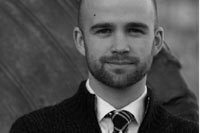
Zachary Wilder, tenor
Described as possessing a “remarkably clear, flexible lyric tenor,” and a “radiant tone,” Zachary Wilder is a much sought after performer on both the operatic and concert stage. He has performed with numerous groups internationally, including Ars Lyrica Houston, Back Bay Chorale, Blue Heron, Boston Early Music Festival, Britten-Pears Baroque Orchestra, Camerata Ventepane, Cappella Mediterranea, Emmanuel Music,
Ensemble Clematis, A Far Cry, Festival D’Aix en Provence, Green Mountain Project, Handel & Haydn Society, Harvard Baroque Orchestra, Houston Bach Society, les Arts Florissants, Mark Morris Dance Group, Mercury Orchestra, Pacific Musicworks, Portland Baroque Orchestra, Tenet Ensemble, and Tesserae. He was chosen by William Christie for the 2013 edition of Jardin des Voix, was named a Lorraine Hunt Lieberson Fellow at Emmanuel Music, Adams Masterclass Fellow at the Carmel Bach Festival, a former Gerdine Young Artist at the Opera Theatre of Saint Louis, as well as a Tanglewood Music Center Fellow. He can be heard on Boston Early Music Festival’s grammy nominated recording of Lully’s Psyché, as well as their recordings of Charpentier’s Actéon and John Blow’s Venus and Adonis on the CPO label.

Matthew Brook, bass-baritone
Matthew Brook has appeared widely as a soloist, and has worked extensively with conductors such as Sir John Eliot Gardiner, Richard Hickox, Sir Charles Mackerras, Harry Christophers, Christophe Rousset, Paul McCreesh and Sir Mark Elder, and many ensembles including the Philharmonia, LSO, the St Petersburg Philharmonic,the RPO, Freiburg Baroque Orchestra, Orchestra of the Age of Enlightenment, the English Baroque Soloists, the Gabrieli Consort & Players, the Sixteen, the Royal Northern Sinfonia and Orchestre National de Lille.
Recent and future highlights include Purcell’s The Fairy Queen and Dido and Aeneas with the Handel and Haydn Society, Bach’s St John Passion with the St Paul Chamber Orchestra, Haydn’s Creation with the City of Birmingham
Symphony Orchestra, Bach’s Magnificat and Brahms’ Triumphlied with the Cincinnati Symphony Orchestra, Il Re di Scozia Ariodante with the Staatstheater Stuttgart and on tour with the English Concert, Bach’s B minor Mass at the Al Bustan Festival in Beirut and with Les Violons du Roy in Québec, Fauré’s Requiem with the Royal Philharmonic Orchestra, Mozart’s Requiem with the Fryderyk Chopin Institute in Warsaw, a tour of Bach cantatas with the Monteverdi Choir and Sir John Eliot Gardiner, and with the Nederlandse Bachvereniging and Early Music Vancouver, a tour of Bach’s St Matthew Passion with the Orchestra of the Age of Enlightenment, and with Gli Angeli Genève, Elgar’s The Dream of Gerontius with the Indianapolis Symphony Orchestra, Tippett’s A Child of Our Time at Festival St Denis, and the roles of Herod and Father in Berlioz’s L’Enfance du Christ with the Melbourne Symphony Orchestra and Sir Andrew Davis.

Alexander Weimann | Sponsored by Bruce Munro Wright, O.B.C., music director
The internationally renowned keyboard artist Alexander Weimann has spent his life enveloped by the therapeutic power and beauty of making music. Alex grew up in Munich. At age three he became fascinated by the intense magic of the church organ. He started piano at six, formal organ lessons at 12 and harpsichord at university (along with theatre theory, medieval Latin and jazz piano.) He is in huge demand as a director, soloist and chamber player, traveling the world with leading North American and European ensembles. He is Artistic Director of the Pacific Baroque Orchestra in Vancouver and teaches at the University of British Columbia where he directs the Baroque Orchestra Mentorship Programme.
Alex has appeared on more than 100 recordings, including the Juno-award-winning album “Prima Donna” with Karina Gauvin and Arion Baroque orchestra. His latest album series “The Art of Improvisation” (Volume 1: A Prayer for Peace; Volume 2: Ad libitum; and Volume 3: Canavian Variations, released on Redshift, 2024) unites his passions for both baroque music and improvisation on organ, harpsichord, and piano.

Pacific Baroque Orchestra
The ‘house band’ of Early Music Vancouver, The Pacific Baroque Orchestra (PBO) is recognized as one of Canada’s most exciting and innovative ensembles performing “early music for modern ears.” Formed in 1990, the orchestra quickly established itself as a force in Vancouver’s burgeoning music scene with the ongoing support of Early Music Vancouver. In 2009, PBO welcomed Alexander Weimann as Director. His imaginative programming, creativity and engaging musicianship have carved out a unique and vital place in the cultural landscape of Vancouver.
PBO regularly joins forces with internationally-celebrated Canadian guest artists, providing performance opportunities for Canadian musicians while exposing West Coast audiences to a spectacular variety of talent. The Orchestra has also toured throughout BC, the northern United States, and across Canada. Their 2019 East Coast Canadian tour with Canadian soprano Karina Gauvin culminated in a critically acclaimed album, Nuit Blanches, released by Atma Classique.
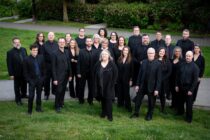
Vancouver Cantata Singers
The Vancouver Cantata Singers (VCS) is one of Canada’s preeminent, award-winning choral ensembles. Known for its exceptional artistry, technical virtuosity and exquisite tonal blend, the choir maintains the highest standards of performance in repertoire encompassing 500 years. VCS have been awarded the Canada Council’s top prize in choral singing, the Healey Willan Grand Prize, more than any other choir in the country. Led by Paula Kremer since 2013, VCS also commissions new works from critically acclaimed composers which have led to extremely successful and innovative collaborations with regional and international artists and ensembles.