

The Chan Centre | Map
Alexander Weimann | Sponsored by Bruce Munro Wright, O.B.C., music director; Amanda Forsythe, soprano Bellezza; Krisztina Szabó, soprano Piacere; Reginald Mobley, alto Disinganno; Colin Balzer, tenor Tempo; Pacific Baroque Orchestra
“Handel doesn’t miss a trick…. theatrical cunning and an all-embracing sense of joy.” (The Vancouver Sun, August 11, 2013) Leave the thorn. Gather the rose. After last summer’s groundbreaking performance of Israel in Egypt and the critical acclaim lavished on 2012’s Orlando, we’ve selected another extraordinary work from Handel’s oeuvre for our 2014 Festival centrepiece. Touring to the Ottawa Chamber Music Festival before coming to Vancouver – a first for EMV – this production will reach greater heights of artistic expression than ever before. Beauty and Pleasure abound in Handel’s first oratorio, the source of his ongoing genius.


Mahony and Sons is proud to sponsor Early Music Vancouver. Join us before or after your concert and make your experience a great one. For reservations visit mahonyandsons.com. We validate parking at our UBC location.
Programme notes
Have you ever dreamed about visiting the past on some momentous occasion? Hearing Lincoln at Gettysburg, seeing Nijinsky dance Spectre de la Rose, watching Hank Aaron break the Babe’s home run record? Here’s a somewhat offbeat nominee for lovers of great music: Imagine being among the eminent Romans invited to the intimate auditorium of the Clementine Order to hear the premiere of an oratorio by the latest virtuoso to take the music-mad aristocracy of the city by storm: a cherubic 22-year-old from Germany by the name of Georg Friedrich Händel.
When his Triumph of Time and Good Counsel had its first performance, Händel was only four years out of his birthplace, the provincial Prussian city of Halle. But acclaim for his dizzying facility as an organist had preceded him, and most of the audience at the Collegio Clementino would have been there more to hear him improvise on that instrument than to listen to a two-hour-long musico-dramatic debate written by a pillar of the Catholic Church establishment, Cardinal Benedetto Pamphili.
They got what they came for: Pamphili made room in his pious music-drama for his protege to perform a three-movement organ concerto, in the guise of a “lovely youth” with “wingèd hands” who pops up unexpectedly among the personnel of the Palace of Pleasure described in the libretto.
Did they also appreciate what else they heard that night: the earliest surviving music-drama of one of the greatest composers in that form who ever lived, the first of fifty-odd composed over the next 50 years or so?
There’s reason to believe they did. Despite the steady hostility of an older rival for Pamphili’s patronage, The Triumph of Time was revived annually for at least two years after its premiere: a very rare testimony to the power of the work in a time when even the greatest composers were accustomed to having their music treated like disposable ephemera.
Pamphili spared no effort or expense to ensure the piece got an attentive hearing. He engaged the finest singers in the city, and provided his private orchestra to accompany it, led by the great violin virtuoso Archangelo Corelli, himself among the most eminent living Italian composers. In more than equal exchange for the Cardinal’s support, Händel turned Pamphili’s rather frigid and conventional verse drama into dazzling entertainment, without betraying its roots as a Christian morality play.
The “Story” is simple. Beauty (she could just as easily have been called “the Soul”) has been feeling a little troubled lately. Is there perhaps more to life than an endless pursuit of fun? Her handmaid Pleasure says no, but the figure of Time enters with a different message: Repent your frivolous ways before it’s too late, he thunders. He’s backed up by his more discreet ally Good Counsel, who prefers to work by persuasion rather than threats.
And so, in Pamphili’s libretto, it goes: He says, she says, he says, she says, with the outcome never in doubt: This is 1707, after all, and we’re in the hands of an author who is also a Roman Catholic cardinal.
What turns all the moralizing back-and-forth into real drama is Handel’s endless string of musical surprises: Within a structure of conventional da capo arias, he slips in jigs, lullabies, and calls to battle, seductions, laments, glees, and prayers, each with a distinctive instrumental accompaniment and each daring its performer to cut loose and show us just how dazzling he or she can improvise on the written notes of the songs.
By the time Pleasure is decisively defeated (and departs in a whirlwind of angry coloratura), we have been treated to such a feast of brilliant singing and playing that Beauty’s final peaceful prayer makes a deliciously restful conclusion.
It makes no sense to talk about the greatest this or that in the career of a composer as stupefyingly prolific and consistent as Handel. But The Triumph of Time is still something special: the first emergence into the limelight of an artist clearly marked for greatness, and manifesting the rare kind of energy that makes you want to watch him every step of the way.
Despite that fact, The Triumph of Time was virtually unknown to music-lovers for over two centuries. Even after the great rediscovery of Händel’s dramatic output began in the mid-20th century, it remained obscure, a footnote even in scholarly studies of the composer’s vast output. (The most eminent Händel expert of the day, Winton Dean, barely mentions its name in his three huge and exhaustive volumes on the operas and oratorios.)
Fortunately, the early-music movement led to a re-examination of even the most arcane corners of the Händel repertory, and The Triumph of Time was soon recognized, along with its sister work from Roman days The Resurrection, as a seminal work, presaging much of what the composer achieved, perhaps with more temperance and polish, in the next five decades.
When fantasizing about the creation of this early masterwork, it’s also interesting to consider what might have happened if Carlo Cesarini, Händel’s bitter rival for Cardinal Pamfili’s patronage hadn’t ultimately prevailed. Perhaps there never would have been an “English Handel”, and the young genius, coddled and cossetted, might have elected to stay in Rome.
We’ll never know; but when Cesarini won the battle, there was someone ready to take advantage of the situation: Vincenzo Grimani, a power behind the papal throne, became Handel’s patron, and took him along when he was appointed to the role of papal regent in Naples. But Grimani died in 1710, and Handel was once again on the lookout for a permanent post. As it happened, Georg Ludwig, Duke of Hannover was looking for a house composer at the time, and when Georg was invited to change his name to George and become King of England, guess who went along for the ride? – Roger Downey

Alexander Weimann | Sponsored by Bruce Munro Wright, O.B.C., music director
The internationally renowned keyboard artist Alexander Weimann has spent his life enveloped by the therapeutic power and beauty of making music. Alex grew up in Munich. At age three he became fascinated by the intense magic of the church organ. He started piano at six, formal organ lessons at 12 and harpsichord at university (along with theatre theory, medieval Latin and jazz piano.) He is in huge demand as a director, soloist and chamber player, traveling the world with leading North American and European ensembles. He is Artistic Director of the Pacific Baroque Orchestra in Vancouver and teaches at the University of British Columbia where he directs the Baroque Orchestra Mentorship Programme.
Alex has appeared on more than 100 recordings, including the Juno-award-winning album “Prima Donna” with Karina Gauvin and Arion Baroque orchestra. His latest album series “The Art of Improvisation” (Volume 1: A Prayer for Peace; Volume 2: Ad libitum; and Volume 3: Canavian Variations, released on Redshift, 2024) unites his passions for both baroque music and improvisation on organ, harpsichord, and piano.

Amanda Forsythe, soprano Bellezza
The American soprano Amanda Forsythe, celebrated for her performances on both sides of the Atlantic, is a regular soloist with the highly acclaimed baroque ensembles Les Talens Lyriques, the Monteverdi Choir and Orchestra, the Boston Early Music Festival, the Handel and Haydn Society, Boston Baroque, Tafelmusik, Apollo’s Fire, Opera Prima, Pacific Musicworks, Early Music Vancouver, and the Philharmonia Baroque Orchestra.
She sang Euridice on the recording of Charpentier’s La descente d’Orphée aux enfers with the Boston Early Music Festival which won the GRAMMY AWARD for Best Opera Recording. Her début solo album of Handel arias “The Power of Love” with Apollo’s Fire was recently followed with the highly praised “Heavenly Bach”.
She toured with the outstanding French countertenor Philippe Jaroussky, performing works based on the Orfeo myth, and subsequently recorded the role of Euridice in a new edition of Gluck’s Orfeo for the ERATO label. Her discography includes more than 25 albums and DVDs, many of them premiere recordings.
Equally at home on the concert platform and on the opera stage, in recent seasons Amanda Forsythe’s major concert engagements have included performances with the Boston Symphony, the Los Angeles Philharmonic, The Philadelphia Orchestra, the Chicago Symphony Orchestra, The Hong Kong Philharmonic, The New York Philharmonic, among others.
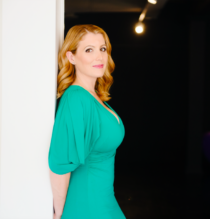
Krisztina Szabó, soprano Piacere
Hungarian-Canadian mezzo-soprano Krisztina Szabó is highly sought after in North America and Europe as an artist of supreme musicianship and stagecraft. She is known for her promotion and performance of contemporary Canadian works. Among her many laudatory reviews, Opera Canada declared her to be an “exceptional talent” after her performance of the title role of Dido in Purcell’s Dido and Aeneas. After a performance with Tapestry Opera, the music blog, Schmopera wrote that “her instrument is one-of-a-kind and she has cemented herself as a darling of Canadian experimental music and opera…her sensibility and sensitivity to the material is truly inspiring”. In her hometown of Toronto, she has been nominated twice for a Dora Award for Outstanding Female Performance. Krisztina has recently been appointed Assistant Professor of Voice and Opera at the University of British Columbia School of Music.
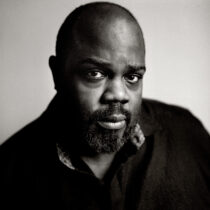
Reginald Mobley, alto Disinganno
Noted for his ‘shimmering voice’ (BachTrack), American countertenor Reginald Mobley is highly sought after for the baroque, classical and modern repertoire.
Reginald leads a very prolific career on both sides of the Atlantic. In the United States, where he resides, he became the first ever programming consultant for the Handel & Haydn Society following several years of leading H&H in his community engaging Every Voice concerts. He also holds the position of Visiting Artist for Diversity Outreach with the Baroque ensemble Apollo’s Fire, and is a regular guest with Cantata Collective, Musica Angelica, Agave Baroque, Charlotte Bach Akademie, Seraphic Fire, Quodlibet, Pacific Music Works, Bach Collegium San Diego, San Francisco Early Music Society and Philharmonia Baroque Orchestra.
Recent engagements have included concerts and recordings with the Chicago Symphony Orchestra, Opera Lafayette, Blue Heron, Chatham Baroque, Washington Bach Consort, Atlanta Baroque Orchestra and Early Music Seattle. Future highlights include Carmina Burana with the Chicago Symphony Orchestra, Messiah with the New York Philharmonic and Pittsburgh Symphony Orchestras, a debut at Carnegie Hall with Orchestra St Luke’s and at the Walt Disney Hall in Los Angeles.
In Europe, Reginald has been invited to perform with the OH! (Orkiestra Historycsna) in Poland, Vienna Academy in Austria (Musikverein), Musée d’Orsay in Paris, Royal Scottish National Orchestra, Academy of Ancient Music, City of Birmingham Symphony Orchestra, Balthasar Neumann Chor & Ensemble, Bach Society in Stuttgart, Holland Baroque Orchestra and in the autumn of 2021, he performed the role of Ottone in L’incoronazione di Poppea in Geneva, MUPA and Teatro di Vicenza in a European tour with The Budapest Festival Orchestra. He has also extensively toured with the Monteverdi Choir and Orchestra under the baton of John-Eliot Gardiner, and more recently performed a series of English music programmes in Germany with the Freiburger Barockorchester under the leadership of Kristian Bezuidenhout.
His recordings have been received with great critical acclaim, most recently American Originals with Agave Baroque ensemble, recorded with Acis Productions, which has been nominated for a GRAMMY Award, following A Lad’s Love with Brian Giebler on BRIDGE 9542 label. Reginald features on several albums with the Monteverdi Choir and Sir John Eliot Gardiner, including a recording of Bach’s St Matthew Passion and Magnificat, where Reginald ‘encapsulates whimsical pathos’ (Classical Music Magazine) His solo recording debut with ALPHA Classics will be released in June 2023. Reginald’s work has earned him both a 2023 Grammy Awards and 2023 Classical Music Awards Nomination.
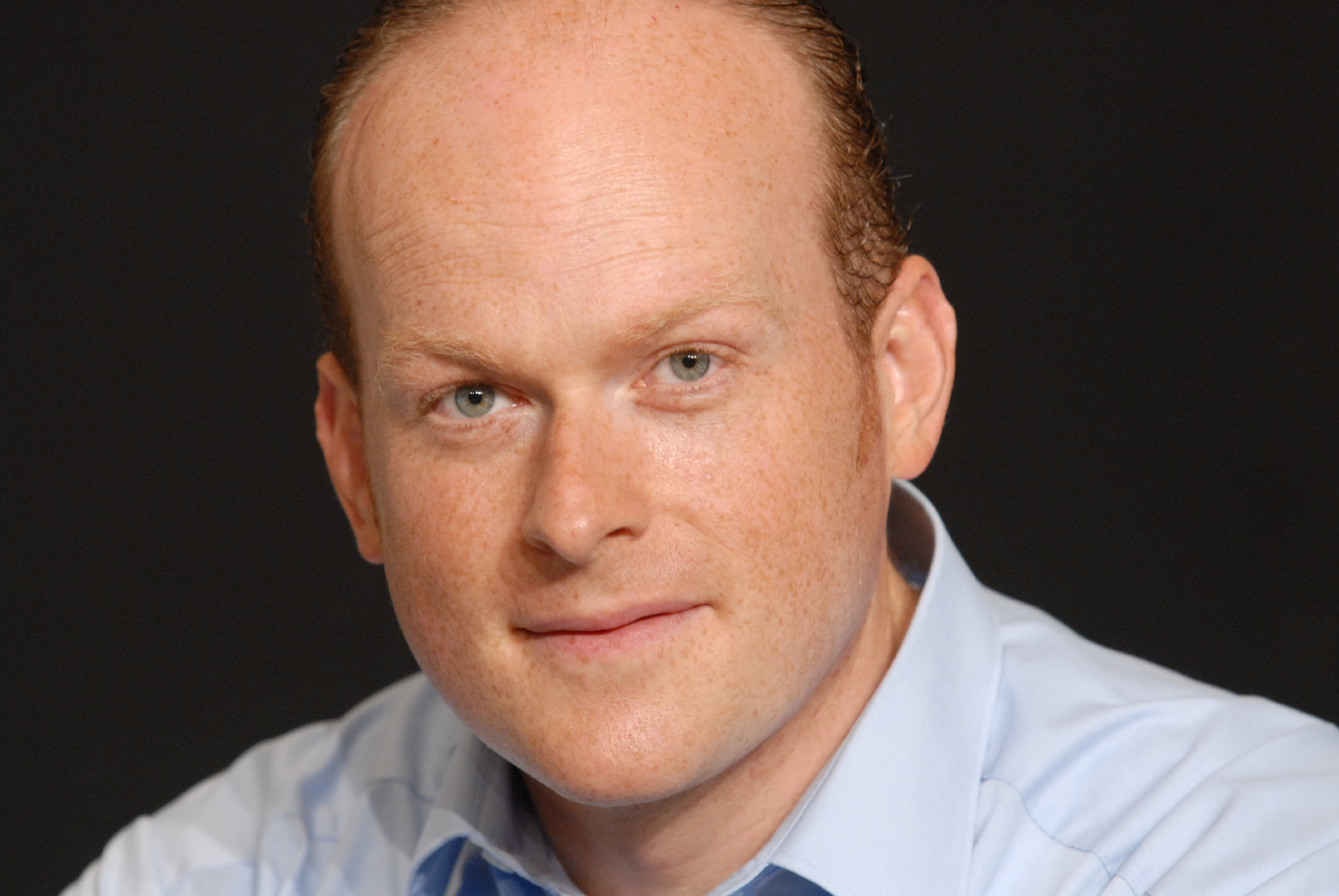
Colin Balzer, tenor Tempo
Canadian lyric tenor Colin Balzer’s North American engagements include recitals at New York’s Frick Collection and on the Philadelphia Chamber Music series; concerts with the Portland, New Jersey, Utah, Victoria, Ann Arbor, Québec, Atlanta, and Indianapolis Symphonies; Early Music Vancouver; Tafelmusik and the Toronto Mendelssohn Choir; Les Violons du Roy; the National and Calgary Philharmonics; Ottawa’s National Arts Centre Orchestra; Musica Sacra and the Oratorio Society of New York at New York’s Carnegie Hall. In addition, he is regularly featured in opera productions at the Boston Early Music Festival.
Guest soloist appearances abroad include work with Collegium Vocale Gent led by Philippe Herreweghe, Fundacao OSESP Orchestra and Louis Langrée, Les Musiciens du Louvre under Marc Minkowski, Rotterdam Philharmonic led by Yannick Nézet-Séguin, Akademie für alte Musik under Marcus Creed, and the RIAS Kammerchor, Scottish Chamber Orchestra, Radio Kamer Filharmonie, Estonian Chamber Choir, and Musik Podium Stuttgart. Operatic forays include the role of Don Ottavio in Mozart’s Don Giovanni at the Bolshoi and in Aix-en-Provence and Mozart’s La finta giardiniera in Aix and Luxembourg.
Particularly esteemed as a recitalist, he has been welcomed at London’s Wigmore Hall, the Britten Festival in Aldeburgh, the Vancouver Chamber Music Festival, the Wratislavia Cantans in Poland, and at the Festspielhaus in Baden-Baden. Recordings to date include Wolf’s Italienisches Liederbuch and Eisler and Henze song anthologies. Mr. Balzer holds the rare distinction of earning the Gold Medal at the Robert Schumann Competition in Zwickau with the highest score in 25 years. Born in British Columbia, he received his formal musical training at the University of British Columbia with David Meek and with Edith Wiens at the Hochschule für Musik Nürnberg, Augsburg.

Pacific Baroque Orchestra
The ‘house band’ of Early Music Vancouver, The Pacific Baroque Orchestra (PBO) is recognized as one of Canada’s most exciting and innovative ensembles performing “early music for modern ears.” Formed in 1990, the orchestra quickly established itself as a force in Vancouver’s burgeoning music scene with the ongoing support of Early Music Vancouver. In 2009, PBO welcomed Alexander Weimann as Director. His imaginative programming, creativity and engaging musicianship have carved out a unique and vital place in the cultural landscape of Vancouver.
PBO regularly joins forces with internationally-celebrated Canadian guest artists, providing performance opportunities for Canadian musicians while exposing West Coast audiences to a spectacular variety of talent. The Orchestra has also toured throughout BC, the northern United States, and across Canada. Their 2019 East Coast Canadian tour with Canadian soprano Karina Gauvin culminated in a critically acclaimed album, Nuit Blanches, released by Atma Classique.