Alexander Weimann | Sponsored by Bruce Munro Wright, O.B.C., Music Director; Pacific Baroque Orchestra; Krisztina Szabó, mezzo-soprano
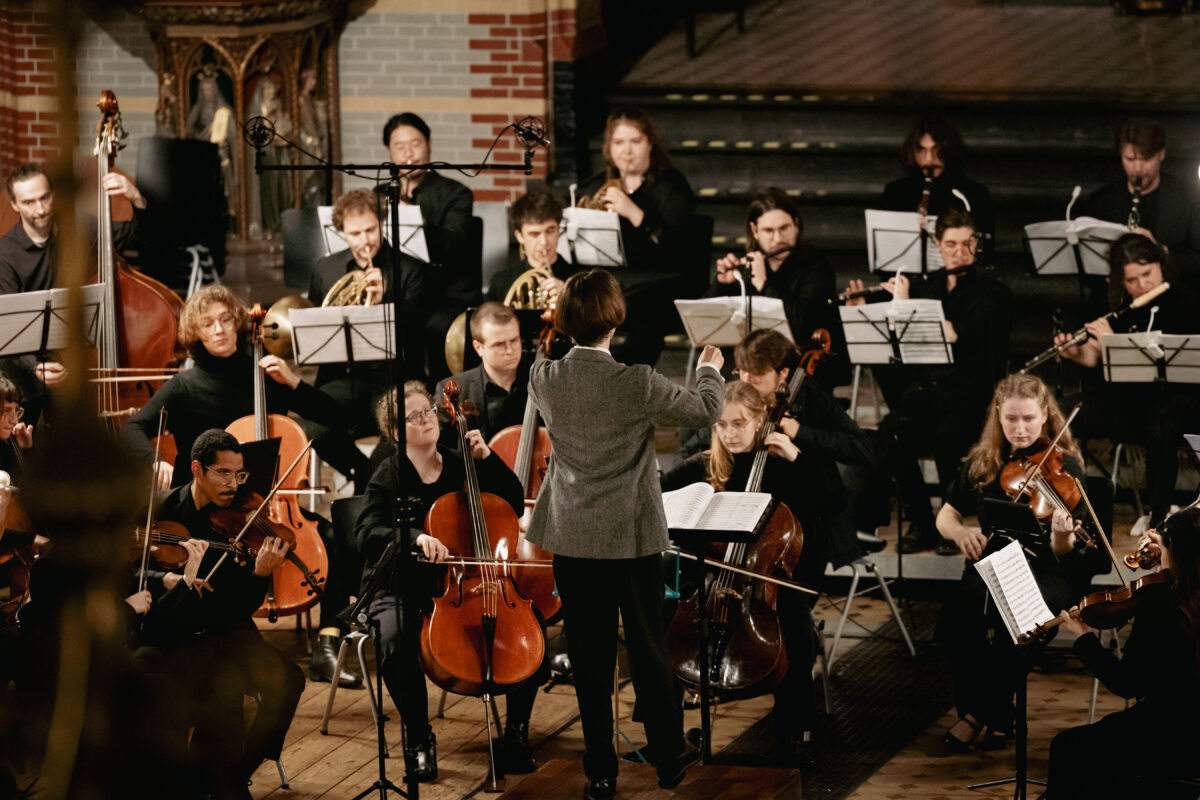
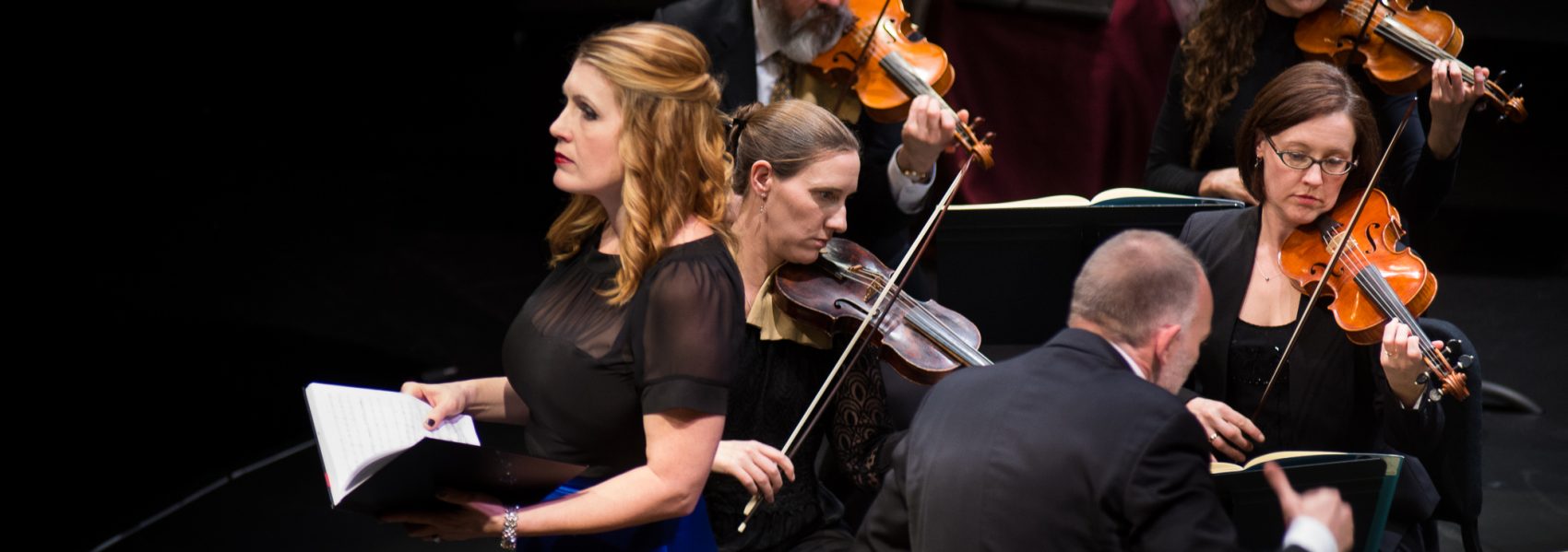
The riches of the West Coast’s early music scene continue to develop year after year, and the PBO is thrilled to welcome long-time collaborator, mezzo-soprano Krisztina Szabó, to join them for a programme of baroque music for Christmas. Krisztina has recently been appointed as a professor at the University of British Columbia which will allow for many more innovative and exciting collaborations in the coming years. Music in this festive concert includes Arcangelo Corelli’s Concerto fatto per la notte di Natale, Alessandro Scarlatti’s Cantata pastorale per la Natività and Georg Frederick Handel’s Concerto Grosso op 6 no 8.
Access to the concert is free, but donations are greatly appreciated. Concert will remain online one year from premiere date.
This concert is generously supported by an anonymous donor, Norman Gladstone & Birgit Westergaard, the RPC Family Foundation, and a donation made in memory of Peter Wood

How to watch:
ONLINE: Watch the concert online by clicking here.
This concert is available to watch for free thanks to the generosity of donors. To support our programming by making a tax-deductible donation, click here.
Concert will remain online one year from premiere date.
Programme
Arcangelo Corelli
Concerto fatto per la notte di Natale
Alessandro Scarlatti
Cantata pastorale per la Natività
Georg Frederick Handel
Concerto grosso op. 6 no. 8 in C minor
Texts & Translations
To download/view the texts and translations, click here.
Programme Notes
The association of pastoral music with Christmas has its roots in the adoration of Christ by the shepherds as described in the Gospel of Luke (2:8 – 2:20). An Italian tradition rose up to reenact the visitation of Mary and Jesus by the shepherds, where peasants from the countryside would descend upon the churches of large towns and cities such as Rome on Christmas Eve. Composers supplied music for these occasions, often writing pieces that strongly evoked pastoral elements, including the imitation of rustic instruments such as bagpipes. Both Alessandro Scarlatti’s Cantata Pastorale and Arcangelo Corelli’s so-called “Christmas Concerto”, Op. 6, no. 8, reference the sound of bagpipes by imitating the drone pipes of such instruments, particularly in the last movement of each piece.
Scarlatti composed the Cantata Pastorale for a performance on Christmas Eve in Rome, tying into the tradition outlined above. Most Italian Baroque sacred music uses Latin texts, even in non-liturgical devotional music for small ensembles. Composers use the term “motet” for such sacred compositions in Latin. By contrast, Scarlatti uses the term “cantata” for the piece on this programme because its text—unusually for sacred music in Italy—is in Italian. This fact speaks to the piece’s intended audience of lay people as opposed to highly educated listeners who would understand Latin. The librettist, Cardinal Ottoboni, was an important patron of the arts in Rome and was a benefactor to such well-known composers as Corelli and George Frederic Handel. Ottoboni wrote many cantata texts and designed them for composers to set the words using the chief modes of operatic expression of the time: recitative and the da capo aria. This cantata is no exception, though the inclusion of an instrumental introduction is reserved for cantatas of special importance, such as this one. The introduction concludes with strong references to rustic music: the imitation of drones gives a nod to the humble bagpipe, and the occasional decorative flattened 7th scale degree lends the music a folk-like flavour. The evocation of the pastoral reappears strongly in the final aria as well, with more references to drones and a lilting 12/8 metre, a common feature of shepherds’ music.
Corelli made the decision to publish his concerti grossi as his sixth opus in 1712, having sent them to the publisher Estienne Roger in Amsterdam that year. A concerto grosso pits two groups against each other: a trio of soloists and a larger ensemble that often doubles the soloists and sometimes accompanies or responds to them. Corelli’s concerti grossi were first printed in 1714 and subsequently spread throughout Europe, becoming arguably one of the most highly influential sets of pieces in the early 18th century. Corelli describes the eighth concerto as “fatto per la notte di natale” (“written for Christmas Night”). This piece, along with all of Op. 6, was almost definitely composed decades earlier than its publication, as evidenced by the many accounts by listeners having heard Corelli’s concerti in the last two decades of the 17th century. The work is cast roughly in the form of the so-called “church sonata” (“sonata da chiesa”) of the late seventeenth century—a series of movements in the order slow-fast-slow-fast. The first slow movement references the stile antico, or “old style” favoured in serious sacred choral writing, drawing on elements of Renaissance music. Corelli gives the direction “arcate sostenute e come stà” (“sustained bows and as it is”), which counters the usual procedure of players ornamenting slow movements. The concluding pastorale, as mentioned above, is truly what makes this piece a “Christmas concerto”, as, like the concluding aria in Scarlatti’s cantata, it imitates the drones of bagpipes and employs a gently rocking 12/8 metre in the manner of shepherds’ music.
As a testament to the aforementioned influence of Corelli’s Op. 6, Handel published his own set of concerti grossi –his Op. 6—in 1739. Handel wrote these pieces to be performed as intermezzi in dramatic works such as his oratorios and court odes. The concerti show a strong influence of Corelli but also incorporate many other stylistic features beyond the Corellian model, including the occasional French Ouverture and more “exotic” dances such as the Polish Polonaise that concludes Op. 6, No. 8. Other movements informed by dance rhythms in the eighth concerto include an Allemande and a Siciliana. The presence of so many dances suggests the model of the other large-scale form favoured by Corelli besides the “church sonata”, which is the “chamber sonata” (“sonata da camera”). Though dances such as the Siciliana and Polonaise are more modern and cosmopolitan than those used by Corelli, Handel still follows Corelli’s basic procedure of laying them out like a suite, interspersing them with connecting movements that reference no dance rhythm. Though this piece has no connection with Christmas, its charming melodies and sparkling rhythmic diversity certainly lend it a festive air.
Notes by Justin Henderlight

Alexander Weimann | Sponsored by Bruce Munro Wright, O.B.C., Music Director
The internationally renowned keyboard artist Alexander Weimann has spent his life enveloped by the therapeutic power and beauty of making music. Alex grew up in Munich. At age three he became fascinated by the intense magic of the church organ. He started piano at six, formal organ lessons at 12 and harpsichord at university (along with theatre theory, medieval Latin and jazz piano.) He is in huge demand as a director, soloist and chamber player, traveling the world with leading North American and European ensembles. He is Artistic Director of the Pacific Baroque Orchestra in Vancouver and teaches at the University of British Columbia where he directs the Baroque Orchestra Mentorship Programme.
Alex has appeared on more than 100 recordings, including the Juno-award-winning album “Prima Donna” with Karina Gauvin and Arion Baroque orchestra. His latest album series “The Art of Improvisation” (Volume 1: A Prayer for Peace; Volume 2: Ad libitum; and Volume 3: Canavian Variations, released on Redshift, 2024) unites his passions for both baroque music and improvisation on organ, harpsichord, and piano.

Pacific Baroque Orchestra
The ‘house band’ of Early Music Vancouver, The Pacific Baroque Orchestra (PBO) is recognized as one of Canada’s most exciting and innovative ensembles performing “early music for modern ears.” Formed in 1990, the orchestra quickly established itself as a force in Vancouver’s burgeoning music scene with the ongoing support of Early Music Vancouver. In 2009, PBO welcomed Alexander Weimann as Director. His imaginative programming, creativity and engaging musicianship have carved out a unique and vital place in the cultural landscape of Vancouver.
PBO regularly joins forces with internationally-celebrated Canadian guest artists, providing performance opportunities for Canadian musicians while exposing West Coast audiences to a spectacular variety of talent. The Orchestra has also toured throughout BC, the northern United States, and across Canada. Their 2019 East Coast Canadian tour with Canadian soprano Karina Gauvin culminated in a critically acclaimed album, Nuit Blanches, released by Atma Classique.
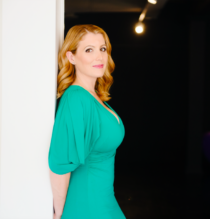
Krisztina Szabó, mezzo-soprano
Hungarian-Canadian mezzo-soprano Krisztina Szabó is highly sought after in North America and Europe as an artist of supreme musicianship and stagecraft. She is known for her promotion and performance of contemporary Canadian works. Among her many laudatory reviews, Opera Canada declared her to be an “exceptional talent” after her performance of the title role of Dido in Purcell’s Dido and Aeneas. After a performance with Tapestry Opera, the music blog, Schmopera wrote that “her instrument is one-of-a-kind and she has cemented herself as a darling of Canadian experimental music and opera…her sensibility and sensitivity to the material is truly inspiring”. In her hometown of Toronto, she has been nominated twice for a Dora Award for Outstanding Female Performance. Krisztina has recently been appointed Assistant Professor of Voice and Opera at the University of British Columbia School of Music.